

Sub-Zero Refrigerator & Freezer Repair NYC
5.0
.avif)
23 Google reviews
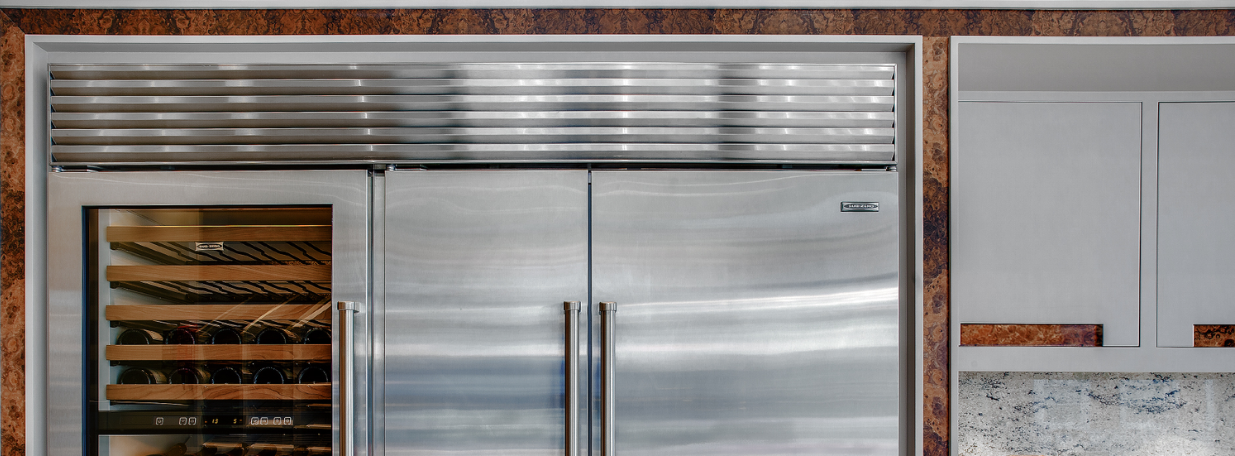
Sub-Zero Refrigerator & Freezer Repair NYC

Updated:
November 29, 2025
Expert Reviewed by Our Certified Wolf Technicians
Same-day Sub-Zero Refrigerator & Freezer repair across Brooklyn, Queens & Manhattan. Call now!
Sub-Zero Refrigerators & Freezers often encounter sophisticated failures that manifest as cascading system issues, leading to cooling losses and rising energy bills. In the unique space-constrained environment of NYC, a malfunctioning appliance not only disrupts daily routines but can also cause food spoilage and waste, intensifying stress in already fast-paced living. Additionally, logistical challenges in accessing replacement parts can prolong the downtime of your unit.
At Volt & Vector, our advanced diagnostic methodology encompasses multimeter testing, control board signal tracing, and sealed system pressure analysis, designed specifically for Sub-Zero units. We leverage borough-specific dispatch logistics to ensure swift access to our services across Brooklyn, select Queens ZIP codes, and Manhattan below 96th Street, allowing for meticulous attention to your appliance's unique needs.
Expect premium service with a $99 diagnostic fee (credited to repair) and a comprehensive 180-day parts & labor warranty. Our commitment to same-day availability and quality OEM parts guarantees a swift resolution to your Sub-Zero issues, ensuring your home maintains its functionality and comfort.
Technical FAQs & Diagnostic Insights
Q: What does diagnostic code EE indicate on my Sub-Zero?
A: This indicates a thermistor error, suggesting a potential fault with the temperature sensor or its connections, often requiring resistance measurements for verification.
Q: How does the symptom 'Not Cooling' manifest in Sub-Zero units?
A: A 'Not Cooling' issue could stem from several components including the compressor or thermistor, commanding a detailed diagnostic evaluation.
Q: Can you explain what the SR code signifies?
A: The SR code indicates a thermistor fault, pointing to wiring issues or a failed thermistor requiring inspection or replacement.
Q: What causes Excessive motor noise or vibration in Sub-Zero refrigerators?
A: Such issues are often linked to failing motors or mechanical components within the system, necessitating component-level examination for resolution.
Expert Cost-Benefit Analysis: Repair or Replace?
When considering repairs for your Sub-Zero Refrigerator & Freezer, it’s essential to evaluate the age and condition of key components like the compressor, control board, and sealed system. In NYC, the typical cost for repairing these parts often aligns favorably against replacement costs, especially when considering long-term service life and energy efficiency improvements.
Replacement becomes a prudent consideration when energy efficiency ROI is on the rise, OEM parts are discontinued or scarce, cumulative repair costs approach the critical 70% threshold of the unit’s replacement value, or if logistical challenges arise for high-rise installations in Manhattan.
- Energy efficiency ROI is greater when replacing older models.
- Discontinued OEM parts can complicate repair timelines.
- Cumulative repair costs exceeding 70% of unit value signal replacement urgency.
- High-rise Manhattan logistics may affect repair feasibility.
Understanding Sub-Zero Error Codes
Important: Many of these codes relate to high-voltage components, sealed systems, and control boards. The “User Actions” below are limited to safe checks. Internal diagnostics, wiring checks, and part replacement should be handled by a qualified technician.
Code 05 / EC 05: Refrigerator Cabinet Thermistor Error
Indicates a problem with the temperature sensor that monitors the refrigerator compartment.
Possible Causes:
- Failed or out-of-spec refrigerator thermistor
- Loose, corroded, or damaged thermistor wiring/connector
- Control board misreading the thermistor signal
User Actions:
- Make sure the refrigerator section is not overpacked and air can circulate around the sensor
- Power-cycle the unit at the breaker for 5 minutes, then restore power
- If the code returns, schedule service for thermistor and wiring diagnosis
Code 06 / EC 06: Refrigerator Evaporator Thermistor Error
Indicates a failure or erratic reading from the sensor mounted on the refrigerator evaporator.
Possible Causes:
- Defective evaporator thermistor
- Damaged or iced-over thermistor connection at the evaporator
- Control board input fault
User Actions:
- Check for unusually heavy frost or ice build-up in the refrigerator section
- Power-cycle the unit and allow it to run for several hours
- If the code reappears, contact a technician to test the thermistor and control board
Code 07 / EC 07: Freezer Cabinet Thermistor Error
Indicates an issue with the temperature sensor that monitors the freezer compartment.
Possible Causes:
- Failed freezer cabinet thermistor
- Loose or broken thermistor harness or connector
- Control board misinterpretation of temperature signal
User Actions:
- Verify the freezer is not overloaded and vents are clear
- Reset power to the unit at the breaker for several minutes
- If the code persists, arrange professional service to check the sensor and wiring
Code 08 / EC 08: Freezer Evaporator Thermistor Error
Indicates a fault with the sensor attached to the freezer evaporator coil.
Possible Causes:
- Defective freezer evaporator thermistor
- Wiring damage or corrosion near the evaporator
- Control board input channel problem
User Actions:
- Look for signs of excessive frost or ice on freezer walls or shelves
- Power-cycle the unit and monitor operation
- If the code returns, schedule a technician to inspect the evaporator area and thermistor
Code 20 / EC 20: Defrost System Underheat
The defrost heater did not reach the expected temperature or did not run long enough.
Possible Causes:
- Weak or failed defrost heater
- Defective defrost thermostat/terminator or sensor
- Wiring issues or control board not powering the heater correctly
User Actions:
- Check for obvious heavy frost build-up on the evaporator cover or rear panel
- Avoid leaving doors open for long periods, which can worsen frost build-up
- Contact a professional for defrost heater and control circuit testing (high-voltage work)
Code 21 / EC 21: Defrost System Overheat
The defrost heater ran too long or reached higher than expected temperature.
Possible Causes:
- Stuck or shorted defrost relay on the control board
- Failed defrost thermostat/terminator not opening when warm
- Wiring short causing the heater to stay energized
User Actions:
- Do not continue to operate the unit if you notice strong burning smells or unusual heat
- Power off the unit at the breaker if there are any safety concerns
- Arrange immediate service for defrost system and control board diagnosis
Code 22 / EC 22: No Voltage Feedback at Defrost Start
The control did not see expected voltage feedback when initiating defrost.
Possible Causes:
- Open wiring between control board and defrost heater circuit
- Defective defrost relay or control board output
- Failed safety device or connector in the defrost circuit
User Actions:
- Confirm the unit has stable power (no tripped breakers, no loose plug)
- Power-cycle the refrigerator and see if the code returns
- Call a technician to inspect wiring, relays, and defrost components
Code 23 / EC 23: Defrost Overheat with No Voltage Feedback
The control detected overheat conditions without proper feedback from the defrost circuit.
Possible Causes:
- Wiring fault or mis-wired defrost circuit
- Control board sensing error
- Failed temperature safety devices in the defrost system
User Actions:
- If you smell burning or see signs of overheating, shut off power immediately at the breaker
- Do not attempt to bypass any safety devices or thermostats
- Schedule service for a detailed defrost and wiring inspection
Code 24 / EC 24: General Defrost Underheat
Indicates that the defrost system is not adequately clearing frost over time.
Possible Causes:
- Weak or failing defrost heater
- Thermostat/terminator or sensor reading incorrectly
- Control board not initiating or completing defrost cycles properly
User Actions:
- Look for persistent frost/ice buildup on the evaporator cover or air vents
- Ensure doors are sealing well and not being left open unnecessarily
- Contact a professional to test heater resistance, sensors, and control logic
Code 30 / EC 30: Excessive Ice Maker Water Valve Activation
The water valve stayed energized too long (typically more than 15 seconds).
Possible Causes:
- Partially blocked or frozen ice maker fill tube
- Sticking water inlet valve
- Control board error commanding the valve too long
User Actions:
- Check the ice bin for overfilling or unusual ice shapes indicating water flow issues
- Inspect the water supply line for kinks or low pressure (if safely accessible)
- If the problem repeats, shut off the ice maker and call for service to inspect the valve and fill tube
Code 35 / EC 35: Zone Fan Speed Error
The control detected an incorrect or unstable speed from one of the compartment fans.
Possible Causes:
- Failing evaporator or compartment fan motor
- Obstruction in the fan blades (ice, packaging, or debris)
- Wiring or control board issue affecting fan RPM feedback
User Actions:
- Listen for unusual fan noises or rattling from inside the compartments
- Avoid overpacking shelves near air vents and fan covers
- Schedule service to check the fan motor, clear any ice, and verify wiring
Code 40 / EC 40: Excessive Freezer Compressor Run Time
The freezer compressor is running longer than expected to maintain temperature.
Possible Causes:
- Door gasket leaks or door not closing fully
- Heavy product load or frequent door openings
- Low refrigerant charge, restricted system, or weak compressor
User Actions:
- Confirm the freezer door is closing and sealing properly (no items blocking it)
- Reduce prolonged door openings and allow 24 hours for temperatures to stabilize
- If the code persists or temperatures remain warm, contact a technician for sealed system diagnostics
Code 41 / EC 41: Zone Compressor / Wiring Check
Indicates a potential problem with a specific zone compressor or its wiring.
Possible Causes:
- Failing zone compressor or start components
- Loose, pinched, or damaged compressor wiring
- Control board output failure to that compressor
User Actions:
- Verify the unit has proper ventilation around the condenser area
- Make sure the unit is not on an extension cord or power strip
- Arrange professional service; compressor and wiring work should not be DIY
Code 42 / EC 42: Condenser Fan / Wiring Check
The control is detecting an issue with the condenser fan or its circuit.
Possible Causes:
- Failed or sticking condenser fan motor
- Blockage around the condenser preventing airflow
- Damaged wiring or faulty fan relay
User Actions:
- Ensure the grill and toe-kick areas are not blocked and are clean of dust
- Listen for the condenser fan running when the compressor is on
- If the fan is not running or the code persists, schedule service to inspect the fan motor and wiring
Code 43 / EC 43: Left Refrigerant Valve / Wiring Check
Indicates a problem with the left-side refrigerant valve or its electrical circuit (on multi-valve systems).
Possible Causes:
- Faulty refrigerant (solenoid) valve coil
- Wiring harness damage or loose connector on the valve
- Control board failing to drive the valve correctly
User Actions:
- Do not attempt to adjust or open sealed system components yourself
- Monitor temperatures; if a section is not cooling, minimize door openings
- Contact a certified technician to evaluate the valve and sealed system
Code 44 / EC 44: Glass Door Heater / Wiring Check
Relevant on models with glass doors; indicates an issue with the door heater circuit.
Possible Causes:
- Failed glass door heater element
- Broken or pinched wiring in the door hinge area
- Control board or relay fault driving the heater
User Actions:
- Look for persistent condensation or fogging on glass doors
- Avoid forcing or overextending the door which can stress wiring in the hinge
- Schedule service to test the heater circuit and repair wiring if needed
Code 46 / EC 46: Ice Accessory Wiring Open Circuit
Typically refers to an open circuit in an ice accessory, such as a fill-tube heater.
Possible Causes:
- Failed fill-tube or ice-system heater
- Broken wire or connector in the ice maker accessory harness
- Control board not detecting the heater properly
User Actions:
- If ice production slows or stops, turn off the ice maker to prevent damage
- Check for obvious kinks in the water line (external only)
- Call a technician to inspect heater continuity and accessory wiring
Code 50 / EC 50: Excessive Refrigerator Compressor Run Time
The refrigerator compressor is running too long to maintain the set temperature.
Possible Causes:
- Warm ambient conditions or heavy product load
- Leaking door gasket or door not closing fully
- Low refrigerant charge, partial restriction, or weakening compressor
User Actions:
- Verify the door is closing and sealing well; remove items blocking closure
- Allow 24 hours after large grocery loads for the unit to stabilize
- If the code repeats and temperatures are not normal, arrange professional sealed system evaluation
Code 66: Power Failure / Interruption
Indicates a past power loss or interruption to the unit.
Possible Causes:
- Utility power outage or brownout
- Tripped breaker or loose power plug
- GFCI or surge device tripping
User Actions:
- Confirm the unit is firmly plugged in and the breaker is not tripped
- Clear the code per the user manual (often via the control panel)
- If repeated power issues occur, consult an electrician to check the outlet/circuit
Code 80: Check Power to Compressor Controller (VS Models)
Applies to variable-speed compressor systems; indicates power or control issues to the compressor controller.
Possible Causes:
- No or low voltage reaching the compressor controller
- Loose or damaged harness between main board and controller
- Internal failure of the compressor controller
User Actions:
- Make sure the unit is on a dedicated, properly rated outlet (no extension cords)
- Power-cycle the appliance at the breaker and see if normal cooling resumes
- If the code returns, call a professional experienced with variable-speed Sub-Zero systems
Code 83 / EC 83: VS Compressor & Filter-Drier Replacement Recommended
Signals a serious issue with the variable-speed compressor system.
Possible Causes:
- Degrading or failed variable-speed compressor
- Restrictions or contamination in the sealed system (filter-drier issue)
- Controller detecting abnormal operating conditions over time
User Actions:
- Minimize door openings and monitor temperatures; move perishables to a backup fridge if needed
- Do not attempt sealed system repairs yourself
- Contact a certified Sub-Zero technician; this code typically requires compressor and filter-drier service
Code 84 / EC 84: VS Compressor Wiring Check
Indicates a wiring or connection problem within the variable-speed compressor circuit.
Possible Causes:
- Loose or corroded connectors at the compressor or controller
- Damaged harness between controller and compressor
- Control board or controller output fault
User Actions:
- Ensure the unit has not been recently moved, jostled, or pushed tightly against the wall
- Avoid operating the unit with repeated error resets; this may worsen damage
- Schedule service for a detailed wiring and controller inspection
Code 85 / EC 85: VS Compressor Control Overheat
The variable-speed compressor control has overheated.
Possible Causes:
- Restricted airflow around the compressor/condensing area
- High ambient temperature or poor ventilation where the unit is installed
- Internal controller or component failure causing excess heat
User Actions:
- Verify that the grille and ventilation areas are clean and unobstructed
- Improve ventilation around the unit if it’s built into a tight enclosure
- If the code reappears, call a technician to inspect the controller, fan, and cooling system
Code 86 / EC 86: Serial Communication Failure (VS Controller ↔ Control Board)
Communication between the variable-speed compressor controller and the main control board has failed.
Possible Causes:
- Loose or oxidized communication cable/connectors
- Faulty compressor controller
- Failing main control board communication circuit
User Actions:
- Power-cycle the unit and see if normal operation returns temporarily
- Avoid moving or flexing the unit, which can worsen marginal connections
- Arrange professional service to test communication lines, controller, and main board
Code dO / Or: Door Ajar Warning
Indicates that a door has been left open for more than about five minutes. This is a warning, not a fault.
Possible Causes:
- Door not fully closed or something blocking closure
- Overloaded door bins preventing proper sealing
- Worn or damaged door gasket
User Actions:
- Close the door firmly and ensure nothing is blocking it
- Check that shelves and bins are properly seated and not hitting the door
- Inspect door gaskets for tears, gaps, or debris, and clean them gently with mild soap and water; if the warning continues, schedule service for gasket adjustment or replacement**
Common Sub-Zero Refrigerator & Freezer Problems We Service
Complete cooling loss with compressor lockout
Intermittent temperature cycling due to sensor drift
Persistent frost buildup and defrost cycle failure
Inconsistent airflow leading to spoiled items
Excessive motor noise or vibration from the unit
Not Cooling
Noise/Vibration
Advanced Pre-Service Checks for Homeowners
Test breaker load to ensure no tripped circuits impede functionality.
Measure thermistor resistance where accessible to validate temperature sensor performance.
Assess condenser coils for dust accumulation that could hinder heat exchange.
Conduct door seal vacuum test to check for leaks that affect cooling efficiency.
Caution: Work on sealed systems presents hazards including gas leaks or electrical faults, necessitating immediate professional intervention.

Clean Work, Privacy First
Clean Work Promise
Shoe covers, drop cloths, and careful moves in tight spaces. We vacuum/wipe the work area so no mess is left behind.
NY Coverage Area
Same-day/next-day service in all listed neighborhoods.
ABOUT US
Volt & Vector — Professional Appliance Repair Service in New York City
Diagnostic Workflow
- Model & serial verification (rating-plate photo).
- Functional test — run service mode, retrieve stored error codes.
- Electrical measurement — voltage, amperage, resistance under load.
- Mechanical check — motors, valves, belts, pumps, airflow or coolant path.
- Safety validation — water, gas, or vent integrity.
- Estimate issued before repair authorization.
If the client proceeds, the diagnostic credit applies in full.
Every visit is logged with readings and photos for warranty traceability.
Parts & Sourcing
- Only factory-original OEM components from authorized distributors.
- Each part is tracked by model, serial, and invoice ID.
- We never use rebuilt electronics or aftermarket substitutes.
- Refrigeration and sealed-system work performed by EPA 608-certified technicians.
Warranty & Compliance
- 180 days on both parts and labor.
- Documentation stored in secure cloud system for repeat-visit reference.
- COI and technician ID available for building management.
- All work complies with NYC Electrical & Plumbing Codes §27-740 et seq.
Safety Protocol
- If there’s water leakage, cut the supply immediately.
- If smoke, odor, or sparks appear — shut the breaker and disconnect.
- Technicians arrive with insulated tools, PPE, and isolation testers rated to 1000 V CAT III.
Pre-Visit Checklist for Clients
- Confirm building access / doorman / elevator window.
- Provide brand + model + symptom (photo helps).
- Clear workspace around appliance (2–3 ft).
- If possible, note any error code or behavior pattern.
These steps reduce diagnostic time and help ensure correct parts are dispatched.
Service Coverage
Brooklyn (core ZIPs: 11201, 11205, 11206, 11213, 11215, 11216, 11217, 11218, 11222, 11225, 11231, 11232, 11238)
- Brooklyn Heights, DUMBO, Downtown Brooklyn
- Cobble Hill, Carroll Gardens, Boerum Hill
- Fort Greene, Clinton Hill, Prospect Heights
- Park Slope, South Slope, Windsor Terrace
- Greenwood Heights, Gowanus, Kensington
- Prospect Lefferts Gardens, Crown Heights
- Bedford–Stuyvesant, West Bushwick
- Greenpoint
Queens (selected ZIPs: 11354, 11356, 11357, 11365, 11374, 11375, 11379)
- North/Broadway Flushing
- College Point
- Whitestone
- Fresh Meadows
- Rego Park
- Forest Hills
- Middle Village
Manhattan (below 96th Street — core ZIPs 10001–10007, 10009–10010, 10011–10014, 10016–10018, 10019–10024, 10028, 10036, 10038, 10065, 10069, 10075, 10128)
- Financial District, Battery Park City, Seaport
- Tribeca, SoHo, Greenwich Village, West Village, East Village
- Chelsea, Hudson Yards, Hell’s Kitchen
- Midtown East & Midtown West, Garment District
- Gramercy, Kips Bay
- Upper West Side
- Upper East Side (south of 96th Street)
Text alerts are sent ≈ 30 minutes before arrival.
Data & Documentation
Volt & Vector maintains a private service database linking symptoms, part numbers, and test results across thousands of NYC appliances.
Why Clients Choose Volt & Vector
- Local operation: no subcontract chains.
- Direct communication: text / email / call — no call-center delays.
- Technical credibility: trained on Bosch Benchmark, Miele W1/T1, Sub-Zero sealed-system platforms.
- COI & property compliance: trusted by NYC building management.
- Fast logistics: inventory and supplier network inside the five boroughs.
Commitment to Repair Ethics
- Every successful repair extends appliance life, lowers energy waste, and avoids landfill scrap.
- All replaced components are recycled through certified NYC facilities.
- “Repair First” is our environmental and professional baseline.
Schedule Service
- Text or call (332) 333-1709.
- Send appliance info + photos.
- Receive ETA and a firm estimate.
- Technician arrives within your chosen window, completes service, provides digital invoice and warranty.
Volt & Vector — Built for NYC by Real Techs
Professional diagnostics, OEM components, documented results.
Transparent pricing. Zero guessing. Guaranteed repair.
Google Reviews
Great people to deal with. Called and set up appointment right away. Mark came and fixed the issue right away. Very friendly and respectful. Will use again. Thanks guys.
Excellent experience with Vlad! He came day of to help fix a laundry machine issue. He was on time, a clear communicator about the issue and fixed it with ease. He came back the following day (at no charge!) when I reached out with further information about how the machine was working to confirm everything was working properly/as intended. Excellent service and will absolutely be working with them again when we have future needs. Can’t recommend enough!
Vlad has been an incredible asset. In the few months we've known him, he's already fixed a dryer, two washing machines, and an oven! He's always very upfront with the repairs needed and the associated costs with fixing an appliance. I wouldn't hesitate at all to hire him for any future appliances in need of repair
I split my time between Italy and NYC and manage several Airbnb units. Scheduling used to take too much energy around guest check-ins and turnovers. With Volt & Vector Appliance Repair, the routine became predictable: clear 2-hour windows (9–11am or 12–2pm), a text with ETA, written pricing (diagnostic credited), before/after photos, and a short summary after each visit. Over ~30 repairs in two years: washers, dryers, dishwashers, ranges, a refrigerator seal. They’ve kept me informed and moved quickly on parts (usually 24–48 hours when ordered). Access and lockboxes are handled without drama, work areas are left clean, and my reviews stayed steady. Hosting from abroad is easier when maintenance is this consistent. Strong recommend for Brooklyn and Manhattan hosts.