
.png)


.jpeg)
.jpeg)


.jpeg)
Refrigerator Repair
Refrigerator Repair in NYC, Brooklyn, Astoria, and Long Island City
A refrigerator failure is rarely one thing. A warm fresh-food section with a hard-frozen freezer points in a different direction than a unit where both compartments rise together, and frost on the back panel tells a different story than water under the crisper. Volt & Vector treats refrigerator repair in NYC as a system diagnosis across cooling, airflow, defrost, door sealing, and the water path, not a part guess from a single symptom.
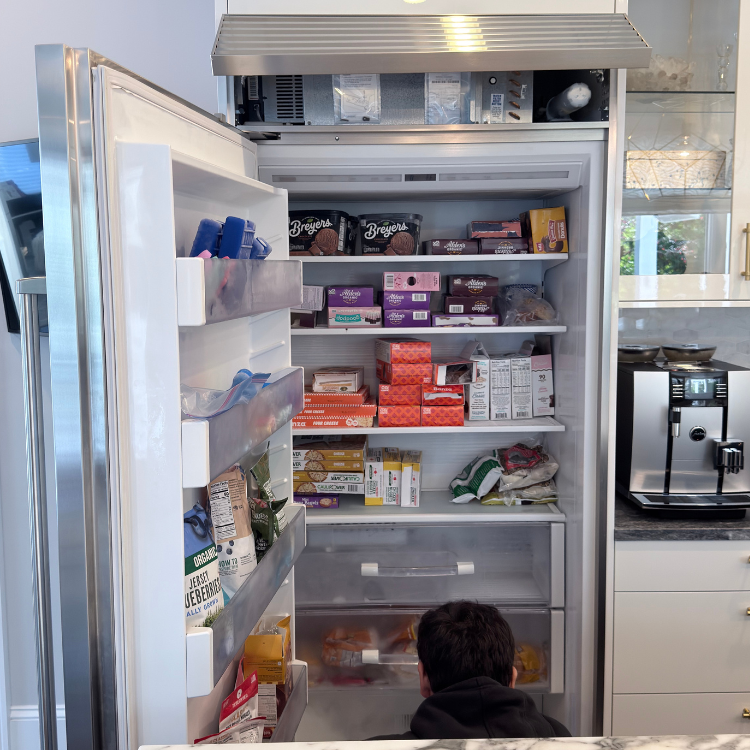
What helps before the visit is simple evidence: the set temperatures, what the food actually feels like, whether the compressor or fans are audible, and whether the unit is built in or connected to a water line. Panel-ready and counter-depth installations in Brooklyn brownstones, Astoria walk-ups, and Long Island City high-rises each add their own access step, so photos of the installation and any display message let us plan the visit correctly. The diagnostic is credited toward the repair, and an estimate is provided before any repair work begins.
DIY vs Pro
Safe Checks Before the Visit
Owner checks should preserve evidence, not open the appliance.
Safe to check
- Record set and actual temperatures in both compartments
- Look for food blocking the interior vents
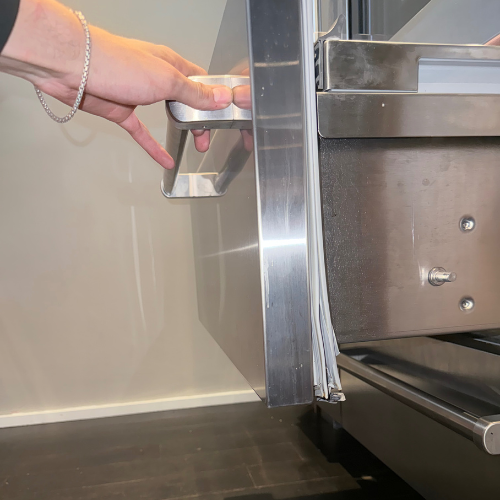
- Photograph frost, water, gasket gaps, and display messages
- Listen for fan and compressor sound with doors closed
- Check that the visible toe-kick grille is not blocked
Leave to the technician
- Chipping or heating ice buildup
- Pulling out built-in, panel-ready, or water-connected units
- Disconnecting or reworking water lines
- Removing the rear interior panel or rear machine cover
- Anything involving the sealed refrigeration system
Diagnostic Process
How Refrigerator Diagnosis Works
The first split is compartment behavior. A freezer that still holds temperature while the refrigerator warms usually moves the diagnosis toward airflow, damper, or defrost branches. Both compartments warming together moves it toward power, control, compressor operation, condenser airflow, or sealed-system territory. From there we check door sealing, vent blockage, frost pattern, fan behavior, and control response before naming any part.
Built-in and panel-ready refrigerators add an access plan: shared cabinet panels, a water connection, finished flooring, and a narrow pull path can all be involved. That is why installation photos matter as much as the symptom sentence. The full visit sequence is described in how appliance repair works, and parts replaced under repair are covered by the 180-day parts and labor warranty with OEM parts only.
Two things protect the diagnosis itself. If water is leaking, stop using the dispenser and ice maker where possible and leave the water evidence visible. If cooling is unstable, avoid repeated unplug resets, because each reset can erase the timing clues that separate one branch from another.
New York City — What's Different
NYC Building Realities for Refrigerator Work
Refrigerator repair in this city is shaped by the building as much as the appliance. Brooklyn brownstone kitchens often hide counter-depth units in tight alcoves, Astoria walk-ups add stair carries and narrow doorways, and Long Island City and Manhattan high-rises bring panel-ready columns, shared water shutoffs, service elevators, and management rules into the plan. Access is part of the repair, so installation photos genuinely change how the visit is prepared.
If your building requires documentation, a certificate of insurance can be provided. Share the management contact, certificate holder wording, permitted work hours, and elevator or service-entrance notes, and tell us whether floor or cabinet protection is required. Neighborhood coverage is listed under Brooklyn and Manhattan service areas.
Symptoms
Symptom Guide: What Each Pattern Suggests
Display looks normal but food is warm
Likely branch: Lights and controls can operate while cooling is disabled, blocked, or failing, so a normal display does not clear the cooling system.
Check safely: Write down the set temperature and the actual food condition with times.
Avoid: Repeated resets that erase the fault pattern.
Compressor runs constantly but barely cools
Likely branch: Long run time with weak results can point to condenser airflow, dusty coils, a sealing fault, or low-side issues that need instrument-level diagnosis rather than guessing.
Check safely: Note whether the kitchen side of the unit feels unusually hot and whether the toe-kick grille is blocked.
Avoid: Vacuuming inside service areas beyond the visible toe-kick grille.
Clicking, buzzing, or the unit cycles on and off rapidly
Likely branch: Start-component or compressor behavior can produce repeating click-hum patterns; the interval and sound matter to diagnosis.
Check safely: Record a short video with sound. Timing between clicks is real evidence.
Avoid: Unplugging and replugging repeatedly to "test" it.
Freezer cold, fridge warm, and it came back after a manual defrost
Likely branch: Improvement after unplugged downtime is a classic frost-restriction clue, and the underlying defrost-circuit cause usually remains.
Check safely: Note how long it stayed fixed before the symptom returned. See freezer cold but fridge warm for the branch logic.
Avoid: Treating the temporary fix as a repair.
Service message or flashing icon on a premium platform
Likely branch: Messages like a flashing condenser-cleaning indicator are model-specific and tied to airflow or sensor behavior.
Check safely: Photograph the exact message and note what the unit was doing when it appeared, as with a flashing vacuum condenser warning.
Avoid: Clearing the message repeatedly before it is documented.
Maintenance Tips
Maintenance That Prevents Repeat Visits
Good refrigerator maintenance lowers compressor workload and keeps the airflow evidence clean for any future diagnosis.
- Keep the toe-kick and condenser airflow path clear where it is accessible without disassembly.
- Leave space around interior vents instead of packing food against them.
- Wipe gasket surfaces gently and watch for tears, compression, or sticking.
- Replace water filters on the model's schedule when ice quality or water flow changes.
- Check door alignment if the unit was recently moved or leveled.
FAQ
Refrigerator Repair Questions
Should I unplug a warm refrigerator before service?
Usually no, unless there is a burning smell, electrical noise, or water near power. A running unit preserves temperature and frost evidence that makes the diagnosis faster and more accurate.
Should I pull the refrigerator out before the appointment?
No. Built-in, panel-ready, and water-connected units should not be moved without a plan. Photos of the opening and surrounding cabinetry let us decide the access path safely.
What should I send before booking?
Brand and visible model information, the temperature behavior of both compartments, whether the freezer is still frozen, and photos of any frost, leak, or display message.
Can the ice maker be diagnosed during refrigerator service?
Yes, when it is part of the refrigerator. The branch depends on freezer temperature, water supply, the ice maker's state, and dispenser behavior. Standalone and built-in machines are covered under ice maker repair.
Is it worth repairing an older refrigerator in NYC?
It depends on the platform, the failed component, and parts availability. The honest framework is laid out in the NYC serviceability guide, and the estimate before work begins lets you decide with real numbers.