
Appliance Repair & Maintenance in NYC
Volt & Vector Appliance Repair
Volt & Vector Appliance Repair services a wide range of residential appliance brands across New York City. Brand matters because diagnostic logic, component compatibility, service documentation, and parts availability can vary materially—even when the symptom looks identical.
Based in: Downtown Brooklyn, NY 11201
Contact: +1 (332) 333-1709 | voltnvector@gmail.com
If you don’t see your brand listed, you can still reach out. The fastest confirmation is your model and serial (photo of the rating tag is ideal).
What to Have Ready Before You Contact Us
Providing this upfront usually saves time:
- Brand + full model number + serial number (photo of the rating tag)
- Clear symptom description (what happens, when it happens, how often)
- Any displayed error code(s)
- Photos of the installation area (tight cabinetry, stacked units, built-ins)
- For cooking: confirm gas vs electric vs induction, and whether the issue is oven, surface burners, or both
NYC Service Area
We primarily serve residential addresses in Brooklyn, Manhattan (generally below 96th Street), and selected Queens ZIP codes. Coverage is ZIP-based—use the ZIP checker on our website to confirm availability for your address.
Based in: Downtown Brooklyn, NY 11201
Contact: +1 (332) 333-1709 | voltnvector@gmail.com
Modern appliances are not “generic machines.” Brands and product families can differ in:
- Control architecture (boards, sensors, software logic)
- Safety interlocks and ignition systems (especially gas cooking)
- Water management and leak protection (dishwashers, laundry)
- Airflow, condensation, and heat management (dryers)
- Refrigeration platforms (sealed system vs. “component” failures)
This page exists to help you identify brand coverage and set expectations around parts, access constraints, and edge-case failures—consistent with Google’s guidance to create people-first, useful content rather than “search-engine-first” filler.
The “Hard Cases” That Occasionally Make Repairs Slower or More Complex
1) Discontinued and “NLA” parts (older appliances)
With older ranges, refrigerators, washers, and dishwashers, the limiting factor is sometimes not the repair itself—it’s whether an OEM replacement part is still manufactured and stocked. Manufacturers explicitly use “no longer available (NLA)” status for parts that are no longer produced or inventoried.
What this means in practice:
- A repair may be technically straightforward but not feasible if a critical part is NLA.
- Compatibility checks can matter (a “replacement” part number may exist but not be a true interchange).
- We verify the exact model/serial before committing to a parts-dependent repair path.
2) Seized fasteners, stripped screws, and heat-locked hardware (common on cooking products)
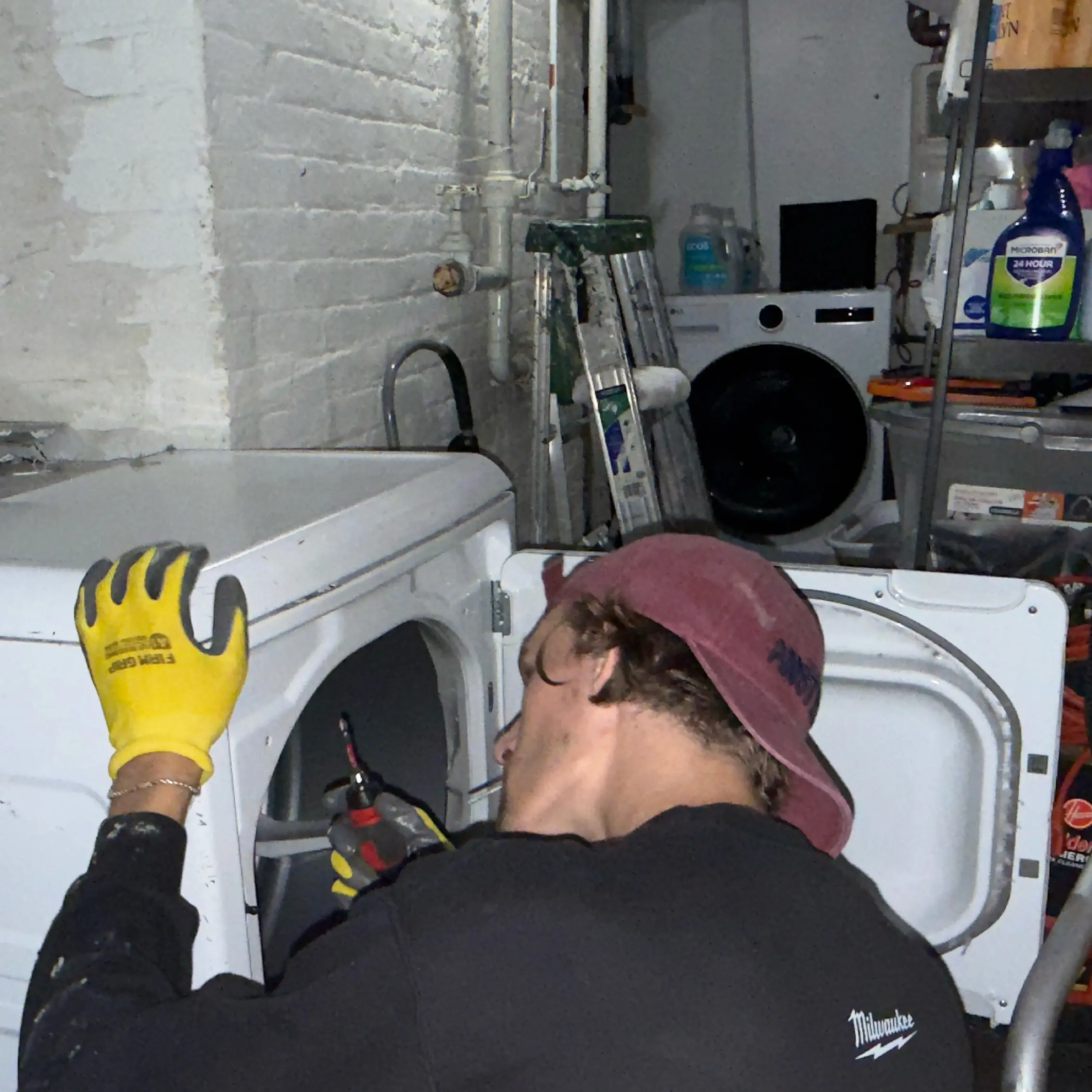
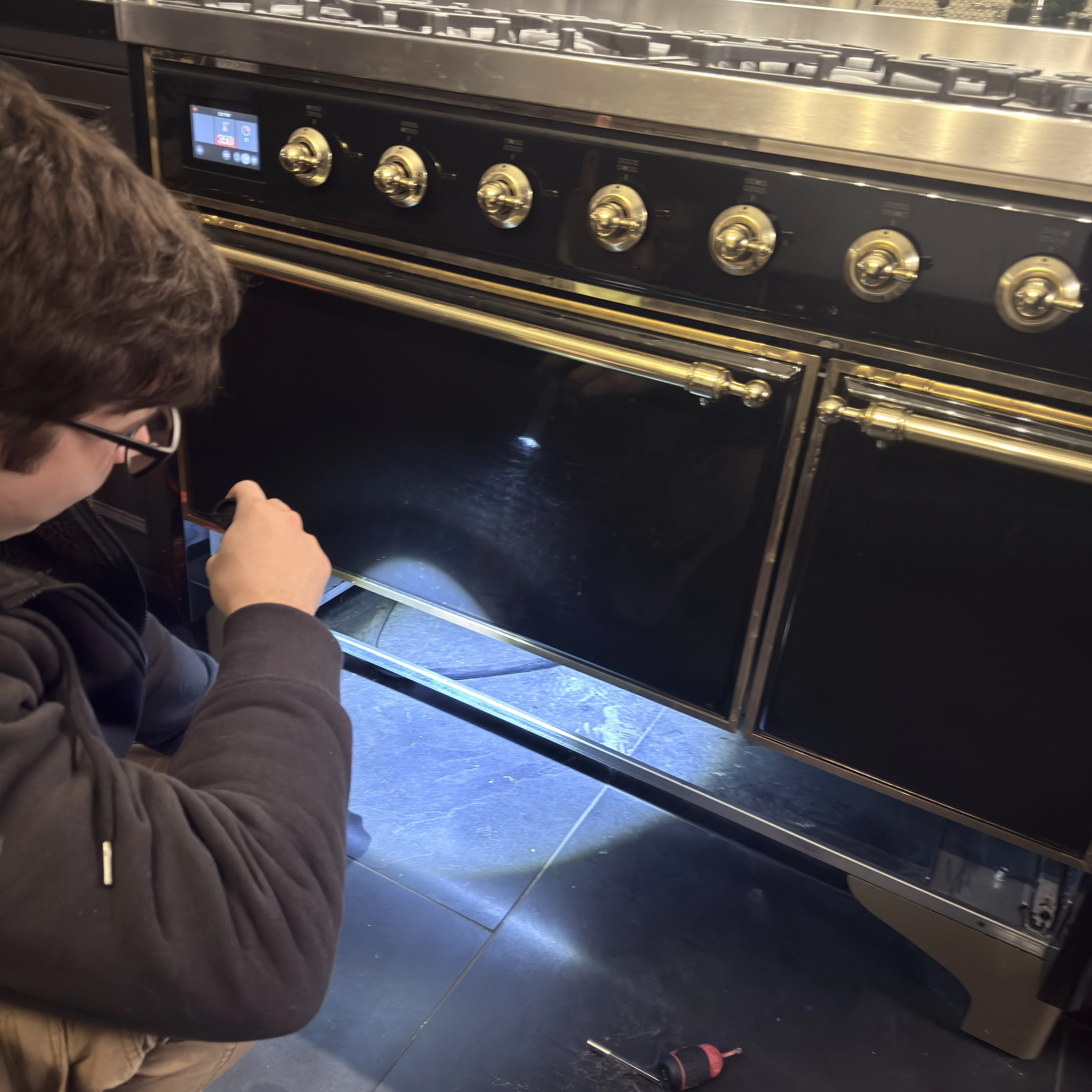
On ranges and cooktops, repeated boil-overs, cleaning moisture, salt/acidic residue, and heat cycles can corrode or lock fasteners in place. In these situations, a “simple” repair (like replacing an igniter or electrode) can become an access problem first. A standard mechanical approach is penetrating oil + patience and controlled removal techniques, but outcomes depend on corrosion severity and materials.
Practical implication: sometimes additional labor is required to extract hardware safely, and in worst cases a mounting bracket, burner base, or related assembly may need replacement due to damage from corrosion or prior attempts.
3) Corrosion from dissimilar metals and chronic moisture exposure (laundry and some dishwashers)
Certain failures are driven by environment and materials, not just “wear.” Galvanic corrosion is a well-understood mechanism where two dissimilar metals in contact corrode when moisture acts as an electrolyte.
In laundry, this shows up as:
- Structural corrosion in drum support components (platform-dependent)
- Hardware and mounts that become brittle or break during disassembly
- Secondary damage when leaks or chronic dampness persists
4) Stainless fastener galling (seizing without “rust”)
Not all seized hardware is “rusted.” Stainless fasteners can seize due to thread galling (adhesive wear) under pressure/friction, which can lock threads abruptly during tightening or removal.
Implication: careful torque and correct technique matter during reassembly, especially on premium platforms that use stainless hardware extensively.
5) Prior repairs, modifications, and “stacked” failures
Rare but real:
- Wrong or mismatched parts installed previously (especially look-alike igniters, valves, drains, and sensors)
- Evidence of water intrusion into harnesses/connectors
- Multiple failures where the initial symptom is not the root cause (example: a washer “noise” that is actually bearing damage plus secondary tub/spider damage)
When we see signs of stacked issues, we prioritize confirming the failure chain rather than swapping the first suspected part.
How We Reduce Wasted Visits (and Set Realistic Expectations)
To keep service efficient and avoid ordering incorrect parts:
- We start with model/serial verification and platform identification.
- We confirm parts status (including NLA/backorder risk) before committing to a parts-dependent solution.
- We focus on root-cause diagnosis and document what we find, rather than “guess-and-replace.” This aligns with Google’s general quality guidance (help users, avoid thin/templated pages that exist mainly to rank).


%20(25).png)


.avif)


.svg.png)