
Wolf Hood & Ventilation Repair in NYC
5.0
.avif)
23 Google reviews
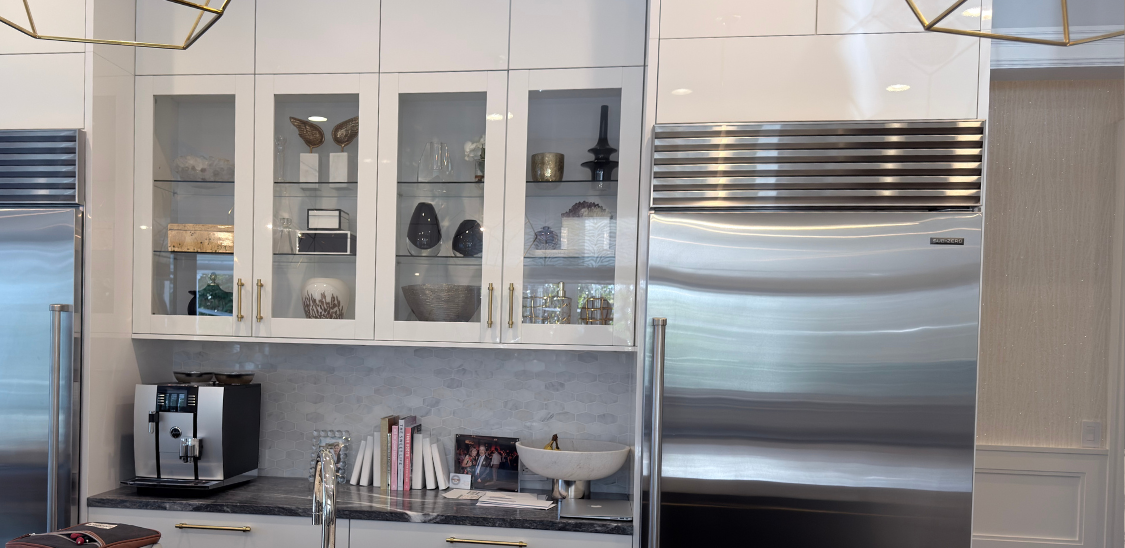
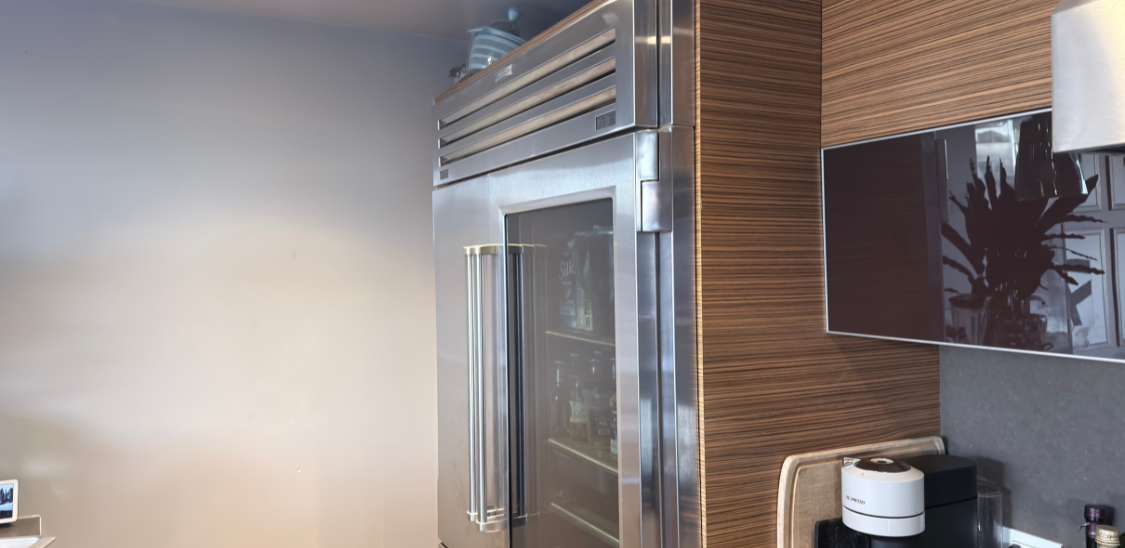
About Volt & Vector — Sub-Zero & Wolf Service in NYC
Volt & Vector Appliance Repair is a focused, high-end service shop built around Sub-Zero refrigeration and Wolf cooking equipment. We’re based in Brooklyn and work where these appliances actually live: Manhattan below 96th Street, core Brooklyn neighborhoods, and select Queens ZIP codes — co-ops, condos, brownstones and new developments.
What we service
We work on the full Sub-Zero and Wolf lineup, including:
- Sub-Zero built-in and integrated refrigerators, columns and PRO units
- Wine storage and undercounter refrigeration
- Ice makers and undercounter ice machines
- Wolf ranges, rangetops, cooktops and wall ovens
All sealed-system refrigeration work is handled by EPA 608–certified techs.
We see and repair the same real-world issues every week:
- Chronic temperature problems and warm spots
- Ice build-up, drainage and defrost issues
- Noisy or failed evaporator and condenser fans
- Control board and sensor faults
- Door and gasket problems, air leaks, sweating
- Ignition issues and oven temperature drift on Wolf ranges
What you get with Volt & Vector
- $99 on-site diagnostic, always credited toward the repair
- OEM parts only, sourced through authorized distributors
- 180-day parts & labor warranty on completed repairs
- Techs who work on Sub-Zero / Wolf every week, not “once in a while”
- Same-day or next-day appointments in our Brooklyn / Manhattan / Queens coverage
- COI available for buildings that require it
Use the guide below to get straight to what you need. Use the tabs to jump between an intro overview, FAQs, safe DIY checks, pro tips, repair-or-replace guidance, error codes, and the most common Sub-Zero/Wolf problems we see in NYC.
Shipping & Repair Timing
Choose how fast we get your OEM part. This affects when we can finish your repair.
All options include our 180-day parts & labor warranty once the part is installed.
Ground (3–5 Business Days)
- Estimated part arrival: 3–5 business days
- Typical repair completion: first available slot after delivery, usually within the same week
- Best for non-urgent problems / secondary appliances
Second Day Air (2 Business Days)
- Estimated part arrival: 2 business days
- Typical repair completion: first available slot after delivery, often within 2–4 business days
- Good balance of speed and cost for most kitchen appliances
Next-Day (1 Business Day)
- Estimated part arrival: next business day (carrier cut-off times apply)
- Typical repair completion: fastest option — we prioritize scheduling for the soonest available slot after the part arrives
- Recommended for no-cool fridges, leaks, or other urgent issues
Warranty note: The shipping method does not change your coverage — every completed repair comes with our 180-day parts & labor warranty.
Wolf Hood & Ventilation units can lead to significant disruptions when they fail, causing cascading system issues that waste energy and compromise performance. In the confined living spaces of NYC, these failures not only impede daily routines but also invite costly repairs due to prolonged downtime and delivery delays for specialized parts. The implications extend beyond inconvenience, affecting your energy bills and overall comfort.
At Volt & Vector, we employ an advanced diagnostic methodology tailored specifically for the complexities of Wolf appliances. Our process encompasses multimeter testing, circuit tracing for control boards, and sealed system pressure analysis. With borough-specific logistics, we ensure that a qualified technician is dispatched promptly across Brooklyn, select Queens ZIP codes, and Manhattan below 96th Street, minimizing the time your appliance is out of service.
We pride ourselves on delivering premium service that includes a $99 diagnostic fee (credited to repair) and a comprehensive 180-day parts & labor warranty. With same-day availability and a commitment to using only OEM parts, you can trust us to restore your appliance efficiently and effectively.
Sub-Zero® and Wolf® are registered trademarks of Sub-Zero Group, Inc. Volt & Vector is an independent repair service and is not affiliated with, sponsored by, or endorsed by Sub-Zero Group, Inc. or its affiliates.
Technical FAQs & Diagnostic Insights
Q: What does the PF code mean for my Wolf appliance?
A: This indicates a problem with the Function Selector on the oven, possibly due to a faulty selector knob or internal control board malfunction.
Q: Why is my Wolf Hood making excessive noise or vibration?
A: Symptoms like excessive noise often stem from worn fan bearings or loose components in the assembly, which we can assess during service.
Q: What does the GO code indicate on my appliance?
A: The GO code signifies that the oven will enter cooking mode but the display isn't functioning, likely due to a display panel failure or wiring issue that needs a technician's evaluation.
Q: How do I handle a leaking Wolf Hood?
A: Leaking can indicate blockage or seal failures that affect performance; a complete assessment is necessary to avoid further complications in the system.
Advanced Pre-Service Checks for Homeowners
Perform breaker load testing to ensure proper voltage supply.
Conduct thermistor resistance checks to identify temperature inaccuracies.
Assess the condition of condenser coils for blockages or dirt buildup.
Test door seals for vacuum integrity to maintain energy efficiency.
Attempt control lock/reset procedures to recalibrate the appliance settings.
Warning: Sealed system work requires expert handling; any gas leaks or persistent electrical faults must be addressed by a professional immediately.
Advanced Pro Maintenance Tips
To combat noise/vibration from the evaporator fan motor, ensure the mounting brackets are not only secure but also use anti-vibration pads as per OEM specifications. These pads help absorb vibrations and reduce sound transmission, which is crucial in densely populated NYC environments.
Regularly inspect door gaskets using the dollar bill test to check for air leaks that can contribute to system inefficiency. Given NYC's high-rise water pressure, a poor seal can exacerbate cooling loads, prompting premature failure of the compressor due to increased strain.
Before accessing the control board relay for maintenance, always disconnect the electrical supply to prevent potential hazards. After disconnecting, check the relay’s resistance values against the OEM specifications to detect any impending failure caused by electrical fluctuations often seen in pre-war electrical systems.
To prevent leaking around the inlet water valve, perform a thorough inspection every six months and replace washers as needed according to OEM recommendations. NYC's fluctuating water pressure can exacerbate wear and tear, leading to leaks if not addressed promptly.
Expert Cost-Benefit Analysis: Repair or Replace?
When considering repairs for Wolf Hood & Ventilation units, examine the age and failure of key components such as the compressor, control board, and sealed system elements. Many repairs often yield around 50-70% of the cost of replacement, making repair a viable option until cumulative repair costs reach threshold limits.
Replacement may be warranted when:
- Your appliance’s efficiency is below modern standards.
- OEM parts are becoming scarce due to discontinuation.
- Cumulative repair costs exceed the 70% rule compared to the price of a new unit.
- You are facing logistical challenges with high-rise installations in Manhattan.
Understanding Wolf Error Codes
Code GO: Oven will enter cooking mode but the display is not functioning.
Possible Causes:
- Display panel failure
- Power supply issues
- Internal wiring problem
User Actions:
- Verify that the oven is receiving power.
- Check the circuit breaker to ensure it's not tripped.
- Attempt a hard reset by unplugging the oven.
Code JJ: Temperature probe is not functioning correctly.
Possible Causes:
- Disconnected temperature probe
- Damaged temperature probe
- Faulty control board
User Actions:
- Inspect the temperature probe connection to ensure it's secure.
- Check for any visible damage on the probe.
- Try using a different cooking method without the temperature probe.
Code KK: Cooling fan is not operating.
Possible Causes:
- Fan motor failure
- Blocked or dirty fan blades
- Electrical issue
User Actions:
- Inspect the fan area for any obstructions.
- Clean the fan blades if they appear dirty.
- Check if the oven is in a cool-down cycle.
Code LL: Cooling fan is noisy which may indicate a problem.
Possible Causes:
- Worn out fan bearings
- Loose fan assembly
- Blocked or dirty fan
User Actions:
- Check for any loose screws in the fan assembly.
- Clear debris that might be obstructing the fan.
- Observe if the noise persists during the cooling cycle.
Code PF: Problem with the Function Selector on the oven.
Possible Causes:
- Faulty selector knob
- Electrical connection issue
- Internal control board malfunction
User Actions:
- Try turning the selector knob to different settings.
- Check for any loose connections around the knob.
- Reset the oven by unplugging it for a few minutes.
Code PP: Oven light is not functioning.
Possible Causes:
- Burnt-out bulb
- Faulty light socket
- Electrical issue
User Actions:
- Check and replace the light bulb if it’s burnt out.
- Inspect the light socket for any signs of damage.
- Make sure the oven is plugged in and powered on.
Common Wolf Hood & Ventilation Problems We Service
Complete cooling loss with compressor lockout
Intermittent temperature cycling due to sensor drift
Excessive noise during operation affecting household peace
Electrical control board failure leading to erratic functionality
Unusual gas odor indicating possible leaks or blockages
Noise/Vibration
Leaking

Great people to deal with. Called and set up appointment right away. Mark came and fixed the issue right away. Very friendly and respectful. Will use again. Thanks guys.
Excellent experience with Vlad! He came day of to help fix a laundry machine issue. He was on time, a clear communicator about the issue and fixed it with ease. He came back the following day (at no charge!) when I reached out with further information about how the machine was working to confirm everything was working properly/as intended. Excellent service and will absolutely be working with them again when we have future needs. Can’t recommend enough!
Vlad has been an incredible asset. In the few months we've known him, he's already fixed a dryer, two washing machines, and an oven! He's always very upfront with the repairs needed and the associated costs with fixing an appliance. I wouldn't hesitate at all to hire him for any future appliances in need of repair
I split my time between Italy and NYC and manage several Airbnb units. Scheduling used to take too much energy around guest check-ins and turnovers. With Volt & Vector Appliance Repair, the routine became predictable: clear 2-hour windows (9–11am or 12–2pm), a text with ETA, written pricing (diagnostic credited), before/after photos, and a short summary after each visit. Over ~30 repairs in two years: washers, dryers, dishwashers, ranges, a refrigerator seal. They’ve kept me informed and moved quickly on parts (usually 24–48 hours when ordered). Access and lockboxes are handled without drama, work areas are left clean, and my reviews stayed steady. Hosting from abroad is easier when maintenance is this consistent. Strong recommend for Brooklyn and Manhattan hosts.