
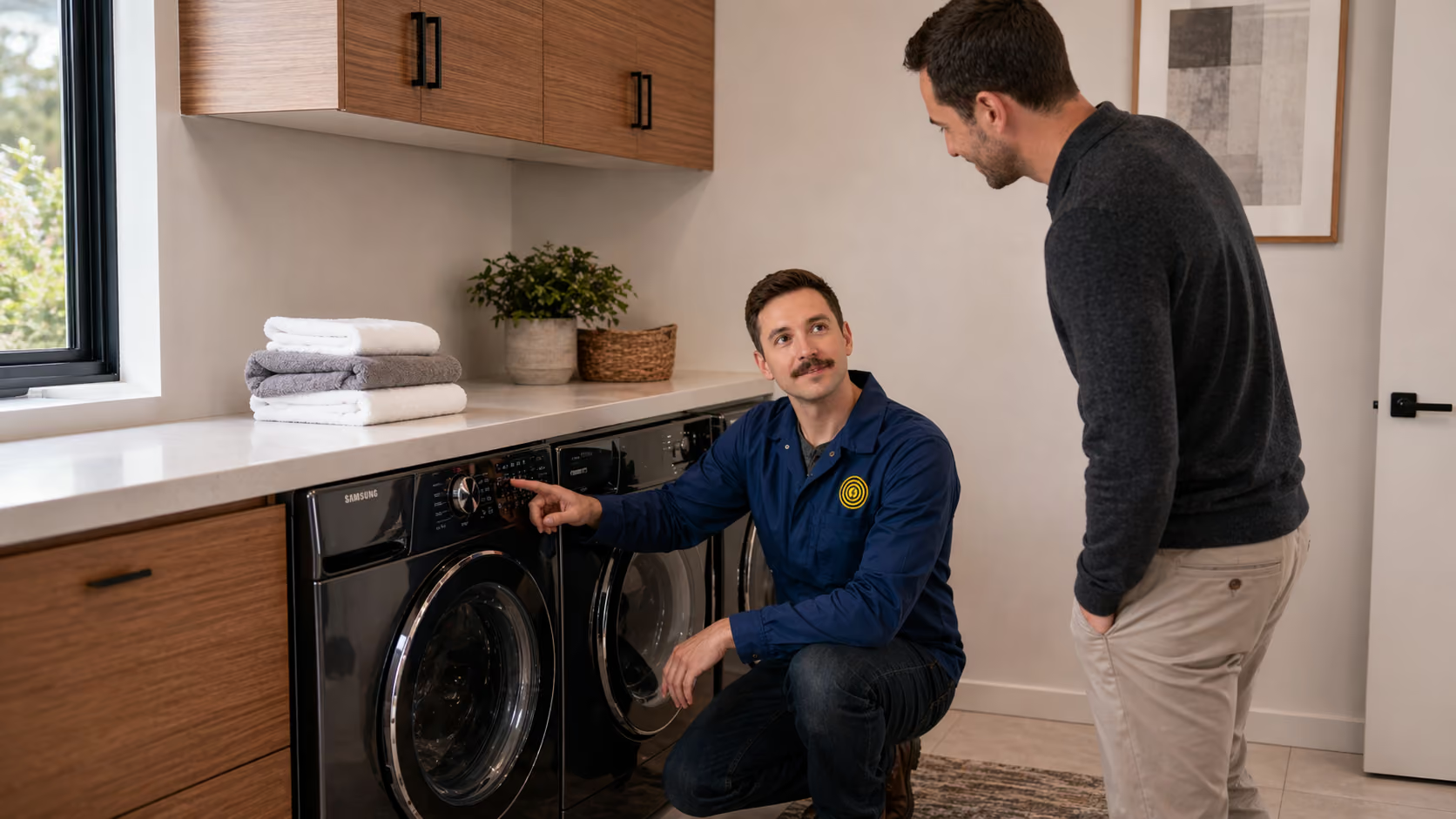
Appliance Repair Pricing — New York City
We believe appliance repair pricing should be predictable and transparent. Every repair begins with a professional diagnosis to identify the actual cause of the problem rather than replacing parts by guesswork. After the diagnosis, you'll receive a written estimate before any repair is performed, so you always know the scope of work and the total cost before making a decision.
Book a diagnostic
Book a diagnostic


+1 (332) 333-1709
43 Duffield St., Brooklyn, NY 11201
Manhattan Appliance Repair
.avif)
Manhattan homes often have compact kitchens, built-in appliances, stacked laundry closets, finished floors, and limited access around the machine. COI available upon request.
Brooklyn Appliance Repair
Diagnostic-first residential appliance repair in Brooklyn for refrigerators, dishwashers, washers, dryers, ovens, ranges, cooktops, and freezers.
HVAC Repair
We diagnose and repair residential HVAC systems across New York City, including central air, heat pumps, mini-splits, air handlers, and thermostats. Our $220 diagnostic fee is credited toward any approved repair.
Q1. Why is the diagnostic visit $99, and what do I get for it?
Volt & Vector Appliance Repair charges $99 for an on-site diagnostic because the goal is verified failure identification, not guessing parts. The diagnostic visit includes symptom confirmation, safe access checks, and a written repair direction with parts and labor separated. Stop the visit if a technician proposes replacing parts before a failure mode is confirmed and documented.
Stop the visit if a technician proposes replacing parts before a failure mode is confirmed and documented.
Q2. Do you start repairs immediately, or do I approve first?
Repairs start only after you approve a written estimate that lists labor, parts (if needed), warranty terms, and any applicable tax line. This prevents “surprise totals” and keeps scope controlled.
Stop if a technician proceeds with work after you said “not yet.”
Q3. Why can’t you quote the total price over the phone?
The same symptom can come from different root causes, and price depends on verified failure mode, access constraints, and correct part identification. A phone quote without verification often turns into an upsell or a wrong-part cycle.
Stop if a company claims a guaranteed total without model/serial verification and a diagnostic plan.
Q4. What info should I send to get the most accurate estimate fastest?
Send appliance type, a clear model/serial photo, a short symptom video, and any error code photo. Those items reduce wrong dispatch, wrong parts, and repeat visits.
Stop DIY and book service if there is gas odor, active leaking, burning smell, or breaker tripping.
Q5. What are the most common “hidden fee” traps, and how do you avoid them?
The common traps are vague “service fees,” undisclosed add-ons, and scope expansion without approval. Avoid them by requiring a written estimate before repair work begins and keeping every charge itemized.
Stop if an invoice contains “misc” lines that were never discussed.
Q6. How do you prevent ordering the wrong OEM part?
Correct parts are matched by the full model/serial and then cross-checked against the exact part number revision/suffix before ordering. If the old part label exists, it should be compared to the replacement reference.
Stop if the replacement would require forcing, trimming, or bracket bypassing.
Q7. Why do some repairs cost more in NYC apartments even on the same brand/model?
Built-in installs, stacked laundry, tight cutouts, and building rules increase labor because safe access and correct reinstall take time. The price difference is usually access and verification work, not “because it’s NYC.”
Stop if someone suggests skipping reinstall alignment, leak checks, or safety verification to cut cost.
Q8. Why do some repairs cost more in NYC apartments even on the same brand/model?
Built-in installs, stacked laundry, tight cutouts, and building rules increase labor because safe access and correct reinstall take time. The price difference is usually access and verification work, not “because it’s NYC.”
Stop if someone suggests skipping reinstall alignment, leak checks, or safety verification to cut cost.
Q9. Why is there sometimes tax on the invoice, and how do I know it’s legit?
Tax is applied only where required and should appear as a separate line item, never blended into labor. If a company can’t explain what is taxed and why, that’s a credibility problem.
Stop if tax appears but the invoice does not clearly separate taxable/non-taxable components.
Q10. What are the scam signals you want customers to watch for?
Fake phone numbers in ads, refusal to provide a written estimate, pressure for full payment upfront, and unclear business identity are major red flags; these are consistent themes in consumer protection guidance.
Use the official website number and insist on written terms before work starts.