Sub-Zero Appliance Repair in NYC


Sub-Zero Appliance Repair in NYC
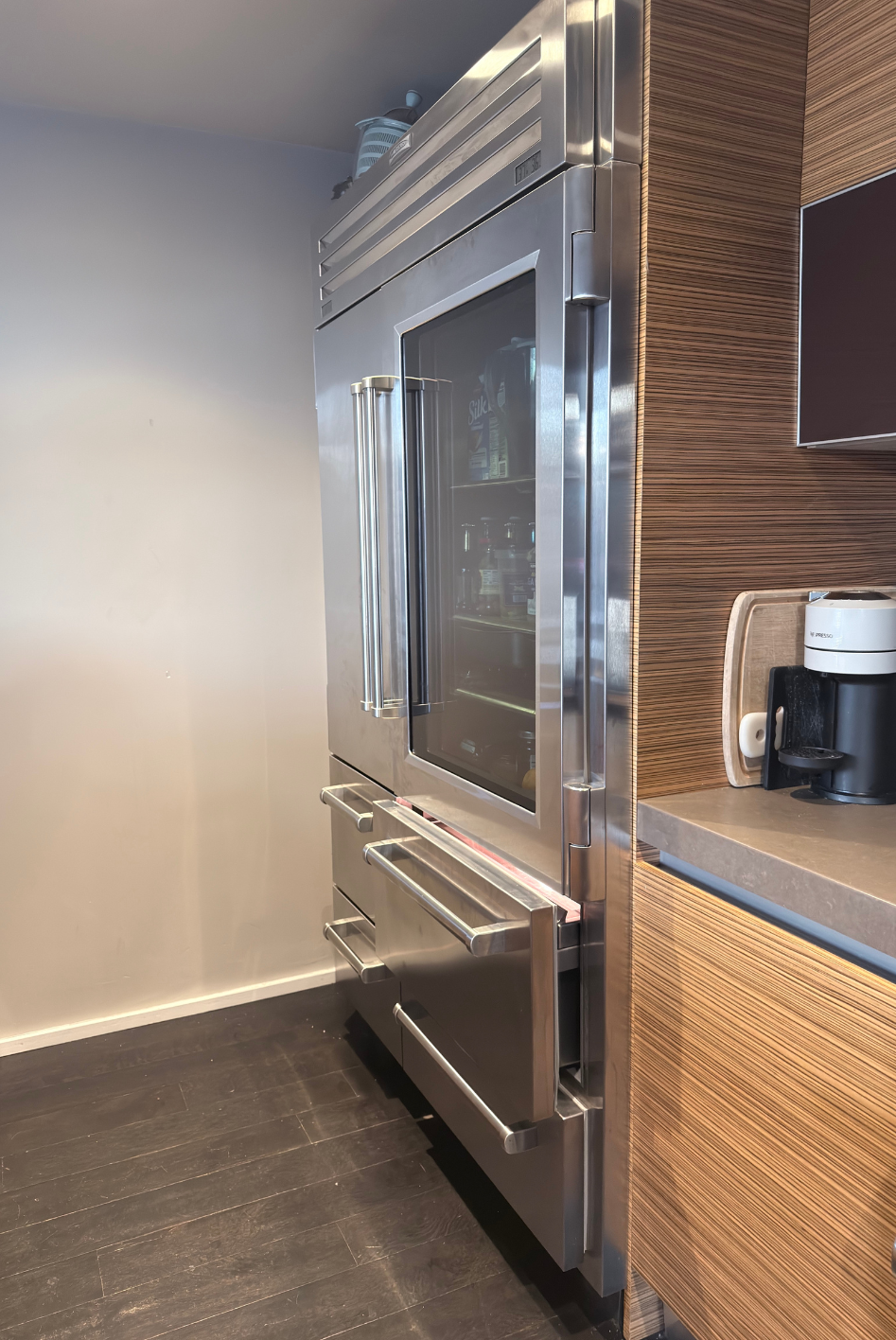
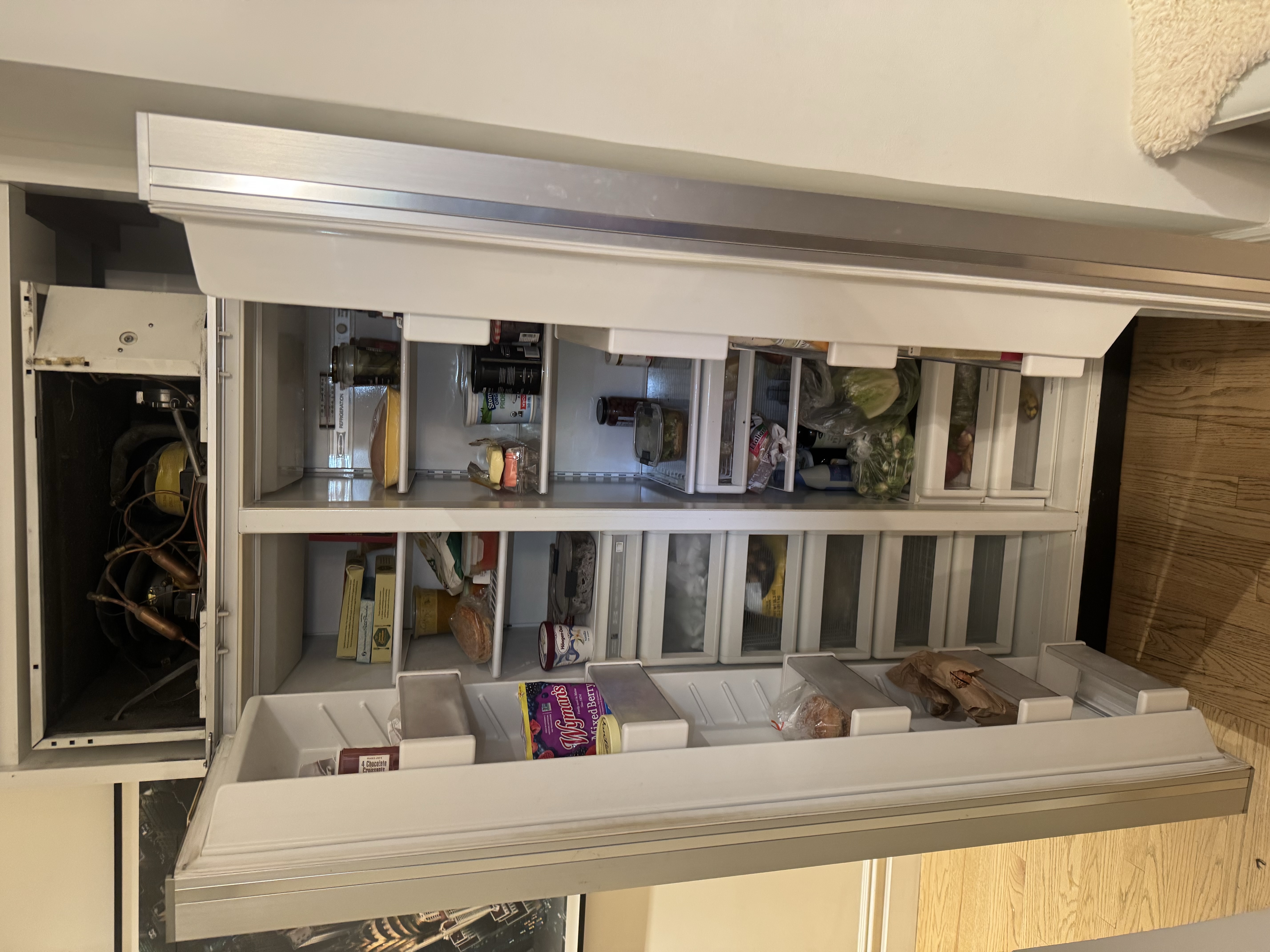
Sub-Zero appliance repair typically starts by mapping symptoms to the right subsystem. Temperature drift often indicates restricted condenser airflow, incorrect sensor readings, or sealed-system inefficiency. Ice-maker problems usually come from water supply issues, a failing inlet valve, fill-tube icing, or optic/switch faults. Fan noise commonly points to evaporator fan wear or ice contact. Water leaks are frequently a blocked defrost drain or loose tubing connections. Frost buildup often suggests door-gasket leakage or a defrost circuit failure. Error codes narrow diagnosis to specific circuits, so confirming the exact model/serial is required before selecting parts or procedures.
Swift Sub-Zero appliance repairs in NYC, backed by a $99 diagnostic fee credit and a 180-day warranty.
Serving Brooklyn & Manhattan


9:00 AM – 6:00 PM
Quick Answers
- Question: Do you repair built-in and integrated Sub-Zero refrigerators in NYC kitchens?
Answer: Yes. Most Sub-Zero refrigeration is built-in or integrated, so we confirm the exact model platform from a model/serial photo before dispatch to avoid access and parts mismatches. - Question: My Sub-Zero is running but not holding temperature. What do you verify first?
Answer: We verify actual compartment temperatures (not just the display), condenser heat rejection, evaporator airflow, and defrost behavior to isolate whether it’s airflow, defrost, sensing, or a sealed-system load issue. - Question: If my Sub-Zero freezer has frost or ice buildup, is it always a “defrost problem”?
Answer: Not always. We separate door seal/alignment moisture load from true defrost/airflow faults by checking frost pattern, fan operation, and how the unit behaves under normal load after stabilization. - Question: My Sub-Zero is loud or runs nonstop. What are the most common root-cause classes?
Answer: In NYC, the repeat offenders are restricted ventilation/dirty condenser loading, airflow restriction from ice or blocked returns, fan wear, and temperature regulation issues that keep the system chasing setpoint. - Question: There’s water under the unit or inside the refrigerator. What do you check on-site?
Answer: We trace the leak path (defrost drain, door-sweat/condensation, icemaker fill, supply line) and confirm with flow and drainage checks so we fix the cause—not just dry it up. - Question: Can I safely do anything before calling for service?
Answer: Yes—basic condenser/airflow and door sealing checks are high-value and safe. If you have active leaking, burning smell, or breaker trips, stop and schedule service.
Sub-Zero refrigeration is precision temperature control plus airflow management inside tight cabinetry. In NYC, the “real” failures are usually not mysterious—they’re often heat rejection constraints at the condenser, airflow restriction from ice/frost patterns, sensor/regulation drift, or door seal/alignment issues that add humidity load and destabilize temperatures.
Volt & Vector is diagnostics-first. We verify actual compartment temperatures, airflow and fan performance, defrost behavior, drainage, and electrical loads before recommending a repair path—so you avoid wrong parts and the fix holds under normal use.
Schedule Sub-Zero service
Call: +1 (332) 333-1709
Email: voltnvector@gmail.com
Sub-Zero Repair NYC At a Glance
- Service: Sub-Zero refrigerator and freezer diagnostics and repair
- Coverage: Brooklyn, Manhattan below 96th St, selected Queens ZIPs
- Appliances: Built-in, integrated, panel-ready, and select undercounter refrigeration
- Approach: Measurement-based diagnosis (temps, airflow, defrost, drain, load behavior)
- Building access: COI available for building management
Quick Facts (NYC-Ready)
- $99 diagnostic fee (credited toward repair if you move forward)
- 180-day parts & labor warranty
- OEM parts only
- Arrival windows: 9–11 / 11–1 / 1–3 / 3–5
Service Area (NYC)
- Brooklyn: Residential service
- Manhattan: Below 96th Street
- Queens: Selected ZIPs
What We Service (Sub-Zero)
- Built-in Sub-Zero refrigerators
- Built-in Sub-Zero freezers
- Integrated columns (refrigeration/freezer columns)
- Panel-ready refrigeration (door/panel alignment and sealing issues included)
- Undercounter refrigeration where applicable
If you’re unsure, send a photo of the model/serial tag and any displayed code; we will confirm scope before dispatch.
Common Sub-Zero Problems We Repair (by category)
Not cold enough, warm compartments, or temperature alarms
- What you notice
- Food softening in the freezer or “not as frozen”
- Refrigerator swings warm during busy door-opening periods
- Alarm conditions that return after resets
- Long run times without recovery
- What we test
- Actual temps over time (stabilized readings, not instant checks)
- Condenser condition and heat rejection under load
- Evaporator airflow and fan operation (including under load)
- Defrost cycle behavior and frost pattern
- Sensor response and control decisions (how it reacts to load)
- What verification looks like
- Temperature recovery and stability after normal door openings
- Airflow and fan performance confirmed while running under load
Frost buildup, ice patterns, or restricted airflow
- What you notice
- Frost on back wall or vents
- Ice buildup that slowly reduces cooling performance
- Freezer “works sometimes” then warms
- Noisy airflow or weak air movement
- What we test
- Frost pattern mapping and airflow return path checks
- Evaporator fan behavior (starts, speed, noise, vibration)
- Defrost function and drain performance
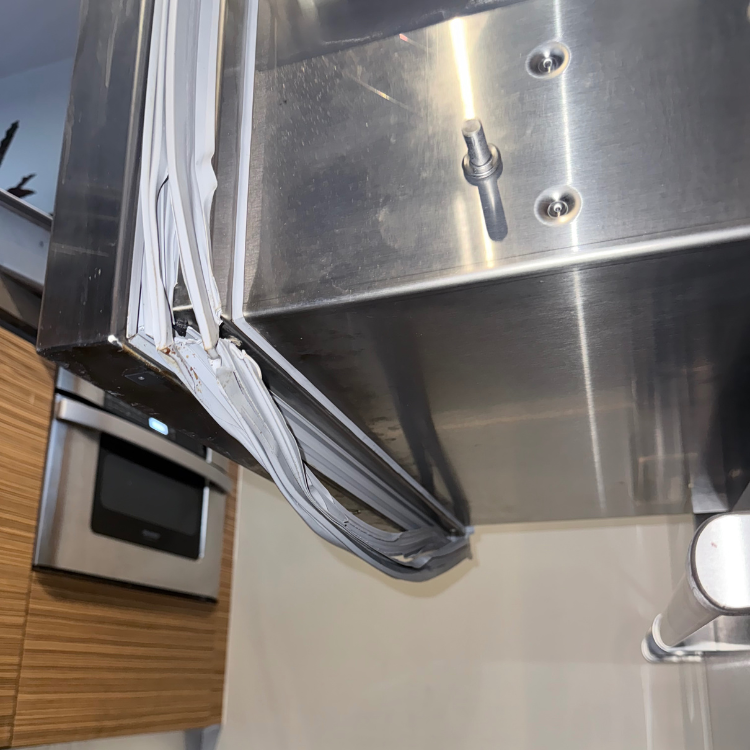
- Door seal condition and alignment (moisture load)
- What verification looks like
- Even airflow after defrost behavior is confirmed
- No rapid re-frosting in the same pattern after normal use
Icemaker not making ice or slow ice production (when part of the unit)
- What you notice
- No ice, small cubes, or intermittent production
- Water taste/clarity changes or air in line symptoms
- Leak traces near the icemaker area
- What we test
- Water supply integrity (pressure/flow behavior) and fill performance
- Fill valve actuation and cycle behavior
- Ice bin sensing and shutoff logic
- Leak tracing at connections and fill path
- What verification looks like
- Consistent fill and harvest cycle completion
- No seep/drip at the supply path after multiple cycles
Water leaks, pooling, or interior dripping
- What you notice
- Water on the floor near the grille/toe-kick
- Water under drawers or pooling inside
- Ice sheet formation in the freezer bottom area
- What we test
- Defrost drain flow and obstruction checks
- Condensation paths, door seal integrity, and door closure
- Icemaker fill and supply line routing
- Drainage behavior during and after defrost
- What verification looks like
- Drain clears and stays clear through repeat checks
- No recurrence after normal usage cycles
Noisy operation, vibration, or “runs all the time”
- What you notice
- Rattling at the grille area or cabinet vibration
- Fan noise changes with door openings
- Unit runs constantly with minimal temperature improvement
- What we test
- Condenser fan and evaporator fan noise/load behavior
- Airflow restriction points (ice, blocked returns, tight cabinetry)
- Condenser cleanliness and heat rejection performance
- Control response to stabilized temperature readings
- What verification looks like
- Normalized run cycles after airflow/heat rejection is corrected
- Noise/vibration reduction confirmed during sustained operation
Symptom to Diagnosis Map (On-Site Confirmation)
- Symptom: Refrigerator warm but freezer “kind of” cold
Likely cause class: Airflow restriction or defrost-related restriction
How we confirm on-site: Frost pattern, evaporator airflow checks, fan behavior under load, defrost behavior - Symptom: Freezer warm, refrigerator also drifting warm
Likely cause class: Heat rejection constraint or system-wide performance loss
How we confirm on-site: Condenser condition, heat rejection under run load, stabilized temperature behavior - Symptom: Temperature alarms that return after reset
Likely cause class: Regulation/sensing drift or load issue not resolved by reboot
How we confirm on-site: Sensor response checks, real temperature logging, control decision behavior - Symptom: Frost builds up quickly after being cleared
Likely cause class: Door seal/moisture load or defrost/airflow fault
How we confirm on-site: Seal/alignment inspection, frost pattern mapping, defrost drain and cycle checks - Symptom: Loud fan noise or “air whooshing” changes over time
Likely cause class: Fan wear, obstruction, or ice interaction
How we confirm on-site: Fan spin/noise/vibration under load, obstruction checks, ice contact signs - Symptom: Water on the floor at the front
Likely cause class: Drainage issue or supply line/icemaker leak path
How we confirm on-site: Drain flow test, leak trace at connections, cycle-based observation - Symptom: Water pooling inside fresh food section
Likely cause class: Condensation path issue, drain restriction, or seal problem
How we confirm on-site: Drain routing checks, door closure/seal inspection, condensation pattern - Symptom: Ice maker not producing ice but water dispenses (if applicable)
Likely cause class: Fill/harvest cycle fault or sensing/shutoff logic issue
How we confirm on-site: Fill actuation observation, cycle completion behavior, bin sensing verification - Symptom: Unit runs nonstop, kitchen feels warm near the grille
Likely cause class: Condenser loading / ventilation constraint
How we confirm on-site: Condenser cleanliness, airflow at grille, heat rejection performance while running - Symptom: Freezer items are soft, but display looks normal
Likely cause class: Display vs actual temperature mismatch, airflow/defrost instability
How we confirm on-site: Stabilized thermometer readings, airflow checks, behavior across door-open cycles - Symptom: Doors hard to close or “pop open” slightly
Likely cause class: Alignment, hinge, or panel/closure interference
How we confirm on-site: Door seal contact check, hinge/alignment verification, cabinet/panel interference check - Symptom: Intermittent cooling improves after power cycle, then fails again
Likely cause class: Regulation/control path or intermittent airflow restriction
How we confirm on-site: Control response testing, fan/defrost behavior, repeatability under load
Why Sub-Zero Issues Are Often Installation-Sensitive in NYC
- Built-in cabinetry can restrict condenser airflow and heat rejection, causing long run times and temperature drift
- Tight grille access makes condenser cleaning and inspection harder, so loading issues persist unnoticed
- Panel-ready door setups can create seal and alignment problems that add humidity load (frost and temperature swings)
- High-rise constraints: access windows, elevator timing, and limited work area affect how diagnostics and repairs must be staged
- Water supply routing for icemakers can be kinked, stressed, or subject to slow seep leaks inside toe-kick areas
- Noise/vibration can transmit through cabinetry, so minor fan or mounting issues become obvious in apartments
How Sub-Zero Service Works
- Pre-check by text/call: model/serial photo, symptom description, any alarm/code photo, and when it happens (constant vs intermittent).
- On-site diagnostics: measure real temps, check condenser/airflow, evaluate frost/defrost patterns, inspect drains and door sealing.
- Clear repair path: root-cause class, what to fix now vs what to monitor, and whether parts are required.
- Repair + verification: confirm stability under load (temperature recovery, airflow performance, and repeat checks where relevant).
- Closeout notes: what changed, what to watch for, and what to send if symptoms recur.
What to Send for Faster Scheduling
- Photo of the model/serial tag
- Photo of any alarm, code, or flashing indicator
- What you observe (warm, frost, noise, leak) and which compartment
- When it happens (constant, overnight, after heavy use, intermittent)
- Install type (built-in, integrated/panel-ready, undercounter) and any recent changes (moving, remodel, power event)
Real Case Logs (NYC)
Example scenarios based on common Sub-Zero refrigeration patterns in NYC kitchens:
- Symptom: Refrigerator warm, freezer borderline
What we checked: condenser loading, evaporator airflow, frost pattern
Root cause class: airflow restriction / defrost-related restriction
How confirmed: weak airflow with consistent frost pattern under load
Fix path: restore airflow/defrost function and verify temperature recovery - Symptom: Freezer soft items, alarm returns after reset
What we checked: stabilized temps vs display, control response, airflow
Root cause class: regulation/sensing mismatch or unstable control behavior
How confirmed: actual temps drifting despite “normal” display behavior
Fix path: correct regulation pathway and re-verify over a sustained run - Symptom: Water at front toe-kick area
What we checked: defrost drain flow, icemaker supply path, leak tracing
Root cause class: drain restriction or slow supply seep
How confirmed: water path traced during cycle/flow checks
Fix path: clear/restore drain or correct supply path and verify dry operation - Symptom: Loud fan noise that changes with door openings
What we checked: evaporator fan behavior, obstruction/ice interaction
Root cause class: fan wear or intermittent obstruction
How confirmed: noise and vibration under load with repeatable trigger
Fix path: correct airflow path and verify stable fan operation
Error Codes (Quick Reference, Not a Parts List)
Sub-Zero code formats vary by series and configuration. A model/serial photo plus the exact code/alarm lets us interpret it correctly for your platform and avoid wrong-part guessing.
Before You Call (Safe, High-Value Checks)
Stop and schedule service if you have burning smell, repeated breaker trips, or active water leaking that risks flooring or cabinetry.
Otherwise, these are safe checks that often clarify the root cause:
- Confirm doors fully close and nothing is preventing sealing (bins, shelves, oversized items)
- Check the grille area is not blocked and airflow is not restricted by nearby items
- If accessible and safe, gently remove dust from the condenser/grille area (do not force panels)
- Note whether the issue worsens after heavy door opening versus constant drift
- Look for obvious frost patterns that suggest airflow restriction (don’t chip ice with tools)
- Record alarms/codes before any reset (resets can erase useful context)
- Verify the unit is not set to an unintended mode and that setpoints are reasonable
- If you have an icemaker issue, confirm the water supply valve is open and the line isn’t visibly kinked (do not pull the unit out without proper access)
FAQ
Do you handle panel-ready and fully integrated Sub-Zero units?
Yes. For integrated setups, we focus heavily on access, sealing, alignment, and ventilation because small installation variables can look like “mysterious cooling problems.”
What does the diagnostic visit cover?
Measurement-based checks: real temperatures, airflow and fan performance, defrost behavior, drainage, and control response—enough to identify the root-cause class and the correct repair path.
Do you use OEM parts?
Yes—OEM parts only.
Can you provide COI for building management?
Yes—COI is available for building management requests.
When should I stop DIY and call?
If you have alarms that return, temperature drift that doesn’t stabilize, recurring frost, unusual noise that persists, or any leak risk—those are cases where on-site confirmation prevents wrong-part replacements.
What should I send to avoid scheduling the wrong service?
Model/serial photo, any code/alarm photo, and a one-line symptom description (which compartment, when it happens).
Schedule Sub-Zero Appliance Repair (NYC)
Call +1 (332) 333-1709
Email voltnvector@gmail.com
1. Schedule your visit
2. On-site diagnostic
3. Approve & repair
4. Done & covered
COI (Certificate of Insurance)
Available on request - usually not required in Brooklyn, but often asked for in Manhattan buildings and co-ops. Please remember that certain issues can come from incorrect use or installation, not from parts failure - our technicians will always point that out and show how to prevent it in the future.
Warranty & Compliance
Every repair is covered by a 180-day warranty on both parts and labor. If the appliance is older, keep in mind that some surrounding components can wear out over time — sometimes one repair leads to another part showing its age. We always explain options clearly before doing extra work.
Safety & Courtesy Protocol
We treat every visit like we’re guests in your home. Technicians wear shoe covers or remove footwear when entering, and we always clean up after the job. If you notice a little dust or debris left behind - our apologies - each tech handles 3-5 appointments per day and works to stay on schedule. If your window was 11-1, the technician usually arrives closer to 11; if running late, we’ll text you right away. Our goal is simple: work clean, stay safe, and respect your space and time.
Coverage
We cover Brooklyn—Downtown, Brooklyn Heights, Park Slope, Williamsburg, Greenpoint, Bed-Stuy, Carroll Gardens, Prospect Heights, and Flatbush—and Manhattan (below 96th Street)-FiDi, Battery Park, Tribeca, SoHo, Chelsea, Midtown, UES, UWS, Gramercy, and the Village. You’ll receive a text alert ~30 minutes before arrival.
Why Volt & Vector
We’ve spent years working inside large NYC repair companies - seeing how real technicians get buried under rushed schedules, fake “same-day” promises, and endless call-center noise. Volt & Vector grew out of that frustration. We wanted a place where diagnostics still matter, where techs can take time to do the job right and talk to people directly. We’re not calling ourselves perfect - far from it - but we’re building the kind of service we always wanted to work for: respectful, transparent, and run by people who actually fix things.
Pricing & Diagnostic Policy
Our diagnostic visit is always billed at the first appointment - that’s the starting point for every repair. After the visit, the technician sends full details to our service desk. Sometimes the tech can give a price range on-site, but we’re moving away from instant quotes - parts pricing changes like crypto these days, and we’d rather stay accurate than promise the wrong number.
Washer Repair
Door won’t lock, won’t drain, leaks at boot/gasket, loud spin (bearings), vibration, error codes.
No agitation, won’t spin, grinding, clutch/gearcase issues, lid switch faults, off-balance cycles.
Poor wash performance, won’t sense/load properly, drain/spin faults, suspension issues, control errors.
Tight installs, small pumps/filters, door lock issues, slow drain, leaks, vibration, control faults.
Stacked access constraints, vibration/noise, drain errors, door lock, leaks—disassembly often required.
Won’t wash/drain, won’t dry, overheating, airflow/condensing issues, pump faults, frequent error codes.
Fill/drain problems, inlet valve issues, hose leaks, weak spin, small pump clogs—parts vary by model.
Dryer Repair
Door won’t lock, won’t drain, leaks at boot/gasket, loud spin (bearings), vibration, error codes.
No heat or weak heat, igniter/flame issues, gas valve problems, airflow/vent blockage, cycling faults.
Not drying, water not collecting/draining, clogged condenser path, pump issues, overheating errors.
Very long cycles, no/low heat, refrigerant circuit/HP module faults, sensor errors, condensate drain issues.
Tight installs, long dry time, noisy drum, heater/sensors, airflow and lint channel restrictions.
Vibration/noise, no heat, long dry times—access/disassembly constraints are common in stacks.
Shared cabinet access, belt/idler noise, heater/thermostat faults, control issues—service is more involved.
No heat, weak airflow, thermal cutoffs, noise—model-specific parts and venting constraints.
Dishwasher Repair
Won’t drain, leaks, not cleaning, not drying, loud wash motor, door won’t latch, error codes.
Drain issues, weak wash, leaks, heater/drying faults, tight cabinet access, model-specific parts.
Door alignment/latch issues, leak at door seal, wash/dry faults, control errors—panel/fitment affects operation.
Not draining, poor wash, no heat/dry, circulation pump noise, inlet/fill faults, error codes.
Door/latch alignment, leaks, drain/wash faults—fitment and toe-kick clearance often matter.
Drain errors, lid seal leaks, actuator faults, fill issues, wiring in slides, frequent cycle interruptions.
Fill/drain problems, weak wash, leaks at hoses, heating faults—quick diagnosis, limited parts support by brand.
Faucet adapter leaks, fill/drain faults, pump noise, wheel/base issues—setup and hose routing are common causes.
Not heating, not filling, drain faults, wash pump issues, door switch problems—cycle time and sanitizing temp checks.
Cooktop Repair
Burners won’t ignite, clicking nonstop, weak flame, gas smell, uneven heat, knobs/valves issues.
Element won’t heat, intermittent heat, burner stays on, sparking at receptacle, switch failures.
One zone not heating, dual/bridge zone failures, heat stuck on, cracked glass, indicator light issues.
Not detecting pan, shuts off, error codes, fan noise, uneven power, touch controls unresponsive.
Uneven heat, ignition issues (gas), sensor/thermostat faults, module-specific controls, performance drop.
Fan not running, weak suction, loud vibration, stuck controls, grease/lint buildup affecting airflow.
Won’t heat, temp unstable, hotspotting, sensor/thermostat faults, control/safety cutoffs.
Single-zone failures, ignition/control faults, tight cutout access, module-specific parts and wiring.
Access and removal vary by install—wiring/gas connection layout affects service time.
Ignition, flame quality, and cleaning-related blockages differ—diagnosis depends on burner design.
Range Repair
Oven won’t heat, weak bake/broil, ignition/clicking, uneven flame, gas smell, temp swings.
No heat, slow preheat, element failures, breaker trips, temp inaccurate, control/relay issues.
Burner ignition/flame issues plus oven heating/sensor faults—two systems, different failure modes.
Cooktop not detecting pans, error codes, shuts off, fan noise, touch panel problems, power module faults.
Oven not heating, cooktop issues, drawer/door problems, control failures—standard pull-out access.
Fitment/leveling affects gaps and heat; oven/cooktop faults plus install constraints during removal.
More involved access/removal; wiring/venting constraints common; oven heating and control issues.
High-output burners, ignition modules, convection fans, temperature control, heavy units and tight installs.
Bake/broil failures, temp calibration issues, door seal leaks, fan/igniter/element faults.
One oven not heating, uneven temps between cavities, shared controls/relays, fan and sensor faults.
Uneven heat, ignition/valve issues (gas), thermostat/sensor faults, module-specific parts and wiring.
Oven Repair
Won’t heat, slow preheat, temp inaccurate, door won’t close, error codes, control/relay issues.
One cavity not heating, uneven temps between ovens, shared controls, fan/sensor faults, error codes.
Oven heat issues plus microwave/Speed functions failing, cooling fan errors, interlock and control faults.
Bake/broil not working, temp swings, ignition/element faults, door seal leaks, control failures.
Heating and control faults plus tight-fit install constraints; leveling and ventilation can affect performance.
Tight cabinet installs, cooling fan/overheat faults, control issues, door alignment and airflow constraints.
No ignition, weak heat, uneven bake, gas smell, igniter/valve issues, temp regulation faults.
No heat, slow preheat, element failures, breaker trips, temp sensor faults, relay/control issues.
Fan not running, uneven cooking, noisy fan, overheating, temp drift, control/sensor faults.
Rear element/fan faults, weak convection heat, uneven bake, overheating errors, airflow restrictions.
No steam, water not pumping, leaks, descaling faults, temp errors, steam generator issues.
Tight installs, cooling fan errors, no heat/temp drift, door issues, model-specific parts.
Not warming, temp too hot/cold, drawer switch issues, heating element/control faults.
High-heat performance issues, ignition/element faults, convection system problems, heavy-unit access constraints.
Refrigerator Repair
Warm fridge or freezer, heavy frost, noisy fan, defrost failure, door seal leaks.
Warm fridge, ice on back panel, drain clogs/leaks, evaporator fan noise, airflow/defrost issues.
One side warm, weak ice/water, dispenser problems, damper/defrost/control faults, fan noise.
Warm fridge, ice maker not making ice, water leaking, fan noise, drawer/door seal issues.
Warm temps, restricted airflow, condenser access/cleaning limits, door alignment and gasket leaks.
Cooling performance issues, fan noise, defrost/drain faults, sealed-system vs control diagnosis, tight access.
Door alignment/seal problems, cooling issues, fan noise—panel weight/fitment affects operation.
Not cooling, frost patterns, fan noise, defrost failures, sensor/control issues.
Not holding temp, icing, drain leaks, fan/compressor faults, airflow and coil restrictions.
Not cooling, icing, loud compressor, thermostat/control faults, limited airflow.
Temp won’t hold, condensation, fan noise, control faults, sealed-system failures in some units.
Not cooling, frost/ice buildup, drawer seal issues, fan noise, control/defrost faults.
Wolf Appliance Repair Service
Read More

Sub-Zero Appliance Repair Service
Read More

Sub Zero appliance repair commonly involves cooling and ice maker problems like warm fridge or freezer, frost buildup, water leaking, loud fan noise, or no ice. Service starts by verifying model details, then checking airflow, defrost operation, fans, sensors, sealed system performance, and control response.
Bertazzoni Appliance Repair Service
Read More

Bertazzoni appliance repair commonly involves burners not igniting, weak or uneven flame, oven not heating properly, temperature swings, error codes, or control issues. Service starts by verifying model details, then checking gas supply or power, ignition components, valve operation, temperature sensing, and control output.
Viking Appliance Repair Service
Read More

Viking appliance repair commonly involves burners not igniting, uneven oven heat, broiler failure, temperature swings, error codes, or continuous clicking. Service starts by verifying model details, then checking gas supply or power, ignition parts, valves, sensors, and control output.
Bosch Appliance Repair Service
Read More

Bosch appliance repair commonly involves dishwasher drain errors, poor cleaning, leaks, fridge cooling issues, or dryer not heating. Service starts by verifying model details, then checking pumps, valves, sensors, airflow or water flow, electrical supply, and control response before recommending parts.
Electrolux Appliance Repair Service
Read More

Electrolux appliance repair commonly involves washer not draining, dryer not heating, fridge not cooling, leaks, unusual noise, or error codes. Service starts by verifying model details, then checking pumps, heaters, airflow, seals, sensors, electrical supply, and control response before recommending parts.
HVAC Repair
Warm fridge or freezer, heavy frost, noisy fan, defrost failure, door seal leaks.
Warm fridge, ice on back panel, drain clogs/leaks, evaporator fan noise, airflow/defrost issues.
One side warm, weak ice/water, dispenser problems, damper/defrost/control faults, fan noise.
Warm fridge, ice maker not making ice, water leaking, fan noise, drawer/door seal issues.
Warm temps, restricted airflow, condenser access/cleaning limits, door alignment and gasket leaks.
Volt & Vector Appliance Repair provides residential appliance repair in New York City & Brooklyn with a diagnostics first workflow. We verify the failure mode on site (electrical, mechanical, airflow, water management, controls) before recommending parts or repair steps. The goal is a confirmed root cause, fewer repeat visits, and fewer wrong part orders.


.png)


.jpg)
.png)


.avif)