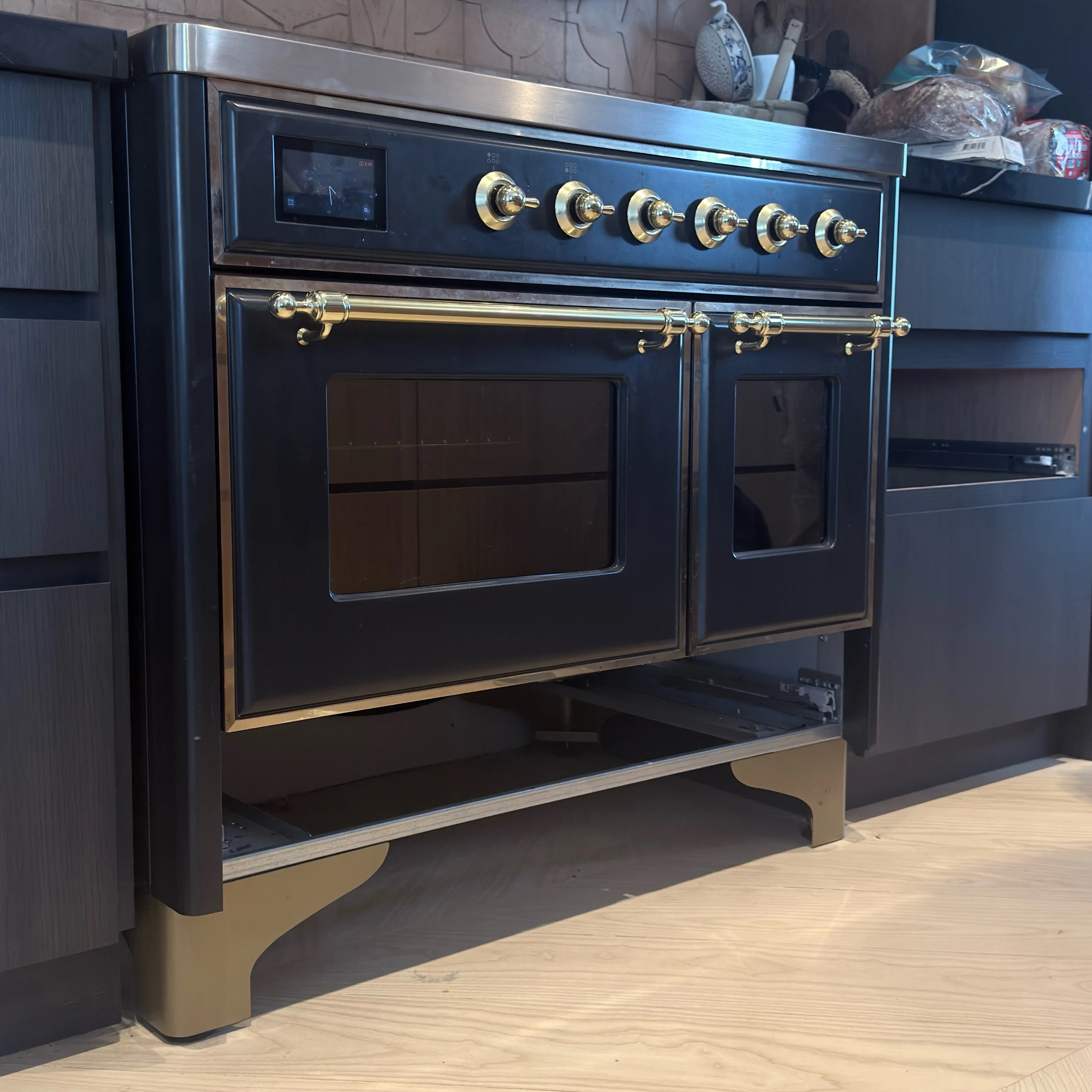
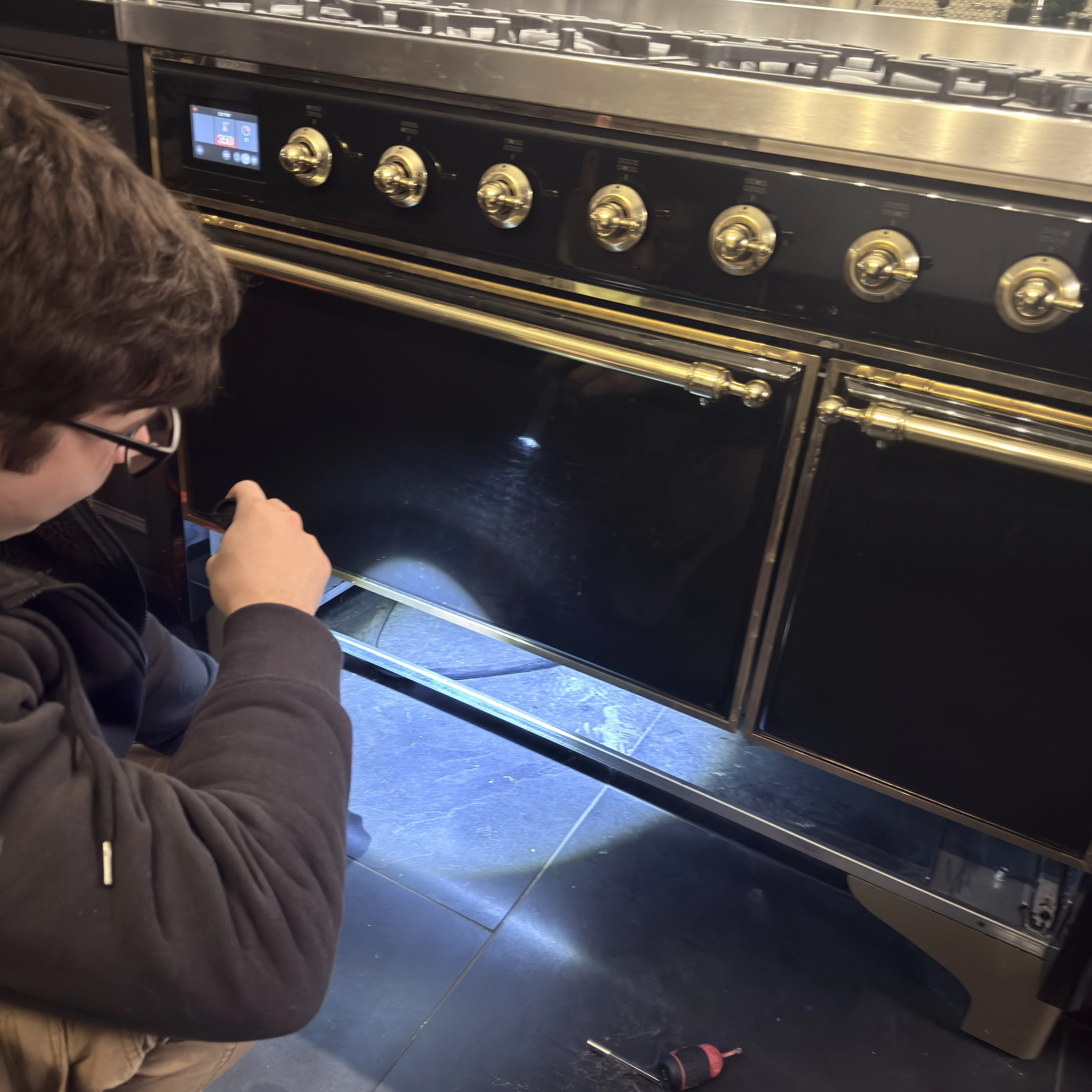


ILVE ranges and ovens are premium, high-heat machines with European-style gas trains, igniters, safety valves, thermostats, and control systems that behave very differently from mass-market appliances. When an ILVE unit starts acting up—weak ignition, uneven bake, burners that won’t hold flame, a hot-spot that develops over time, or a control that becomes intermittent—the right fix depends on verifying the failure mode, not guessing. Volt & Vector approaches ILVE service the way Google rewards: practical, measurable diagnostics first. We confirm gas pressure and ignition behavior, verify thermostat and sensor readings, test safety circuits, and isolate whether the problem is combustion, regulation, airflow/venting, or control logic—then we quote the repair with clear next steps.
Brooklyn: Prospect Heights, Clinton Hill, Boerum Hill, Park Slope, Carroll Gardens, Cobble Hill, Kensington, Bushwick (West), Greenwood Heights, Prospect Lefferts Gardens, Windsor Terrace, Bedford–Stuyvesant, Crown Heights, Fort Greene, Brooklyn Heights, DUMBO, Greenpoint
Queens: Middle Village, Rego Park, Forest Hills, Fresh Meadows, Whitestone, North/Broadway Flushing, College Point
Manhattan: Below 96th Street
Common Symptoms → Likely Causes (service-facing, not marketing)
ILVE Error Codes & Alerts provide essential guidance for troubleshooting issues with your appliance. These codes are not standardized across all ILVE models, meaning that some units may display clear messages like lockout or child lock alerts, while others might show induction hob codes or no meaningful codes at all. It's crucial to use these codes as a starting point, aligning them with your specific model and the appliance's current behavior before proceeding with any part replacements.
ILVE error codes are not universal across all models. Some ILVE platforms show clear messages (lockout/child lock), some show induction hob codes, and some models don’t display meaningful codes at all. The right way to use a code is to treat it as a starting point, then match it to your exact model/platform (and what the appliance is physically doing) before replacing parts.
N - - 0 (Child Lock / control lock active)
FLTOA (Flame lockout — gas models)
ERR (Celsius/Fahrenheit mismatch / over-limit setting)
E (External error / unsuitable cookware)
E1 / E2 (Power supply voltage abnormal — too low / too high)
E5 / E6 (Power card fault / internal temperature sensor fault)
E9 (Inductor sensor damaged / poor heat radiation)
U (Pan detection / sensor fault — some Majestic II platforms)
These typically point to specific internal sensors/boards, and “DIY resets” won’t solve the root cause if the code returns.
E00-1 / E00-2 — cavity temperature probe open circuit (PT1000/NTC)
E01-1 — cavity probe short circuit
E19-1 / E19-2 — incorrect power board configuration for TFT display
E20-1 / E20-2 — communication error between display board and main power board
E47 — display unit damaged
If you see a code on an ILVE, the fastest path is:
ILVE ranges and ovens are high-output appliances with European gas components, tight combustion tolerances, and controls that are sensitive to power quality, heat, and installation details. In NYC kitchens—tight cabinetry, short clearances, heavy use, and building gas/power quirks—small issues tend to show up as repeatable symptoms: ignition that becomes inconsistent, burners that won’t hold a stable flame, ovens that drift off temperature, or controls that work “sometimes.” Because one symptom can have multiple root causes (gas supply, ignition, safety circuit, airflow/venting, thermostat/sensor drift, or a control board), proper diagnosis is about matching the behavior of the unit to the correct failure mode—not swapping parts until it improves.
What you notice: clicking without ignition, needs multiple tries, lights only with a lighter, or sparks but no flame.
What it commonly points to (depending on model):
NYC note: Burners that fail mostly during peak cooking times can be a gas-supply/pressure stability issue—not always an igniter.
What you notice: burner ignites then shuts off, you have to hold the knob longer, or flame cuts out randomly.
Most frequent causes:
This category matters because it’s both a usability and safety issue—stability must be verified under real heat.
What you notice: yellow flame, soot on cookware, smell of gas, or flames that lift/blow.
What it commonly points to:
Safety note: If you smell gas, shut off the burner, ventilate, and stop using the appliance until it’s inspected.
What you notice: long preheat, temperature swings, bakes unevenly, or the oven shuts off mid-cycle.
What it commonly points to:
Experience note: “It gets hot” isn’t the same as “it regulates correctly.” The key is measured cycling behavior at operating temperature.
What you notice: broiler won’t ignite, only one side heats, or browning is inconsistent.
What it commonly points to:
What you notice: functions work sometimes, display glitches, or certain modes won’t engage.
What it commonly points to:
NYC note: Many “random” control complaints are actually heat-management or power-supply problems in the cabinet.
What you notice: hot spots around the door, uneven baking, door feels loose, or gasket looks compressed.
Most frequent causes:
What you notice: loud fan, rattling, or convection mode that doesn’t improve baking.
What it commonly points to:
Case Log 1: “Burner clicks but won’t light” — Spark was present but weak under heat; correcting the ignition path + replacing the failing component restored first-try ignition.
Case Log 2: “Burner lights then drops out” — Flame stability didn’t satisfy the safety circuit; cleaning/realigning the sensing area and correcting gas flow stabilized operation.
Case Log 3: “Oven temperature swings / uneven baking” — Regulation drift confirmed by measured temps; correcting the sensing/regulation fault brought baking back into spec.
Case Log 4: “Control works intermittently” — Heat buildup behind the panel and a marginal connection caused random failures; fixing the heat/connection issue stopped repeat shutdowns.
We service ILVE ranges, freestanding ovens, cooktops/rangetops, and range-hood related issues that affect cooking performance (airflow, make-up air constraints, venting interference). Most NYC calls are ILVE gas ranges and dual-fuel ranges.
The repeat offenders are ignition reliability, burner flame stability, oven temperature regulation, convection fan noise, and control/intermittent behavior caused by heat buildup behind the panel in tight cabinetry.
Model number, gas type (Natural Gas or LP), a short video of the symptom (ignition, flame, oven cycling), and a photo of the rating plate if accessible. If it’s a built-in/tight install, also send a photo of the sides/clearances and the shutoff valve location.
Usually on a rating label behind the storage drawer, on the oven frame (door jamb area), or near the rear panel depending on the platform. If you can’t access it safely, send photos of the front + control panel and we’ll help identify the model family.
Most often it’s a spark path issue (electrode position, contamination, cracked ceramic) or a gas delivery issue (blocked ports, injector/orifice restriction). The fix depends on whether you have strong spark with no flame, or weak/no spark.
Continuous clicking usually means the electrode is wet/dirty, the spark is tracking to ground incorrectly, or the flame pattern isn’t stable at the electrode. Cleaning alone sometimes helps, but repeated behavior typically needs alignment/inspection.
That pattern points to flame stability/safety confirmation problems: weak gas flow, sensor/thermocouple-style issues (platform dependent), or a valve/regulator behavior that drops output once the knob is released. It’s a safety-related symptom and should be corrected, not “worked around.”
Occasional orange flicker can be normal (humidity, airborne particles), but persistent yellow flame, soot, or strong odor usually means air–fuel mix is off or ports are restricted. That needs inspection because it affects combustion quality and can produce soot/CO risk.
Turn the burner off, ventilate, and stop using the appliance. If odor persists, shut the appliance gas supply off and contact your gas utility/emergency services as appropriate. Don’t keep testing ignition when gas odor is present.
Yes. In NYC, building-level gas supply conditions can show up as weak flame, delayed ignition, or burners that behave differently at peak times. Diagnosis is about confirming whether the issue is appliance-side regulation/ports or supply-side pressure/flow.
We look for regulation drift (actual temp vs set temp), convection airflow behavior, door seal integrity, and how the burner/element cycles under load. “It gets hot” is not the same as “it regulates correctly.”
Common causes are weak heat output (ignition/valve issues on gas, element/relay issues on electric), heat loss (door seal), or control/sensor drift that forces inefficient cycling. Tight cabinetry that traps heat can also change how the unit behaves.
On gas broilers: electrode/ignition reliability and flame stability issues are common. On electric broilers: element failures or control output/relay issues are typical. The correct diagnosis depends on whether you have heat at all, or intermittent/uneven output.
Usually fan blade imbalance, motor wear, or vibration transfer from mounts/hardware. We confirm whether it’s the convection fan, cooling fan, or cabinet resonance (which is common in tight NYC installs).
Heat buildup behind the control panel can expose marginal connections, aging components, or control logic protection behavior. In tight installs with limited venting, overheating conditions can trigger failures that only appear after 20–40 minutes of cooking.
In practice, dedicated and stable power is strongly preferred for reliable ignition modules, controls, and safety systems. Shared circuits, loose neutrals, or nuisance GFCI behavior can create intermittent faults that look like appliance failures.
It can, depending on wiring and the appliance’s electrical characteristics. If the range trips protection devices, we treat it as an electrical-safety issue and verify the installation before replacing appliance parts.
Some clicking during ignition is normal. Clicking that continues after stable flame is established is not normal and usually indicates electrode contamination, alignment issues, or poor flame pattern at the electrode.
Yes. Restricted ports can delay ignition, cause “poof” ignition, create uneven flame, or prevent the flame from stabilizing. Cleaning has to be done correctly—aggressive scraping can damage components or change port geometry.
We verify the conversion was done correctly for that exact model: correct jets/orifices, regulator setting, and flame characteristics under load. Wrong jets or regulator setting will cause chronic ignition, flame color, and performance problems.
Most often: partial blockage, cap alignment issues, incorrect injector/orifice, or an airflow/mix problem. It matters because uneven flame can overheat one area and underperform in another.
Yes. Poor sealing causes heat loss, temperature instability, longer preheat, and uneven baking. It can also increase heat stress on nearby cabinetry and the control area.
Absolutely. Tight clearances can trap heat, alter ventilation, and amplify noise/vibration. In NYC, we see “appliance problems” that are actually installation constraints causing overheating or airflow restriction.
It can. Strong exhaust without proper make-up air can pull flame, cause lifting, or destabilize low simmer settings. The symptom often looks like a gas/ignition fault but is actually airflow/pressure imbalance in the kitchen.
Mechanical wear, heat cycling, and internal switch/selector wear are common. The key is determining whether the issue is purely mechanical (knob/shaft) or electrical (switch contacts/control logic).
We don’t guess. We verify spark strength, output behavior under heat, and whether the failure is upstream (power/ground) or downstream (electrodes/wiring). Replacement is recommended only when testing matches module failure.
Some ILVE parts can have longer lead times depending on the exact model and distribution availability. The practical approach is confirming the correct part number from the rating plate and ordering OEM to avoid mismatches.
Some issues can be corrected on the first visit (cleaning/alignment, minor component replacement if stocked). If a specific OEM part is required, the timeline depends on availability—especially for boards, valves, or specialty components.
If it’s a simple “one burner won’t ignite” with no odor and the rest are stable, you can often use the other burners cautiously. If you have gas odor, flame instability, flame dropout, or abnormal flame color/sooting—stop using it until inspected.
We look at failure type (gas valve/regulator/controls vs cosmetic), age, parts availability, and whether the repair restores stable regulation. For premium ranges, repair is usually rational when the chassis and core system are solid and the fix is targeted and test-verified.
Clear access, remove items from the oven and nearby cabinets, and ensure the shutoff valve and electrical connection are accessible. If it’s a tight install, plan for possible pull-out access (sometimes required to reach regulators, wiring, or rear components).
We match the symptom to measurable behavior: ignition consistency, flame pattern, stability at low/high settings, oven cycling behavior, sensor/thermostat response, and control outputs under heat. The goal is a diagnosis that explains the failure reliably—not a generic guess.
Call right away if you have gas odor, repeated flame dropout, visible soot/strong yellow flames, electrical burning smell, breaker trips, or the oven overheats and won’t regulate. These are safety- or damage-risk conditions, not “wait and see” issues.
Repair is the first option: spark modules, thermostats, relays, and fans are serviceable. Replace only for major gas leaks, severe cabinet damage, or repeated electronic board failures.
ILVE appliances use premium gas burners, thermostats, relays, and control modules. Ignition relies on spark modules and flame sensing; thermistors measure resistance rising with temperature. Fans are tach-monitored, and door locks ensure safety during self-cleaning. Relays can overheat when exposed to continuous high-temperature cooking. Typical tests: element 20–40 Ω, thermistor 5–10 kΩ @ 25 °C, fan/pump continuity, and control board inspection for stressed solder joints.
Call a technician for gas leaks, persistent ignition errors, repeated overheating trips, or board failures. Professionals test gas pressure, check calibration, and verify control systems safely.
See the full catalog of our services—organized by brand and by appliance—right here.