Dryer Repair Service in NYC | Volt & Vector

Facing dryer issues? Our expert team quickly diagnoses and fixes no-heat problems for electric and gas dryers, ensuring reliable performance.
Modern kitchen corner featuring a stainless steel glass-door refrigerator, wooden cabinets, a mounted flat-screen TV, and a coffee machine on the countertop.

Dryer Repair Service

No items found.
No items found.
Dryer Repair — No Heat, No Problem

Dryers take more abuse than almost any appliance: high heat, hard vibration, and heavy electrical load every cycle. So when a dryer tumbles but never gets hot—or heats, then quits—there’s always a specific reason. We don’t guess. We start with targeted fault detection so you get a fast, accurate fix that lasts.

What “No Heat” Usually Means (Electric vs. Gas)

Electric dryers (240V supply):

  • Open heating element — coil breaks and the drum spins cold.
  • Blown thermal fuse — airflow problem or overheat event opened the safety link.
  • Failed high-limit or cycling thermostat — stuck open (no heat) or stuck closed (overheat/short cycle).
  • Relay/board fault — motor runs but heater relay never sends power.
  • Half-tripped breaker — motor runs on 120V; heater never gets 240V.

Gas dryers:

  • Igniter glows, no flame — weak igniter, bad gas valve coils, or faulty flame sensor.
  • Lights, then goes cold — coils failing hot or restricted airflow tripping the high limit.
  • Short, hot bursts — vent restriction overheating the burner compartment.

Airflow is the multiplier. A crushed hose, lint-packed vent, or stuck exterior hood overheats the system and takes out fuses, thermostats, coils, and elements. Fix the heat source and the airflow or the failure returns.

Symptom → Likely Cause (read the signals)
  • Drum turns, air is cold from start to finish
    Electric: open element, blown thermal fuse, half-tripped breaker.
    Gas: dead igniter/coil/sensor, no gas to burner.
  • Heats for a minute, then quits until cool
    Airflow restriction tripping the high-limit; gas coils failing hot; cycling thermostat drift.
  • Takes forever to dry / towels never finish
    Weak heat or poor airflow: vent restriction, stuck hood, lint-packed lint screen (fabric softener film), or partially open element.
  • Stops mid-cycle
    Overheat trip (airflow), failing motor drawing high current, weak door switch, control relay fault.
  • Hot or “electrical” smell
    Scorched lint at the element/burner, slipping belt on idler, overheated terminal block/cord. Power off and book service.
Our Method: Observe → Hypothesize → Test → Fix → Verify

Observe. We run a short, live heat cycle: time-to-heat, exhaust temperature, blower tone, relay clicks, ignition sequence (gas), and airflow at the hood.

Hypothesize. Map the behavior to the platform and likely suspects:

  • Electric: element → fuse/limits → cycling control → relay/board → supply (240V).
  • Gas: igniter → flame sensor → valve coils → burner air mix → limits.
  • Both: vent path first—no good repair survives bad airflow.

Test.

  • Airflow/back-pressure: measure at the lint screen and exterior hood; inspect hose run and the hood flap.
  • Heat source: element continuity and insulation to chassis (electric); igniter current draw, sensor switching, and coil function (gas).
  • Safety chain: thermal fuse, high-limit, cycling thermostat.
  • Controls/power: heater relay output, terminal block condition, full 240V supply (electric).

Fix.

  • Electric: replace element, thermal fuse/limits, cycling thermostat, or repair board/relay as proven.
  • Gas: replace igniter, coils, or flame sensor; clean and align burner/orifice; correct burner airflow.
  • Airflow: clean lint paths, correct hose geometry, replace crushed foil with rigid/semirigid where allowed, free the exterior hood.
  • Wear items (if noisy/dragging): rollers, idler, belt, blower wheel—because drag raises temps and stresses the system.

Verify. Proof run with instruments: proper time-to-heat, stable cycling temperatures, strong exterior airflow, no tripping limits, no smells, and clean current draw. We leave you numbers, not guesses.

Quick Checks You Can Try (Safe & Simple)
  • Reset the double-pole breaker fully off → on (electric dryers need 240V; a half trip runs the motor but not the heater).
  • Clean the lint screen and look through it against light—if it’s hazy, wash with mild soap (softener film blocks airflow).
  • Check the exterior hood during a cycle—flap should open wide with a strong, steady exhaust.
  • Try a small test load on “Timed Dry / High.” If heat is intermittent or the exterior airflow is weak, stop and book service.
  • If you smell hot plastic or gas: power off, stop using, and follow the safety note below.

Gas Safety (Read This)

If you smell gas, do not switch anything on or try to relight. Leave the area and call your utility’s emergency line (Con Edison / National Grid) first. Once they clear the site as safe, we’ll service the dryer.

What We Bring (So It’s Usually One Visit)

  • Electric heat: OEM elements, thermal fuses, high-limit and cycling thermostats, heater relays/terminal kits.
  • Gas heat: OEM igniters, valve coils, flame sensors, burner gaskets, and alignment tools.
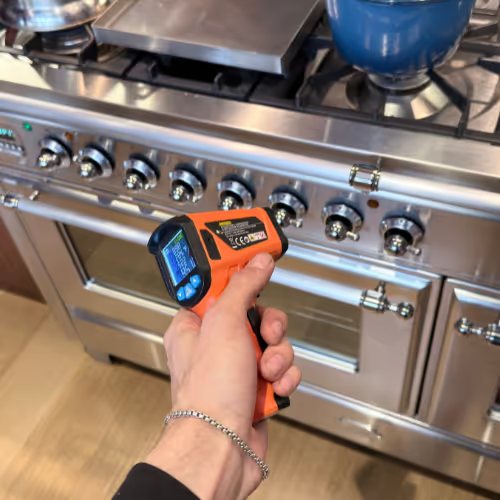
  • Airflow & wear: rollers, idlers, belts, blower wheels, lint-path tools; manometer/amp clamp/IR for proof.
  • Protection: non-marring pads, containment for tight laundry closets, and interface-safe diagnostics (no false board resets).
Why This Approach Works

Dryers fail for a short list of reasons: no power to the heater, a dead heat source, a tripped safety, bad control output, or blocked airflow. By proving airflow and temperature cycling under load, then checking the heat source and safety chain in order, we fix the actual cause and prevent rapid re-failure. The result is real heat restored, shorter cycles, lower energy use, and less stress on motors, boards, and wiring.

Brand Nuances, NYC Venting Reality, and Fixes That Actually Last

Brand & Platform Patterns We Watch For

Different dryers fail in different ways. We tune diagnostics to the platform so you don’t pay for parts roulette.

Samsung / LG (modern sensor-dry families)

  • Sensitive to airflow quality; will “hunt” or extend cycles when exhaust temps swing.
  • Common field findings: heating coils cracked at the insulator, idler pulleys glazing, and moisture sensor contamination that confuses auto-dry.
  • What we do: verify exhaust temp curve under load, replace the bad actor (coil/coils or idler), and clean/ohm-test moisture bars so auto-dry ends when clothes are actually dry.

Whirlpool / Maytag / KitchenAid (U.S. workhorses)

  • Terminal blocks and heater cans are robust, but long foil vents cook thermal fuses.
  • Common findings: half-tripped breakers leaving only 120V to the motor, loose cord lugs that run hot, and exterior hoods stuck shut.
  • What we do: restore full 240V, re-terminate overheated lugs, swap the fuse and clear the cause, then confirm a clean cycling pattern.

GE

  • Solid motors and wheels; issues often trace to door switches and idler/belt paths after relocations.
  • What we do: correct belt routing/tension, replace a sloppy switch, then verify drum RPM vs. heat duty cycle so fabrics don’t scorch.

Electrolux / Frigidaire

  • Gentle on fabrics, picky about vent back-pressure.
  • What we do: measure static at the lint screen and hood, service the blower path, and confirm even cycling on a mixed load.

Bosch / Miele compact & ventless (condensing / heat-pump)

  • No exterior vent; performance depends on clean heat-exchanger and airflow path.
  • Common findings: lint mats on the exchanger fins and fan bearings singing.
  • What we do: deep-clean the exchanger channel, service fans, calibrate sensor-dry logic, and document temp-humidity trend so you know it’s back to spec.

Venting & Airflow: Where NYC Installs Go Wrong

Most “no-heat” returns to one of these three realities:

  1. Crushed hose behind the unit
    Tight laundry closets push the dryer back onto a soft foil accordion. The bend looks small; the heater sees it as a wall.
  2. Long, sagging runs with elbows
    Sag pockets collect lint and condensate, then feed it back to the heater can. Any high-limit you install will blow again.
  3. Exterior hood that never opens fully
    Paint, corrosion, or lint binds the flapper. The dryer thinks the load is still wet because exhaust temps swing.

Our fix path: replace flimsy foil with semi-rigid where allowed, shorten and straighten the run, secure a proper radius at the back, and restore a free-moving hood. Then we prove it with measured back-pressure and steady temperature cycling under load.

Electric Supply & Heating Chain (why “tumbles but no heat” is common)

Electric dryers need both legs of 120V to make 240V for the heater. A weak cord lug or a half-tripped breaker leaves the drum running with no heat path. Add any airflow restriction and you’ll also pop the thermal fuse. We verify full supply at the terminal block, correct overheated terminations, and confirm clean relay output to the heater before calling the job done.

Gas Ignition & Combustion (when it glows but won’t light)

Glow without flame points to weak igniters, tired valve coils, or an air mix problem. Short burns followed by silence usually mean overheat trip from restricted airflow. We check igniter current draw, flame sensor switching, coil behavior hot vs. cold, and burner cleanliness. If the cabinet’s starved for air (tight closet), we correct clearances so the fix lasts.

Moisture Sensing, Not Magic

Auto-dry ends when the control “sees” low conductivity across sensor bars—unless those bars are waxed in fabric-softener film. Then cycles drag on forever (or end too soon). We clean and test the bars, confirm harness integrity, and demonstrate normal termination on a mixed load so you don’t live on Timed Dry.

What “Fixed Right” Looks Like (proof you can see)

  • Stable temperature curve: heats to target, cycles evenly, no runaway peaks, no early dropouts.
  • Strong, steady exhaust at the hood; flap opens fully.
  • Clean current draw: heater on/off duty matches the cycle; motor amperage is steady (no dragging).
  • No odors, no hot terminal block, and no limit trips during an extended test.
  • Auto-dry ends correctly on a mixed load without cooking the light items.

We hand you a plain-English summary: what failed, what caused it, what we replaced or corrected, and the readings we used to prove it.

Repair vs. Replace (practical rules that respect your time)
  • Repair makes sense when: the cabinet and drum are sound, parts are available, the failure is single-path (element/coil/fuse/switch/relay), and you plan to keep the unit.
  • Replace is smarter when: the drum or cabinet is heat-warped, multiple subsystems are failing together, critical parts are discontinued, or a new platform (e.g., heat-pump) will clearly save money long-term.
  • We’ll tell you which side you’re on before spending into a dead end.

Access & Building Notes (so the first visit is the last)

  • Clear 3–4 ft in front; for stacked sets, tell us if there’s a lip or shelf that blocks a clean pull.
  • Note elevator windows, COI needs, and loading dock rules; we align to your building’s schedule.
  • If the vent exits a shared shaft or odd location, a 10-second phone video helps us bring the right adapters and tools.

Aftercare That Actually Prevents Comebacks

  • Lint screen wash (not just wipe) every few weeks if you use softeners—film blocks airflow.
  • Vent check at the hood monthly: flap opens wide, strong push of warm air.
  • Shorten the run at your next renovation; fewer elbows = happier heater.
  • Don’t overstuff: airflow needs space around fabric to carry moisture out.
  • Leave the door ajar for a few minutes post-cycle in tight closets to bleed heat off electronics.

What We Stock (to finish in one trip whenever possible)

  • Electric: OEM elements, thermal fuses, high-limit and cycling thermostats, heater relays, terminal kits.
  • Gas: OEM igniters, valve coils, flame sensors, burner gaskets/orifices.
  • Airflow & wear: rollers, idlers, belts, blower wheels, hood flappers, semi-rigid duct sections, clamps.
  • Diagnostics & protection: clamp meters, manometers, IR thermometers, non-marring lifts, floor protection, interface-safe tools.

The NYC Edge (why proximity matters)

We dispatch by skill and distance, not just queue order. That means a tech who sees your exact complaint weekly—and can arrive with the right parts—lands at your door first. You won’t recount your story twice; your notes, model, and building constraints travel with the job.

Ready When You Are

Text or call (332) 333-1709 with your brand + model and a quick note about the symptom (e.g., “heats 60 sec then cold,” “tumbles cold,” “hood flap barely opens”). We’ll bring the exact kit to restore real heat, fast cycles, and a vent path that keeps the fix holding for years.

No items found.

Need help from our experts?

+1 (332) 333-1709

9:00 AM - 6:00 PM

Our service manager handles all calls personally. For short questions, text works best.

Google Business Profile

See live reviews, photos, and recent jobs. Booked with us? Please leave a review, thank you!

180-Days Warranty

Every completed repair includes a 180-day parts & labor warranty. OEM parts only. Warranty service is prioritized.

Local Service

Built by real NYC technicians - not marketers.

Volt & Vector is where clean design meets certified service.

Services

See the full catalog of our services—organized by brand and by appliance—right here.

Book your service

Choose a convenient time slot. Diagnostic $99 (credited toward repair).

Open Google Calendar

Available Mon–Sat, 9 AM–6 PM. Same-day slots often open.

Instant confirmation

Your slot is reserved immediately after booking.

180‑day warranty

Parts & labor covered. No questions asked.

OEM parts only

Original manufacturer components for every repair.

$99 diagnostic credit

Applied in full toward any approved repair.

Need help from our experts?

+1 (332) 333-1709

9:00 AM - 6:00 PM

Our service manager handles all calls personally. For short questions, text works best.

Google Business Profile

See live reviews, photos, and recent jobs. Booked with us? Please leave a review, thank you!

180-Days Warranty

Every completed repair includes a 180-day parts & labor warranty. OEM parts only. Warranty service is prioritized.

Local Service

Built by real NYC technicians - not marketers.

Volt & Vector is where clean design meets certified service.

Google Reviews

Bright yellow five-pointed star on a white backgroundBright yellow five-pointed star on a white backgroundBright yellow five-pointed star on a white backgroundBright yellow five-pointed star on a white backgroundBright yellow five-pointed star on a white background

Great people to deal with. Called and set up appointment right away. Mark came and fixed the issue right away. Very friendly and respectful. Will use again. Thanks guys.

Bright yellow five-pointed star on a white backgroundBright yellow five-pointed star on a white backgroundBright yellow five-pointed star on a white backgroundBright yellow five-pointed star on a white backgroundBright yellow five-pointed star on a white background

Excellent experience with Vlad! He came day of to help fix a laundry machine issue. He was on time, a clear communicator about the issue and fixed it with ease. He came back the following day (at no charge!) when I reached out with further information about how the machine was working to confirm everything was working properly/as intended. Excellent service and will absolutely be working with them again when we have future needs. Can’t recommend enough!

Bright yellow five-pointed star on a white backgroundBright yellow five-pointed star on a white backgroundBright yellow five-pointed star on a white backgroundBright yellow five-pointed star on a white backgroundBright yellow five-pointed star on a white background

Vlad has been an incredible asset. In the few months we've known him, he's already fixed a dryer, two washing machines, and an oven! He's always very upfront with the repairs needed and the associated costs with fixing an appliance. I wouldn't hesitate at all to hire him for any future appliances in need of repair

Bright yellow five-pointed star on a white backgroundBright yellow five-pointed star on a white backgroundBright yellow five-pointed star on a white backgroundBright yellow five-pointed star on a white backgroundBright yellow five-pointed star on a white background

I split my time between Italy and NYC and manage several Airbnb units. Scheduling used to take too much energy around guest check-ins and turnovers. With Volt & Vector Appliance Repair, the routine became predictable: clear 2-hour windows (9–11am or 12–2pm), a text with ETA, written pricing (diagnostic credited), before/after photos, and a short summary after each visit. Over ~30 repairs in two years: washers, dryers, dishwashers, ranges, a refrigerator seal. They’ve kept me informed and moved quickly on parts (usually 24–48 hours when ordered). Access and lockboxes are handled without drama, work areas are left clean, and my reviews stayed steady. Hosting from abroad is easier when maintenance is this consistent. Strong recommend for Brooklyn and Manhattan hosts.

Larry Lawson
Bright yellow five-pointed star on a white backgroundBright yellow five-pointed star on a white backgroundBright yellow five-pointed star on a white backgroundBright yellow five-pointed star on a white backgroundBright yellow five-pointed star on a white background

Amazing service every time! I work for a multi-use property in lower Manhattan and we have used Volt & Vector for at least 20+ jobs and I can honestly say they do incredible and reliable work. Vlad is a pleasure to work with, he is honest and his pricing is fair. Highly recommend!

Frequently Asked Questions

Clear answers about scheduling, pricing, coverage, warranty, and what to expect on-site.

General & Company
What are your hours of operation?
Phone support is typically 9:00 AM–6:00 PM. Appointments are scheduled by arrival window, and you’ll get a text ~30 minutes before arrival.
What service areas do you cover?
We cover Brooklyn, Manhattan (below 96th Street), and selected Queens ZIPs. Use the ZIP checker on the page to confirm coverage for your address.
Are you licensed and insured?
We’re insured and can provide a COI (Certificate of Insurance) upon request for building management.
How long have you been in business?
Volt & Vector is built by NYC technicians with years of field experience in high-volume repair environments and premium residential service.
What training do your technicians have?
We diagnose using factory documentation, service-manual test procedures, and real-world NYC installation experience (tight cabinetry, airflow issues, building constraints). Sealed-system work is handled by certified technicians when applicable.
Why should I choose your company over a competitor?
We’re diagnostics-first, transparent about causes (including install/use issues), and focused on correct repairs with OEM parts and a 180-day parts & labor warranty.
Do you have customer references or testimonials I can review?
Yes—our Google Business Profile is the best place to see live reviews, photos, and recent jobs.
Services & Specialization
Which appliances can you repair?
Most common calls include refrigerators/freezers (including built-ins), ice makers, dishwashers, washers, dryers, ovens, ranges, cooktops, and ventilation where applicable.
What specific brands do you service?
We service many premium brands commonly installed in NYC, including Sub-Zero, Wolf, Miele, Thermador, Bosch, Gaggenau, ILVE, and others. If you don’t see your brand listed, ask—coverage varies by product line.
Do you service high-end or commercial appliances?
Our core focus is high-end residential. For light commercial environments (small offices, studios), we review brand/model first to confirm serviceability.
Can you install new appliances, or do you only repair them?
We’re primarily a repair service. If an installation or modification is required to complete a repair safely, we’ll explain options and what we can support.
Do you offer preventative maintenance?
Yes—maintenance is often the fastest way to prevent repeat failures (airflow/condenser cleaning, leak checks, drain/defrost maintenance, and performance verification).
Do you provide emergency or same-day repair services?
Same-day/next-day availability depends on scheduling and location. We’ll give you realistic timing and keep communication direct.
Pricing & Payment
How do you price your services?
We start with diagnostics, then provide a clear repair estimate based on parts required and labor scope. No repair begins without approval.
What is your service call / diagnostic fee?
$99 diagnostic (credited toward the repair if you approve the estimate).
Is the diagnostic fee waived if I proceed with the repair?
The diagnostic is credited toward the approved repair total.
Do you provide estimates in writing before starting work?
Yes. You’ll receive diagnostic findings and an estimate before any repair is performed (unless it’s a minor on-the-spot fix you explicitly approve).
What payment methods do you accept?
We support standard modern payment methods (card and electronic options). If your building requires a specific payment workflow, tell us during booking.
Warranty & Parts
What kind of warranty do you offer on parts and labor?
180-day warranty on both parts and labor for completed repairs.
Do you use genuine manufacturer parts?
Yes—OEM parts only.
Will using an unauthorized repair technician void my manufacturer’s warranty?
Manufacturer rules vary by brand and coverage type. If your unit is under a manufacturer warranty, the brand may require an authorized provider. We’ll tell you what we can verify on-site and what should go through the manufacturer.
Do you work with home warranty companies?
We typically work directly with the homeowner/building. If you have a home-warranty plan, you can often submit our invoice for reimbursement if your plan allows.
Preparation & Process
What should I check before calling a repair service?
Quick safe checks:
  • Power: breaker not tripped, outlet working, unit plugged in.
  • Settings: temperature setpoints not changed accidentally.
  • Water supply (ice makers/dishwashers): valve on, no kinked line.
  • Filters/vents: obvious airflow blockage or clogged filter where applicable.
  • Any error code/message shown on the display.
How should I prepare my home/appliance for the technician’s visit?
Clear access around the appliance, remove fragile items nearby, and (if possible) have model/serial info ready. If your building needs COI or a service elevator reservation, tell us in advance.
How long will the repair take?
Diagnostics typically take 30–90 minutes depending on appliance type and access. Some repairs can be completed the same visit if parts and scope are confirmed; others require a follow-up once parts arrive.
Will you need to order parts, and how long does that typically take?
Sometimes. Lead times vary by brand and stock status; many common OEM parts arrive in a few business days, but specialty items can take longer (especially during backorders).
Do I need to be home during the repair?
Yes—an adult must provide access and approve work. If your building has a super/doorman process, coordinate access ahead of time.
Post-Service
What follow-up support do you provide after a repair?
You’ll have a clear record of what was diagnosed, what was repaired, and what parts were used. If anything looks off, contact us and we’ll guide next steps.
What if the same problem occurs after the repair?
If it’s related to the completed repair and within the 180-day warranty window, warranty service is prioritized.
How can I leave a review or provide feedback?
Google reviews help us most. If you booked with us, we appreciate an honest review on our Google Business Profile.
Do you provide tips on how to properly maintain my appliances after the repair?
Yes—if we see install/use factors contributing to the failure (airflow restriction, drainage, loading habits, filter maintenance), we’ll show you exactly what to change to prevent repeats.
Safety & Environment
Do you have safety procedures for working in my home?
Yes. We work clean and controlled: shoe covers (or footwear removed), protected work areas, safe power shutoffs when required, and clear communication before testing anything that could affect your home.
How do you dispose of old parts or refrigerants safely?
Old parts are removed and handled responsibly. Refrigerant recovery and sealed-system handling are performed using compliant procedures by certified technicians where applicable.