
.png)
.png)


Midtown West Appliance Repair in Manhattan | Volt & Vector
Midtown West appliance repair for high-rises, managed buildings, compact kitchens, refrigerators, dishwasher leaks, laundry, dryers, ovens, ranges, and cooktops.
Midtown West Appliance Repair in Manhattan
Volt & Vector provides appliance repair in Midtown West for refrigerators, dishwashers, ovens, ranges, cooktops, washers, and dryers in Manhattan high-rises, apartments, condos, rentals, and mixed-use buildings. Midtown West changes the visit because concierge entry, elevator windows, loading rules, commercial corridor timing, compact kitchens, and stacked laundry can affect how safely the appliance is reached. A dishwasher leak in a high-rise kitchen, a refrigerator warming behind panels, or a dryer heating without drying should be documented before the appliance is moved. We use symptom timing, model details, installation photos, and building notes to plan the visit and provide an estimate before repair work begins.
Midtown West Service Context
Manhattan Community Board 5 covers central Midtown areas including Times Square, the Theater District, Garment District, Herald Square, Grand Central, and Penn Station context, while Community Board 4 covers west-side Clinton/Hell's Kitchen. For appliance repair, that means dense building entry, loading, and elevator coordination can be part of the job.
Midtown West buildings can combine residential apartments with commercial procedures. A front desk may need vendor notes, a service elevator may need a window, and a loading route may matter before a refrigerator or stacked laundry unit can be reached.
The appliance evidence should stay concrete. Leaks need cycle timing and water location. Cooling issues need displayed temperatures and ice or water behavior. Laundry problems need movement or end-of-cycle condition. Cooking problems need mode, ignition, heat, and gas-odor distinction.
The page should not turn the district into a landmark description. The useful point is how the building route changes what the customer should gather before service and what they should avoid doing with the appliance.
In Midtown West, the front-desk or management step can be as important as the appliance symptom. If the property needs a vendor list entry, elevator reservation, loading instruction, or certificate wording, collect that before the appointment. If water or gas safety is involved, report it through the building process while keeping the appliance evidence intact.
The strongest Midtown West preparation is a clean handoff: apartment number rules, front-desk name, elevator window, and the exact appliance behavior in one request. That prevents a refrigerator cooling call from turning into a model-label search, or a dishwasher leak from becoming a late building-notification problem.
Common Midtown West Appliance Repair Situations
Dishwasher Water At The Toe-Kick In A Vertical Building
- Visit context: A Midtown West tower or mixed-use building may treat even a small kitchen leak as a building issue because water can move below cabinets before it is visible.
- Appliance symptom: Water shows near the toe-kick, inside the sink base, after drain, or alongside a cabinet panel.
- Safe customer action: Cancel the cycle, dry what is visible, and do not use another rinse or quick wash as a test.
- What helps booking: Include the cycle stage, sink-drain behavior, under-sink photo, and any front-desk or management leak instruction. Use dishwasher repair when the water source and cycle stage are documented.
Counter-Depth Refrigerator Temperature Drift With Ice Or Water Changes
- Visit context: A compact high-rise kitchen can hide the model tag and water connection behind a counter-depth refrigerator.
- Appliance symptom: Fresh-food temperature climbs, ice output slows, the freezer changes first, or the dispenser behavior changes with the cooling problem.
- Safe customer action: Write down displayed temperatures, limit door openings, and leave the appliance in place if a water line is likely behind it.
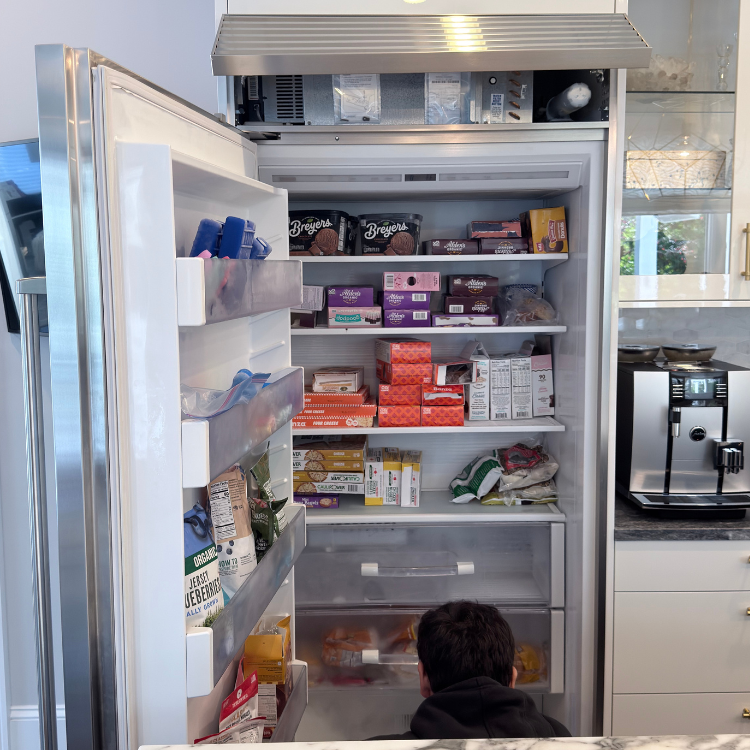
- What helps booking: Share the brand, section affected first, ice or dispenser behavior, and photos showing side and floor clearance. Pair temperature notes with refrigerator not cooling diagnosis.
Washer Stops With Wet Clothes In A Stacked Closet
- Visit context: A stacked laundry closet may limit access to the drain path, pan, and side clearance in a managed apartment.
- Appliance symptom: The washer pauses before spin, leaves clothing wet, thumps once at high speed, or changes behavior only on heavy loads.
- Safe customer action: Stop the load if the machine shifts, and do not unstack or pull the unit forward yourself.
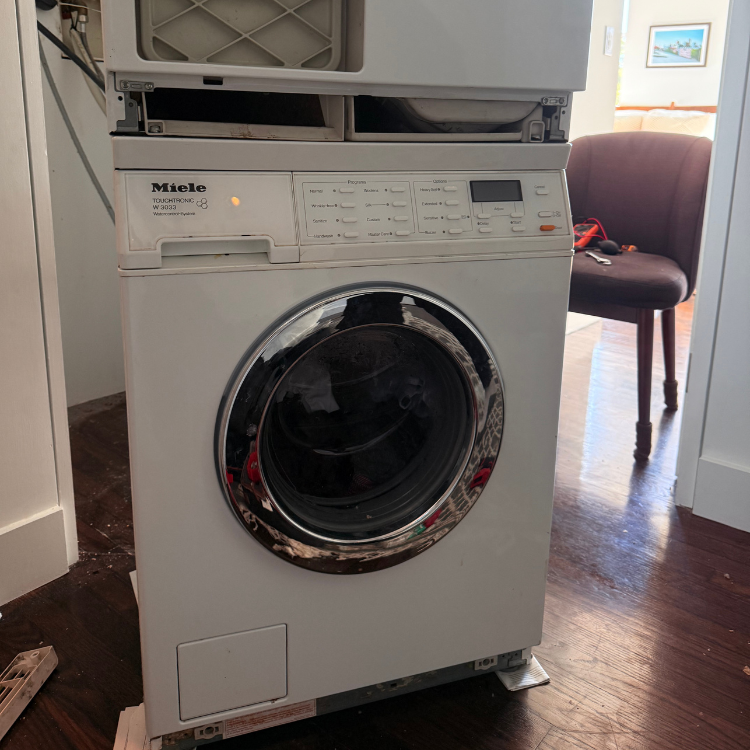
- What helps booking: Send the load type, whether water remained, a short clip of the spin attempt if safe, and a photo of the closet layout. Use washer shaking violently when the wet-load problem includes movement.
Ventless Dryer Or Combo Unit Leaves The Closet Humid
- Visit context: Midtown West compact laundry often depends on condenser or heat-pump moisture removal rather than a simple visible vent.
- Appliance symptom: The closet feels humid, towels stay damp, a lint message appears, or the unit warms the space without drying the load.
- Safe customer action: Clean the accessible lint filter and stop use if the appliance smells hot, shuts down, or overheats.
- What helps booking: Identify whether it is ventless, heat-pump, or combo, and describe whether the load ends hot, cold, damp, or humid. Compact moisture-removal symptoms fit ventless combo washer dryer not drying.
Wall Oven Or Range Preheat Drift In A Compact Kitchen
- Visit context: A compact apartment kitchen can surround the cooking appliance with trim, cabinet sides, and finished flooring.
- Appliance symptom: Preheat takes longer than normal, one cooking mode fails, food browns unevenly, or the display reaches temperature before the oven behaves that way.
- Safe customer action: Stop use if there is smoke, burning smell, repeated breaker trips, or gas odor; leave panels and wiring untouched.
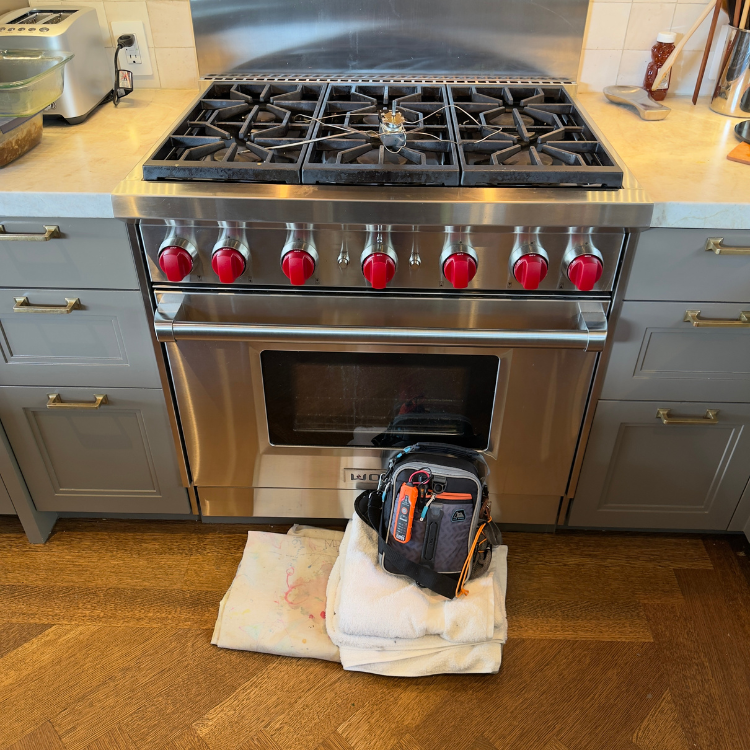
- What helps booking: Tell us the mode, set temperature, actual cooking result, and whether the issue appears from cold start or after the oven is hot. Use oven repair when the evidence is bake, broil, convection, or range heat.
COI And Building Access
For Midtown West buildings that require a COI, send certificate holder wording, management or front-desk contact, service entrance or loading instructions, elevator timing, permitted work hours, and any floor or cabinet protection requirement.
If active water, overheating, or gas odor is involved, follow building notification rules while preserving appliance evidence. Keep built-in, stacked, or water-connected appliances in place until the service plan is clear.
When To Stop Using The Appliance
Stop using the appliance if there is active leaking, smoke, burning smell, repeated breaker trips, extreme dryer heat, violent washer movement, or a gas odor.
If you smell gas, leave immediately and call 911 or the utility from a safe location. Do not test burners, relight anything, flip switches, or use electronics near the odor.
Quick Answers
Do you repair appliances in Midtown West high-rises?
Yes, when vendor entry is allowed and any required front-desk, elevator, service entrance, COI, or work-hour instructions are available.
Should I move a refrigerator in a tight apartment kitchen?
No. Send temperature behavior and installation photos instead of forcing a water-connected or panel-ready unit forward.
What should I do if a dishwasher leaks in a managed building?
Stop the cycle, dry visible water, follow building leak-report rules if required, and avoid another wash.
Can a dryer heat and still fail to dry?
Yes. Warm damp loads can point to lint path, airflow, condenser, or combo-unit moisture removal issues.
What information helps most before a Midtown West appointment?
Send symptom timing, model details, installation photos, and building requirements for entry, loading, elevator, COI, or work hours.
Book Midtown West Appliance Repair
For appliance repair in Midtown West, send the appliance type, symptom timing, model details, installation photos, and building requirements together. Volt & Vector is an independent appliance repair company, uses a diagnostics-first approach, uses OEM parts when appropriate and available, and provides an estimate before repair work begins.
Insured HVAC & Appliance Repair Service in NYC & Brooklyn
VOLT & VECTOR LLC carries Commercial General Liability insurance through Hiscox Insurance Company Inc. Coverage is effective June 6, 2026 – June 6, 2027, with $1,000,000 per occurrence and $2,000,000 general aggregate limits.COI available upon request for homeowners, landlords, property managers, co-op/condo boards, commercial clients, and general contractors.