Laundry appliance repair in NYC has to be written differently because the machines do not live in ideal conditions. In Brooklyn brownstones, Manhattan apartments, and Queens homes, washers and dryers are often stacked, built into closets, squeezed into kitchens, pushed too close to walls, or connected to long vent runs and older utility setups. That changes how failures show up. A dryer that seems weak may have a venting problem before it has a parts problem. A washer that shakes, leaks, or stops mid-cycle may have an internal fault, but it may also be reacting to leveling issues, drain routing, floor movement, or installation stress. That is why real laundry repair starts with platform-specific diagnosis, not guessing parts from a symptom alone.
Related offers
Gas dryers usually have a simpler heating path than heat pump platforms. If a gas dryer tumbles but does not heat, the fault is often in the ignition sequence, flame sensing, gas valve behavior, thermal protection, airflow-related overheating history, or control logic. Gas dryers can still be complex, but in many cases the repair path is more straightforward than sealed-system heat pump designs.
Important note for gas dryers in apartments and multifamily buildings:
Electric dryers are common in NYC, especially where gas is not available or not permitted in the laundry area. If the dryer runs but does not heat, the cause may be loss of one leg of power, a failed heating element, thermal cutoff, wiring problem, relay issue, or a control fault. This is why a dryer that still turns normally can still have no real heat.
Important note for electric dryers:
Ventless condenser dryers are common in compact apartment installs where exterior venting is not practical. These machines dry differently and normally take longer than standard vented dryers. If performance drops, the issue may be in the condenser circuit, fan performance, moisture sensing, lint buildup inside the machine, drainage behavior, or control logic.
Important note for ventless dryers:
Heat pump dryers are the most nuanced laundry dryer category on this page. They are efficient, but diagnosis is more platform-specific. If the unit runs and dries weakly, the issue may involve airflow, sensors, drainage, control logic, fan operation, exchanger contamination, or deeper sealed-system problems. If a heat pump dryer has a compressor or refrigeration circuit issue, that is usually a longer repair story with more variables, more verification, and a more careful parts decision.
Important note for heat pump dryers:
If your dryer still gets warm but clothes stay damp, take too long to dry, or come out hotter than normal, one of the first things to verify is the venting. This matters especially in Brooklyn brownstones, Manhattan apartment stacks, and Queens homes where long runs, crushed ducts, lint buildup, or shared building exhaust conditions can reduce airflow.
Common real-world pattern:
That does not mean the dryer is always fine. It means airflow must be ruled out early. A dryer with poor venting can overheat, cycle incorrectly, dry badly, burn through thermal components, and create repeat service calls if the vent problem is ignored.
If the washer finishes full of water or stops before spin, the issue may be the drain pump, drain hose restriction, filter blockage, installation height problem, pressure sensing issue, or control fault. In NYC apartments, hidden drain routing and tight standpipe access complicate this more than people expect.
Excessive washer vibration is often blamed on the floor alone, but that is not enough. We check leveling, suspension wear, shipping hardware mistakes, overloaded cycles, drum support problems, and installation conditions. In stacked laundry installs, vibration can transfer through cabinetry and walls and feel worse than it really is, but sometimes the support system is genuinely worn.
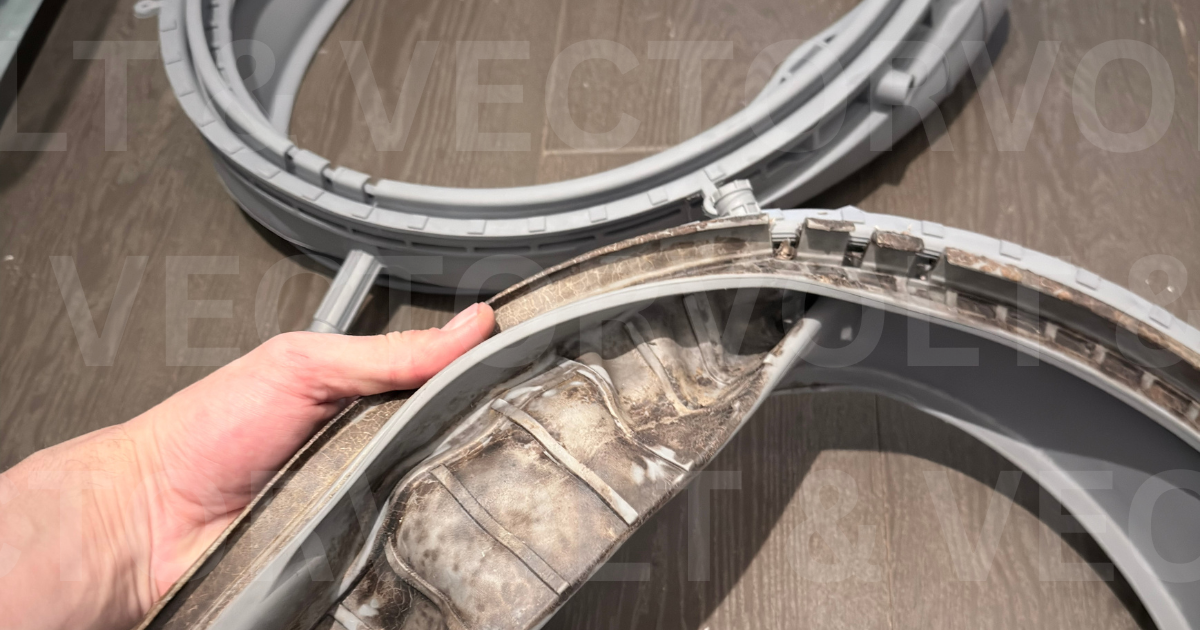
Washer leaks can come from door boot damage, soap oversudsing, drain path issues, loose hoses, cracked dispensers, tub movement, inlet valve seepage, or installation stress. In apartment laundry closets, slow leaks often stay hidden longer and cause more damage before the customer notices.
Odor complaints are often maintenance-related, but not always. We look at drain behavior, biofilm buildup, detergent misuse, standing water, poor extraction, and door boot contamination. A washer that does not spin out correctly can create a persistent odor pattern even when the machine still appears to run normally.
NYC laundry repair is not only about the machine. It is also about the install.
Common NYC constraints:
That is why apartment washer repair and apartment dryer repair in Brooklyn, Manhattan, and Queens need a practical diagnostic approach. Some failures are inside the machine. Others are partly driven by the way the machine is installed or maintained in the apartment.
This can be caused by heating element failure, thermal protection failure, gas ignition failure, power supply issues, relay failure, or platform-specific control faults. On some dryers, airflow history is part of the failure chain and cannot be ignored.
Long dry time is one of the most misdiagnosed dryer complaints. Causes include restricted venting, poor internal airflow, moisture sensor issues, weak heat production, overloaded drum conditions, condenser maintenance neglect, and incorrect customer expectations on ventless platforms.
If the dryer ends the cycle too soon, the problem may be moisture sensor behavior, overheating protection, control logic, poor airflow, or instability in heat production. Some customers call this “it works but clothes are still wet.” The cycle logic has to be tested in context.
Noise can come from rollers, idlers, blower issues, support wear, drum seals, foreign objects, or installation vibration. On stacked units, normal machine noise can also become amplified through the cabinet or floor. The source has to be isolated, not guessed.
Stop using the dryer if there is a strong burning smell. This may be lint accumulation, overheating from restricted airflow, belt or support friction, electrical connection damage, or heater-adjacent debris. This is not a “wait and see” symptom.
NYC laundry repair is not only about the machine. It is also about the install.
Common NYC constraints:
That is why apartment washer repair and apartment dryer repair in Brooklyn, Manhattan, and Queens need a practical diagnostic approach. Some failures are inside the machine. Others are partly driven by the way the machine is installed or maintained in the apartment.
Brooklyn appliance repairs often come down to access, building rules, and logistics, not just the failed part. The same symptom can be a one-visit fix in a suburban setup and a multi-step job in Brooklyn because of tight installs, co-op/condo requirements, and limited on-site testing space.
Manhattan appliance repairs often come down to access, building rules, and tight-space logistics, not just the failed part. The same symptom can be a one-visit fix in an open setup and a multi-step job in Manhattan because units are built into compact kitchens, stacked into closets, and surrounded by finished surfaces with almost zero clearance.
In Manhattan, appliances are commonly boxed in by stone counters, tall cabinet towers, paneling, and adjacent fixtures. That changes the job from “replace a part” to “create safe access.”
Many washer/dryer setups are stacked behind doors or inside narrow closets where full removal is disruptive and risky.
Doormen, elevator reservations, COI requests, loading rules, and strict work hours can shrink the available working window.
Manhattan buildings can introduce symptoms that look like appliance failures.
We do not assume the answer from a symptom alone. Laundry machines fail in patterns, but the same complaint can come from multiple causes.
Examples:
That is why the correct repair path is evidence first, parts second.
Do you repair both washers and dryers in Brooklyn, Manhattan, and Queens?
Yes. This laundry hub covers washer and dryer repair across Brooklyn, Manhattan, and Queens, including apartment laundry units, stacked laundry systems, and compact installations.
What laundry brands do you service?
Samsung, GE, Whirlpool, LG, Electrolux, Miele, and Bosch.
Do you work on gas and electric dryers?
Yes. We diagnose gas dryers and electric dryers, including vented and many apartment laundry configurations.
Do you work on ventless and heat pump dryers?
Yes. We diagnose ventless condenser dryers and heat pump dryers. These platforms often require a more model-specific diagnostic path than standard vented dryers.
My dryer gets hot but clothes still stay damp. What should I check first?
One of the first things to verify is venting. If airflow is restricted, the dryer may still produce heat but dry poorly, overheat internally, or shut down incorrectly.
Are heat pump dryer repairs harder?
They can be. Heat pump dryers are not impossible, but they are less forgiving of guesswork. If the problem involves the compressor or sealed system, the repair path is usually longer and more situational than a standard gas or electric dryer repair.
Are gas dryers easier to repair than heat pump dryers?
In many cases, yes. Gas dryers can still be complex, but the heating system is usually more straightforward than a heat pump platform with refrigeration components.
Do you repair stacked washer dryer units?
Yes. We work on stacked and compact laundry setups common in NYC apartments and condos.
Can a washer leak because of installation and not just a bad part?
Yes. Hose routing, drain position, leveling, movement, oversudsing, and clearance issues can all contribute to leaks or leak-like complaints.
Can a dryer run normally and still have a power problem?
Yes. On many electric dryers, the motor can run while the heating circuit is compromised. That is why “it turns on” does not prove the heating system is receiving proper power.
Laundry appointments in NYC move faster when the first message includes the exact machine identity, access conditions, and what the unit is doing right now. For stacked sets, closet installs, and compact units, access matters almost as much as the failure itself. A clean first message helps reduce back-and-forth, avoids wrong parts lookup, and lowers the chance of a repeat visit.
Please send the following before dispatch:
Include access details in the first message if any of these apply:
The most useful details are practical details, not general descriptions. Examples:
For Stacked and Compact Laundry Units
For stacked and compact laundry systems, send one full photo of the setup from a few steps back. That helps confirm service clearance, door swing, vent routing, hose routing, and whether anything has to be partially moved or coordinated before the visit.
For Dryer Appointments
For dryers, include these details if known:
For Washer Appointments
For washers, include these details if known:
What Happens After Booking
Once the request is reviewed, the next step is dispatch confirmation based on route, access, and appliance category. If anything important is missing, we ask for it before the visit instead of guessing. That is the fastest way to keep the appointment usable and avoid avoidable delays.
Diagnostic Visit
The diagnostic visit is used to identify the actual failure path and determine whether repair is justified. The diagnostic fee is $99 and is credited toward an approved repair, as shown on the estimate before work begins.
Service Window Notes
Same-day and next-day availability depend on route density, borough, building rules, and the machine category. Delays usually come from missing model information, incomplete access details, or building restrictions that were not disclosed at the start.
Urgent Conditions
Include it immediately in the first message if any of the following are present:
Service Area
Primary laundry coverage includes: