

.avif)
Refrigerator warm? Compare fridge and freezer temperatures, check visible airflow and door problems, protect food and understand what a technician must verify.
Why Your Refrigerator Is Not Cooling
A refrigerator can warm up because its settings or airflow are wrong, the door is not sealing, heat cannot escape at the condenser, or a fan, defrost component, control or refrigeration component has failed. The first useful distinction is whether the freezer is also warming.
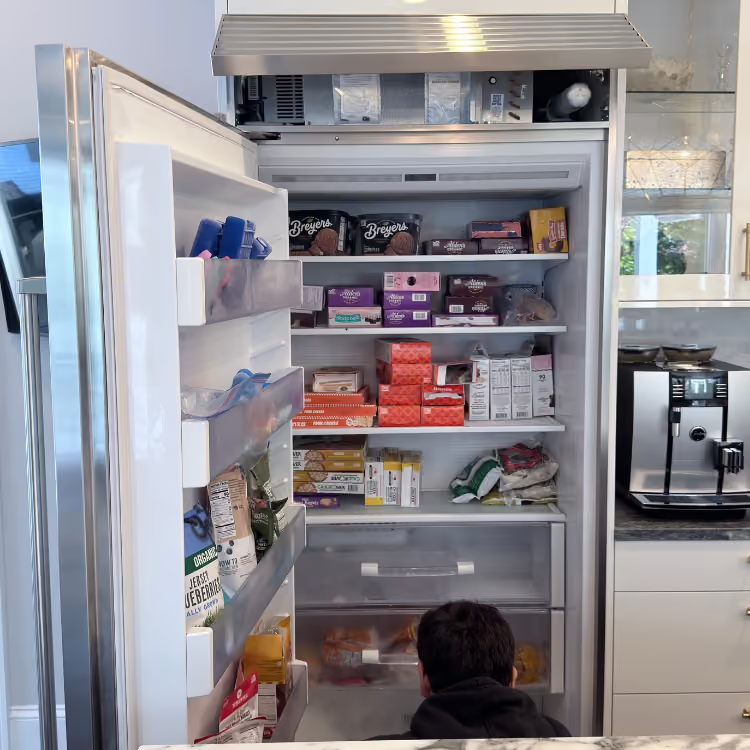
- Freezer cold, refrigerator warm: Check food blocking visible vents and whether the refrigerator door closes fully. Internal airflow or a separate refrigerator cooling circuit may need diagnosis.
- Both compartments warm: Check the controls, displayed mode, known power interruption and blocked external grille. Record temperatures rather than relying on the lights or a humming sound.
- Heavy frost, grinding or repeated clicking: Photograph or record it; do not remove covers, chip ice or replace a part from the sound alone.
- Food safety: Move still-safe perishables to verified cold storage. Discard meat, milk, eggs and similar perishables held at 40°F or above for more than two hours; chilling them again does not make them safe. Use the food-specific chart for exceptions.
Use the Temperature Pattern to Choose the Next Check
The control may display a target temperature rather than an actual measurement. A lit interior proves that some power is present; it does not prove that cooling is running.
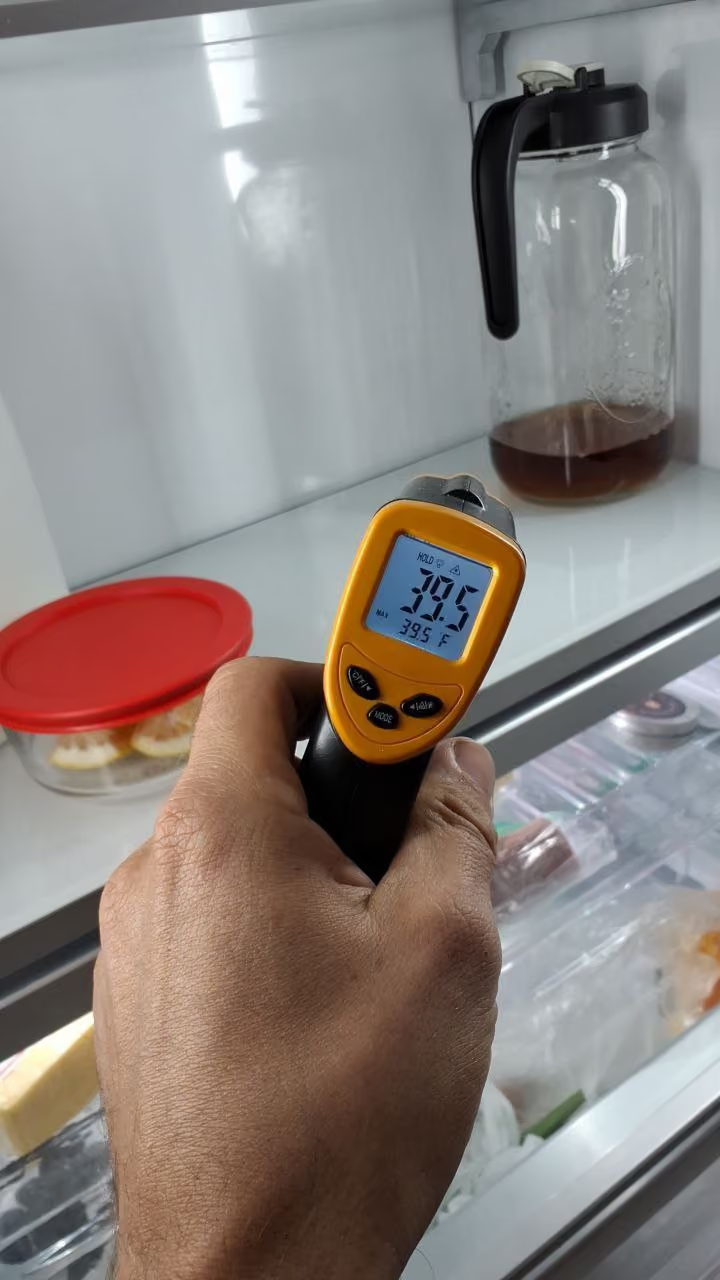
- Measure: Record the refrigerator and freezer temperatures with an appliance thermometer if available, the time of each reading and when you first noticed the problem.
- Check visible conditions: Look for an accidentally changed setting, a cooling-off or showroom indication identified in the model manual, food covering vents or packages holding a door open.
- Record recent changes: Note an outage, large warm-food load, appliance move or cabinet work.
These observations change the starting point for diagnosis without proving that a part is healthy or faulty.
Cooling depends on heat leaving the cabinet, air reaching the food and the refrigeration system working correctly. Whirlpool's cooling guidance likewise separates visible installation, ventilation and gasket checks from internal components.
Cause 1: Restricted Condenser Airflow
The condenser releases heat removed from the cabinet. Dust on an owner-cleanable condenser or an obstructed ventilation grille can reduce heat rejection and leave the refrigerator running longer without maintaining temperature. A cabinet renovation or items stored against a grille can create this problem without a failed compressor.
Use the manual to identify the condenser and whether owner cleaning is intended. Some models need little routine coil access; built-in units can have very different locations. Do not pull a heavy refrigerator across the floor, disturb its water line or remove a machinery cover just to look. If cleaning is owner-accessible, disconnect or turn off power exactly as directed and use the specified soft brush or vacuum method.
For Sub-Zero, the manufacturer provides separate condenser instructions by series. It is not always behind a top grille. Cleaning may improve heat transfer, but persistent warming still requires diagnosis; do not leave perishable food inside while waiting for recovery.
Cause 2: Evaporator Fan or Internal Airflow Trouble
The evaporator absorbs heat; a fan distributes cooled air on designs that use forced airflow. Food blocking an outlet, ice obstructing a passage, a fan problem or a damper that is not opening can interfere with delivery to the fresh-food compartment. On a single-evaporator design this may leave the freezer colder than the refrigerator. A model with separate cooling circuits needs a different interpretation.
Notice where cooling is lost and whether a scraping or grinding noise changes during normal use. Silence with a door open does not establish fan failure: operation depends on the model's controls and cycle state. Do not hold or bypass a door switch for testing. A technician must establish the fan's commanded operation, actual airflow and whether ice or an obstruction is preventing it.
Cause 3: Frost Restricting Airflow or a Defrost Fault
Frost can obstruct the evaporator area or air passages. An automatic-defrost fault is one explanation; a door left ajar, a leaking seal or other moisture entry can also create frost. Defrost arrangement and timing vary by model and must be checked against its control design.
Photograph the frost location before it is removed. A localized patch near a door gap tells a different story from a recurring ice buildup behind an internal cover. If cooling improved after a previous thaw and then deteriorated again, tell the technician how long that took. The pattern supports an ice-related problem; it does not identify a failed heater, sensor or control by itself.
Do not chip ice, use a hair dryer or run a forced-defrost sequence from an unrelated model. A manual thaw is only appropriate when the owner's instructions allow it and safe food storage and meltwater protection are arranged. Repeated thawing without finding why ice returns can hide the fault temporarily.
Cause 4: Condenser Fan Trouble
On models fitted with a condenser fan, that fan moves air through the heat-rejection area. A fan that is obstructed, not commanded on or unable to run can contribute to overheating and poor cooling. Repeated short running attempts or an unusual machinery-area sound are useful observations but can overlap with compressor-start or supply problems.
Do not reach behind a running appliance or judge the fan through an exposed machinery compartment. The technician should confirm the model's fan sequence, clear airflow, motor operation and control supply. A fan replacement should follow that evidence, not just a hot cabinet surface.
Cause 5: Compressor or Starting-System Trouble
The compressor circulates refrigerant through the cooling system. A compressor that cannot start, cannot pump effectively or is not receiving the correct control can leave a cabinet warm. Different designs use different starting or inverter arrangements; there is no universal capacitor diagnosis for a refrigerator that clicks.
Repeated clicking, a hum that stops or no apparent compressor sound should be recorded. None proves compressor failure alone. Before recommending a sealed-system repair, the technician should distinguish the power/control path, starting components, compressor operation and actual refrigeration performance.
For LG and any other brand, check the exact model, serial number, purchase date and warranty document before authorizing work. Compressor parts, labor and sealed-system coverage may differ. A brand name or an online claim of a ten-year warranty is not confirmation that this repair is covered.
Cause 6: A Refrigerant Leak or Other Sealed-System Fault
A refrigerant leak can reduce the system's ability to carry heat, but continuous running and weak cooling also occur with airflow and control problems. A restriction or a compressor that is running without adequate pumping can look similar to an owner. Refrigerant does not normally need routine topping up in a sealed household refrigerator.
If a leak is confirmed, the repair proposal should identify the leak location, whether it is accessible and repairable, and how the system will be checked after repair. Adding refrigerant without explaining the loss is not a complete answer. Do not open refrigerant lines, attach a recharge kit or remove a cover to examine the coil yourself.
Door Gasket Problems Can Add to the Cooling Load
A door held open by food, a misseated bin or a damaged gasket admits warm, humid air. Look for a folded corner, sticky residue or frost concentrated near the contact edge. A gentle paper check can help locate uneven contact, but it cannot separate a worn gasket from door alignment on its own.
Use the door-gasket guide if the door will not seal. Do not assume a seal problem explains all warming, particularly when temperatures remain abnormal after the door closes correctly.
Repair or Replace: Ask What the Diagnosis Actually Includes
A useful estimate names the confirmed fault, required parts, access work and any uncertainty about the rest of the system. Compare the repair with the total replacement job: the new appliance, delivery, removal, cabinet fit, panels and connection changes. Built-in refrigeration can make that comparison different from a freestanding unit, but neither age nor a premium badge settles the decision.
The NYC replacement-cost guide covers the wider installation comparison. The condition of the complete appliance matters when weighing the value of the proposed repair.
When to Stop Checking and Request Service
Arrange diagnosis when safe settings, vent and door checks do not explain the warming, when a warning returns or when either compartment continues getting warmer. Protect food independently of the appointment. For refrigerated medication, ask the dispensing pharmacist about the specific product's storage limits.
Stop operating and get help for burning odor, smoke, a damaged connection, water near electrical equipment or a breaker that trips again. Do not keep resetting power to make the refrigerator run. Send the model photo, both temperatures, onset time, warning display and any short noise recording with the service request.