Appliance repair service in New York City - Brooklyn
See what happens on a diagnostic visit, how quotes and parts work, why some repairs need multiple visits, and when replacing an appliance makes more sense than repairing it.

Appliance Repair Brooklyn & Manhattan

Volt & Vector provides appliance and HVAC repair in Manhattan below 96th Street with a diagnostics first workflow. This footprint has its own operating reality: controlled access, elevator rules, tight installations, and strict time windows. The goal of this page is simple: explain how service works here so your first visit produces a verified diagnosis and an executable repair plan.

Diagnostic fee: $99, credited toward the repair if you move forward
Warranty: 180-day parts and labor warranty on completed repairs
Arrival windows: 9 to 11, 11 to 1, 1 to 3, 3 to 5
Move-In Dryer Deep Cleaning & Vent Service NYC
Move-In Appliance Reset: Washer Mold Removal NYC

Brooklyn Appliance Repair

Brooklyn appliance repairs often come down to access, building rules, and logistics, not just the failed part. The same symptom can be a one-visit fix in a suburban setup and a multi-step job in Brooklyn because of tight installs, co-op/condo requirements, and limited on-site testing space.

What changes in Brooklyn

  • Tight cabinetry and built-ins
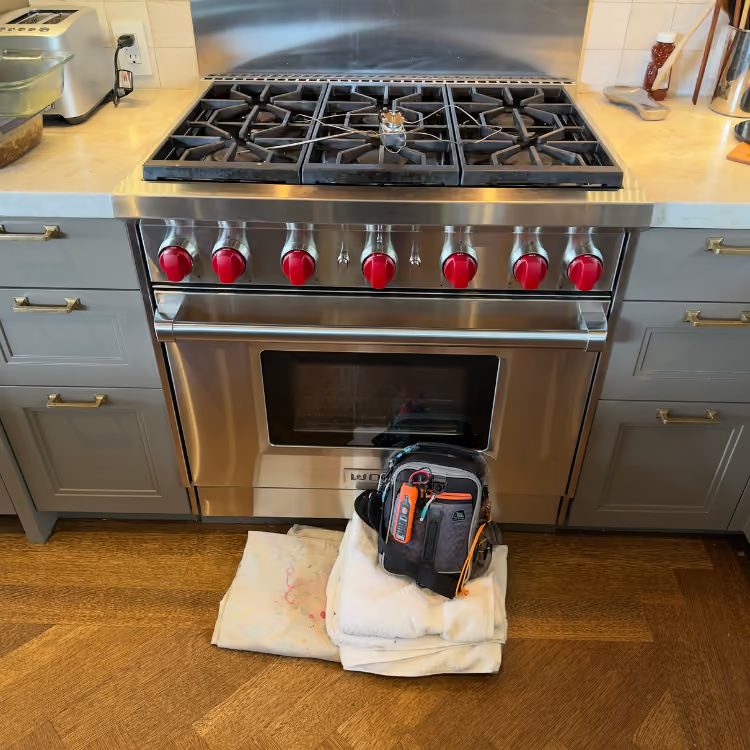
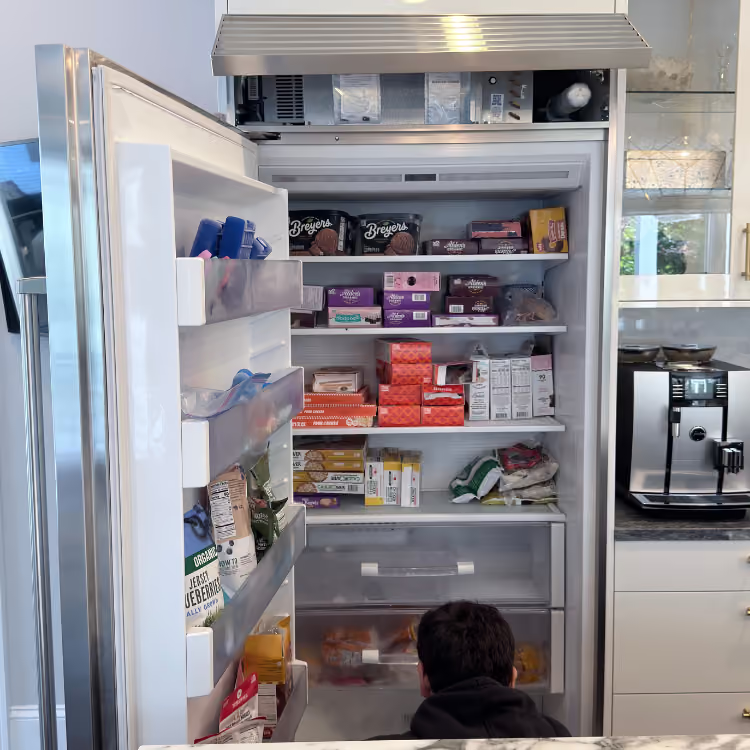
    Dishwashers packed under stone counters, wall ovens pinned in tall cabinets, and panel-ready refrigeration often require careful removal before you can even reach the failure point. Time goes into safe access and reassembly, not “guessing parts.”
  • Stacked laundry installs and venting constraints
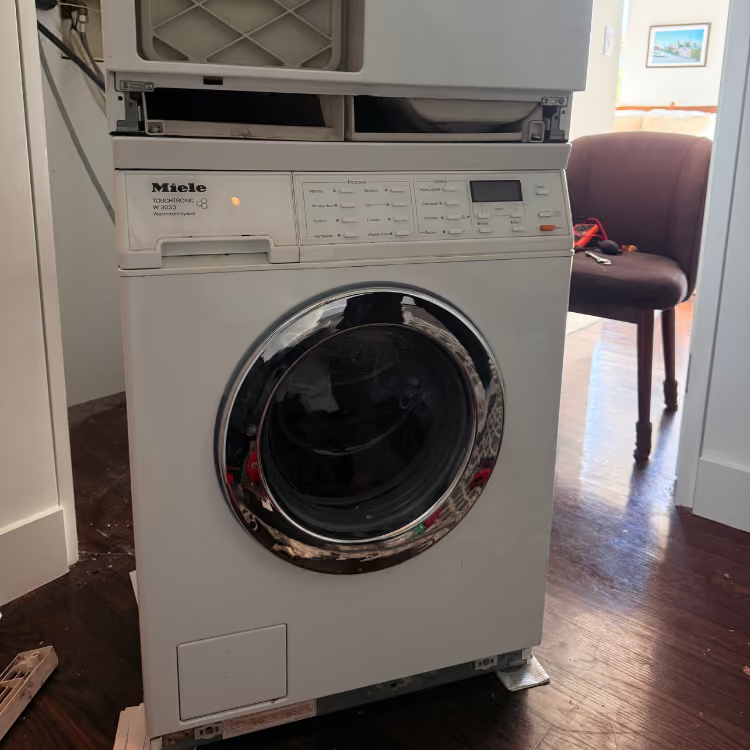
    Many Brooklyn laundry closets are stacked, cornered, or behind doors. For dryers, vent routing and lint accumulation can create heat and airflow issues that mimic bad parts. For washers, drain height, standpipe setups, and vibration isolation matter more than people expect.
  • High-rise logistics and building policies
    Freight elevator scheduling, COI requests, service windows, parking/loading rules, and doorman access can compress the working window. That affects whether a repair can be completed in one visit, especially if the unit must be pulled out and tested under load.
  • Supply stability and shared building infrastructure
    Brownouts, weak circuits, shared gas pressure issues, and intermittent water supply problems can create “phantom” symptoms. In Brooklyn, we see more cases where the appliance is fine but the environment is causing resets, ignition lockouts, slow heating, or fill/ drain anomalies.

Brooklyn Area List

Manhattan Appliance Repair

Ultra-tight installs and “no clearance” service conditions

In Manhattan, appliances are commonly boxed in by stone counters, tall cabinet towers, paneling, and adjacent fixtures. That changes the job from “replace a part” to “create safe access.”
  • Protecting stone, cabinetry, floors, and panels becomes part of the repair.
  • More in-place testing is required because pulling the unit out is not always possible.
  • Reassembly and alignment matter (doors, panels, leveling, vibration, sealing).

Stacked laundry in closets

Many washer/dryer setups are stacked behind doors or inside narrow closets where full removal is disruptive and risky.
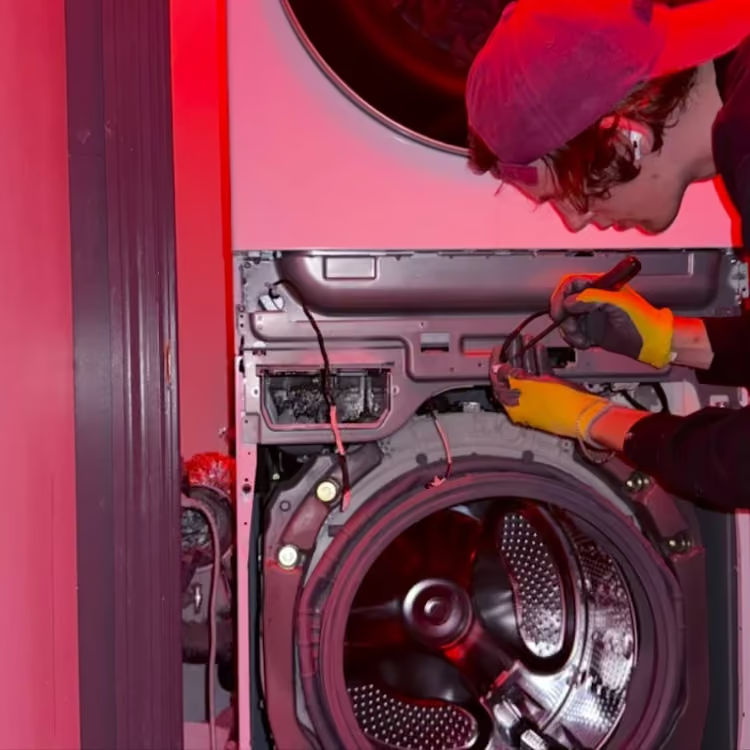
  • In many cases, the technician can diagnose and service common failure points without fully unstacking the dryer, when the installation allows it.
  • We rely on tight-space methods and diagnostic tooling (inspection cameras/borescopes, targeted electrical measurements under load, airflow/temperature verification, and platform-specific service access points).
  • If unstacking is unavoidable, it’s treated as a controlled access operation, not a default step.

Building logistics and service window compression

Doormen, elevator reservations, COI requests, loading rules, and strict work hours can shrink the available working window.

  • Access timing can determine whether a repair is finished same-visit or staged.
  • Some failures require testing under real operating conditions, which is harder when the unit cannot be moved or run freely.

Utilities and infrastructure-driven “phantom symptoms”

Manhattan buildings can introduce symptoms that look like appliance failures.

  • Voltage drop, weak circuits, shared gas issues, and inconsistent water supply/pressure can trigger resets, ignition lockouts, slow heating, or fill/drain anomalies.
  • Diagnosis has to separate “appliance fault” from “site condition” before parts are ordered.

Manhattan Area List