Appliance repair service in New York City - Brooklyn
See what happens on a diagnostic visit, how quotes and parts work, why some repairs need multiple visits, and when replacing an appliance makes more sense than repairing it.

Refrigerator Repair NYC — Volt & Vector Appliance Repair

A broken refrigerator in a New York City apartment is an immediate emergency — and Volt & Vector technicians are on the road across Brooklyn and Manhattan seven days a week. We diagnose with a $99 fee credited toward your repair and back every job with a 180-day warranty.

Diagnostic fee: $99, credited toward the repair if you move forward
Warranty: 180-day parts and labor warranty on completed repairs
Arrival windows: 9 to 11, 11 to 1, 1 to 3, 3 to 5

Refrigerator Repair

Categories:
Appliance Repair
Updated:
April 1, 2026
Expert refrigerator repair in Brooklyn and Manhattan. Same-day service, $99 diagnostic credited to repair, 180-day warranty. Sub-Zero, Viking, Miele, LG, Samsung. Call (332) 333-1709.

Professional Refrigerator Repair in Brooklyn & Manhattan

Your refrigerator runs every hour of every day — it is the single most mission-critical appliance in your home. When it fails in a Brooklyn brownstone or a Manhattan high-rise, food spoilage begins within four hours and replacement costs climb fast. Volt & Vector factory-trained technicians serve all of Brooklyn and Manhattan with same-day appointments, stocking parts for every major brand on the van. We repair Sub-Zero, LG, Samsung, Whirlpool, GE, Bosch, Miele, KitchenAid, Viking, and Maytag. Whether you live in a pre-war walk-up in Park Slope, a luxury condo in Tribeca, or a co-op on the Upper East Side, we arrive equipped to diagnose and fix the problem in one visit. Our 5.0-star rating reflects a simple commitment: transparent pricing, genuine expertise, and repairs done right the first time.

DIY vs Pro

DIY vs. Professional Refrigerator Repair

Some refrigerator maintenance tasks are safe for a careful homeowner. Others carry real risk to the appliance, your food supply, and your building.

Safe to DIY: Cleaning condenser coils (unplug, pull from wall, use a coil brush), replacing a door gasket on models with snap-in seals, clearing a clogged defrost drain with warm water and a turkey baster, and replacing a water filter.

Call Volt & Vector: Any work involving the sealed refrigerant system requires EPA 608 certification — refrigerant handling without it is illegal and environmentally harmful. Replacing a compressor, evaporator fan motor, or control board on a high-end unit like Sub-Zero or Miele requires brand-specific training to avoid voiding remaining warranty coverage. In NYC apartment buildings, improper refrigerator work that causes water damage to units below can trigger building liability issues. The repair cost is almost always far less than the downstream risk. We offer transparent flat-rate pricing — you know the cost before we begin.

Diagnostic Process

How We Diagnose Refrigerator Issues

Accurate diagnosis separates a one-visit repair from a parts-guessing cycle that wastes your time and money. Our process is systematic.

Every refrigerator service call begins with a full system check before any parts are ordered or replaced. We use digital thermometers to verify actual cabinet temperatures against set points, then test the sealed system pressures where accessible. We check evaporator coil condition, fan operation, defrost cycle function, and control board outputs — all in sequence. For smart refrigerators from LG, Samsung, and GE, we pull onboard fault codes directly from the diagnostic interface. For premium brands like Sub-Zero, Miele, and Viking, we use brand-specific service protocols from factory training. The result: you get a clear, written estimate for the actual repair — not a range based on guesses. Most diagnoses are completed within 30 minutes of arrival.

New York City — What's Different

Refrigerator Repair in Brooklyn & Manhattan

Refrigerator repair in New York City involves logistics that simply do not exist in suburban markets — and Volt & Vector is built around them.

In Brooklyn, we serve the full range of residential building types: pre-war brownstones in Cobble Hill and Carroll Gardens where refrigerators are often tucked into tight galley kitchens; newer construction in Williamsburg and DUMBO with full-size panel-ready models; and large co-op buildings throughout Park Slope and Prospect Heights. In Manhattan, we handle the built-in Sub-Zero and Viking columns common in Tribeca lofts and Upper East Side prewar apartments, as well as the compact under-counter models found in studio apartments throughout Chelsea and East Village. We navigate service elevator schedules, doorman buildings, and parking restrictions as a normal part of every job.

Symptoms

Symptom Guide: What Your Refrigerator Is Telling You

Warm Fresh Food Section, Normal Freezer Temperature

This symptom pattern almost exclusively points to a failed evaporator fan motor. The evaporator coils live in the freezer section, and the fan pushes cold air through a damper duct into the fresh food compartment. When the fan fails, the freezer stays cold but the refrigerator warms. To test: close the freezer door and listen for fan operation during a compressor cycle — no fan sound during a running compressor is a strong indicator. A failed air damper between compartments produces the same symptom. Urgency: High — food spoilage begins within 4–8 hours at above 40°F.

Both Sections Warming, Compressor Silent

If both compartments are warming and the compressor is completely silent, the failure is likely electrical. Possible causes include a failed main control board, a tripped thermal overload protector, a dead start relay, or a wiring fault. Do not immediately assume a failed compressor — control board failures are far more common on modern inverter refrigerators. Check that the outlet is live by plugging in a lamp, check the door switch manually, then call for service. Urgency: Critical — compressor silence for more than two hours means active food loss requiring immediate action.

Excessive Condensation on Exterior or Interior Surfaces

Moisture beading on the refrigerator exterior or interior walls typically indicates warm humid air infiltrating through a degraded door gasket or a failed mullion heater — the thin heating element along the door frame that prevents condensation on that surface. In NYC summers where interior humidity frequently exceeds 60%, even a minor gasket gap creates noticeable condensation. Run the dollar bill test: close the door on a bill at multiple points around the gasket perimeter. Easy extraction indicates gasket failure at that location. Urgency: Moderate — compressor is working significantly harder, energy costs are elevated, and mechanical wear is accelerating.

Rapid On/Off Cycling (Short Cycling)

Rapid cycling — compressor running for only a few minutes before shutting off, then restarting — indicates a refrigerant charge problem, failing start relay, or control board fault sending erratic signals to the compressor. On older R-134a refrigerators, low refrigerant from a slow leak is the primary suspect. On newer inverter-drive refrigerators, the inverter board may be sending improper speed commands to the variable-speed compressor. Short cycling dramatically shortens compressor life and should be addressed within 24–48 hours. Urgency: High — continued short cycling risks permanent compressor damage costing far more than the underlying repair.

Ice or Water Dispensing Erratically

Erratic dispenser behavior — dispensing when not commanded, refusing to dispense, or mixing ice and water outputs — typically involves the dispenser control board, door switch assembly, or actuator micro-switch. On Sub-Zero and Viking refrigerators, a firmware issue in the dispenser module can mimic hardware failure; a control board reset is often the first diagnostic step. On Samsung Family Hub models, the dispenser integrates with the WiFi module and connectivity issues occasionally cause phantom dispensing events. A trained technician can isolate dispenser faults quickly using the service diagnostic mode built into most modern refrigerators. Urgency: Low-to-Moderate — unit is functional but inconvenient and potentially causing water waste.

Grinding or Scraping Sounds During Operation

Grinding or scraping sounds during compressor operation often mean the evaporator fan blade is contacting an ice formation that has accumulated around the fan shroud — a direct symptom of defrost system failure. The sound also occasionally comes from a failing condenser fan bearing, distinguishable because it occurs throughout the entire compressor cycle rather than intermittently. Ice contact with the evaporator fan will eventually destroy the fan motor, creating a secondary repair on top of the original defrost failure. This symptom warrants same-day service. Urgency: High — secondary fan failure risk within 24–48 hours if left unaddressed.

Maintenance Tips

What to Expect From Our Refrigerator Service

We designed the service experience for busy New Yorkers who do not have time for vague appointment windows or surprise invoices.

When you book online or call, you receive a confirmed arrival window — typically a two-hour block, not an all-day wait. Our technicians arrive with a fully stocked van covering the most common refrigerator failure parts for all brands we service. After a complete system diagnosis, we present a written estimate. If you approve, we complete the repair in the same visit in the vast majority of cases. If a specialty part must be ordered for a high-end brand, we schedule the follow-up visit before leaving. All repairs include a 90-day labor warranty. We also document the repair on file so future service calls are faster. For buildings that require service elevator scheduling or have specific access requirements — common in Upper West Side co-ops and Brooklyn Heights townhouses — we coordinate directly with building management.

Case Logs

Field Case Log: Sub-Zero 648PRO Repair in Tribeca

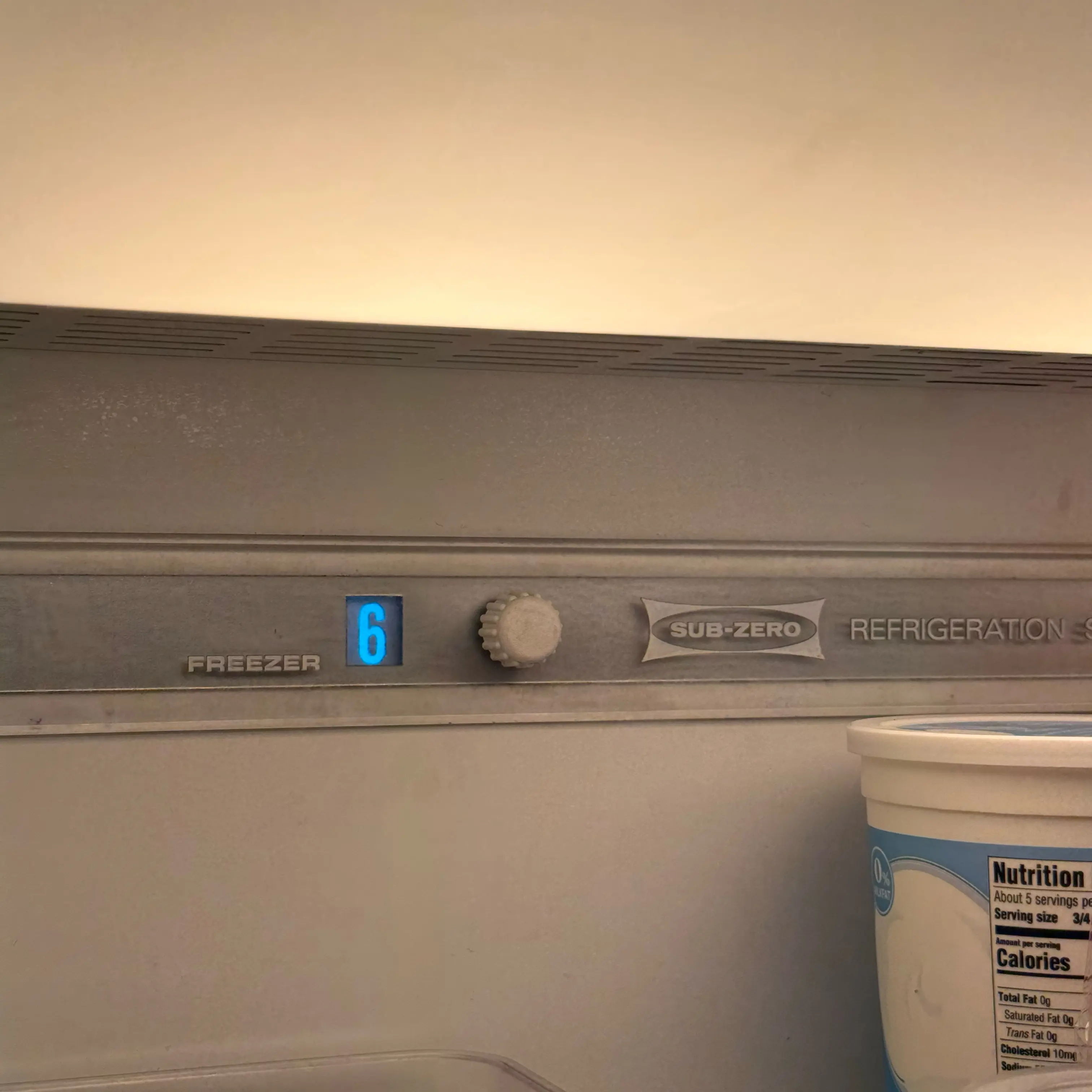
A client in Tribeca contacted Volt & Vector regarding a Sub-Zero 648PRO built-in refrigerator that had been running warm for approximately four days. The unit — a 48-inch integrated professional model installed flush with custom cabinetry in a full-floor loft — was showing 48°F in the fresh food section against a 37°F setpoint, while the freezer section was maintaining temperature normally.

On arrival, the technician confirmed the evaporator fan was running, which ruled out the most common cause of fresh-food-only warming. Running the unit's built-in service diagnostic retrieved an EC 40 fault code logged three days prior — a fresh food temperature sensor error. However, the Sub-Zero 648PRO generation is known for a scenario where EC 40 is triggered not by sensor failure but by ice bridging across the sensor housing from a partial defrost failure. The technician removed the interior panel to inspect the fresh food evaporator section and confirmed the second scenario exactly: a partial defrost heater failure had allowed ice to accumulate around — but not fully block — the fresh food evaporator, causing the sensor to read ambient ice temperature rather than circulating air temperature.

The defrost heater assembly and companion thermal limiter were replaced from stock on the service vehicle. A forced defrost cycle cleared the ice accumulation, and the refrigerator returned to a 37°F setpoint within 90 minutes of the technician's arrival. The EC 40 fault code cleared automatically once the ice formation was eliminated. Total repair was completed in a single visit; the 180-day warranty was documented on the written receipt. The client — a gallery owner who uses the refrigerator to hold food and beverages for client events — noted that the single-visit resolution and accurate root-cause diagnosis were exactly what distinguished Volt & Vector from a previous repair company that had replaced the temperature sensor without addressing the underlying defrost failure.

FAQ

Frequently Asked Questions About Refrigerator Repair

How quickly can you repair my refrigerator in NYC?

For most requests received before noon, we offer same-day or next-morning service across Brooklyn and Manhattan. Our vans carry the most common parts for all major brands, so the majority of repairs are completed in a single visit lasting one to three hours. We give you a confirmed two-hour arrival window when you book.

Is it worth repairing a refrigerator that's 10 years old?

Generally yes — if the repair cost is below 50% of replacement value and the sealed system (compressor, condenser, evaporator) is intact. A $200–400 repair on a functioning compressor-based unit is almost always better than a $2,000–4,000 replacement, especially for premium brands like Sub-Zero or Viking where used value remains high. We give you an honest assessment.

My refrigerator is warm but the freezer works fine — what's wrong?

This symptom almost always points to a failed evaporator fan motor. The freezer compartment contains the evaporator coils and stays cold from direct proximity, but the fan that pushes cold air into the fresh-food section has stopped. It is a common, stocked part — usually repaired same-visit. We also check for frost blockage around the fan if a defrost failure preceded the fan failure.

Do you repair built-in and panel-ready refrigerators?

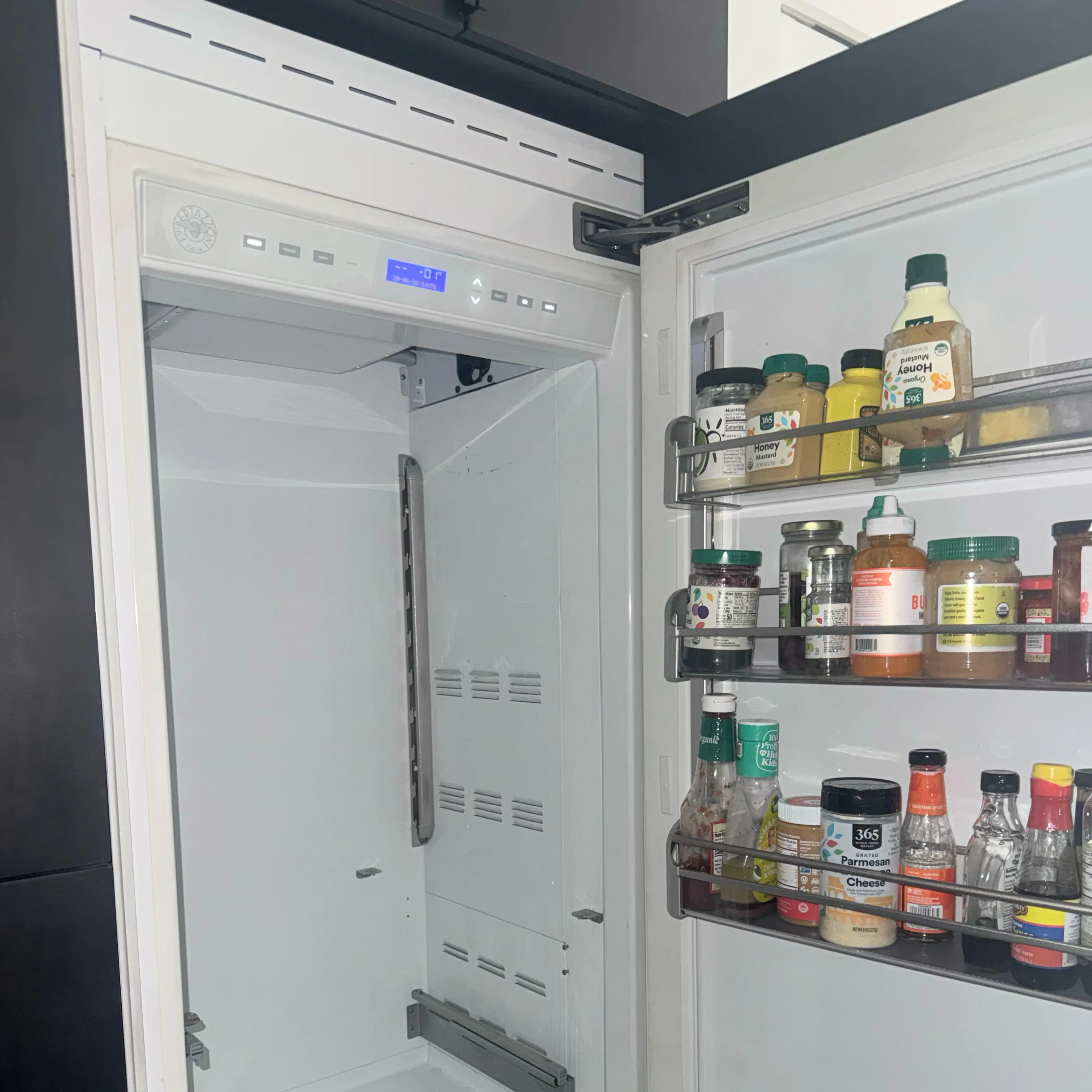
Yes. We routinely service built-in Sub-Zero, Viking, and Miele refrigerators in Manhattan and Brooklyn. These units require brand-specific knowledge for disassembly and component access — our factory-trained technicians handle them regularly. If your refrigerator shares a food-storage system with a standalone freezer column, we can assess both units on the same visit.

Every completed repair includes a 180-day parts & labor warranty.

Expert refrigerator repair in Brooklyn and Manhattan. Same-day service, $99 diagnostic credited to repair, 180-day warranty. Sub-Zero, Viking, Miele, LG, Samsung. Call (332) 333-1709.

Same/Next Day Availability!

9:00 AM - 6:00 PM
Response time
< 5 Minutes
Response rate
100%

Booking

Appliance Repair in NYC

Choose a time that works for you. Share the appliance type, address, and the issue you are seeing. We review the request and confirm the appointment details before the visit is finalized.

$99 diagnostic

Credited toward repair after approval

180 day warranty

Parts and labor on completed repair

OEM parts

Used when applicable and available

Licensed and insured

COI available if building requires it

What Happens Next

You send the request with the appliance type, location, and symptom.

We review the details and confirm service area, timing, and access notes.

If needed, we may ask for a model and serial photo before the visit.

Before You Book

If you smell gas, see sparks, notice a burning odor, or have an active water leak near electrical parts, stop using the appliance and handle the safety issue first.

Wolf - Repair-New-York - Brooklyn - slide

Baseline experience standard

Volt & Vector sets a hard baseline of 4+ years of hands-on appliance repair experience per technician. Senior technicians bring 8 years and 16 years in the field, which helps maintain consistent on-site decision quality across different appliance platforms and install constraints.
Fact: Minimum 4+ years per tech; senior techs with 8 and 16 years.

Prior manufacturer-authorized service environment experience

Team backgrounds include prior roles inside manufacturer-authorized service environments and within warranty-service procedures, where technicians are trained to follow required test steps, record outcomes, and close jobs with audit-ready notes.
Fact: Prior roles included authorized-service environments and warranty-service workflows.

Warranty-grade diagnostics and verification discipline

Work is executed like a controlled process: reproduce the symptom, isolate the failure mode, take measurements, confirm root cause, then verify the repair with functional testing before close-out. This reduces “guess-and-swap” and makes repeat calls less likely.
Fact: Reproduce → isolate → measure → confirm root cause → functional test.

Documentation habits that reduce repeat visits

Service notes are structured for traceability: model/serial capture, fault codes, readings, photos where relevant, and a clear parts path. That documentation makes follow-ups faster and reduces re-diagnosis time if a related symptom returns.
Fact: Model/serial + codes + readings + photos + parts path are documented.

NYC jobsite realities are built into the standard

Technicians operate to NYC constraints: built-in appliances, stacked laundry, tight clearances, and building rules. When required, documentation supports COI-driven access workflows without improvisation on site.
Fact: Built-ins, stacked installs, tight clearances, building rules, COI workflows when needed.

Independence and authorization clarity

Volt & Vector is an independent repair company. Prior authorized-service experience does not mean we are currently manufacturer-authorized for any brand.
Fact: Independent company; no current manufacturer authorization implied.