How appliance repair works in New York
See what to expect when you book appliance repair in NYC—from the initial diagnostic visit and repair estimate to parts ordering, final testing, payment, and warranty coverage.
Book a diagnostic
Book a diagnostic


+1 (332) 333-1709
43 Duffield St., Brooklyn, NY 11201
Manhattan Appliance Repair
.avif)
Manhattan homes often have compact kitchens, built-in appliances, stacked laundry closets, finished floors, and limited access around the machine. COI available upon request.
Brooklyn Appliance Repair
Diagnostic-first residential appliance repair in Brooklyn for refrigerators, dishwashers, washers, dryers, ovens, ranges, cooktops, and freezers.
HVAC Repair
We diagnose and repair residential HVAC systems across New York City, including central air, heat pumps, mini-splits, air handlers, and thermostats. Our $220 diagnostic fee is credited toward any approved repair.
How appliance repair works
Appliance repair is rarely “swap one part and done.” The clean workflow is: diagnose the failure, confirm the repair path, source the correct part, then return to complete the fix. Most of the stress people feel comes from not knowing what’s normal in that process, so this page sets expectations clearly.
The diagnostic visit (what we actually do)
A proper diagnosis is not guessing. On the first visit, the goal is to identify the failure mechanism and rule out look-alikes (different problems that create the same symptom). That means we’re not only checking the obvious part, we’re checking the scenarios that commonly imitate it.
Typical diagnostic workflow includes:
- Confirm the complaint (what the appliance does, when it fails, how often, and under what conditions)
- Check installation factors that can mimic “broken” (power, water supply, drain routing, venting, leveling, airflow, etc.)
- Use the appliance’s own clues (error codes, stored faults, test modes where available)
- Verify inputs/outputs and basic health checks (not every appliance supports the same tests, but the logic is consistent)
- Identify the most likely root cause and the components involved (one failed part can be caused by another upstream issue)
What you get after diagnosis is a clear plan: what failed, why it failed (when that’s possible to determine), what parts/labor are needed, and what risks/unknowns still exist.
Quote and decision point (repair vs replace)
After diagnosis, you’re choosing between:
- Repair now (with a defined scope)
- Defer repair (if it’s not urgent or you want to think)
- Replace the appliance (if repair doesn’t make economic sense)
There are cases where repair is simply not a smart investment. This comes up most often when:
- Multiple components are failed at the same time
- The failure is centered around expensive electronics (control boards, inverter modules, display/UI boards, power boards)
- The appliance is in a lower price tier and the repair approaches a large share of replacement cost
A practical rule: if a sub-$1,000 appliance needs multiple major electronic components, replacement is often the rational call. Not always, but often. We’ll tell you when the numbers don’t pencil out so you don’t sink money into a losing position.
Also worth saying plainly: four years ago, many repairs were cheaper. Parts pricing and availability have shifted across the industry, and electronics-heavy appliances tend to be less forgiving on cost when things fail.
Parts (the messy part nobody tells you about)
Even with a correct diagnosis, parts can be unpredictable in the real world. A few things can happen:
- The part is backordered or delayed
- The part arrives damaged
- The part supersedes to a new revision and needs an adapter or updated install approach
- The part doesn’t match the unit as expected (model/serial variations matter more than people realize)
- The part is correct, but the failure reveals a second issue once the first is addressed
That’s why some repairs require multiple visits. It’s not stalling, it’s reality: diagnosis is the map, but parts logistics and revision differences are the terrain.
Repair visit (and what “done” means)
On the repair visit, the focus is:
- Install the correct component(s) cleanly
- Re-check the related systems so the new part doesn’t get taken out by the original cause
- Run a verification cycle or functional test appropriate to the appliance
- Confirm the symptom is resolved and the appliance behaves normally
If a repair has any remaining uncertainty (for example, intermittent failures), we’ll tell you what to watch for and what the next diagnostic trigger would be.
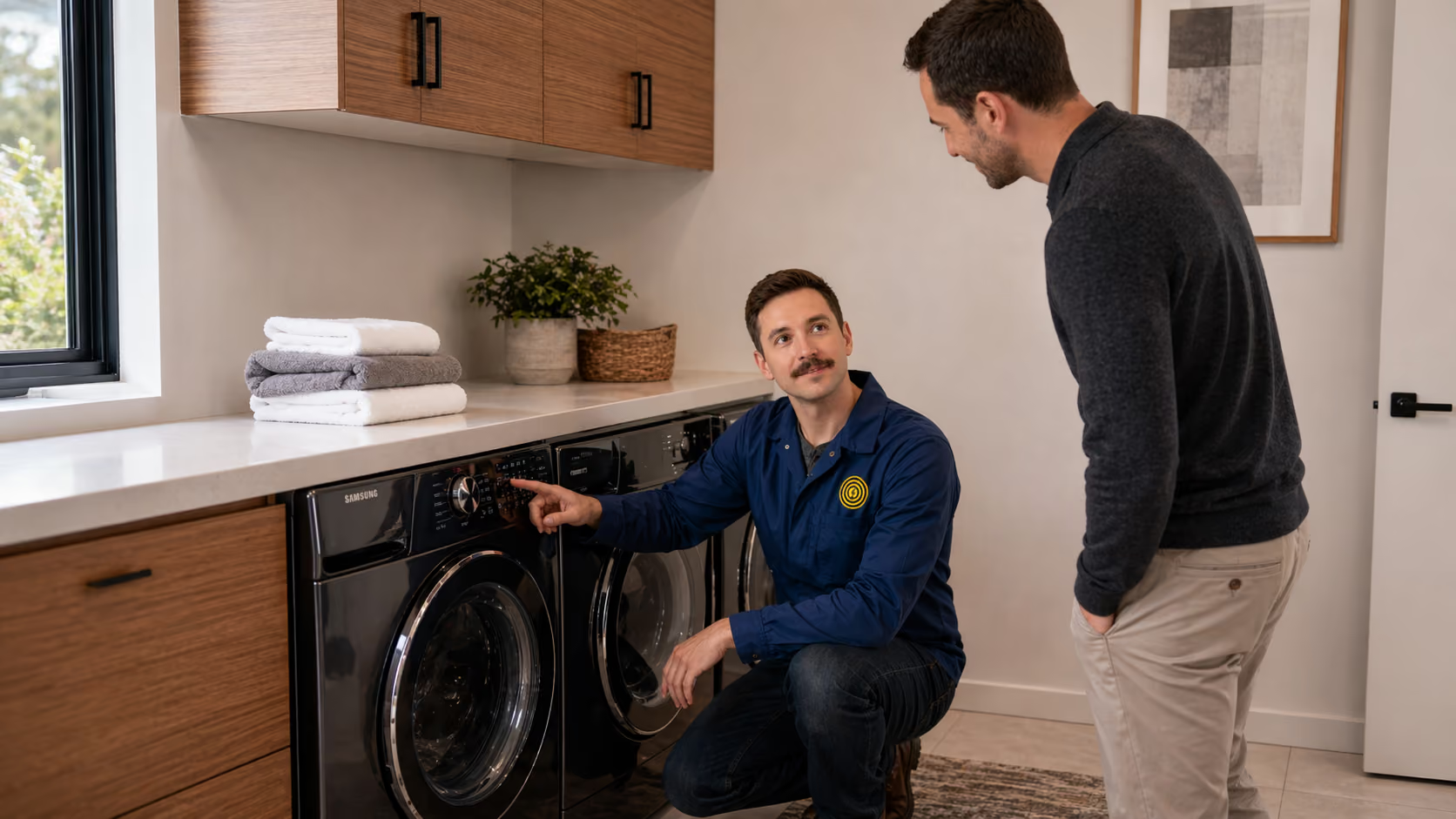
Background checks and professionalism
When you book a repair, you’re not just buying a technical outcome. You’re letting someone into your home. In NYC that’s a bigger deal than people admit: apartments are tight, neighbors are close, schedules are stacked, and a service visit often happens while you’re working, watching kids, or trying to keep a building manager happy. So the baseline expectation isn’t “show up and fix it.” It’s “show up and be trustworthy, predictable, and professional inside someone else’s space.”
That’s why our technicians complete background checks. It’s not a marketing line. It’s a practical filter. If we send someone to your door, we want you to feel comfortable letting them in, letting them move through your kitchen/laundry area, and letting them work around your personal belongings without you feeling like you need to hover. Trust is part of the service, not a bonus.
Professionalism also means consistency in the small things, because those are what customers actually experience:
- Clear identification and communication (who is coming, when, and what the plan is)
- Respect for the home (shoe covers when appropriate, controlled tool placement, no unnecessary wandering, no mess left behind)
- Respect for your time (arrival windows, updates if a job runs long, and a clean explanation of what’s next)
- Respect for your property (no forcing panels, no “let’s just try this” experiments that create new damage, no shortcuts that look fine for 48 hours and then fail)
- Calm, direct explanations (what failed, what didn’t, what’s uncertain, and what you’re paying for)
A professional tech knows how to operate inside that environment without creating extra problems for you. The job is not only the appliance. It’s also the building, access, logistics, and minimizing disruption.
And for you as the customer, the “professional” part shows up in one sentence: you should never feel like you have to manage the technician. You should be able to open the door, point to the issue, and go back to your life, knowing the person in your home is vetted, focused, and operating with a clean standard.
Scheduling, arrival windows, and delays (rare, but real)
A typical day for a working tech is about four appointments, sometimes more, sometimes fewer. It depends on:
- Job complexity (a “quick” call can turn into a deep diagnostic)
- Building access and elevator/loading rules
- Traffic and parking realities
- Parts runs or emergency pivots (less common, but it happens)
A technician can run late if the job before you takes longer than expected or traffic gets ugly. It’s not the norm, but it’s possible. When it happens, it’s usually because we’re finishing a job the right way instead of rushing out mid-stream.
The human part: why techs stay in this work
From the outside, appliance repair can look repetitive. In practice, it’s the opposite: every home has different constraints, every failure has its own signature, and the job is basically applied problem-solving with real consequences (time, food, laundry, comfort, budgets). The technicians who are good at it tend to genuinely like it, because they get to solve real problems for real people every day.
How you can help the process go faster
If you want the shortest path from “broken” to “working,” do these before the first visit:
- Send a photo of the model/serial tag (inside the door, on the frame, behind the drawer, etc.)
- Send a photo or short video of the symptom (noise, error code, leaking point, flame behavior)
- Clear access (especially under-sink shutoffs, behind laundry units, and around cooktops)
- Tell us what changed right before the issue started (power outage, moving the unit, plumbing work, first use after months, etc.)
A good repair experience is not magic, it’s disciplined process: diagnose thoroughly, set expectations honestly, source the correct part, and verify the fix under real operating conditions. Sometimes it’s one visit. Sometimes it’s two. Sometimes the correct answer is “don’t repair this.” The goal is the same either way: a clean decision with no surprises.

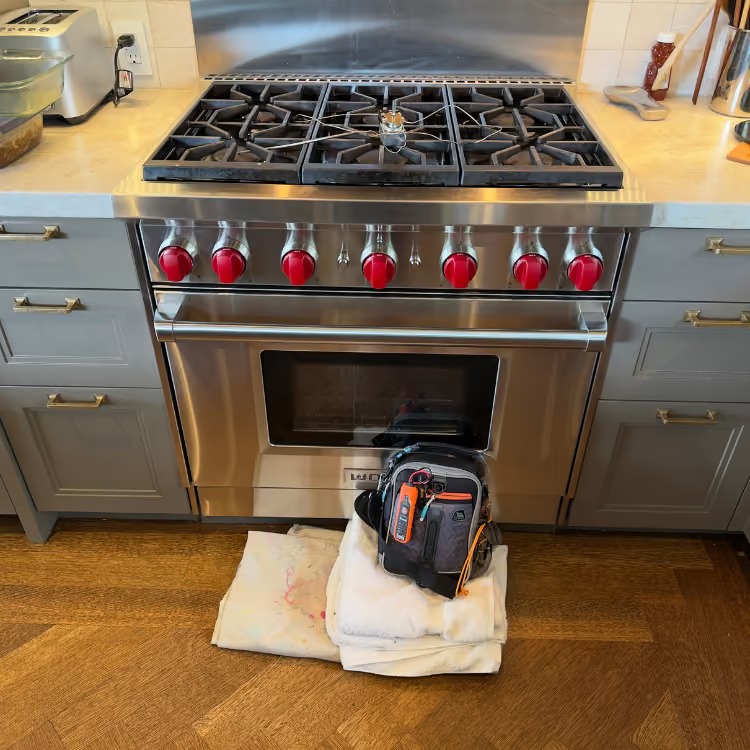
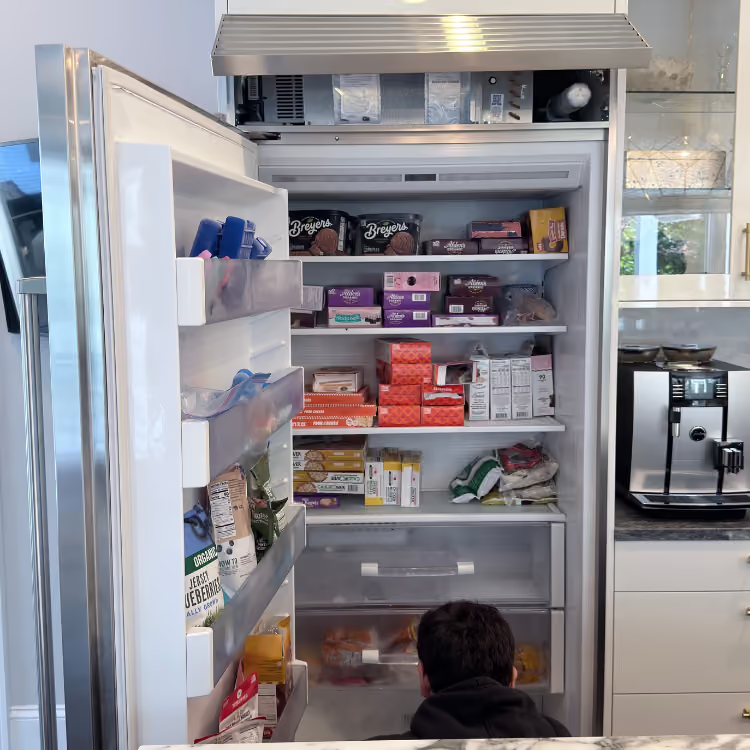
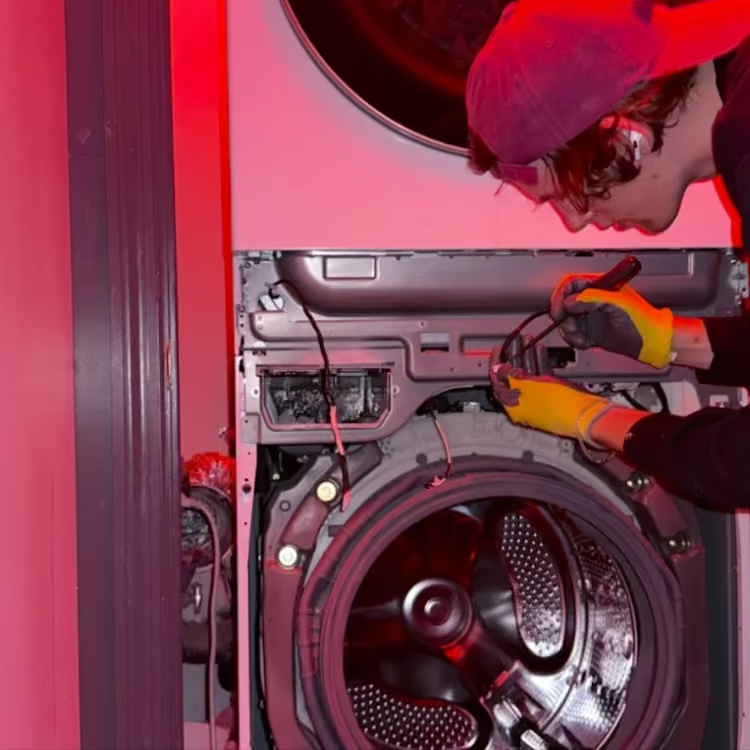
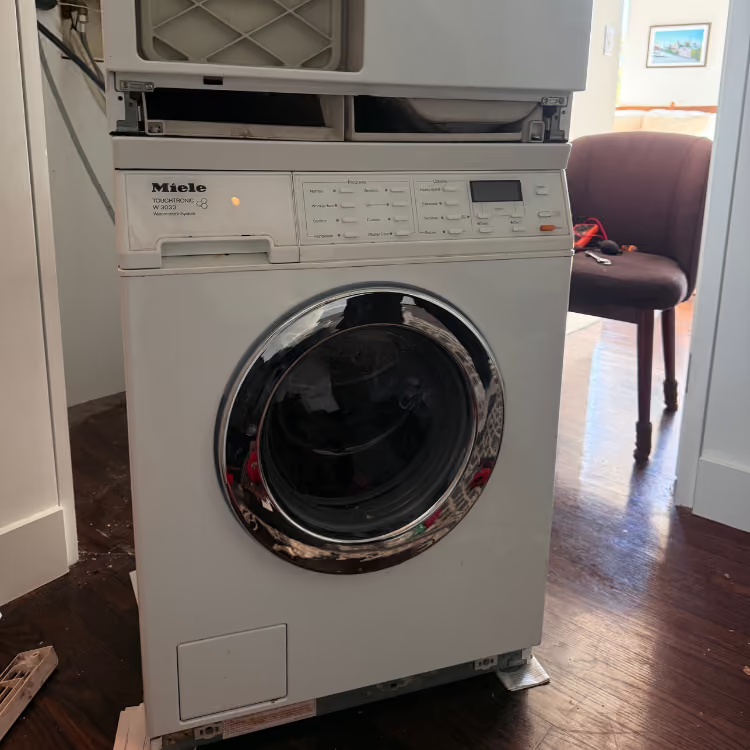
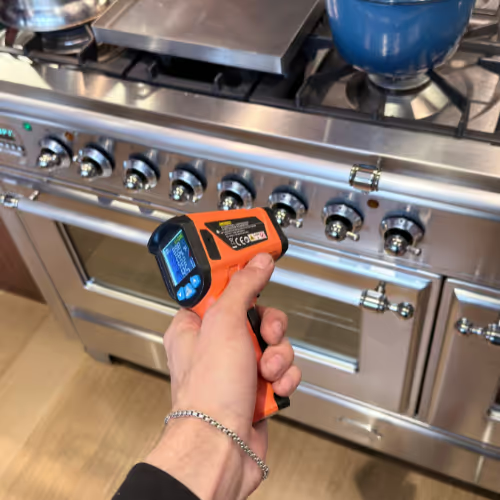
Photos from real jobs: what we found, what we tested, and what we fixed.