.avif)


.avif)
Clicking, ignition, flame, induction, electric-zone, control, and power diagnosis for surface-only cooktops and rangetops.
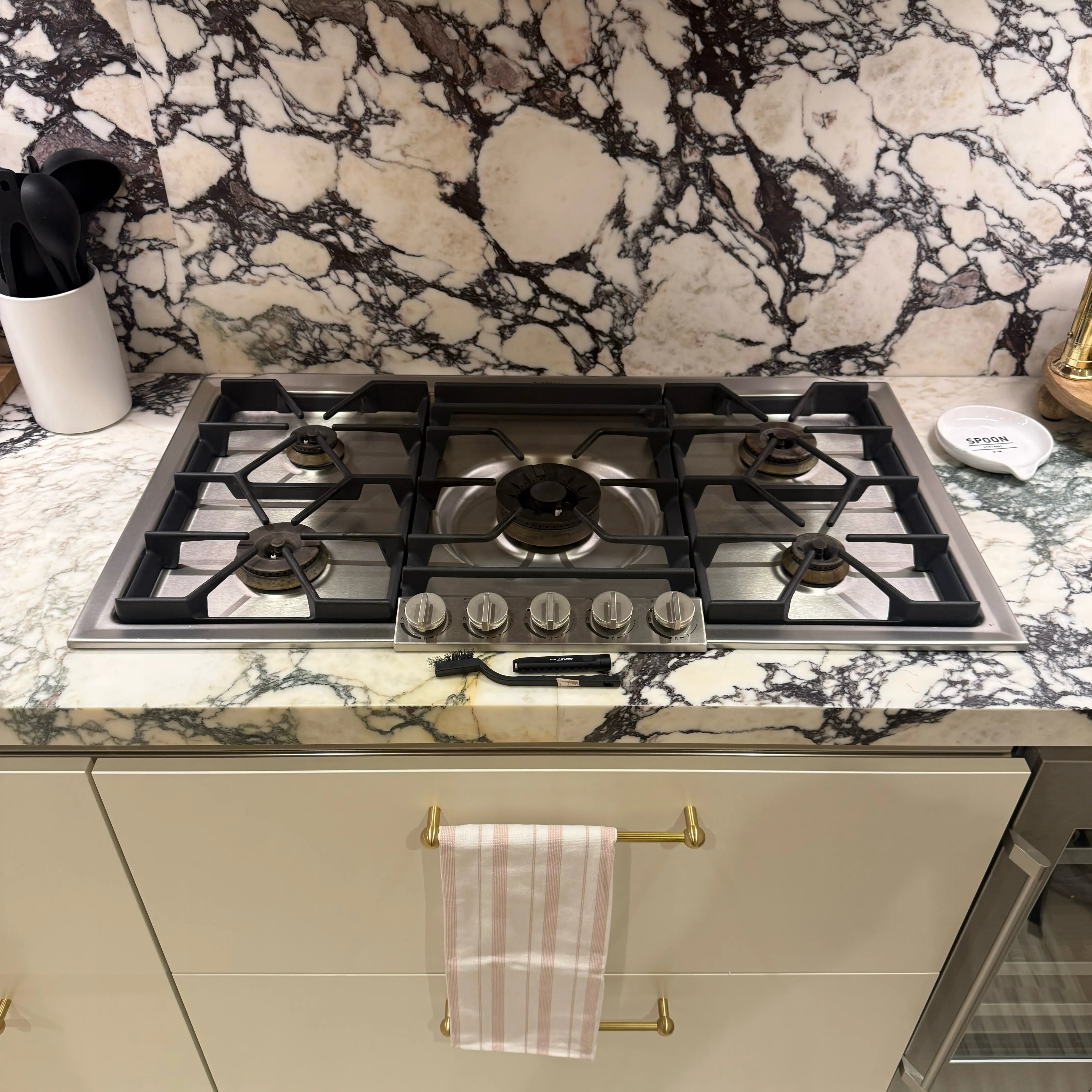
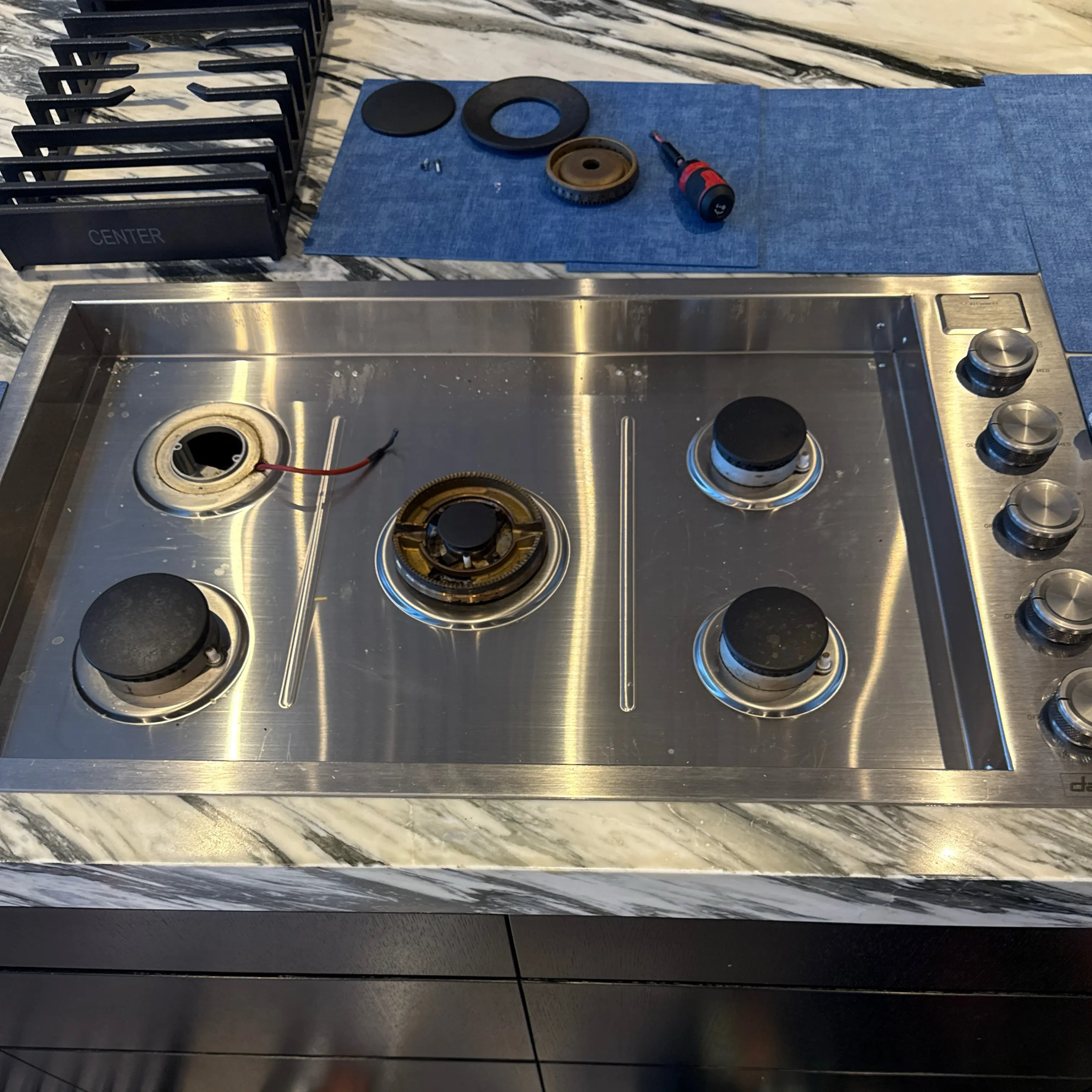
Schedule Gas, Electric, or Induction Cooktop RepairCooktop repair is for the cooking surface only: gas burners, electric radiant zones, induction zones, knobs, touch controls, and the power or ignition systems that serve them. It should not be mixed with an oven-cavity complaint just because both appliances are installed in the same kitchen.
Volt & Vector services residential gas, electric, induction, and rangetop installations by appointment in active NYC routes. The first questions are which zones fail, what platform is installed, what the controls show, and how the cooktop is supported and accessed from the counter or cabinet below.
Is This the Right Repair Page?
- Use cooktop repair for a separate surface-only appliance with clicking, no ignition, abnormal flame, a dead or overheating electric zone, induction pan-detection trouble, damaged controls, or a display fault.
- Use range repair when the surface and oven share one freestanding or slide-in cabinet.
- Use oven repair for a separate wall oven or an oven-only complaint.
- Use range hood repair when the symptom is weak capture, hood noise, fan speed, light, or ventilation control.
What the Symptom Changes
- A gas burner keeps clicking: recent cleaning or spillover, cap and ring seating, visible residue, knob return, flame stability, ignition switch, electrode, module, wiring, and supply or polarity conditions must be separated.
- A gas burner lights but the flame is abnormal: cap placement, burner cleanliness, pan size, ventilation interaction, fuel type, pressure, regulator, and air mixture can affect flame behavior. Gas odor or unstable flame is a stop-use condition.
- One electric zone does not heat: the element, limiter, control, wiring, and zone-specific command differ from a cooktop where every zone is dead.
- Induction does not detect a pan: cookware compatibility, pan position, zone choice, control lock, overheating state, supply, and model-specific fault display guide the branch.
- The touch panel is unresponsive: moisture, lock state, power, control temperature, user interface, and internal control must be distinguished without lifting the glass.
Safe Checks Before Service
- Identify gas, radiant electric, or induction and note every affected and working zone.
- With gas controls off and surfaces cool, seat only owner-removable caps and rings according to the manual and let visible cleaning moisture dry.
- For induction, try known compatible cookware and confirm the control lock and settings.
- Record the exact display message, clicking pattern, flame behavior, or zone response.
- Send model-label and counter photos, including the cabinet or drawers below and any wall oven directly underneath.
Do not lift or unseal the cooktop, perform energized electrical measurements, open gas fittings, enlarge burner openings, defeat switches, or keep attempting ignition through gas odor. Do not slide drawers or stored items into wiring or the cooktop underside.
When to Stop Using the Cooktop
If you smell gas, leave immediately with others and do not operate appliance controls, switches, plugs or phones inside. From a safe outdoor location, call 911 and the gas utility. Stop using the cooktop for a burner that will not shut off, flame outside the burner area, delayed ignition, sparking below the surface, broken glass with exposed electrical risk, repeated breaker trip, smoke, or a burning electrical smell.
The CPSC carbon-monoxide safety guidance is the public safety reference for fuel-burning appliance and gas-range concerns.
What Diagnosis Should Confirm
Diagnosis should verify platform and supply, zone-by-zone behavior, gas ignition and flame where applicable, element or induction response, temperature protection, user-interface commands, internal control outputs, wiring, and installation clearances as the model permits. One failed zone should not be used to assume the same cause as an all-zone outage.
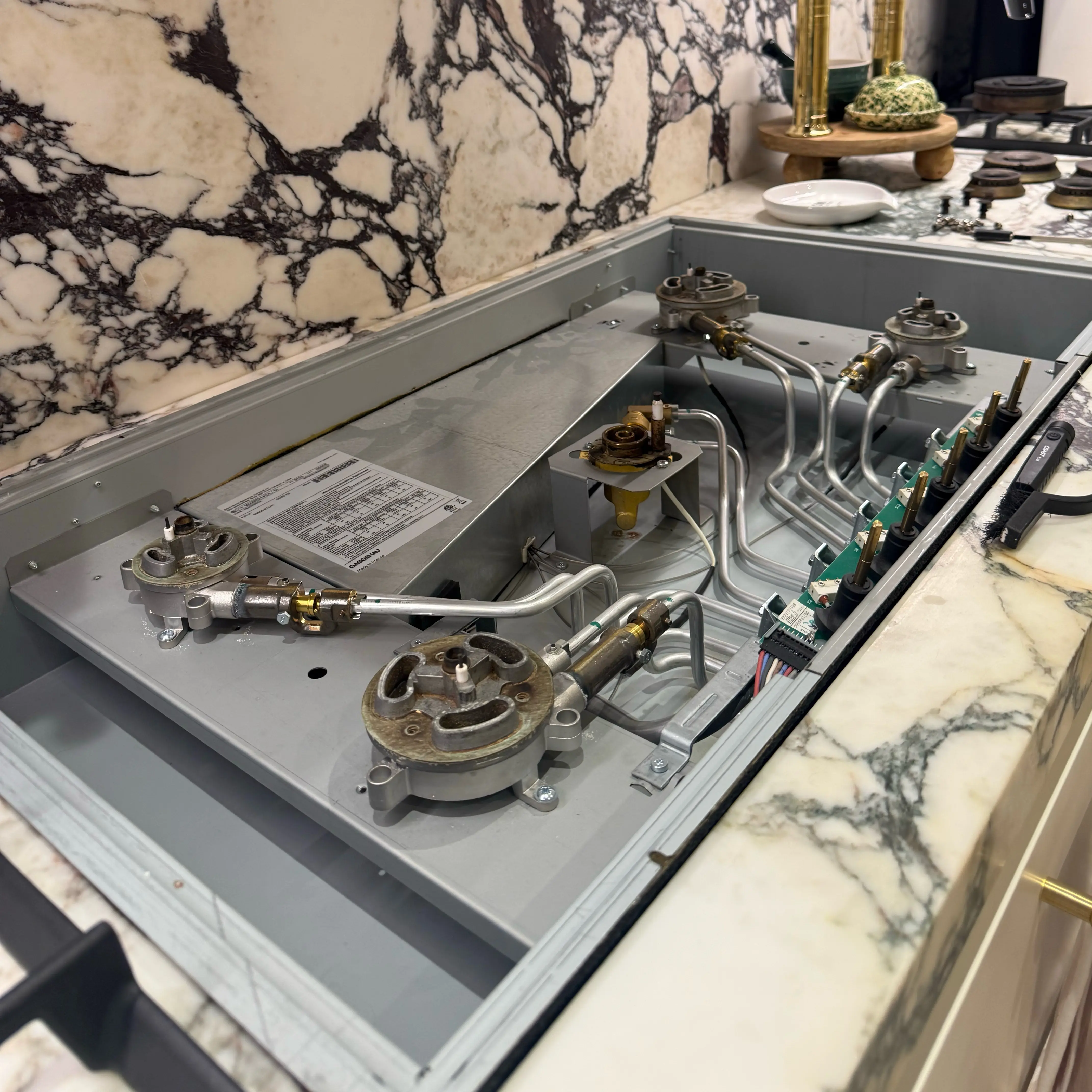
Counter-mounted appliances can require drawer removal, cabinet access, seal protection, support, and coordination with an oven underneath. Send photos above and below the surface and do not loosen mounting hardware before the service plan is confirmed.
Cooktop Repair Questions
Is brief clicking from several gas burners normal?
It can be normal during ignition on some designs. Clicking that continues after a stable flame, occurs with every control off, follows a gas odor, or never produces ignition is a different condition.
Does an induction no-pan message mean the cooktop failed?
Not automatically. Cookware material, pan position and size, selected zone, control lock, overheating protection, and model-specific messages should be checked before an internal failure is assumed.
Should I remove drawers below the cooktop?
You may clear loose contents if safe, but do not remove structural panels, wiring covers, gas connections, or mounting hardware. Send photos so access can be planned.
Can cooktop repair include the oven below it?
A separate wall oven is a different appliance and should be listed as a second symptom and model. A range with both functions belongs under range repair.