Appliance repair service in New York City - Brooklyn
See what happens on a diagnostic visit, how quotes and parts work, why some repairs need multiple visits, and when replacing an appliance makes more sense than repairing it.

Mini Split Filter Cleaning vs Deep Cleaning

Not sure if a mini split needs filter cleaning or deeper cleaning? Compare accessible filter care, visible buildup, airflow, odor, and water clues.

Diagnostic fee: $99, credited toward the repair if you move forward
Warranty: 180-day parts and labor warranty on completed repairs
Arrival windows: 9 to 11, 11 to 1, 1 to 3, 3 to 5
Symptom

Customer is unsure whether a mini split needs basic filter care or deeper indoor-head cleaning

Brand and model notes

Filter access, filter type, reminder behavior, and cleaning interval vary by model. Always use the model label and official instructions for owner-level filter care.

Use the exact model label and controller photo when model behavior, filter access, reminder messages, or light patterns may vary.

Before you request service

Use this page when you are unsure whether a mini split needs basic filter care or deeper indoor-head cleaning.

This page compares owner-level filter care against deeper cleaning for a ductless mini split indoor head.

The resident can see a filter or louver area and wants to know whether simple owner maintenance is enough or a cleaning request makes sense.

Use the checks below to document what is visible, what changed, and what cannot be accessed safely.

Submit the information for review before treating it as an accepted appointment.

What this symptom usually means

Filter cleaning is the owner-level step when the filter is accessible and the manual allows it. It addresses dust on the removable filter, not hidden buildup deeper inside the head.

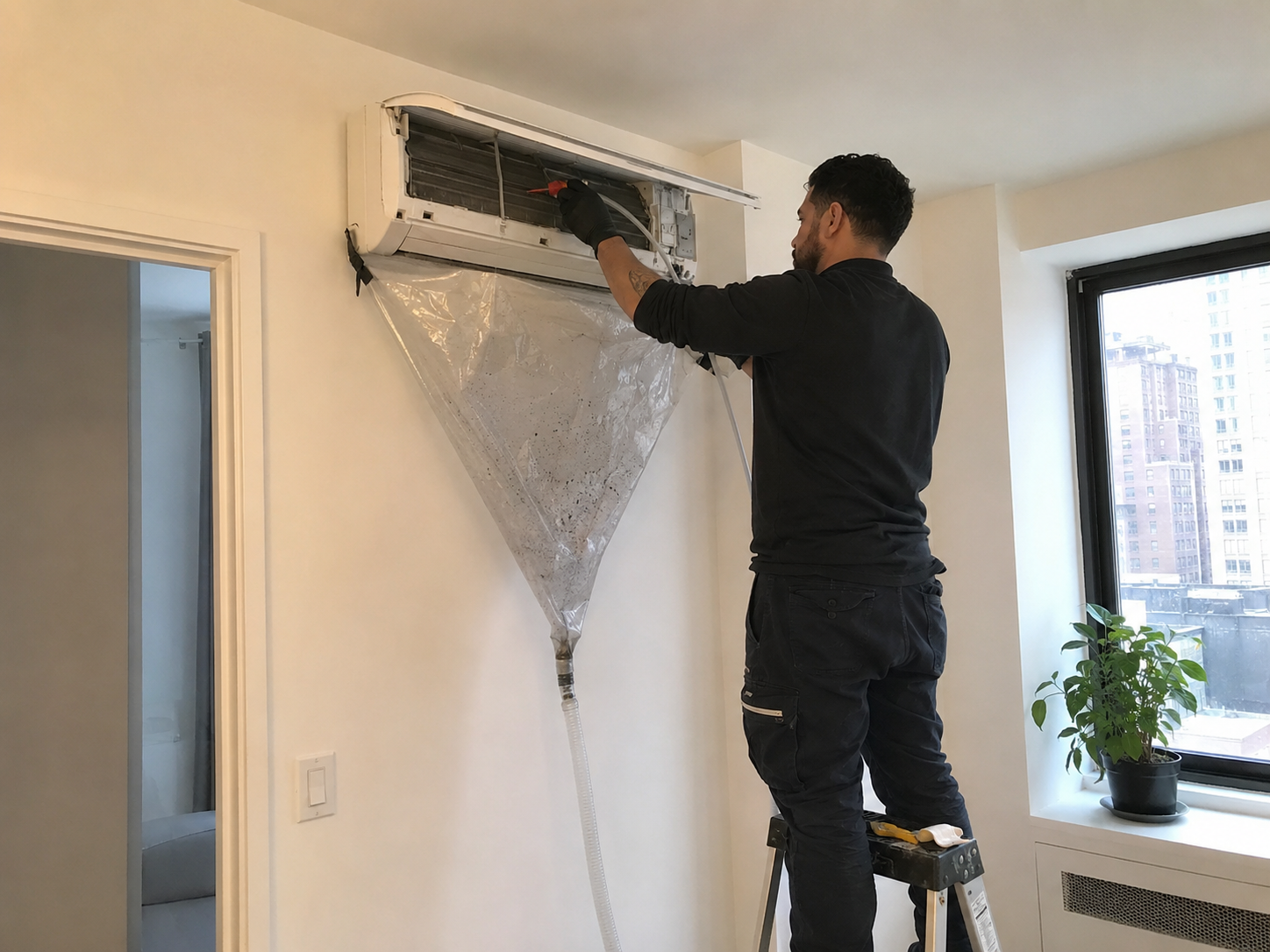
Deep cleaning becomes more reasonable when visible dirt remains around the outlet, louver, blower opening, or coil area after the filter is clean and dry.

DOE and ENERGY STAR support filter maintenance as a first line for airflow. Daikin guidance reinforces filter care and also separates deeper fan or heat-exchanger dirt from ordinary filter cleaning.

A clean filter does not prove the indoor head is clean. Airflow, odor, water, and visible buildup determine whether the request should move deeper.

A useful lead states what changed after filter care, rather than simply asking for a package.

Details that change the next step

A dusty removable filter with normal airflow after cleaning supports owner maintenance, not deep-clean scope.

Visible buildup beyond the filter after a dry reinstall supports a deeper cleaning request.

Odor or weak airflow that remains after filter care changes the request from filter maintenance to condition review.

Water, ice, no cooling, or alerts should not be folded into a cleaning-only request.

Unit count and head access change price and preparation, so each head should be photographed separately.

First safe checks

  1. Confirm the filter is actually accessible without tools or forcing brittle clips.
  2. Clean the filter only according to the model instructions, and reinstall it only after it is fully dry.
  3. Photograph the filter before and after cleaning so the result is documented.
  4. Look at the louver and outlet area without opening covers; note whether dirt remains beyond the filter.
  5. Compare airflow and odor before and after filter care.
  6. Record whether water, ice, or alerts are also present because those are not filter-only symptoms.

These checks stay visible, reversible, and safe. They do not require opening equipment, testing voltage, handling refrigerant, clearing hidden drains, or guessing failed parts.

If a check cannot be done from normal room-side access, skip it and include that access limit in the request.

When to stop

  • The filter cannot be removed without tools, force, or unsafe climbing.
  • The filter is torn, missing, does not seat correctly, or will not stay in place.
  • Visible buildup remains deeper in the head after the filter is clean.
  • Odor, weak airflow, water, or no-cooling persists after filter care.
  • The head is installed above delicate finishes or furniture where cleaning preparation matters.

Stop checking when the symptom creates property risk, abnormal equipment behavior, or access risk.

The safer next step is to document what happened and send the request for review.

Do not keep collecting clues if the next clue would require removing covers, reaching locked areas, climbing, handling water inside equipment, or repeating power resets.

What not to do

  • Do not spray cleaner into the unit to replace deep cleaning.
  • Do not remove blower wheels, louvers, covers, or panels for homeowner cleaning.
  • Do not reinstall a wet filter.
  • Do not assume a filter-cleaning reminder means the whole unit was cleaned.
  • Do not use health or mold-cure claims to justify cleaning.

These blocked actions protect the customer, the apartment, and the equipment while preserving the symptom for review.

Photos and details to send

  • Filter before cleaning.
  • Filter after cleaning and drying.
  • Louver and outlet area with visible buildup if present.
  • Controller or reminder display if the unit shows one.
  • Wall, floor, and access clearance around the head.
  • Any water, ice, or odor-related staining that changes the scope.

A useful request shows the symptom, the visible equipment, the controller or setting, the access condition, and the room context.

NYC apartment and building notes

Many NYC ductless heads are mounted high, above beds, built-ins, kitchens, or finished wood floors.

Cleaning scope depends on protection, ladder access, water handling, and whether furniture must be moved.

A COI or building access rule can apply even when only the indoor head is being cleaned.

Multiple heads should be documented separately because one room may have cooking dust or pet hair while another is clean.

Best next request path

If airflow and odor improve after allowed filter care, the customer can keep a maintenance record and avoid an unnecessary request.

If deeper visible buildup remains, submit a mini split cleaning request with photos and unit count.

If water, ice, no-cooling, or blinking indicators are present, the request should not be cleaning-only.

The review should decide scope from evidence, access, and number of heads.

The likely service handoff is Mini split cleaning, but the final route depends on photos, access, and risk signs.

When submitting, include: Mini split filter vs deep cleaning; include filter photos, louver/outlet photos, airflow/odor result after filter care, unit count, ZIP code, and access notes.

Brand and model notes

Filter access, filter type, reminder behavior, and cleaning interval vary by model. Always use the model label and official instructions for owner-level filter care.

Use the exact model label and controller photo when model behavior, filter access, reminder messages, or light patterns may vary.

How to make the request reviewable

Send a short factual message instead of a guessed diagnosis.

Include the affected room, what changed, what safe checks were completed, and what could not be accessed.

If the condition improved, say what improved. If it stayed the same, returned, or became worse, say when that happened.

Photos are more useful than long explanations when they show the unit, controller, visible condition, and building access issue.

If management, a superintendent, or COI approval is involved, include that in the first request.

Choose the next step

When the safe checks explain the symptom and the unit works normally again, keep the record and plan routine maintenance instead of submitting mini split cleaning immediately.

When visible buildup, weak airflow, odor, water, ice, no response, or an alert remains, stop guessing and send the photos for review.

Choose a cleaning request only when the visible evidence supports cleaning; choose diagnostic review when the evidence includes water risk, ice, no response, abnormal noise, or recurring alerts.

Check building access before choosing a route. Locked panels, roof access, shared drains, mechanical rooms, or COI rules can change whether the work can be accepted.

Do not choose a service category from comfort symptoms alone. Use the visible condition, controller state, timing, and safe-check result.

When the next safe check would require tools, covers, live electrical access, refrigerant work, drain work, or unsafe height, stop and send the request as-is.

If the symptom affects one room, one head, one grille, or one cabinet, say that. If every room or unit is affected, say that instead.

If you are unsure, submit the request for review with photos rather than asking for a confirmed visit under the wrong service type.

Sources used

Official sources support the safe checks and stop points above; they are not used to guess a failed part from symptoms alone.

When a manufacturer manual or support source applies, use it to check model-specific owner steps, not to claim brand authorization.

Source-backed boundaries help decide when to stop owner checks and submit the request for review.

DOE and ENERGY STAR support filter and airflow maintenance. Daikin separates filter care from deeper fan/heat-exchanger cleaning. NYC HPD supports seasonal resident filter cleaning and building access coordination.

Reference links: DOE air conditioner maintenance, ENERGY STAR maintenance checklist, Daikin maintenance tips, and NYC HPD VRF and split system maintenance plan.

NYC apartment and building notes

Many NYC ductless heads are mounted high, above beds, built-ins, kitchens, or finished wood floors.

Cleaning scope depends on protection, ladder access, water handling, and whether furniture must be moved.

A COI or building access rule can apply even when only the indoor head is being cleaned.

Multiple heads should be documented separately because one room may have cooking dust or pet hair while another is clean.

Photos and details to send

  • Filter before cleaning.
  • Filter after cleaning and drying.
  • Louver and outlet area with visible buildup if present.
  • Controller or reminder display if the unit shows one.
  • Wall, floor, and access clearance around the head.
  • Any water, ice, or odor-related staining that changes the scope.

A useful request shows the symptom, the visible equipment, the controller or setting, the access condition, and the room context.

First safe checks

  1. Confirm the filter is actually accessible without tools or forcing brittle clips.
  2. Clean the filter only according to the model instructions, and reinstall it only after it is fully dry.
  3. Photograph the filter before and after cleaning so the result is documented.
  4. Look at the louver and outlet area without opening covers; note whether dirt remains beyond the filter.
  5. Compare airflow and odor before and after filter care.
  6. Record whether water, ice, or alerts are also present because those are not filter-only symptoms.

These checks stay visible, reversible, and safe. They do not require opening equipment, testing voltage, handling refrigerant, clearing hidden drains, or guessing failed parts.

If a check cannot be done from normal room-side access, skip it and include that access limit in the request.

When to stop

  • The filter cannot be removed without tools, force, or unsafe climbing.
  • The filter is torn, missing, does not seat correctly, or will not stay in place.
  • Visible buildup remains deeper in the head after the filter is clean.
  • Odor, weak airflow, water, or no-cooling persists after filter care.
  • The head is installed above delicate finishes or furniture where cleaning preparation matters.

Stop checking when the symptom creates property risk, abnormal equipment behavior, or access risk.

The safer next step is to document what happened and send the request for review.

Do not keep collecting clues if the next clue would require removing covers, reaching locked areas, climbing, handling water inside equipment, or repeating power resets.

What not to do

  • Do not spray cleaner into the unit to replace deep cleaning.
  • Do not remove blower wheels, louvers, covers, or panels for homeowner cleaning.
  • Do not reinstall a wet filter.
  • Do not assume a filter-cleaning reminder means the whole unit was cleaned.
  • Do not use health or mold-cure claims to justify cleaning.

These blocked actions protect the customer, the apartment, and the equipment while preserving the symptom for review.

Before Scheduling HVAC Service

Check the thermostat mode, set temperature, air filter, breaker, and whether the indoor or outdoor unit is running. Take photos of the thermostat screen, equipment label, leak area, or error code before resetting the system.

Do not keep running the HVAC system if there is a burning smell, repeated breaker tripping, water near electrical parts, or ice on the coil. Those symptoms should be checked before the problem spreads to a larger component.