
.png)
.png)


West Village Appliance Repair in Manhattan | Volt & Vector
West Village appliance repair for prewar apartments, townhouse layouts, compact kitchens, refrigerators, dishwasher leaks, laundry, dryers, ovens, ranges, and cooktops.
West Village Appliance Repair in Manhattan
Volt & Vector provides appliance repair in the West Village for refrigerators, dishwashers, ovens, ranges, cooktops, washers, and dryers in Manhattan apartments, co-ops, condos, townhouses, and prewar buildings. The neighborhood changes the visit because compact kitchens, older floors, narrow halls, stair routes, finished cabinetry, and water-connected appliances can make careless movement more damaging than the original symptom. A refrigerator warming in a galley kitchen, a dishwasher leak under a finished counter, or a washer shaking on older flooring should start with symptom evidence, model details, and installation photos. We do not ask customers to move built-in or water-connected appliances blindly; we plan the next step and provide an estimate before repair work begins.
West Village Service Context
Community Board 2 includes the West Village within a larger Greenwich Village and lower west-side district, and LPC Greenwich Village historic-district materials explain why building layouts vary block by block. For appliance repair, that translates into practical concerns: older floors, narrow paths, compact kitchens, and appliance openings that may not match modern service clearances.
The service route matters most when the appliance is tied to water, heat, or finished surfaces. A refrigerator may sit against a tight side wall with a water line behind it. A dishwasher can be trapped by a raised floor or counter edge. A range or oven may be close to cabinets that should not be scratched during access.
The best preparation is specific rather than broad. Cooling problems need displayed temperatures and water/ice notes. Leaks need location and cycle timing. Washer vibration needs load type and a short video. Dryer symptoms need whether the load ends warm, cold, damp, or overheated.
West Village calls also split between townhouse-style entries and smaller apartment routes. That changes what should happen before service: confirm whether the unit is on a parlor, garden, or upper level, whether the kitchen path turns sharply, and whether a building contact controls entry. Those details are more useful than a long appliance list because they decide whether the technician can protect the appliance, floors, and nearby cabinetry on the first visit.
For townhouse or duplex layouts, the level of the appliance can change the safe plan. A garden-level laundry issue may need drain and pan details, while an upper-level refrigerator issue may need hallway turns and floor-threshold photos. If the appliance sits behind trim, send the trim condition instead of loosening it. If a dishwasher leak is visible, keep the water evidence contained and leave the installation undisturbed.
Common West Village Appliance Repair Situations
Refrigerator Warming In A Narrow Kitchen
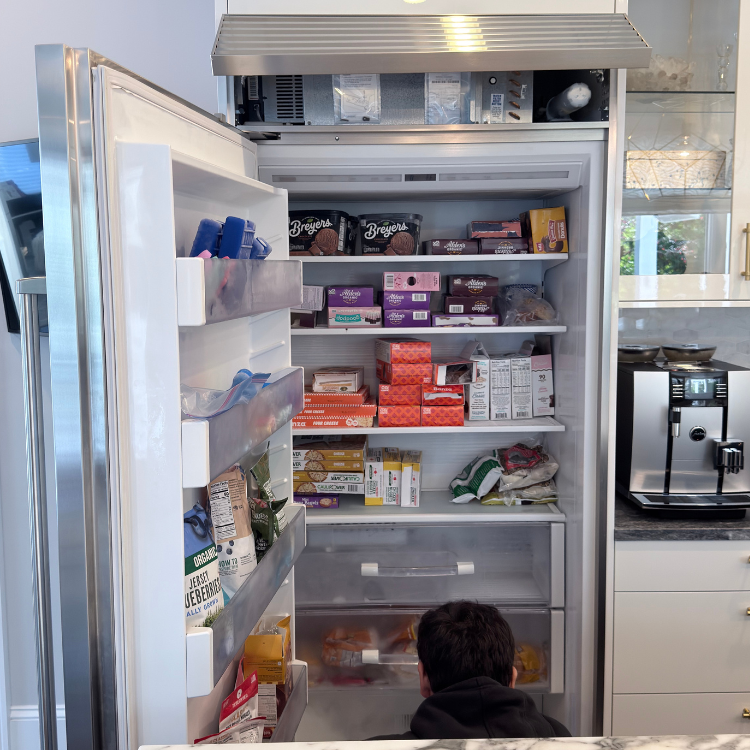
- Visit context: West Village galley kitchens can leave little room around a counter-depth or built-in refrigerator, especially when the cabinet run ends against a side wall.
- Appliance symptom: The fresh-food section warms, freezer behavior changes, ice output slows, or the display temperature does not match food condition.
- Safe customer action: Record temperatures, keep doors closed when practical, and avoid forcing the appliance out of the opening.
- What helps booking: Send brand, visible model details, water or ice connection notes, and photos showing the side clearance and floor path. Use refrigerator not cooling diagnosis to separate temperature evidence from access planning.
Dishwasher Leak Under A Finished Counter
- Visit context: Renovated kitchens can hide water behind toe-kicks, side panels, flooring transitions, or a narrow sink base.
- Appliance symptom: Water appears at the front edge, under the sink base, after drain, or along a cabinet seam.
- Safe customer action: Stop the cycle, dry visible water, and do not run another wash to confirm the leak.
- What helps booking: Share leak location, cycle timing, under-sink connection photo, and whether the sink drains normally. Before another cycle, use protect cabinets around a dishwasher.
Washer Vibration On Older Floors
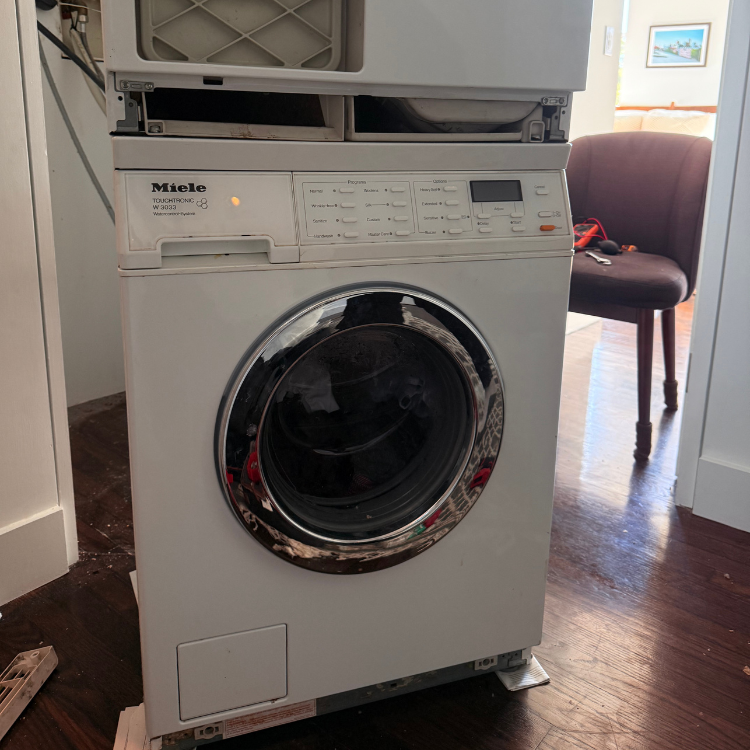
- Visit context: A laundry closet above older framing or near a townhouse stair can make spin movement louder than the same washer on a newer slab.
- Appliance symptom: The washer bangs, walks, pauses with wet clothing, or only shakes with towels and bedding.
- Safe customer action: Stop the load if the machine shifts or hits surrounding surfaces; do not keep restarting spin cycles.
- What helps booking: A short video, load type, and photo of the laundry setup help more than a part guess. A spin video can be compared with washer shaking violently.
Dryer Heats But Clothes Stay Damp
- Visit context: A closet dryer may have a short visible lint path but a hidden vent, condenser, or moisture-removal problem behind the installation.
- Appliance symptom: Loads end warm and damp, dry time stretches, lint warnings appear, or the dryer shuts down mid-cycle.
- Safe customer action: Clean the accessible lint filter and stop use if the dryer smells hot or overheats.
- What helps booking: Identify whether the machine is vented, ventless, heat-pump, or combo and describe the load at cycle end. Route damp-load complaints to dryer repair.
Oven Or Range Not Heating Correctly
- Visit context: Small kitchens can make oven access sensitive because trim, cabinets, and flooring sit close to the appliance.
- Appliance symptom: Preheat takes too long, food cooks unevenly, one mode works while another fails, or the display disagrees with results.
- Safe customer action: Stop use if there is smoke, burning smell, repeated breaker trips, or gas odor. Do not remove panels.
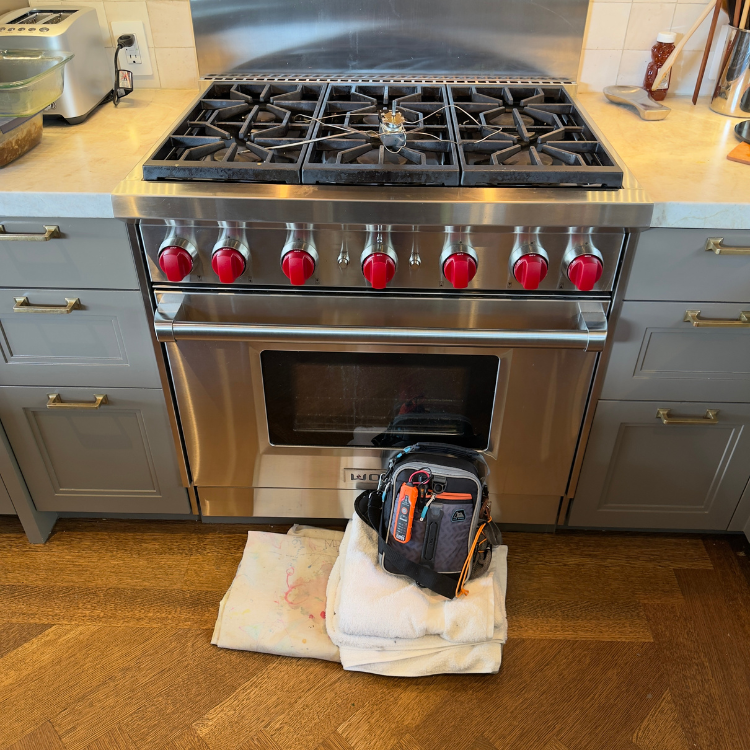
- What helps booking: Tell us whether the issue is bake, broil, convection, surface burner, display, or ignition related. Heat-mode issues belong under oven repair.
Cooktop Clicking After Cleaning Or Spillover
- Visit context: A short counter run near the sink can leave moisture around burner caps and electrodes after cleaning.
- Appliance symptom: One burner clicks repeatedly, multiple burners spark from one knob, or clicking begins after cleaning with no gas odor.
- Safe customer action: Keep knobs off, let damp parts dry, check visible cap seating only if safe, and leave immediately if gas odor appears.
- What helps booking: Note burner position, cleaning or spill history, and whether the flame pattern looks uneven. No-odor ignition noise fits gas surface burner clicking.
COI And Building Access
For West Village buildings that require a COI, send certificate holder wording, management contact, work-hour restrictions, and any stairs, elevator, or service-entrance notes before the appointment is finalized.
If a leak, overheating issue, or gas odor is involved, safety and building notification come before appliance movement. Keep evidence visible and avoid forcing the unit out of place.
When To Stop Using The Appliance
Stop using the appliance if there is active leaking, smoke, burning smell, repeated breaker trips, extreme dryer heat, violent washer movement, or a gas odor.
If you smell gas, leave immediately and call 911 or the utility from a safe location. Do not test burners, relight anything, flip switches, or use electronics near the odor.
Quick Answers
Do you repair appliances in West Village walk-ups and prewar buildings?
Yes, when the appliance can be reached safely and any required building instructions are available before the visit.
Should I move a refrigerator out of a narrow kitchen?
No. Photos of the opening, model area, and symptom are safer than forced movement around finished floors or water lines.
What should I do if a dishwasher leaks under the counter?
Stop the cycle, dry visible water, and avoid another wash. The leak location and cycle timing are useful evidence.
Can older floors make washer vibration worse?
They can make movement more noticeable. Load balance, leveling, installation, and floor response all matter, so a short spin video helps.
What information helps most before a West Village appointment?
Send the symptom, appliance type, model details, installation photos, and any stairs, elevator, or building-contact notes.
Book West Village Appliance Repair
For appliance repair in the West Village, send the appliance type, symptom timing, model details, installation photos, and building notes together. Volt & Vector is an independent appliance repair company, uses a diagnostics-first approach, uses OEM parts when appropriate and available, and provides an estimate before repair work begins.
Insured HVAC & Appliance Repair Service in NYC & Brooklyn
VOLT & VECTOR LLC carries Commercial General Liability insurance through Hiscox Insurance Company Inc. Coverage is effective June 6, 2026 – June 6, 2027, with $1,000,000 per occurrence and $2,000,000 general aggregate limits.COI available upon request for homeowners, landlords, property managers, co-op/condo boards, commercial clients, and general contractors.