
.png)

Air Handler Repair in Pennsylvania
Air handler repair in Pennsylvania should not start with a guessed blower motor or control board. The useful first split is whether the indoor unit is not moving air, moving weak air, moving air without temperature change, leaking water, freezing at the coil, or ignoring the thermostat call. Volt & Vector checks the blower response, airflow path, coil condition, drain clues, thermostat command, and connected AC or heat pump operation before recommending repair or replacement.
What This Air Handler Repair Page Covers
This page is for Pennsylvania homes where the indoor HVAC unit is part of the problem: no air from vents, weak airflow, uneven rooms, blower noise, blower runs constantly, water near the unit, ice near the coil or refrigerant line, or air movement without heating or cooling.
An air handler is not the same decision as a furnace, outdoor AC unit, or heat pump. It may be paired with straight-cool AC, a heat pump, or electric heat. A useful diagnosis has to prove what the indoor unit is doing before blaming ducts, refrigerant, thermostat, or the outdoor unit.
The First Diagnostic Split
Before approving an air handler repair, separate the symptom into one of these buckets:
- Blower response problem: no air, delayed air, loud blower, blower will not shut off, or blower starts and stops incorrectly.
- Airflow path problem: weak airflow from all vents, weak airflow in part of the home, restricted return, blocked filter, closed damper, duct issue, or dirty coil.
- Temperature transfer problem: blower runs but the air does not heat or cool because the connected AC, heat pump, electric heat, or furnace heat source is not right.
- Water or ice problem: water near the indoor unit, pan/drain signs, frozen coil, frozen line, or thawing ice that creates water after airflow or cooling trouble.
- Control mismatch: thermostat says Heat, Cool, or Fan, but the indoor unit response does not match the call.
Air Handler Symptom To Technician Proof Map
Use these rows to describe the problem before booking. The homeowner should not diagnose the unit; the point is to give the technician better starting evidence.
- No air from vents: Record whether the thermostat display is on, whether the indoor unit hums or clicks, and whether the outdoor unit runs. The technician proves blower motor response, capacitor/control behavior, board output, door switch, power, and safety state.
- Weak air from all vents: Record whether airflow changed suddenly or slowly. The technician proves filter/return restriction, blower speed, blower wheel condition, coil restriction, duct pressure, and whether ice is limiting airflow.
- Weak air in part of the home: Record which rooms changed and whether any vents were closed. The technician proves duct branch issues, dampers, return balance, collapsed duct, leakage, or whether the air handler itself is moving normal total airflow.
- Blower runs but temperature does not change: Record whether this happens in Heat, Cool, or both. The technician proves whether the blower is working but the connected AC, heat pump, electric heat, or furnace heat source is not responding correctly.
- Blower will not shut off: Record whether the thermostat fan is set to Auto or On and whether the system is still calling for heat or cooling. The technician proves thermostat fan command, relay/control-board behavior, stuck fan call, safety mode, or equipment logic.
- Water appears below or near the indoor unit: Record where the water appears and whether cooling was running. The technician proves drain, pan, float switch, coil freeze/thaw, air handler pitch, and whether water is near electrical components.
- Ice appears near the coil or refrigerant line: Stop cooling and record whether airflow was weak before ice appeared. The technician proves airflow restriction, coil condition, blower operation, refrigerant-side performance, and whether the system can restart safely after thawing.
- Thermostat says Cool but indoor blower is silent: Record whether the outdoor unit runs. The technician proves fan command, low-voltage path, blower control, board output, and indoor safety switch state.
- Thermostat says Heat but only cool air moves: Record whether the system is a heat pump, electric heat, or furnace-connected blower. The technician proves whether the air handler is moving air correctly while the heat source fails to respond.
What To Check Before Booking Air Handler Repair
These are safe visible checks only.
- Thermostat mode: Confirm Heat, Cool, Off, or Fan mode, and whether Fan is set to Auto or On.
- Air filter: Check whether the filter is packed, collapsed, missing, or installed backward.
- Return grilles: Make sure large returns are not blocked by furniture, boxes, curtains, or storage.
- Vent pattern: Note whether all vents are weak or only certain rooms are weak.
- Indoor unit area: Look for water, ice, staining, unusual noise, or a panel that appears loose.
- Outdoor unit status: If cooling or heat pump mode is active, note whether the outdoor unit also runs.
- Timing: Record whether airflow drops after several minutes, after the coil freezes, after a thermostat change, or only during one mode.
Do not open live electrical panels, bypass door switches, reset breakers repeatedly, chip ice off the coil, pour chemicals into the drain, or try to force the blower to run.
Water And Ice Are Related But Separate Paths
Water near the air handler is not automatically just a drain problem. It can come from a clogged drain, pan issue, float switch event, frozen coil thawing, poor airflow, dirty coil, or equipment pitch/access problem.
Ice near the indoor coil or refrigerant line is not automatically just a refrigerant problem. Airflow restriction, blower problems, filter issues, dirty coils, and refrigerant-side performance can overlap. The repair path changes depending on whether weak airflow came before the ice or whether ice caused the airflow to drop.
When To Stop Running The System
Stop forcing operation and book service if any of these are present:
- Water near electrical controls: shut the system down if safe and avoid repeated operation.
- Breaker trips more than once: stop resetting it.
- Burning electrical smell: stop using the system and schedule diagnosis.
- Ice on the indoor coil or refrigerant line: turn cooling off and let the system thaw safely before restart.
- Blower makes grinding, scraping, or high-pitched noise: avoid another cycle.
- No airflow while outdoor unit runs: stop cooling to avoid freezing or damaging the system.
- Water reaches finished floors, ceilings, or walls: treat the call as urgent because property damage risk can grow quickly.
- Blower runs constantly with thermostat off: schedule diagnosis before assuming the thermostat is the cause.
Repair-First Decision Rule
Repair usually stays reasonable when the failure is isolated and provable: filter/return restriction, blower capacitor, blower motor, control relay, board output, door switch, drain/float condition, wiring fault, blower wheel issue, or a coil/airflow condition that can be corrected.
Replacement enters the conversation only after diagnosis shows the air handler is structurally poor, repeatedly failing, incompatible with the connected AC or heat pump, unsafe, heavily corroded, or facing a major repair that does not make sense against the system age and condition.
Pennsylvania Air Handler Reality
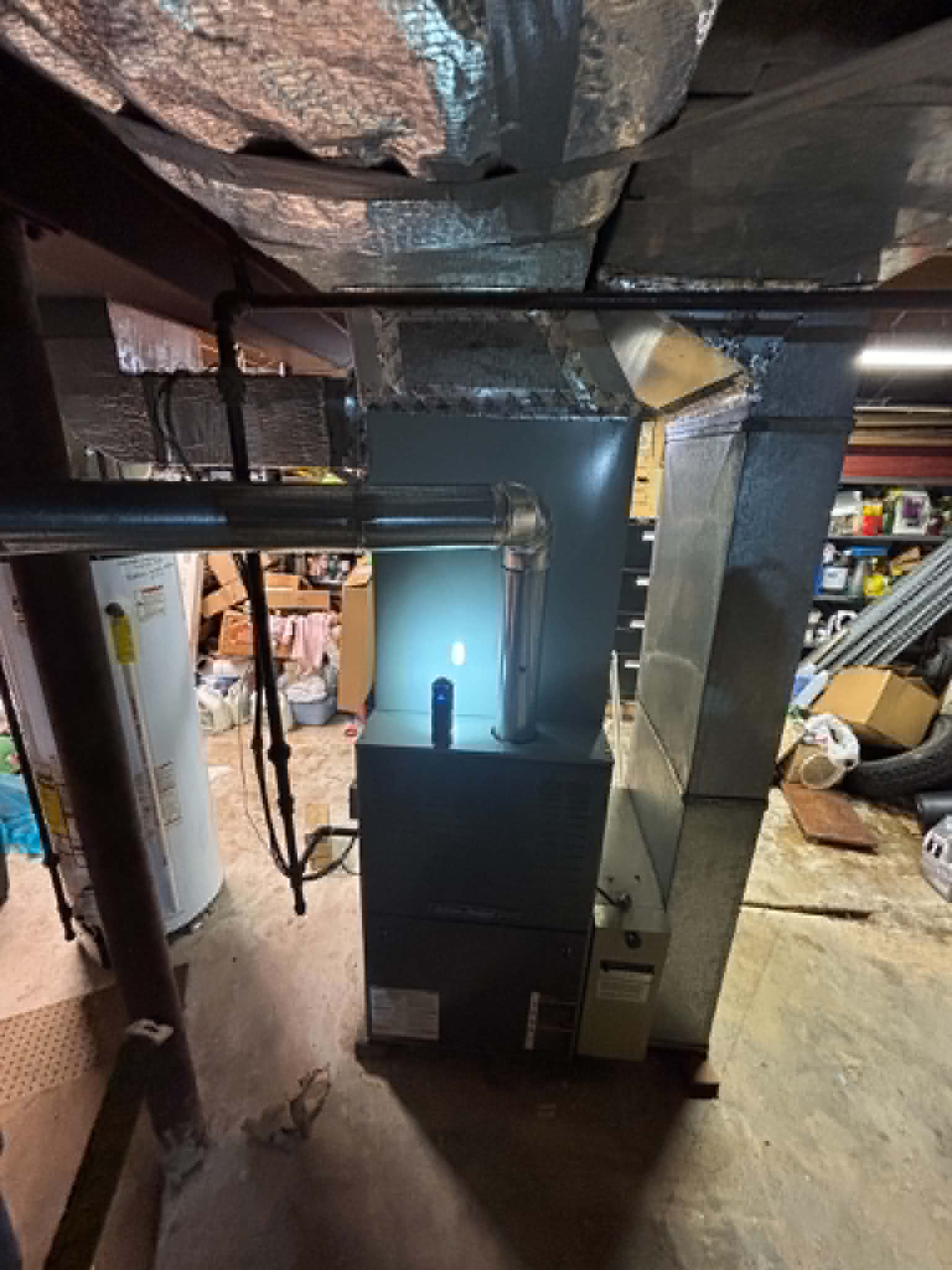
In Pennsylvania homes, the indoor unit may be in a basement, closet, attic, utility room, finished lower level, or tight mechanical area. That location changes the risk. A small condensate issue in an unfinished basement is different from water above finished ceilings or near electrical components.
This page stays focused on air handler and indoor-unit repair. It is not a duct cleaning page, IAQ page, mini split page, or replacement-first page.
Service Area Fit
This page is the Pennsylvania air handler service-detail page. It should be linked from Bucks County, Montgomery County, and Northeast Philadelphia local landing pages when those pages are live and visibly support the service area.
Use the county pages for local intent. Use this page for the service-specific decision: no air from vents, weak airflow, blower runs with no temperature change, blower will not shut off, water near the indoor unit, frozen coil symptoms, thermostat fan-call mismatch, and repair-vs-replacement proof.
How To Describe The Problem When You Book
The best booking note is short and factual:
- Airflow: no air, weak air everywhere, weak air in certain rooms, or normal air with wrong temperature.
- Blower behavior: silent, humming, loud, starts late, stops early, or will not shut off.
- Mode: cooling, heating, fan-only, or both heating and cooling.
- Water clue: water under unit, water in pan, water near finished surface, or float switch shutoff.
- Ice clue: ice on line, ice near coil, or airflow dropped before ice appeared.
- Outdoor unit: running, silent, humming, or not part of the call.
- Thermostat: Fan Auto/On, Heat/Cool mode, blank display, fault message, or temperature not changing.
- Safety clue: breaker trip, burning smell, electrical noise, water near controls, or severe mechanical noise.
FAQ
Why is no air coming from my vents?
No air can come from a blower motor problem, control-board output issue, door switch, power problem, thermostat fan call, frozen coil, or indoor safety shutoff. If the outdoor unit runs while the indoor blower is silent, stop cooling and schedule diagnosis.
Why is airflow weak from every vent?
Weak airflow from every vent often points to the shared airflow path: filter, return, blower, blower wheel, coil restriction, frozen coil, or duct pressure. A technician should prove total airflow before blaming one room or one vent.
Why is airflow weak only in part of the house?
Uneven airflow can involve duct branches, dampers, return balance, collapsed duct, closed vents, or a design issue. The air handler still needs to be checked so the repair does not miss a central blower or coil problem.
Why is there water near my air handler?
Water near the air handler can come from condensate drain restriction, pan overflow, float switch events, a frozen coil thawing, poor airflow, dirty coil behavior, or equipment pitch/access issues. Water near electrical controls or finished surfaces should be handled quickly.
Should I keep running the AC if the indoor coil is frozen?
No. Running cooling with a frozen indoor coil can make the problem worse. Turn cooling off, let the coil thaw safely, and schedule diagnosis to find the airflow, blower, coil, drain, or refrigerant-side cause.
Is a blower that will not shut off a thermostat problem?
Sometimes, but not always. It can be a thermostat fan setting, stuck fan command, control-board relay, safety mode, wiring issue, or equipment logic. The thermostat should not be replaced until the command path is proven.
Do you repair air handlers in Pennsylvania?
Volt & Vector supports Pennsylvania HVAC appointments through the PA service-area structure. Core local landing pages should handle Bucks County, Montgomery County, and Northeast Philadelphia coverage, while this page explains the air-handler-specific repair decision.
Related Pennsylvania HVAC Pages
If the symptom points outside this page's system, use these PA pages to route the call without guessing.
- PA HVAC repair hub: PA HVAC repair hub
- AC airflow and cooling diagnostics: AC airflow and cooling diagnostics
- heat pump indoor-unit diagnostics: heat pump indoor-unit diagnostics
- condensate drain and air handler water problems: condensate drain and air handler water problems
- Lower Bucks HVAC repair route: Lower Bucks HVAC repair route
- North Penn HVAC repair route: North Penn HVAC repair route
CTA
Book air handler repair when you can describe blower behavior, airflow pattern, thermostat mode, water or ice clues, and whether the problem affects cooling, heating, fan-only operation, or the whole indoor unit.