.avif)


.avif)
No-heat, uneven-bake, ignition, temperature, door, fan, and control diagnosis for gas and electric ovens.
Schedule Gas, Electric, Wall, or Range Oven RepairOven repair focuses on the heated cavity: bake, broil, convection, temperature control, door sealing, fans, ignition, and the controls that command those functions. Burners working on top do not prove the oven has the fuel, voltage, ignition, airflow, or control response it needs.
Volt & Vector services gas and electric wall ovens, double ovens, and the oven section of residential ranges by appointment in active NYC routes. The model, fuel type, failed mode, and whether other functions still work determine the diagnostic path before any igniter, element, sensor, or control is recommended.
Is This the Right Repair Page?
- Use oven repair when the complaint is inside the oven cavity: no bake, no broil, slow preheat, uneven results, temperature drift, a failed fan, door problem, or oven display fault.
- Use range repair when one freestanding or slide-in appliance has both surface-burner and oven symptoms, or its combined controls and fuel platform must be evaluated together.
- Use cooktop repair for a surface-only gas, electric, or induction appliance with no oven cavity.
- Use microwave repair when the failed heating function is microwave energy, an over-the-range microwave, or a microwave combination compartment.
What the Symptom Changes
- Bake does not heat but broil works: the failed mode, its heat source or ignition sequence, wiring, relay output, sensor feedback, and model logic become more relevant than the shared power supply.
- Neither bake nor broil heats: settings, lock or demo state, electrical supply, gas supply where applicable, safety devices, controls, and temperature feedback must be separated.
- The oven heats slowly or cooks unevenly: rack position, cookware, blocked circulation, door sealing, convection fan, temperature sensing, calibration, and heat-source performance can create similar results.
- Gas odor, repeated clicking, or delayed ignition occurs: gas odor routes directly to the emergency steps below. Repeated clicking or delayed ignition without gas odor is still a stop-use condition that requires qualified diagnosis.
- The problem started after self-clean: record the exact sequence and any message. High-temperature operation can reveal a pre-existing door-lock, sensor, wiring, control, or thermal-protection weakness, but the timing alone does not identify the failed part.
Safe Checks Before Service
- Confirm the cooking mode, temperature, clock, timer, control lock, and Sabbath or demo setting using the model manual.
- Note whether bake, broil, convection fan, light, display, and surface burners each work.
- Record the preheat behavior with a normal cycle and suitable oven thermometer only if there is no gas odor, smoke, sparking, or overheating.
- Photograph the exact display message and model label without removing the oven or trim.
- Note whether the symptom followed a power interruption, cleaning cycle, spill, installation, or electrical work.
Do not touch a glowing or damaged element, open panels, perform energized electrical measurements, defeat a door lock or thermal device, open a gas burner assembly, or keep attempting ignition through gas odor. Do not line the entire rack or oven floor with foil in a way the model manual prohibits; blocked airflow can change cooking results.
When to Stop Using the Oven
If you smell gas, even if the odor is weak, leave the building immediately and take others with you. Do not try to locate or stop the leak. Do not operate lights, switches, appliances, doorbells, or phones inside. From a safe location, call 911, then the gas service provider. Do not return or use the oven until emergency responders and qualified service personnel have cleared the area and appliance.
For delayed ignition without gas odor, flame where it should not be, smoke unrelated to food residue, sparking, a burning electrical smell, a control that will not turn the oven off, shattered glass, or severe overheating, stop using the oven. Leave and call 911 when there is an active fire or immediate danger. Never use a gas range or oven to heat the home.
The CPSC carbon-monoxide guidance specifically warns against using a gas range or oven for home heating.
What Diagnosis Should Confirm
Diagnosis should verify supply and fuel type, selected mode, heat or ignition sequence, temperature sensor response, actual temperature recovery, element or burner performance, convection airflow, door and gasket contact, safety devices, and control outputs as the model permits. Calibration is considered only after the heat source, airflow, sensing, and door condition are stable.
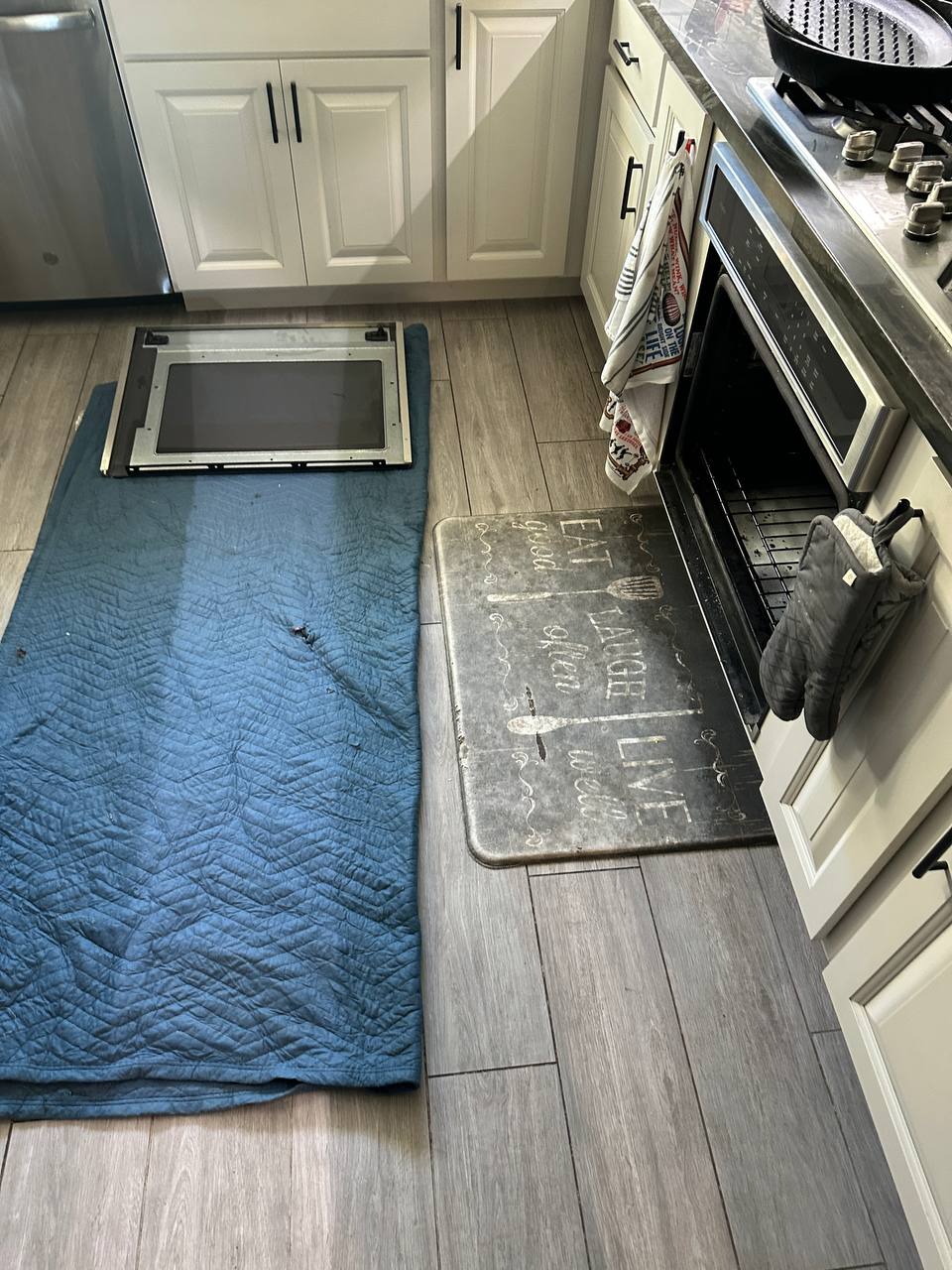
Wall and double ovens can be cabinet- and weight-sensitive. Send wide photos of the installation, trim, adjacent doors, floor path, and electrical or gas access if visible, plus building requirements. Do not remove a built-in oven before the required support and connections are planned.
Oven Repair Questions
The cooktop works but the oven is cold. Is that still an oven repair?
Yes. Surface and oven functions can use different ignition, heating, voltage, controls, and safety paths even inside the same range.
Can an oven be calibrated if it bakes hot or cold?
Sometimes, but calibration comes after confirming the measurement method, cooking mode, airflow, door sealing, sensor response, and heat performance. It should not hide a repeatable hardware fault.
Should I run self-clean before service?
No. Self-clean changes temperatures and can erase residue or symptom evidence. Do not run it when the oven already has a lock, heat, smoke, odor, or control problem.
What should I send for a wall oven?
Send the model label, failed mode, temperature evidence, exact message, cabinet and trim photos, and whether it is a single, double, steam, or combination installation.