.avif)
Is Your Appliance Worth Repairing — NYC Serviceability Guide 2026
Compare a diagnosed repair with the complete replacement cost. Check condition, fault scope, parts, warranty, building constraints and downtime before deciding.
When Is an Appliance Worth Repairing?
Repair is a stronger option when the fault is confirmed, the cause can be corrected, suitable parts are obtainable and the rest of the appliance is in useful condition. Replacement becomes more attractive when the repair scope is uncertain, important parts cannot be sourced or other serious condition problems remain.
- Get a diagnosis: a noise, leak or error code does not by itself establish a failed part or the cost to fix it.
- Check coverage first: review warranty or service-plan terms and any applicable recall before authorizing paid work.
- Compare complete totals: put the written repair scope beside a comparable replacement quote including installation and removal.
- Check practical limits: confirm part availability, access, building permission and how long you can manage without the appliance.
- Use age as context: neither a birthday nor a fixed percentage of replacement price decides whether this particular repair is sensible.
If there is an active safety problem, stop using the appliance and address that first. Do not keep running it while comparing costs.
First Establish What You Are Deciding
“Can it be repaired?” and “Is this repair worth paying for?” are related but different questions. The first needs a diagnosis and a viable repair method. The second also needs the appliance's condition, the repair scope, available coverage and the cost and disruption of installing a replacement.
If the appliance belongs to a landlord, contact the owner or manager before arranging replacement or paid work. If the fault presents an immediate hazard, the safety response comes before a buying decision. For an active appliance water leak, use the NYC water-leak guide and notify building management.
Look for the receipt, warranty and any service-plan paperwork. The FTC recommends checking what a warranty covers and how claims are handled. Also check the exact model and serial range against the manufacturer's safety notices and the CPSC recall search; follow the remedy for a matching recall rather than treating it as an ordinary out-of-pocket repair.
We diagnose and repair appliances across all five boroughs every week. This is the decision framework our technicians use internally to give honest assessments — including the cases where we tell customers that repair isn't the right call.
Why a Percentage Rule Cannot Decide the Repair
A rule such as “replace when repair exceeds half the new price” leaves out the most important uncertainty: what are you buying with the repair? A clearly diagnosed repair with a defined outcome is different from a proposal to replace a suspected part and investigate further if the symptom remains.
It also matters which replacement price you use. The original purchase price is historical spending. Today's comparable replacement needs to fit the room, meet the installation requirements and provide the functions you need. Add delivery, required accessories, installation and removal before comparing it with the repair.
Keep three things separate: the money needed now, the expected disruption and the unresolved risks. You can compare the first two directly. A reliable estimate of years remaining is often unavailable, so do not disguise that uncertainty as a precise cost-per-year calculation. The replacement-cost checklist helps make the two quotes comparable.
Use Age Together With Condition and Repair History
Record the purchase or installation date if known. If you need a production date, ask the manufacturer using the complete model and serial number; serial formats vary. Photograph an accessible label without pulling out a heavy appliance or removing panels.
Age can help identify the product generation and support options. It does not prove that the cabinet, wiring, mechanical parts or controls are either sound or worn out. Ask the technician which observed condition findings affect the recommendation, rather than accepting “too old” as the entire explanation.
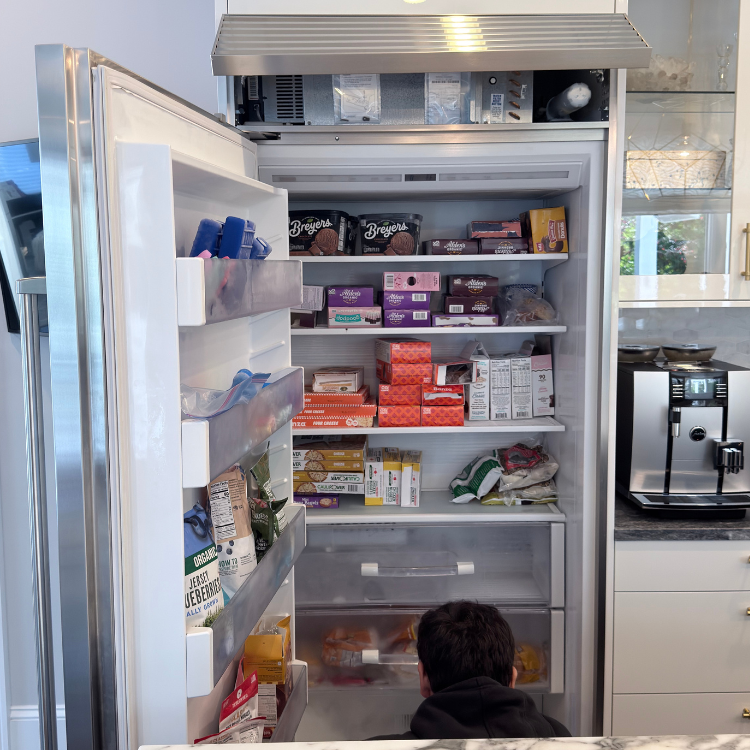
- Refrigerators: establish whether the repair involves airflow, a door/seal issue, controls or the sealed refrigeration system. For sealed-system work, ask how the underlying fault and any leak location have been established.
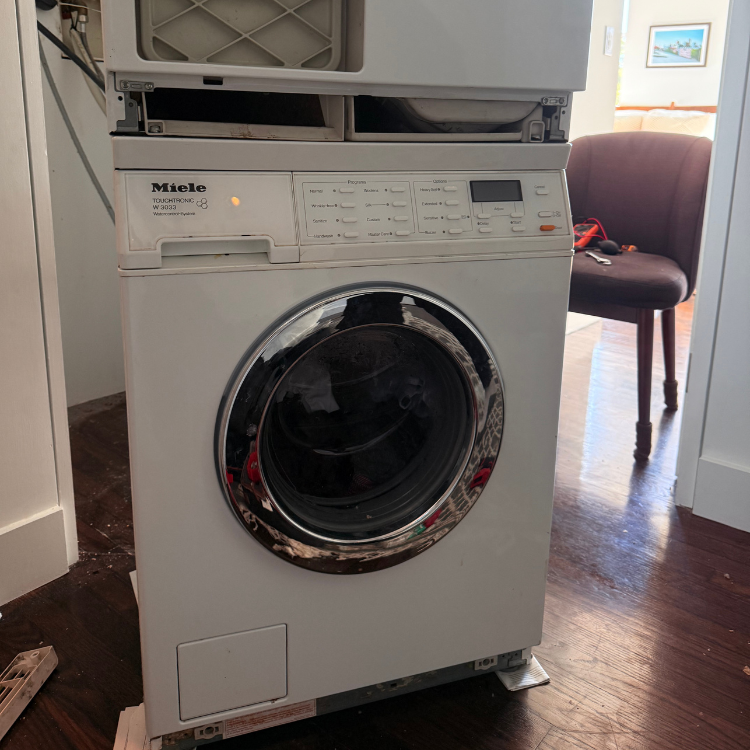
- Washers and dryers: distinguish a confirmed replaceable fault from additional drum, cabinet, leak or installation issues. Include access or unstacking in the scope.
- Dishwashers: consider the confirmed fault alongside tub condition, leaks and damage around the installed machine. A new pump alone does not resolve an unrelated leak.
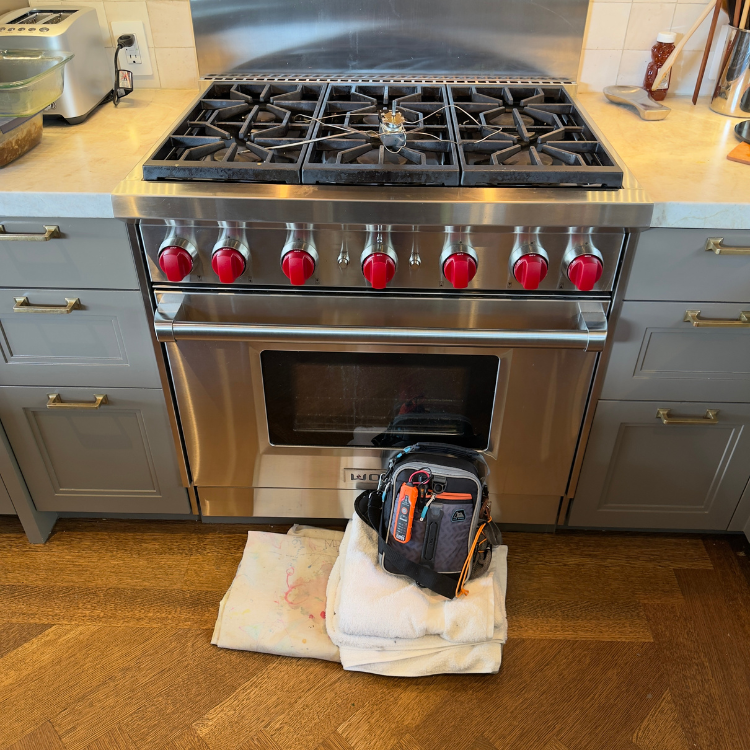
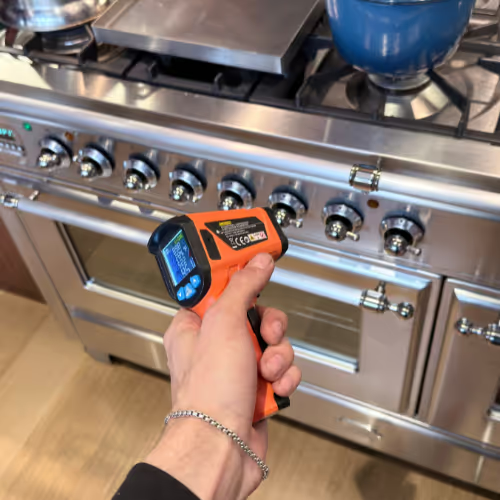
- Ovens and ranges: consider the door, cooking surface and safe installation as well as the proposed ignition, heating or control repair. Fuel connections and cabinets can affect replacement scope.
A manufacturer's longevity statement also needs its exact meaning. Miele explains that testing to simulate 20 years of use is not a guarantee of 20-year durability. It is not a reason to approve every repair on a machine of a particular brand.
Failure Type: What Has Actually Been Confirmed?
A useful estimate names the observed symptom, the established fault and the work proposed to correct it. A display code or a remembered sound is evidence to investigate, not a universal parts list. Ask what testing supports the diagnosis and what would change the estimate.
A Defined Fault With a Defined Repair
A repair is easier to assess when the technician can identify the failed component, explain why it failed or what has been ruled out, and state how operation will be checked afterward. The estimate should include any related work needed to prevent the same problem returning.
For example, a compressor problem associated with a refrigerant leak cannot be judged only by the price of a compressor. The leak, its repairability and the complete sealed-system work belong in the scope. Likewise, replacing a damaged seal is not a complete answer if the surface it seals against is also damaged. These examples identify questions for the technician, not homeowner repair procedures.
Repeat Failures or Unresolved Damage
Collect prior invoices and describe whether the same symptom returned or different problems developed. Repeated visits can reflect an unresolved original cause, a separate failure or a problem outside the appliance. The count of visits alone does not prove that the whole machine is declining.
Ask whether the previous repair's coverage applies and what new evidence changes the diagnosis. If several important systems have confirmed problems, request the complete scope before authorizing one repair at a time. A second opinion can be useful when an expensive proposal does not explain the cause, the expected result or the remaining uncertainty.
Parts Support: Check the Exact Model and Repair
A part appearing in an online diagram does not mean it is stocked. Ask for the required part or assembly, confirmed compatibility, actual availability and what happens if the estimated delivery date changes. Clarify whether programming, paired components or additional work is needed to complete the repair.
Manufacturer policies help establish where to start. Miele states that its spare parts remain available for at least 15 years after the series stops production; that does not confirm a particular part's shipping date. Model-based catalogs from other manufacturers also require a current availability check.
A long lead time may be acceptable if you have a workable temporary arrangement. An unavailable critical part is a different problem. The serviceability guide explains how to ask for a support check without relying on a brand ranking.
Our technicians maintain parts relationships with multiple local and national distributors. Once the model and required part are identified, we can usually confirm parts availability before a repair is scheduled.
NYC Installation Constraints Can Change the Comparison
Built-in refrigerators, integrated dishwashers and appliances installed in a stack can carry replacement work beyond the new machine. Check cabinetry, decorative panels, mounting hardware, delivery access and the compatibility of any retained appliance.
Ask the building about approval, water shutoffs, permitted work hours, contractor documents and delivery arrangements. These requirements can make repair less disruptive, but they do not make a damaged or unsupported appliance worth repairing at any cost.
For a washer replacement, establish the building's laundry rules and the candidate model's installation requirements. For cooking equipment, establish whether replacement changes the gas or electrical scope. Compare a permitted, installable replacement rather than an attractive model that the apartment cannot support.
What to Collect Before Requesting an Assessment
- Identity and dates: model/serial photo, purchase date if known, receipt and coverage documents.
- Specific behavior: what starts, what stops, when the problem happens, and the exact display message if present. Not every appliance displays a fault code.
- History: earlier repair invoices, replaced parts and whether the same symptom returned.
- Installation: safely taken photos showing built-in panels, stacked equipment or restricted access; include building requirements.
- Replacement alternative: a comparable candidate and a complete installed quote, if already available.
This information prepares a visit and avoids duplicated questions. It does not promise that a technician can diagnose the machine or select a part before inspecting it.
What the Final Recommendation Should Explain
Before authorizing the work, ask: “What has failed, what caused it or remains uncertain, what is included in this repair, and how will you verify the result?” Then confirm the price, parts status, coverage and what happens if the diagnosed repair cannot be completed.
Choose repair when that proposal and the machine's remaining condition meet your needs at an acceptable cost and disruption. Choose replacement when the available repair does not offer a useful outcome or the replacement better fits your needs. The decision should be supported by those facts, not a promise that any repair restores the appliance to new condition.