
.png)

Furnace Repair in Pennsylvania
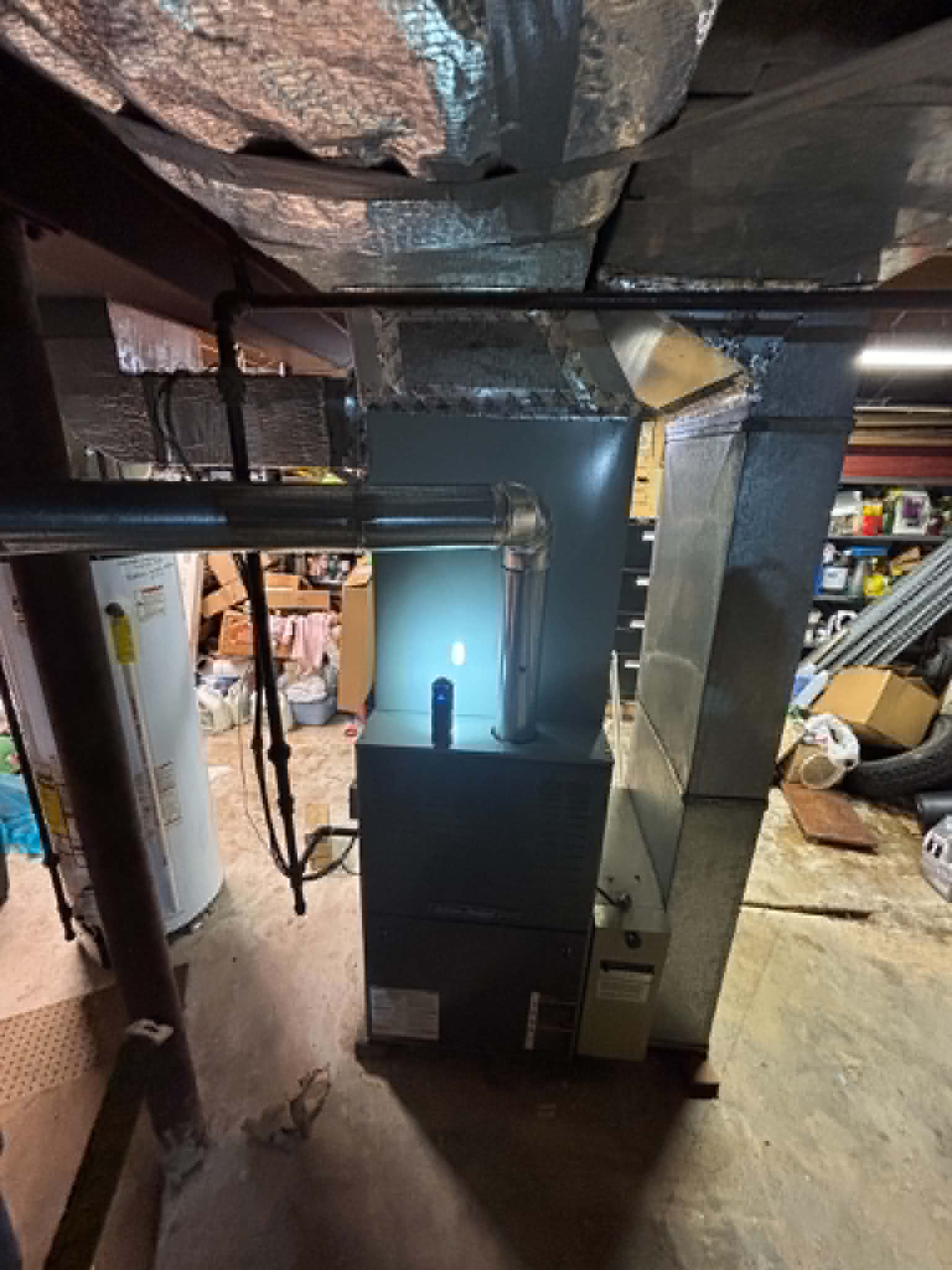
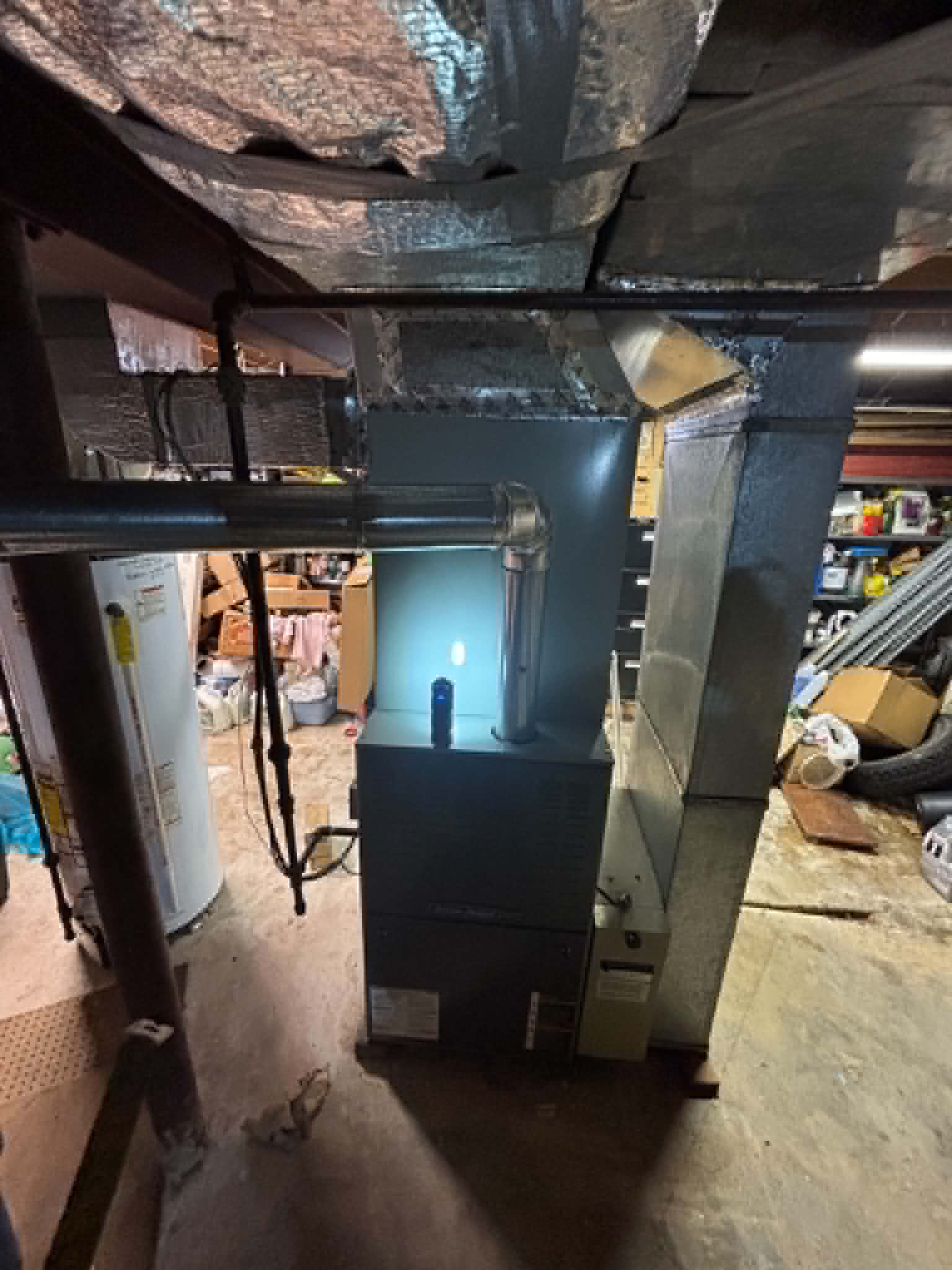
Furnace repair in Pennsylvania should not start with a guessed flame sensor, igniter, blower motor, board, or replacement quote. The useful first split is whether the thermostat is calling for heat, whether the furnace begins its start sequence, whether heat is actually produced, and whether the blower moves warm air through the home. If there is gas odor, a carbon monoxide alarm, soot, unusual combustion behavior, or repeated breaker trips, stop using the system and treat the situation as a safety issue before any repair discussion.
What This Furnace Repair Page Covers
This page is for forced-air furnace repair in Pennsylvania homes. It covers gas furnaces, electric furnaces, thermostat heat calls, no-heat calls, short cycling, blower problems, ignition symptoms, cold air from vents, repeated shutdowns, and safety shutoff clues.
This page is not a boiler page, not a heat pump defrost page, not a fuel-oil equipment page, and not a replacement sales page. If the outdoor unit is running in heat mode, auxiliary heat is displayed, or emergency heat is involved, the stronger fit is the heat pump repair page after that page is live.
Common furnace repair calls include:
- No heat: the thermostat calls for heat, but the home does not warm.
- Starts then shuts off: the furnace begins a cycle, then drops out quickly.
- Blower runs with cool air: air moves through the vents, but heat is missing.
- Burners light then go out: ignition starts, but flame does not stay proven.
- No ignition attempt: the furnace does not advance into a normal heating sequence.
- Short cycling: the furnace turns on and off repeatedly before satisfying the thermostat.
- Fan will not shut off: the blower keeps running after the heat call should be over.
- Safety concern: gas odor, CO alarm, burning smell, soot, or unusual flame/exhaust clues are present.
The First Diagnostic Split
A furnace repair visit should prove the failure path before recommending a part. The first split is simple from the homeowner side:
- Thermostat call: does the thermostat actually ask for heat?
- Furnace response: does the furnace do anything after the heat call?
- Heat creation: does the gas burner or electric heat section produce heat?
- Air movement: does the blower move air through the vents?
- Safety interruption: does the furnace shut itself down before, during, or after ignition?
That split matters because several symptoms look similar. A thermostat/control problem, inducer issue, pressure-switch path, ignition fault, flame-proving problem, limit trip, blocked airflow, blower fault, electric heat control issue, gas supply issue, venting problem, or unsafe combustion condition can all show up as “no heat.”
The page should not tell homeowners to open panels, jump switches, clean flame sensors, test voltage, or bypass safeties. The public value is knowing what to observe safely and what the technician must prove.
Furnace Symptom To Technician Proof Map
Use this map to describe what is happening before booking and to understand what should be proven before parts or replacement are discussed.
- Thermostat calls for heat but furnace does not start: record thermostat mode, setpoint, room temperature, display status, and whether the fan-only setting works. The technician proves thermostat output, low-voltage control path, furnace board response, door switch status, safety circuit, and power path.
- Furnace starts then shuts off quickly: record whether you hear the inducer, clicking, ignition, burner flame, or blower. The technician proves where the sequence stops: inducer, pressure proving, ignition, flame proving, limit/safety, control board, or gas path.
- Burners light then drop out: do not remove or clean flame-sensing parts as public DIY. The technician proves flame signal, grounding, burner condition, gas pressure, board interpretation, and safety response.
- Blower runs with cool or room-temperature air: record whether the thermostat fan setting is ON or AUTO and whether heat ever appears at the vents. The technician proves whether heat is being produced, whether a limit/safety opened, whether electric heat elements or gas burners are active, and whether blower timing or control is wrong.
- Burner never lights: record whether there is clicking, glow, inducer sound, or silence. The technician proves ignition source, gas valve command, pressure path, control sequence, and safety lockout.
- System short cycles repeatedly: record cycle length and whether the shutdown happens before flame, after flame, or after blower starts. The technician proves airflow, filter/return restriction, limit trips, venting, flame proving, temperature rise, and control behavior.
- Fan will not shut off: record whether the thermostat fan setting is AUTO, whether heat is still being produced, and whether the furnace shows an error light. The technician proves fan relay, board output, limit condition, electric heat sequencer behavior, thermostat/control signal, and safety fan-on logic.
- Gas smell, CO alarm, soot, or exhaust concern: stop using the furnace and leave the diagnosis to safety response and a qualified technician. The technician proves gas leak status, combustion safety, venting, heat exchanger risk, and whether the system can be operated at all.
Gas Furnace Versus Electric Furnace
A gas furnace and an electric furnace can both create “no heat,” but the proof path is different.
A gas furnace usually needs a safe sequence: thermostat call, inducer or draft proving where applicable, ignition, burner flame, flame proving, heat rise, and blower operation. If the burners light and drop, the issue is not automatically a flame sensor. If the blower runs cold, the furnace may be in a safety or lockout condition, or heat may never have been created.
An electric furnace does not have gas combustion, flame proving, or a flue path, but it still has safety limits, heat elements, sequencers or relays, blower timing, controls, and airflow requirements. A blower that runs without heat can be an electric heat control problem, a safety interruption, a thermostat/control issue, or an airflow/limit problem.
The dispatch note should not begin with the brand or model. It should begin with the observed sequence: thermostat call, furnace response, heat or no heat, blower behavior, shutoff timing, and any safety symptoms.
What To Check Before Booking Furnace Repair
These checks are safe observations. They are not instructions to disassemble the furnace.
Safe things to record:
- Thermostat mode: heat mode, set temperature, room temperature, and whether the display is blank.
- Fan setting: AUTO or ON. A fan set to ON can move room-temperature air even when heat is not active.
- Furnace response: silent, click only, inducer sound, ignition attempt, flame briefly visible, blower only, or repeated shutdown.
- Vent air: no air, cool air, room-temperature air, warm air that stops quickly, or weak airflow.
- Error light: if visible through a viewing window, record the blink pattern without removing panels.
- Filter condition: if safely accessible, note whether the filter is visibly loaded or recently changed.
- Fuel type if known: natural gas, propane, or electric heat.
- Safety signals: gas odor, CO alarm, soot, burning smell, electrical smell, or repeated breaker trips.
Do not:
- remove burner doors to force operation;
- bypass door switches, rollout switches, pressure switches, limits, or safeties;
- clean flame sensors as public DIY instruction;
- test live voltage;
- open gas lines;
- keep resetting a tripped breaker;
- keep running a furnace after a CO alarm or gas odor.
When To Stop Using The Furnace
Some furnace symptoms are not normal repair-intake details. They are stop-use conditions.
Stop using the furnace and address safety first if any of these are present:
- Gas odor: do not keep cycling the furnace to “see if it clears.”
- Carbon monoxide alarm: get to fresh air and follow emergency guidance.
- Soot or exhaust smell: do not assume it is only dust burning off.
- Flame outside the normal burner area: stop use and do not retry.
- Repeated ignition failure: do not keep forcing heat calls.
- Burning electrical smell: shut the system down if it is safe to do so.
- Repeated breaker trips: do not keep resetting the breaker.
- Furnace door must be left open to run: do not operate it that way.
Space heaters and ovens should not become unsafe substitute heat. If temporary heat is needed, use only equipment according to its instructions and keep combustible items away from heat sources.
What Not To Approve Before Diagnosis
Do not approve these based only on a phone guess or a generic symptom:
- Flame sensor replacement: burners lighting then dropping can involve flame signal, grounding, burner condition, gas pressure, board logic, or venting. It needs proof.
- Igniter replacement: no ignition can be an igniter issue, but the control sequence and safety path must be checked.
- Pressure switch replacement: pressure-switch symptoms can involve venting, inducer performance, tubing, drainage, intake/exhaust restriction, or control timing.
- Blower motor replacement: blower symptoms need separation from fan relay, control board, limit condition, sequencer, thermostat signal, and airflow problems.
- Control board replacement: boards should not be used as a catch-all answer after one symptom.
- Gas valve replacement: gas valve diagnosis needs proper sequence proof and safe testing.
- Heat exchanger replacement or furnace replacement: safety concerns matter, but a replacement decision should be based on documented evidence, not vague fear.
- Whole-system replacement because the furnace is old: age affects the discussion, but it does not replace diagnosis.
When Repair Usually Still Makes Sense
Repair is still reasonable to evaluate when the failure path is narrow and provable.
Repair can make sense when:
- A single control or ignition failure is proven: the issue is isolated and the rest of the furnace condition supports repair.
- Airflow restriction caused the shutdown: filter, return, blower, or duct-side symptoms can sometimes be corrected without replacing the furnace.
- The blower/control issue is specific: fan behavior is traced to a provable control, relay, motor, module, or sequencer path.
- The thermostat call is wrong: thermostat, wiring, zone, or control mismatch explains the symptom.
- The furnace is locking out for a correctable reason: the safety event is understood and repairable.
- Electric heat control failure is isolated: elements, sequencers, relays, and controls need proof before replacement is discussed.
The visit should leave the homeowner with a clear explanation: what was observed, what was tested, what failed, what remains uncertain, and what repair path is justified.
When Replacement May Enter The Conversation
Replacement can be the right answer, but it should enter after proof.
Replacement may be discussed when:
- Heat exchanger integrity is a safety concern: combustion gas and CO risk require serious handling and documented evidence.
- Multiple expensive failures are present: the repair path is no longer narrow.
- The furnace is significantly worn, oversized, unsafe, or inefficient: DOE guidance supports evaluating old, worn, inefficient, or oversized equipment with a qualified contractor.
- Venting or chimney problems make continued operation unsafe or impractical: older venting systems may affect the repair decision.
- Repeated repairs are no longer defensible: the system has a pattern, not a single failure.
- Combustion or gas safety cannot be restored through a reasonable repair: the equipment should not be operated just to delay replacement.
The replacement conversation should still be evidence-based. A homeowner should be able to understand why repair is weak, what risk remains, and what proof changed the decision.
Pennsylvania Furnace Service Reality
Pennsylvania furnace calls are not one housing type. A furnace may be in a basement, closet, attic, garage, utility room, finished area, or tight rowhome access. Bucks County, Northeast Philadelphia, and selected Montgomery County routes can involve gas furnaces, electric furnaces, heat pumps with backup heat, older duct systems, renovated homes, and access constraints.
That affects the visit. A useful dispatch note is not a list of towns or a brand name first. A useful dispatch note says:
- whether the thermostat calls for heat;
- whether the furnace starts;
- whether flame or heat appears;
- whether the blower runs;
- whether air from vents is warm, cool, weak, or absent;
- whether the system shuts down quickly or repeats cycles;
- whether there is gas odor, CO alarm, soot, burning smell, or breaker trouble.
Pennsylvania furnace appointments should be described by route, access, system type, and safety condition. If the call involves gas odor, a CO alarm, repeated shutdown, or burning smell, say that before scheduling so the call is routed as a safety-sensitive furnace issue.
How To Describe The Problem When You Book
A good furnace repair request should be short and sequence-based.
Use this format:
- Heat request: thermostat is set to heat, setpoint, and current room temperature.
- Furnace response: silent, click, inducer sound, ignition attempt, flame starts, flame drops, or blower only.
- Air from vents: no air, cool air, room-temperature air, weak airflow, or warm air that stops.
- Cycle timing: shuts off after seconds, minutes, or after blower starts.
- Fuel/system type if known: gas, propane, electric furnace, or not sure.
- Visible clue: error light pattern if visible through a window, water, soot, unusual odor, or breaker trip.
- Safety clue: gas odor, CO alarm, burning smell, or exhaust smell.
Example:
“Thermostat is in heat mode at 70, room is 63. Furnace clicks, burners seem to light for a few seconds, then shut off. Blower starts later and pushes cool air. No gas odor and no CO alarm.”
That is more useful than:
“My furnace needs a flame sensor.”
When Volt & Vector Is A Fit
Volt & Vector is a fit when the homeowner wants repair-first furnace diagnostics before approving a part or replacement. The visit should separate thermostat command, furnace sequence, heat creation, blower behavior, safety shutoff, and repair value.
Use the booking page when the symptom is active and you can describe the furnace sequence. Use the pricing, warranty, and repair process pages when the decision is about how the visit works before scheduling. The main HVAC service page can help compare related heating and cooling services.
FAQ
Why does my furnace start and then shut off?
A furnace that starts and shuts off may be stopping at ignition, flame proving, pressure proving, airflow, limit, or control logic. The exact point in the sequence matters. Record whether you hear the inducer, see ignition, see flame, hear the blower, or get only a click.
Why is my furnace blowing cold air?
Cold air from vents can happen when the blower runs without heat, when the furnace locks out after a failed heat sequence, when the thermostat fan is set to ON, or when a safety limit changes operation. The technician needs to prove whether heat was created before the blower moved air.
Should I clean the flame sensor myself?
No public furnace repair page should treat flame-sensor cleaning as the default answer. Burners lighting and dropping can have several causes, and gas furnace safety matters. Record the sequence and let the technician prove the flame-signal path.
What should I do if I smell gas when the furnace starts?
Stop using the furnace and treat it as a safety issue. Do not keep cycling the system. Follow gas utility or emergency guidance for your situation before any normal repair scheduling.
What if my carbon monoxide alarm goes off?
Get outside to fresh air and call emergency services. Do not troubleshoot the furnace while staying inside. A furnace repair visit can happen only after the immediate CO safety issue is handled.
Does an old furnace always need replacement?
No. Age matters, but it is not a diagnosis. Replacement becomes more reasonable when the furnace is unsafe, significantly worn, inefficient, oversized, has heat exchanger or venting concerns, or has multiple expensive failures. A repair-first visit should explain the proof.
Can an electric furnace be repaired?
Yes, electric furnaces can have repairable blower, element, sequencer, relay, limit, thermostat, or control issues. The proof path is different from a gas furnace because there is no combustion sequence, gas valve, flame proving, or flue path.
Related Pennsylvania HVAC Pages
If the symptom points outside this page's system, use these PA pages to route the call without guessing.
- PA HVAC repair hub: PA HVAC repair hub
- heat pump heating diagnostics: heat pump heating diagnostics
- thermostat heat-call diagnostics: thermostat heat-call diagnostics
- repair vs replacement second opinion: repair vs replacement second opinion
- Central Bucks HVAC repair route: Central Bucks HVAC repair route
- Abington-Willow Grove HVAC repair route: Abington-Willow Grove HVAC repair route
CTA
Book furnace repair when you can describe the thermostat call, furnace response, blower behavior, vent air temperature, shutdown timing, and any safety signals. Volt & Vector will use that information to focus the visit on proof before parts or replacement.