

Bertazzoni Refrigerator Ices Up After a Fan Change | Case
This recurring icing case was reported resolved after service follow-up. Earlier hinge, fan and sensor work showed why clearing the evaporator alone could not establish a lasting correction.
Service Context
The recurring icing was investigated over successive service follow-ups, including hinge replacement, a fresh-food fan change and comparison of the original and replacement temperature sensors.
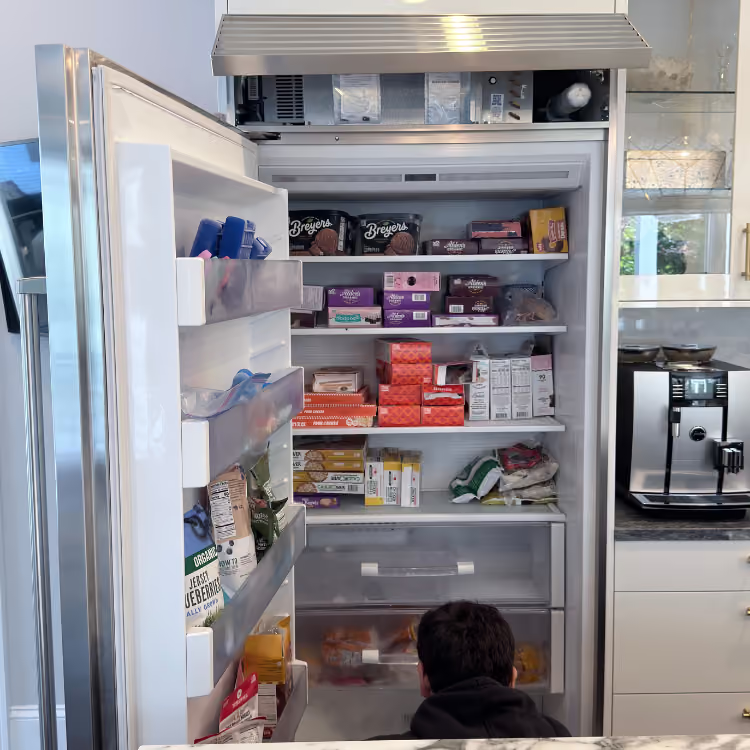
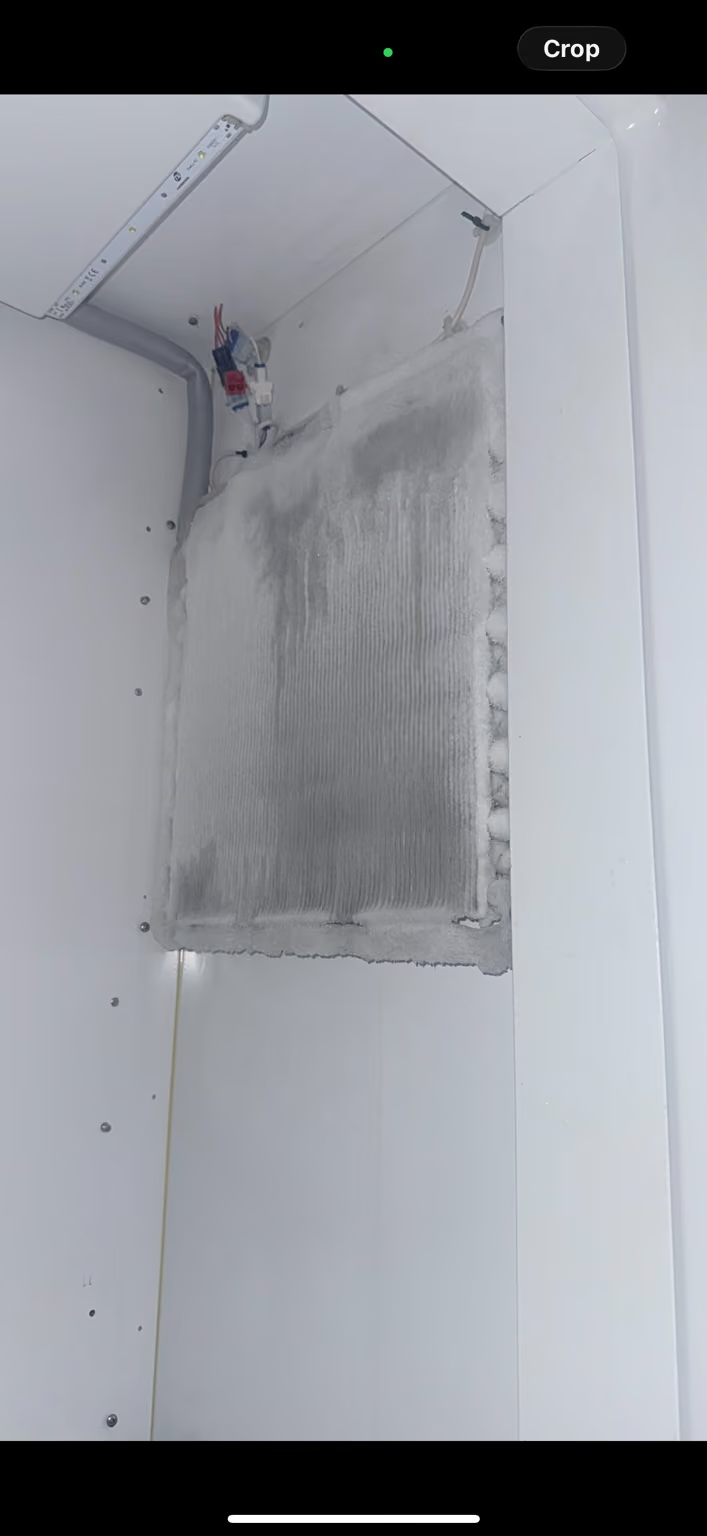
The fresh-food evaporator during the recurring-ice diagnosis. The technician reported that ice returned about three days after a full thaw.
- A temperature-sensing component examined during follow-up. Its appearance alone did not establish the correct sensor position or calibration.
The fresh-food evaporator in this Bertazzoni refrigerator iced over again about three days after thawing. Clearing the ice removed the buildup, but the quick return showed that the condition causing it had remained.
The follow-up history changed the repair question
The technician had replaced a broken hinge and fully thawed the compartment before the three-day callback. A later follow-up reported replacement of the fresh-food fan, with no change in the recurring ice. Subsequent checks compared the original and a newly installed temperature sensor. Fan behavior remained inconsistent with both during those comparisons. The technician also observed resistance changing with cooling and reported no heater at the fresh-food evaporator.
The fan change was an important result: it did not solve the icing complaint. That made repeating the same repair without new evidence difficult to justify. Likewise, a sensor responding to cooling answered only whether its reading changed. Without comparing its readings with the specification at known temperatures, that observation did not establish accurate temperature sensing.
Separate the ice problem from the display
The technician also described intermittent fan operation and a displayed temperature that did not match the observed compartment conditions. Those clues needed to be considered together, but they did not identify a failed controller. A replacement board selected only from an inconsistent display would still be a guess.
For a recurring-ice complaint like this, the useful service assessment is to confirm the exact refrigerator model, identify how its fresh-food evaporator is intended to clear frost, and compare actual compartment temperatures with the sensing and control behavior through cooling and frost-clearing operation. The earlier hinge failure also makes final door alignment and gasket contact relevant: replacing a hinge and confirming a full seal are different findings. Not finding a heater during an inspection is not enough to assign a heater failure or assume the design should contain one.
The result and the useful lesson
The case was reported closed with a positive outcome after the service follow-up. The final corrective work and a retest beyond the recurrence interval are not specified. Earlier in diagnosis, the fan change had not ended the icing recurrence, and the sensor comparisons had not established stable fan behavior. A meaningful retest must extend beyond the roughly three-day recurrence seen here, with compartment temperatures recorded and the buildup checked by the technician. A clear evaporator immediately after thawing would not demonstrate that the original problem had been corrected.
For the owner, the most useful contribution is a short timeline: when ice returns, when cooling changes and what the independent thermometer reads. If the symptom returns, that timeline gives the technician evidence about the failure developing over time.
- Fresh-food evaporator ice returned roughly three days after the hinge repair and full thawing.
- A later fresh-food fan replacement did not stop the recurring ice.
- Fan operation remained inconsistent during comparisons of the original and newly installed temperature sensors.
- A displayed temperature did not consistently match observed compartment conditions.
- A sensor's resistance changed during cooling; that observation alone did not confirm its accuracy.
- No heater was found at the fresh-food evaporator during the reported inspection.
If the same symptom appears on your appliance:
For owners seeing the same recurring-ice pattern:
- Protect food by actual temperature: use an independent refrigerator thermometer. Keep perishable food at 40°F or below; move it to reliable cold storage if this refrigerator cannot maintain that temperature.
- Give the technician the complete sequence: include the thawing interval, hinge change, fan change, sensor check and when the icing returned after each intervention.
- Require a model-specific check: establish the fresh-food frost-clearing design, compare sensor readings with measured temperatures, and assess how the fan and controls behave as the condition develops.
- Verify beyond the previous recurrence interval: agree on a follow-up temperature and icing check after the period in which the refrigerator previously froze up again.
Can I trust the display to decide whether food is safe?
Use a separate appliance thermometer when the display and compartment conditions disagree. The FDA recommends a refrigerator temperature of 40°F or below. If you do not know how long perishable food has been above that temperature, discard it rather than relying on its appearance or smell.
Result Details:
Reported outcome: resolved. The recurring icing case closed with a positive outcome after follow-up service. The earlier fan change and sensor comparisons explain why the repair required attention to the whole sequence of temperature sensing, airflow and frost clearing. The final corrective work and post-repair operating verification are not specified in this case.
Repair Decision:
Use the failed fan-replacement result to narrow the next assessment: confirm the model's frost-clearing design and compare actual temperatures with sensing and control behavior before selecting another component.
Owner Takeaway
A fan replacement that leaves the same icing pattern is diagnostic evidence. The next repair should account for that failed result and prove stable cooling beyond the previous recurrence interval.