Gaggenau Appliance Repair in NYC


Gaggenau Appliance Repair in NYC
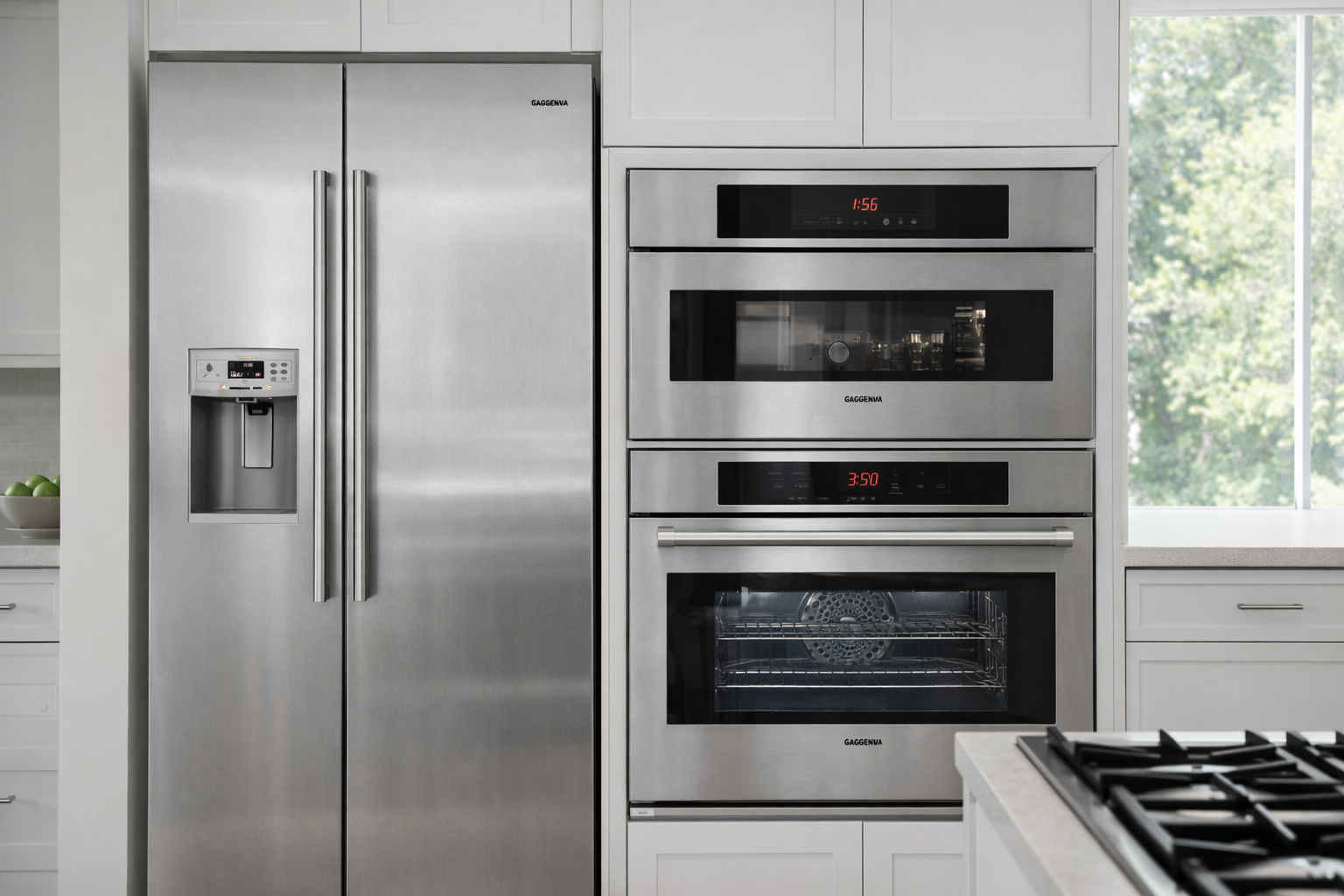
Gaggenau appliance repair is typically symptom-to-subsystem diagnosis across wall/steam ovens and cooktops, with model/serial required before any test sequence or parts choice. Heating issues (slow preheat, uneven bake, temp drift) usually trace to elements, sensor/RTD feedback, or relay switching under load, plus convection/cooling airflow. Steam/combi problems (no/weak steam, water faults) commonly involve the water path (inlet, pump, level sensing, scale/blockage) and need controlled fill/heat checks. Induction faults (no pan, cycling, shutdown) usually point to inverter/power electronics, sensors, or cooling fan and must be verified against correct supply voltage. Error codes are circuit/feedback specific, and control or door/latch issues typically come down to boards, harness integrity, or latch/switch feedback under real operating load.
Reliable Gaggenau repair in NYC with $99 diagnostic fee. Book your service today!
Serving Brooklyn & Manhattan


9:00 AM – 6:00 PM
Quick Answers
- Question: Do you service built-in Gaggenau appliances in NYC kitchens?
Answer: Yes. Most Gaggenau installs are built-in and access-sensitive, so we confirm the exact model platform from a model/serial photo before dispatch. - Question: What Gaggenau appliance categories do you handle most often?
Answer: Cooking & Baking, Cooktops, Ventilation, Refrigeration & Freezers, and Dishwashers are the most common NYC calls. - Question: If my Gaggenau oven heats “sometimes,” what do you check first?
Answer: We verify supply voltage under load, sensor feedback, heating output, airflow/venting behavior, and control response to isolate whether it’s power, sensing, or heat-generation. - Question: If a Gaggenau combi-steam/steam oven won’t make steam, is it always descaling?
Answer: Not always. We confirm water feed behavior, steam-generation conditions, and whether the unit is failing on flow, temperature, or control decisions before recommending a path. - Question: My induction cooktop turns on then shuts off. Is it the pan or the cooktop?
Answer: We separate pan-detection behavior from power-delivery issues by checking supply stability, error recurrence, and load response on each zone. - Question: My Gaggenau dishwasher won’t drain. What’s the fastest way you diagnose it?
Answer: We confirm drain path restriction vs pump failure vs control/float input by inspecting the sump area, checking drain flow, and validating pump electrical load and command. - Question: Do you provide COI paperwork for co-ops/condos that require it?
Answer: Yes. If your building needs documentation for access, tell us during scheduling so we can align the visit. - Question: Do you use OEM parts for Gaggenau repairs?
Answer: Yes. We use OEM parts only when parts are required, and we verify the failure first so you avoid wrong-part swaps. - Question: What does the diagnostic visit cover?
Answer: On-site testing and verification to identify the root cause class, a clear repair path, and what we need to confirm repair stability under normal use.
Schedule Gaggenau service
Call: +1 (332) 333-1709
Email: voltnvector@gmail.com
Gaggenau is high-tolerance, built-in-first engineering. In NYC, the repeatable problems usually come from a small number of root-cause classes: power delivery under load, airflow and heat rejection limits in tight cabinetry, water/drain routing realities, and sensor/control decisions that look “random” until you test them correctly.
Volt & Vector is diagnostics-first. We verify temperatures, flow/drain performance, electrical loads, ventilation airflow, and control response before recommending parts—so the repair holds up under real NYC usage patterns, not just a quick power-cycle.
Gaggenau Repair NYC At a Glance
- Service: diagnostics-first residential appliance repair and maintenance
- Coverage: Brooklyn, Manhattan below 96th St, selected Queens ZIPs
- Appliance categories: Cooking & Baking, Cooktops, Ventilation, Refrigeration & Freezers, Dishwashers
- Approach: verify the failure under load, isolate the cause class, then repair and re-verify
- Building coordination: COI available for co-op/condo access requirements
- Reviews on-site: Google Business Profile shows 26 reviews at 5.0 on our pages
Quick Facts (NYC-Ready)
- $99 diagnostic fee credited toward the repair if you move forward
- 180-day parts and labor warranty on completed repairs
- OEM parts only
- Licensed and insured with COI available for building management
- Arrival windows: 9–11 / 11–1 / 1–3 / 3–5
Service Area (NYC)
- Brooklyn
- Queens (selected ZIPs)
- Manhattan (below 96th Street)
What We Service (Gaggenau)
- Cooking & Baking: wall ovens, ranges, steam/combi-steam platforms, warming drawers
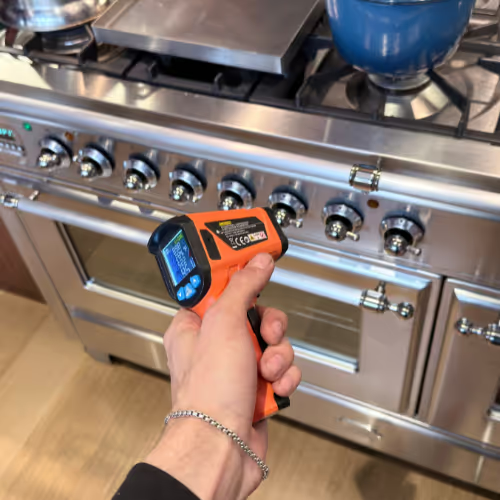
- Cooktops: gas, electric, induction
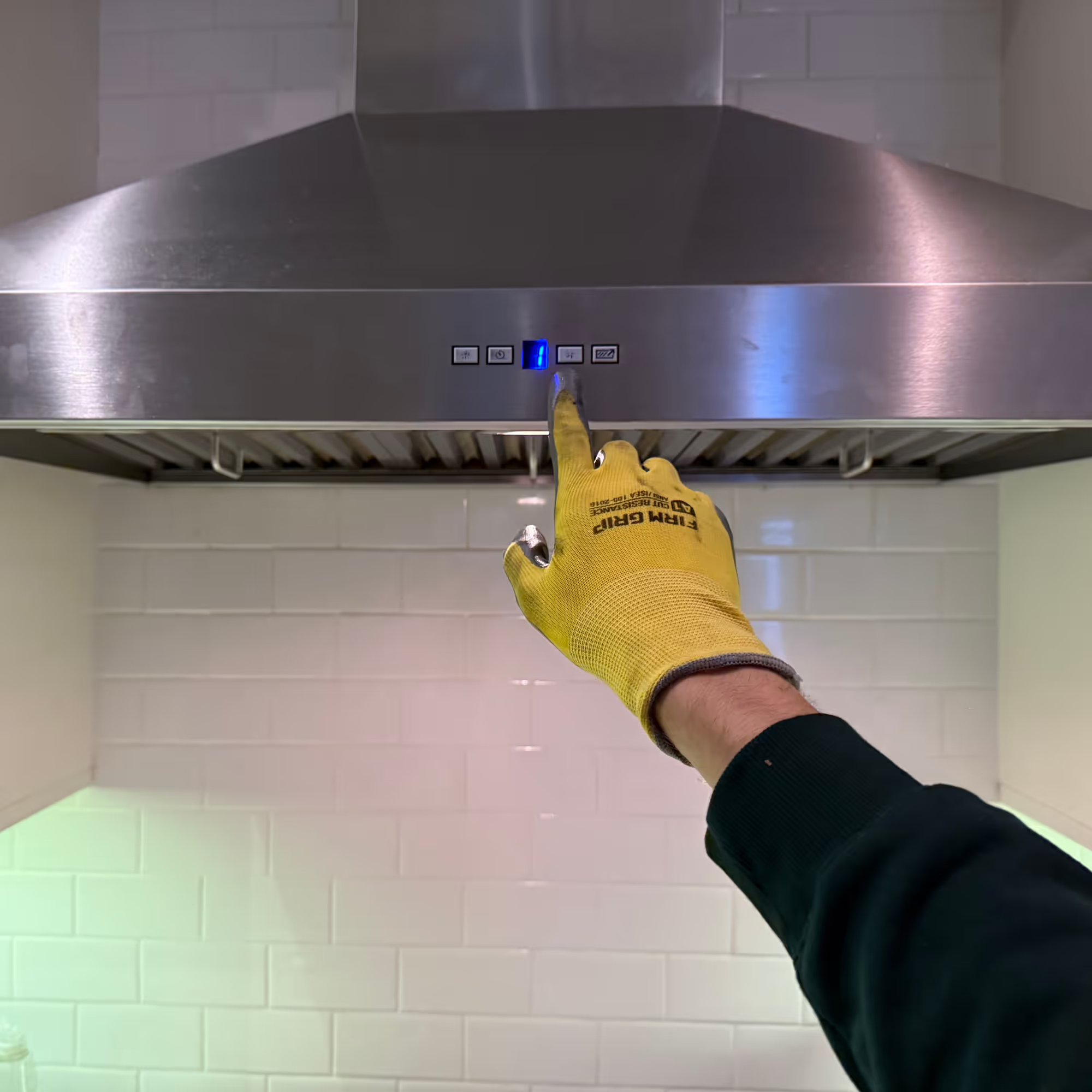
- Ventilation: hoods, internal blowers, external blower setups when applicable, downdraft-style ventilation where present
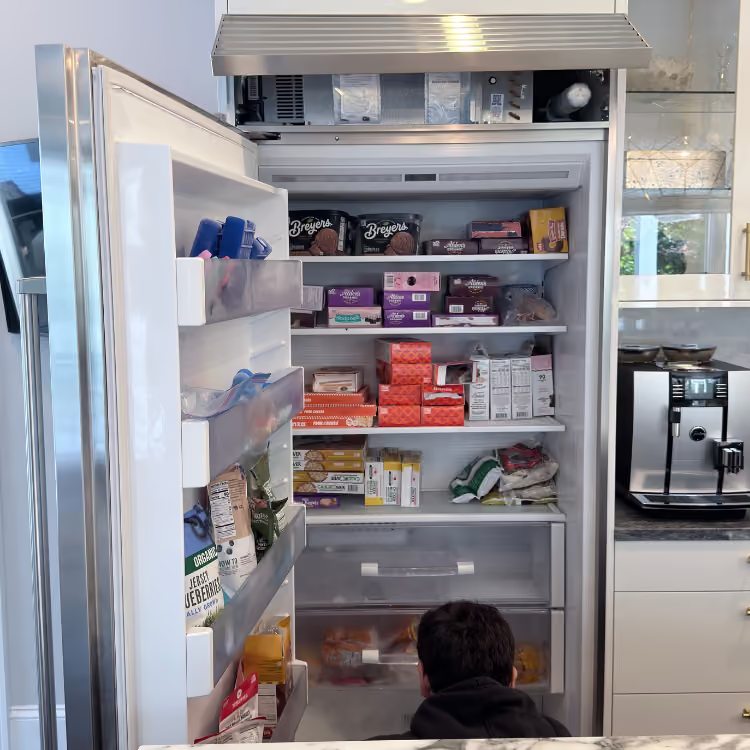
- Refrigeration & Freezers: built-in and integrated units where Gaggenau is installed in the kitchen system
- Dishwashers: built-in and panel-ready configurations
If you’re unsure what you have, send a photo of the model/serial tag and any displayed code; we will confirm scope before dispatch.
Common Gaggenau Problems We Repair (by category)
Cooking & Baking
What you notice
- Oven heats inconsistently or takes too long to reach set temperature
- Temperature swings during baking or roasting
- Fan runs but heat output feels weak
- Steam/combi-steam functions fail to generate or maintain steam conditions
- Unit powers on but cancels mid-cycle
What we test
- Supply voltage and stability under load
- Heating output behavior and control response to setpoint changes
- Sensor feedback and plausibility versus actual cavity behavior
- Airflow path and fan performance where applicable
- Door seal and latch behavior that can affect heat retention and control decisions
What verification looks like
- Stable temperature behavior under a real cycle, not just “it turns on”
- Repeatable performance after cool-down and re-start
Cooktops
What you notice
- Induction zone turns on then shuts off
- Clicking or repeated ignition attempts on gas burners
- One or more zones weak, uneven, or dead
- Burner lights but won’t stay lit
- Controls respond but heating output is missing or intermittent
What we test
- Power delivery and stability under load at the appliance
- Zone-by-zone load response and recurrence pattern
- Ignition behavior, flame sensing behavior, and burner condition for gas platforms
- Control inputs and output commands (what the unit is trying to do)
- Obvious mechanical constraints: warped caps, clogged ports, damaged electrodes, misalignment
What verification looks like
- Each zone sustains stable heat output for a controlled interval
- On gas, stable ignition and stable flame holding without repeated re-tries
Ventilation
What you notice
- Hood runs but airflow is weak
- Excess noise, vibration, or rattling at certain speeds
- Intermittent shutdowns or overheating behavior
- Lights work but fan speeds don’t respond correctly
- Grease and odor control is worse than before
What we test
- Blower operation and speed response under each setting
- Obvious airflow restrictions: filters, backdraft damper behavior, duct choke points where accessible
- Electrical load behavior and heat buildup under sustained run
- Mounting/vibration sources that transmit into cabinetry or soffits
What verification looks like
- Stable operation at multiple speeds without thermal cutouts
- Measurable improvement in capture and exhaust behavior in normal use
Refrigeration & Freezers
What you notice
- Not cold enough, warming alarms, or temperature instability
- Frost/ice patterns that reduce airflow
- Loud running, long run-times, or cycling changes
- Freezer okay but fresh food warm, or the reverse
- Condensation or humidity issues around doors
What we test
- Actual compartment temperatures and how they drift over time
- Airflow and fan performance, including blocked returns or frost restriction
- Defrost behavior and whether it’s creating intermittent airflow restriction
- Heat rejection constraints for built-in installs: condenser loading and ventilation path
- Door seal and alignment effects on humidity load
What verification looks like
- Temperatures stabilize within a normal operating band after repair
- Airflow remains consistent over multiple cycles, not just immediately after a reset
Dishwashers
What you notice
- Won’t drain, drains slowly, or leaves water in the bottom
- Poor wash results despite “normal” cycle completion
- Leaks at the toe-kick area or under the sink connection
- Intermittent stopping mid-cycle
- Unusual grinding or buzzing during drain phases
What we test
- Sump and drain path restriction versus pump performance
- Drain flow and routing realities: kinks, long runs, improper loop height
- Float/overfill inputs that can change drain behavior
- Electrical load of the drain pump when commanded
- Spray circulation and heating behavior for “cleans poorly” complaints
What verification looks like
- Full drain performance at end-of-cycle
- Confirmed wash circulation and normal cycle completion under a real load
Symptom to Diagnosis Map
- Symptom: Oven heats sometimes, then drops heat mid-cycle
Likely cause class: power delivery under load, sensing/control decision, heat-generation component failure
How we confirm on-site: verify supply stability, check sensor plausibility, confirm heating output and control response under a sustained cycle - Symptom: Steam/combi-steam won’t make steam or steam is weak
Likely cause class: water feed/flow limitation, steam-generation conditions not met, control logic inhibited by a related fault
How we confirm on-site: validate fill behavior, check whether temperature/conditions reach steam enable, verify recurrence and inputs without guesswork resets - Symptom: Induction zone turns on then shuts off quickly
Likely cause class: pan detection mismatch, supply instability, zone power module failure
How we confirm on-site: compare zone behavior across cookware, check supply under load, reproduce the shutdown pattern consistently - Symptom: Gas burner clicks repeatedly or won’t stay lit
Likely cause class: ignition/flame-sense issue, burner obstruction/misalignment, gas delivery constraint
How we confirm on-site: observe ignition sequence, verify stable flame hold, inspect burner/electrode alignment and cleanliness - Symptom: Hood runs but airflow is weak
Likely cause class: restriction in filters/duct/damper, blower performance degradation, duct path limitations in the install
How we confirm on-site: confirm blower response, inspect accessible restriction points, validate improvement after corrective action - Symptom: Ventilation is very loud or rattles at higher speeds
Likely cause class: mounting/vibration transfer, blower imbalance, loose components in the hood or duct connection
How we confirm on-site: isolate noise source by speed and contact points, verify stability after securing or correcting the cause - Symptom: Refrigerator warm, freezer ok
Likely cause class: airflow distribution failure, frost restriction, sensor/control misread
How we confirm on-site: verify airflow, inspect frost/ice patterns, confirm fan operation and temperature readings versus actual - Symptom: Freezer warm, fresh food ok
Likely cause class: defrost/airflow issue, heat rejection constraint, control decision errors under load
How we confirm on-site: measure temps over time, validate defrost behavior, check condenser loading and ventilation path for built-ins - Symptom: Dishwasher won’t drain or drains slowly
Likely cause class: restriction, pump failure, drain routing problem, control/float input
How we confirm on-site: inspect sump/drain path, verify pump load and command, confirm drain routing height and kinks - Symptom: Dishwasher cleans poorly but “finishes” cycles
Likely cause class: circulation impairment, heating deficiency, loading/detergent mismatch hiding a real performance fault
How we confirm on-site: verify spray/circulation, confirm heat behavior, validate outcomes under a controlled load - Symptom: Appliance trips breaker when heating or on high power
Likely cause class: short under load, supply circuit weakness, component drawing abnormal current
How we confirm on-site: identify when it trips, measure load behavior safely, isolate whether it’s appliance-side or circuit-side - Symptom: Intermittent shutdowns across multiple functions
Likely cause class: thermal protection events, control instability, supply irregularity
How we confirm on-site: reproduce under sustained operation, observe thermal/load behavior, validate stable operation after correction
Why Gaggenau Issues Are Often Installation-Sensitive in NYC
- Built-in cutouts can restrict airflow and heat rejection, especially around ovens and integrated refrigeration
- Tight cabinetry access changes what can be inspected without partial disassembly
- Ventilation performance is limited by real duct routing, dampers, and building constraints, not just the hood motor
- Dishwashers are sensitive to drain routing height, long runs, and under-sink plumbing changes
- Power supply realities vary: 208V vs 240V, shared circuits, and older panels can surface “intermittent” faults under load
- Panel-ready installs add alignment pressures that can affect doors, seals, and latching behavior
- High-rise logistics can affect timing and access; model/serial confirmation prevents wrong-dispatch visits
How Gaggenau Service Works
- Pre-check by text or call: model/serial photo, category, symptoms, and any displayed code
- On-site diagnostics: confirm the failure under load and isolate the root cause class
- Clear repair path: what failed, why it failed, and what verification will prove the fix
- Repair and verification: function test plus stability checks that match real use
- Notes and follow-up guidance: what to monitor, and what changes indicate a new issue
What to send for faster scheduling
- Photo of the model/serial tag
- Photo of any displayed error or fault message
- Short description of when it happens: constant vs intermittent, and which modes trigger it
- Install type: built-in, panel-ready, freestanding, or in a tight cabinet cutout
- For dishwashers: photo under the sink showing drain routing and connections
- For ventilation: photo of the hood underside and filters, plus any accessible duct connection area
Real Case Logs (NYC)
- Example scenario: Built-in wall oven “sometimes” reaches temp, sometimes stalls → checked supply under load and control response → cause class isolated to load-related control/sensing behavior → verified stable heat output across a full bake cycle after corrective repair path
- Example scenario: Induction zone shuts off in under 10 seconds → compared zone behavior and load response → isolated pan-detection mismatch versus power delivery issue → verified sustained heating on each zone under repeatable conditions
- Example scenario: Dishwasher leaves standing water intermittently → inspected sump and drain path, verified pump load when commanded → isolated restriction vs pump performance vs routing height → verified full end-of-cycle drain and no recurrence
- Example scenario: Integrated refrigeration warms mainly during afternoons → measured temperature drift pattern and airflow, evaluated heat rejection in cabinet → isolated airflow/heat rejection constraint → verified stabilized temperatures after restoring proper airflow and heat rejection
Error Codes (Quick Reference, Not a Parts List)
Gaggenau error and fault formats vary by series and platform. If you send the exact code plus a model/serial photo, we align it to the correct platform-specific diagnostic path and avoid wrong-part assumptions.
Before You Call (Safe, High-Value Checks)
Stop and schedule service if you have a burning smell, repeated breaker trips, gas odor, or active water leaking.
- Confirm the appliance is fully powered and the breaker is not half-tripped
- For ovens: verify the door closes fully and no debris blocks the seal surface
- For cooktops: remove and re-seat burner caps on gas units; for induction, try a known-compatible magnetic pan
- For ventilation: clean or replace washable grease filters and confirm they are seated correctly
- For dishwashers: check the bottom area for obvious debris; confirm the sink/disposer isn’t backing up into the dishwasher drain line
- For refrigeration: make sure vents inside the cabinet are not blocked by food containers; confirm doors are closing without hitting bins
- If an error is displayed, take a photo before resetting power (resets can erase useful diagnostic context)
- Note whether the issue happens only under high power or only after the unit runs for a while
FAQ
Do you service Gaggenau built-in and panel-ready appliances?
Yes. Built-ins are common in NYC. We confirm the model platform from a model/serial photo so the visit matches the install type and access reality.
What’s the diagnostic fee and how does it apply?
The on-site diagnostic fee is $99, credited toward the repair if you move forward.
Do you use OEM parts for Gaggenau repairs?
Yes. We use OEM parts only when parts are required, and we verify the failure first to avoid wrong-part swaps.
Do you provide COI for building management access?
Yes. Tell us during scheduling if your co-op/condo requires COI so we can align access requirements.
What’s your warranty on completed repairs?
180-day parts and labor warranty on completed repairs.
When should I stop DIY and book service immediately?
If you have repeated breaker trips, burning smell, gas odor, or active leaks. Also stop power-cycling if a fault code keeps returning.
Do you handle ventilation performance problems even if the ducting is the real issue?
Yes. We separate hood/blower performance from duct restrictions and damper issues, then recommend the correct fix path based on what we can verify.
Schedule Gaggenau Appliance Repair (NYC)
Call +1 (332) 333-1709 or email voltnvector@gmail.com to book service in Brooklyn, Queens (selected ZIPs), or Manhattan (below 96th St.
1. Schedule your visit
2. On-site diagnostic
3. Approve & repair
4. Done & covered
COI (Certificate of Insurance)
Available on request - usually not required in Brooklyn, but often asked for in Manhattan buildings and co-ops. Please remember that certain issues can come from incorrect use or installation, not from parts failure - our technicians will always point that out and show how to prevent it in the future.
Warranty & Compliance
Every repair is covered by a 180-day warranty on both parts and labor. If the appliance is older, keep in mind that some surrounding components can wear out over time — sometimes one repair leads to another part showing its age. We always explain options clearly before doing extra work.
Safety & Courtesy Protocol
We treat every visit like we’re guests in your home. Technicians wear shoe covers or remove footwear when entering, and we always clean up after the job. If you notice a little dust or debris left behind - our apologies - each tech handles 3-5 appointments per day and works to stay on schedule. If your window was 11-1, the technician usually arrives closer to 11; if running late, we’ll text you right away. Our goal is simple: work clean, stay safe, and respect your space and time.
Coverage
We cover Brooklyn—Downtown, Brooklyn Heights, Park Slope, Williamsburg, Greenpoint, Bed-Stuy, Carroll Gardens, Prospect Heights, and Flatbush—and Manhattan (below 96th Street)-FiDi, Battery Park, Tribeca, SoHo, Chelsea, Midtown, UES, UWS, Gramercy, and the Village. You’ll receive a text alert ~30 minutes before arrival.
Why Volt & Vector
We’ve spent years working inside large NYC repair companies - seeing how real technicians get buried under rushed schedules, fake “same-day” promises, and endless call-center noise. Volt & Vector grew out of that frustration. We wanted a place where diagnostics still matter, where techs can take time to do the job right and talk to people directly. We’re not calling ourselves perfect - far from it - but we’re building the kind of service we always wanted to work for: respectful, transparent, and run by people who actually fix things.
Pricing & Diagnostic Policy
Our diagnostic visit is always billed at the first appointment - that’s the starting point for every repair. After the visit, the technician sends full details to our service desk. Sometimes the tech can give a price range on-site, but we’re moving away from instant quotes - parts pricing changes like crypto these days, and we’d rather stay accurate than promise the wrong number.
Washer Repair
Door won’t lock, won’t drain, leaks at boot/gasket, loud spin (bearings), vibration, error codes.
No agitation, won’t spin, grinding, clutch/gearcase issues, lid switch faults, off-balance cycles.
Poor wash performance, won’t sense/load properly, drain/spin faults, suspension issues, control errors.
Tight installs, small pumps/filters, door lock issues, slow drain, leaks, vibration, control faults.
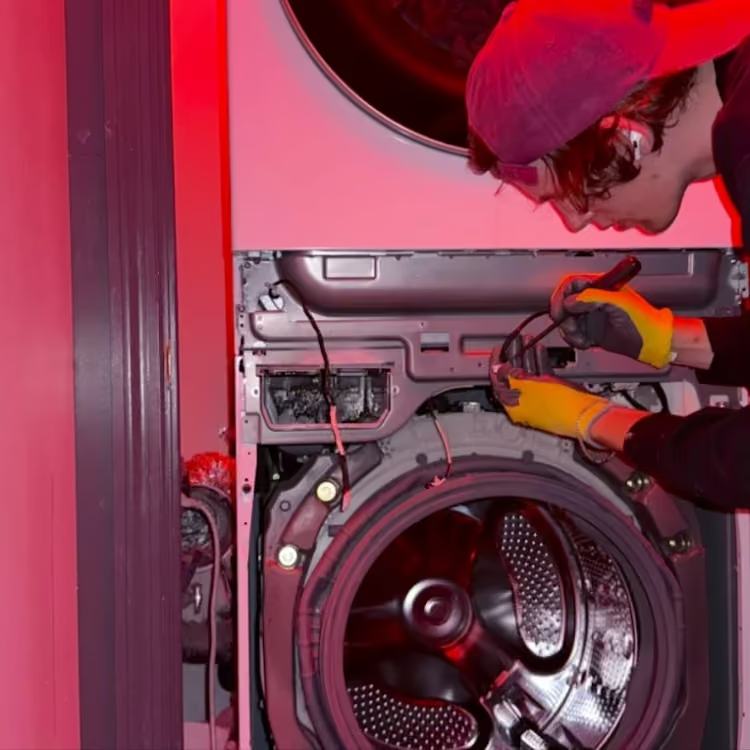
Stacked access constraints, vibration/noise, drain errors, door lock, leaks—disassembly often required.
Won’t wash/drain, won’t dry, overheating, airflow/condensing issues, pump faults, frequent error codes.
Fill/drain problems, inlet valve issues, hose leaks, weak spin, small pump clogs—parts vary by model.
Dryer Repair
Door won’t lock, won’t drain, leaks at boot/gasket, loud spin (bearings), vibration, error codes.
No heat or weak heat, igniter/flame issues, gas valve problems, airflow/vent blockage, cycling faults.
Not drying, water not collecting/draining, clogged condenser path, pump issues, overheating errors.
Very long cycles, no/low heat, refrigerant circuit/HP module faults, sensor errors, condensate drain issues.
Tight installs, long dry time, noisy drum, heater/sensors, airflow and lint channel restrictions.
Vibration/noise, no heat, long dry times—access/disassembly constraints are common in stacks.
Shared cabinet access, belt/idler noise, heater/thermostat faults, control issues—service is more involved.
No heat, weak airflow, thermal cutoffs, noise—model-specific parts and venting constraints.
Dishwasher Repair
Won’t drain, leaks, not cleaning, not drying, loud wash motor, door won’t latch, error codes.
Drain issues, weak wash, leaks, heater/drying faults, tight cabinet access, model-specific parts.
Door alignment/latch issues, leak at door seal, wash/dry faults, control errors—panel/fitment affects operation.
Not draining, poor wash, no heat/dry, circulation pump noise, inlet/fill faults, error codes.
Door/latch alignment, leaks, drain/wash faults—fitment and toe-kick clearance often matter.
Drain errors, lid seal leaks, actuator faults, fill issues, wiring in slides, frequent cycle interruptions.
Fill/drain problems, weak wash, leaks at hoses, heating faults—quick diagnosis, limited parts support by brand.
Faucet adapter leaks, fill/drain faults, pump noise, wheel/base issues—setup and hose routing are common causes.
Not heating, not filling, drain faults, wash pump issues, door switch problems—cycle time and sanitizing temp checks.
Cooktop Repair
Burners won’t ignite, clicking nonstop, weak flame, gas smell, uneven heat, knobs/valves issues.
Element won’t heat, intermittent heat, burner stays on, sparking at receptacle, switch failures.
One zone not heating, dual/bridge zone failures, heat stuck on, cracked glass, indicator light issues.
Not detecting pan, shuts off, error codes, fan noise, uneven power, touch controls unresponsive.
Uneven heat, ignition issues (gas), sensor/thermostat faults, module-specific controls, performance drop.
Fan not running, weak suction, loud vibration, stuck controls, grease/lint buildup affecting airflow.
Won’t heat, temp unstable, hotspotting, sensor/thermostat faults, control/safety cutoffs.
Single-zone failures, ignition/control faults, tight cutout access, module-specific parts and wiring.
Access and removal vary by install—wiring/gas connection layout affects service time.
Ignition, flame quality, and cleaning-related blockages differ—diagnosis depends on burner design.
Range Repair
Oven won’t heat, weak bake/broil, ignition/clicking, uneven flame, gas smell, temp swings.
No heat, slow preheat, element failures, breaker trips, temp inaccurate, control/relay issues.
Burner ignition/flame issues plus oven heating/sensor faults—two systems, different failure modes.
Cooktop not detecting pans, error codes, shuts off, fan noise, touch panel problems, power module faults.
Oven not heating, cooktop issues, drawer/door problems, control failures—standard pull-out access.
Fitment/leveling affects gaps and heat; oven/cooktop faults plus install constraints during removal.
More involved access/removal; wiring/venting constraints common; oven heating and control issues.
High-output burners, ignition modules, convection fans, temperature control, heavy units and tight installs.
Bake/broil failures, temp calibration issues, door seal leaks, fan/igniter/element faults.
One oven not heating, uneven temps between cavities, shared controls/relays, fan and sensor faults.
Uneven heat, ignition/valve issues (gas), thermostat/sensor faults, module-specific parts and wiring.
Oven Repair
Won’t heat, slow preheat, temp inaccurate, door won’t close, error codes, control/relay issues.
One cavity not heating, uneven temps between ovens, shared controls, fan/sensor faults, error codes.
Oven heat issues plus microwave/Speed functions failing, cooling fan errors, interlock and control faults.
Bake/broil not working, temp swings, ignition/element faults, door seal leaks, control failures.
Heating and control faults plus tight-fit install constraints; leveling and ventilation can affect performance.
Tight cabinet installs, cooling fan/overheat faults, control issues, door alignment and airflow constraints.
No ignition, weak heat, uneven bake, gas smell, igniter/valve issues, temp regulation faults.
No heat, slow preheat, element failures, breaker trips, temp sensor faults, relay/control issues.
Fan not running, uneven cooking, noisy fan, overheating, temp drift, control/sensor faults.
Rear element/fan faults, weak convection heat, uneven bake, overheating errors, airflow restrictions.
No steam, water not pumping, leaks, descaling faults, temp errors, steam generator issues.
Tight installs, cooling fan errors, no heat/temp drift, door issues, model-specific parts.
Not warming, temp too hot/cold, drawer switch issues, heating element/control faults.
High-heat performance issues, ignition/element faults, convection system problems, heavy-unit access constraints.
Refrigerator Repair
Warm fridge or freezer, heavy frost, noisy fan, defrost failure, door seal leaks.
Warm fridge, ice on back panel, drain clogs/leaks, evaporator fan noise, airflow/defrost issues.
One side warm, weak ice/water, dispenser problems, damper/defrost/control faults, fan noise.
Warm fridge, ice maker not making ice, water leaking, fan noise, drawer/door seal issues.
Warm temps, restricted airflow, condenser access/cleaning limits, door alignment and gasket leaks.
Cooling performance issues, fan noise, defrost/drain faults, sealed-system vs control diagnosis, tight access.
Door alignment/seal problems, cooling issues, fan noise—panel weight/fitment affects operation.
Not cooling, frost patterns, fan noise, defrost failures, sensor/control issues.
Not holding temp, icing, drain leaks, fan/compressor faults, airflow and coil restrictions.
Not cooling, icing, loud compressor, thermostat/control faults, limited airflow.
Temp won’t hold, condensation, fan noise, control faults, sealed-system failures in some units.
Not cooling, frost/ice buildup, drawer seal issues, fan noise, control/defrost faults.
Wolf Appliance Repair Service
Read More

Sub-Zero Appliance Repair Service
Read More

Sub Zero appliance repair commonly involves cooling and ice maker problems like warm fridge or freezer, frost buildup, water leaking, loud fan noise, or no ice. Service starts by verifying model details, then checking airflow, defrost operation, fans, sensors, sealed system performance, and control response.
Bertazzoni Appliance Repair Service
Read More

Bertazzoni appliance repair commonly involves burners not igniting, weak or uneven flame, oven not heating properly, temperature swings, error codes, or control issues. Service starts by verifying model details, then checking gas supply or power, ignition components, valve operation, temperature sensing, and control output.
Viking Appliance Repair Service
Read More

Viking appliance repair commonly involves burners not igniting, uneven oven heat, broiler failure, temperature swings, error codes, or continuous clicking. Service starts by verifying model details, then checking gas supply or power, ignition parts, valves, sensors, and control output.
Bosch Appliance Repair Service
Read More

Bosch appliance repair commonly involves dishwasher drain errors, poor cleaning, leaks, fridge cooling issues, or dryer not heating. Service starts by verifying model details, then checking pumps, valves, sensors, airflow or water flow, electrical supply, and control response before recommending parts.
Electrolux Appliance Repair Service
Read More

Electrolux appliance repair commonly involves washer not draining, dryer not heating, fridge not cooling, leaks, unusual noise, or error codes. Service starts by verifying model details, then checking pumps, heaters, airflow, seals, sensors, electrical supply, and control response before recommending parts.
HVAC Repair
Warm fridge or freezer, heavy frost, noisy fan, defrost failure, door seal leaks.
Warm fridge, ice on back panel, drain clogs/leaks, evaporator fan noise, airflow/defrost issues.
One side warm, weak ice/water, dispenser problems, damper/defrost/control faults, fan noise.
Warm fridge, ice maker not making ice, water leaking, fan noise, drawer/door seal issues.
Warm temps, restricted airflow, condenser access/cleaning limits, door alignment and gasket leaks.
Volt & Vector Appliance Repair provides residential appliance repair in New York City & Brooklyn with a diagnostics first workflow. We verify the failure mode on site (electrical, mechanical, airflow, water management, controls) before recommending parts or repair steps. The goal is a confirmed root cause, fewer repeat visits, and fewer wrong part orders.


.png)


.jpg)


.avif)