What Happens During an Appliance Repair? | Volt & Vector
Follow the visit from diagnosis and estimate approval to parts, repair and testing. Understand why some jobs need a return visit.


Manhattan Appliance Repair

Brooklyn Appliance Repair
Westchester Appliance Repair
HVAC Repair
How appliance repair works
The diagnostic visit (what we actually do)
Typical diagnostic workflow includes:
- Confirm the complaint (what the appliance does, when it fails, how often, and under what conditions)
- Check installation factors that can mimic “broken” (power, water supply, drain routing, venting, leveling, airflow, etc.)
- Use the appliance’s own clues (error codes, stored faults, test modes where available)
- Verify inputs/outputs and basic health checks (not every appliance supports the same tests, but the logic is consistent)
- Identify the most likely root cause and the components involved (one failed part can be caused by another upstream issue)
Quote and decision point (repair vs replace)
Review Estimate, diagnostic credit and parts deposit. After diagnosis, you’re choosing between:
- Repair now (with a defined scope)
- Defer repair (if it’s not urgent or you want to think)
- Replace the appliance (if repair doesn’t make economic sense)
There are cases where repair is simply not a smart investment. This comes up most often when:
- Multiple components are failed at the same time
- The failure is centered around expensive electronics (control boards, inverter modules, display/UI boards, power boards)
- The appliance is in a lower price tier and the repair approaches a large share of replacement cost
A practical rule: if a sub-$1,000 appliance needs multiple major electronic components, replacement is often the rational call. Not always, but often. We’ll tell you when the numbers don’t pencil out so you don’t sink money into a losing position.
Parts (the messy part nobody tells you about)
Even with a correct diagnosis, parts can be unpredictable in the real world. A few things can happen:
- The part is backordered or delayed
- The part arrives damaged
- The part supersedes to a new revision and needs an adapter or updated install approach
- The part doesn’t match the unit as expected (model/serial variations matter more than people realize)
- The part is correct, but the failure reveals a second issue once the first is addressed
That’s why some repairs require multiple visits. It’s not stalling, it’s reality: diagnosis is the map, but parts logistics and revision differences are the terrain.
Repair visit (and what “done” means)
On the repair visit, the focus is:
- Install the correct component(s) cleanly
- Re-check the related systems so the new part doesn’t get taken out by the original cause
- Run a verification cycle or functional test appropriate to the appliance
- Confirm the symptom is resolved and the appliance behaves normally
If a repair has any remaining uncertainty (for example, intermittent failures), we’ll tell you what to watch for and what the next diagnostic trigger would be.
Background checks and professionalism
Professionalism also means consistency in the small things, because those are what customers actually experience:
- Clear identification and communication (who is coming, when, and what the plan is)
- Respect for the home (shoe covers when appropriate, controlled tool placement, no unnecessary wandering, no mess left behind)
- Respect for your time (arrival windows, updates if a job runs long, and a clean explanation of what’s next)
- Respect for your property (no forcing panels, no “let’s just try this” experiments that create new damage, no shortcuts that look fine for 48 hours and then fail)
- Calm, direct explanations (what failed, what didn’t, what’s uncertain, and what you’re paying for)
You should not have to manage the technician’s work throughout the visit.
Scheduling, arrival windows, and delays (rare, but real)
A typical day for a working tech is about four appointments, sometimes more, sometimes fewer. It depends on:
- Job complexity (a “quick” call can turn into a deep diagnostic)
- Building access and elevator/loading rules
- Traffic and parking realities
- Parts runs or emergency pivots (less common, but it happens)
A technician can run late if the job before you takes longer than expected or traffic gets ugly. It’s not the norm, but it’s possible. When it happens, it’s usually because we’re finishing a job the right way instead of rushing out mid-stream.
The human part: why techs stay in this work
Safe access and symptom assessment
Do not move or unstack the appliance, remove panels, disconnect utilities, or reproduce a fault.
- The model and serial number identify the appliance. A label may be on a door opening or frame; access to a hidden label is left to the technician.
- Noise, error codes, leaks, unusual flames and symptom timing help characterize a fault. Do not restart equipment or reproduce a fault. For gas odor, leave immediately. Do not use switches, flames, appliances or a phone inside; call 911 from safely outside.
- Do not pull out laundry units or reach behind connected equipment; the technician handles technical access.
- A power outage, moving the unit, plumbing work or first use after months can change the diagnostic context.

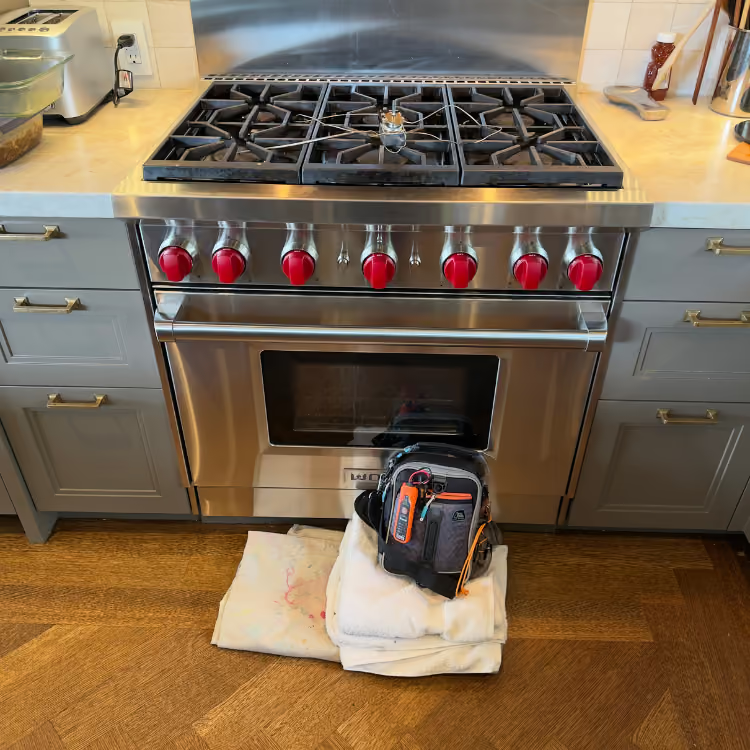
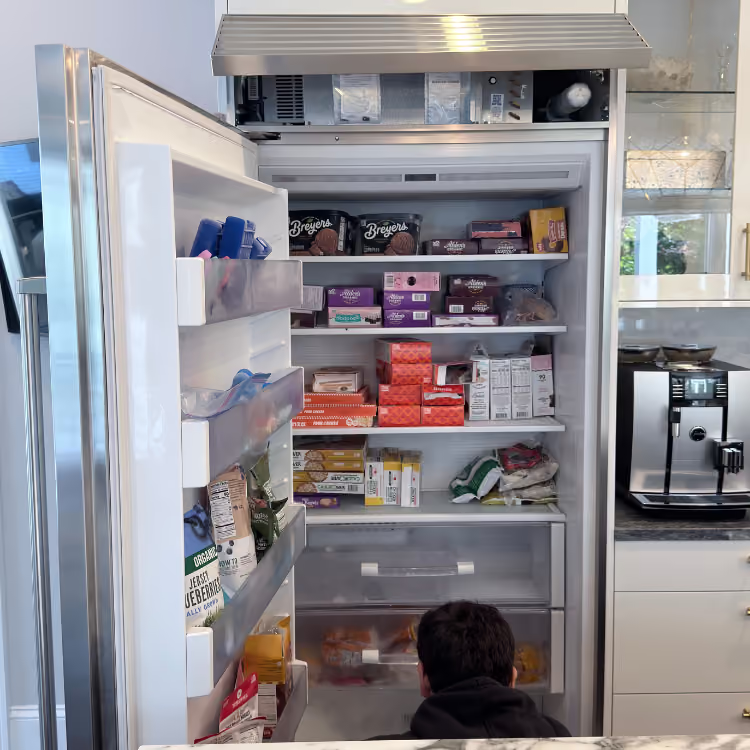
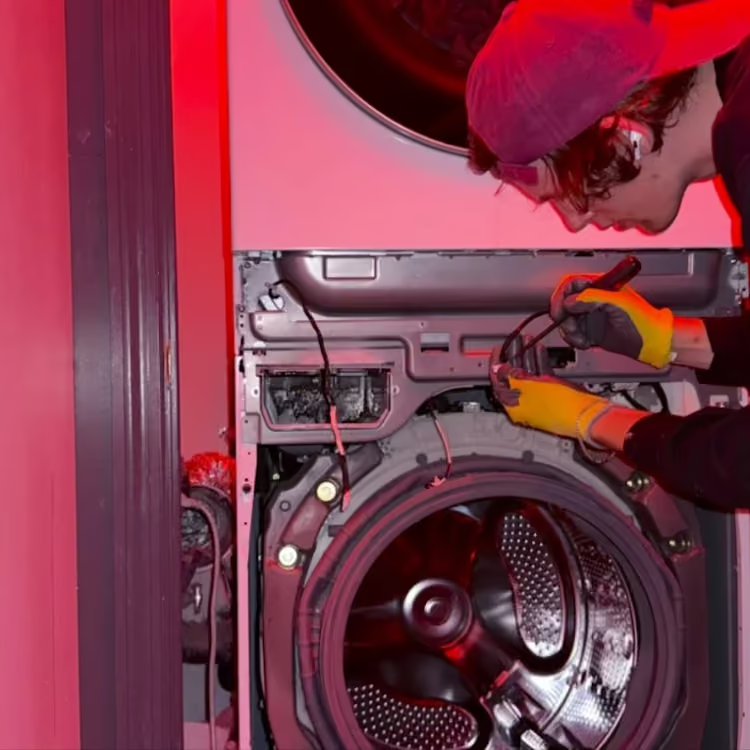
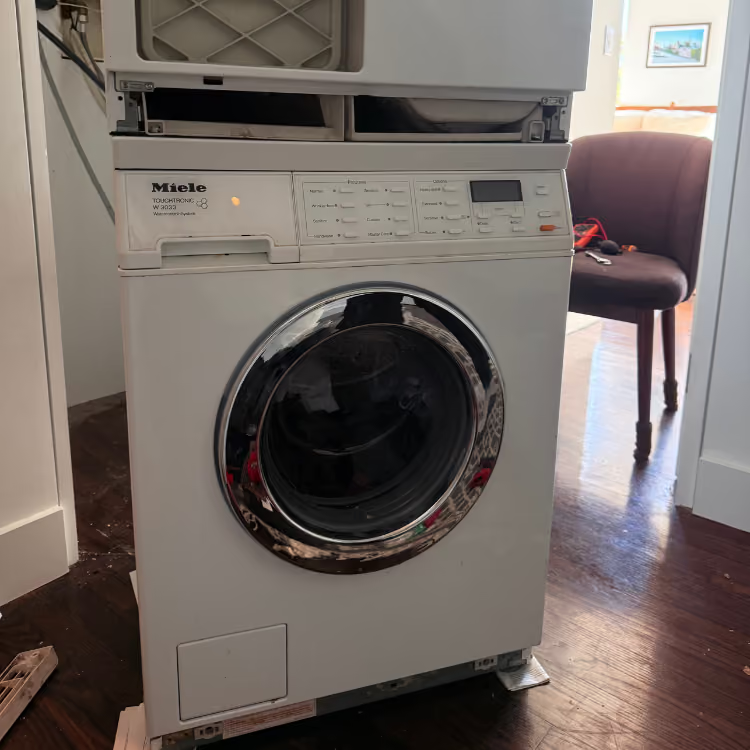
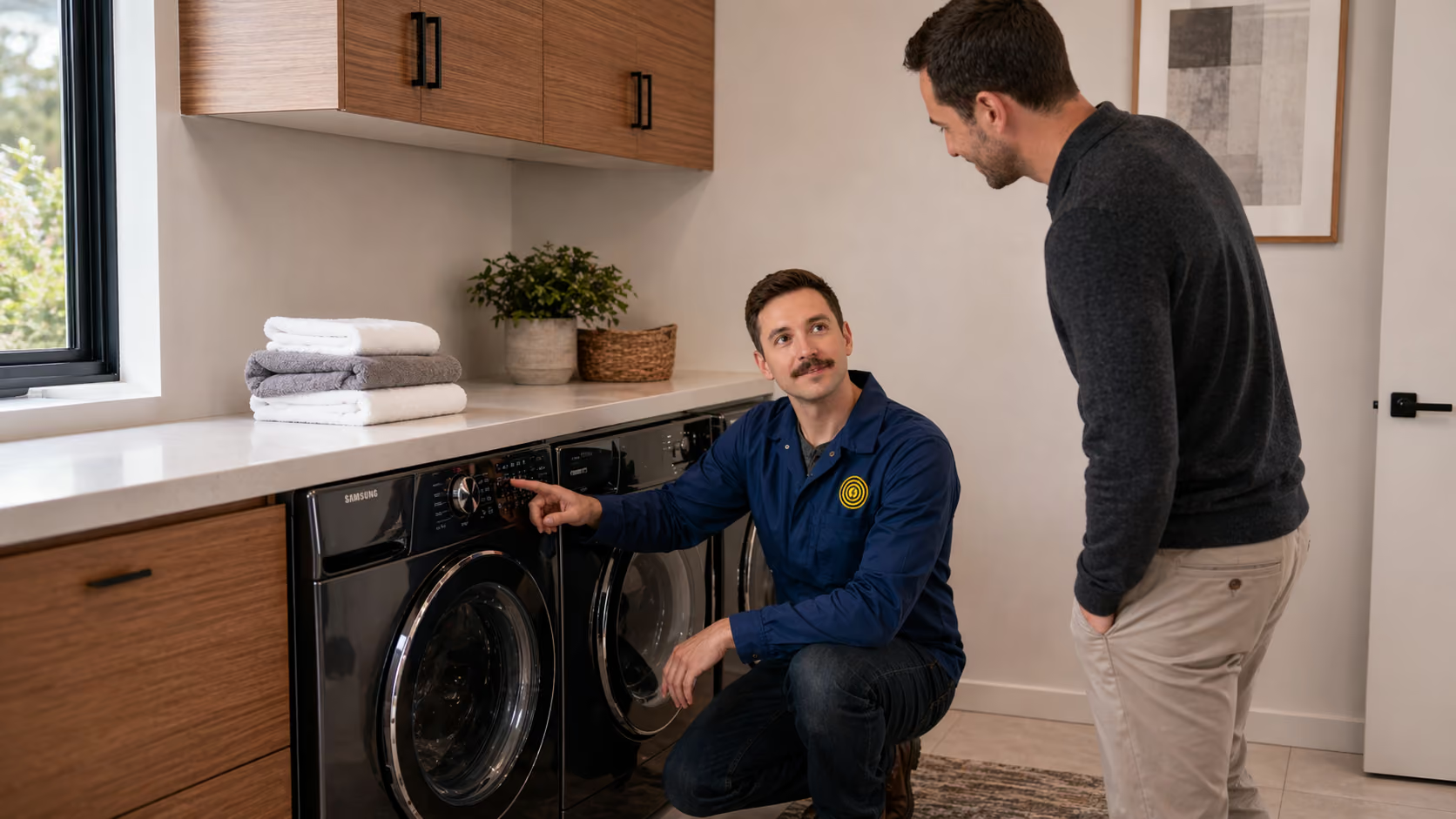
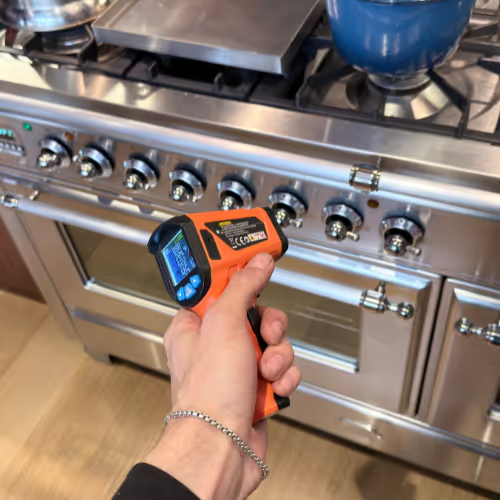
Volt & Vector service photographs: examples from our work.