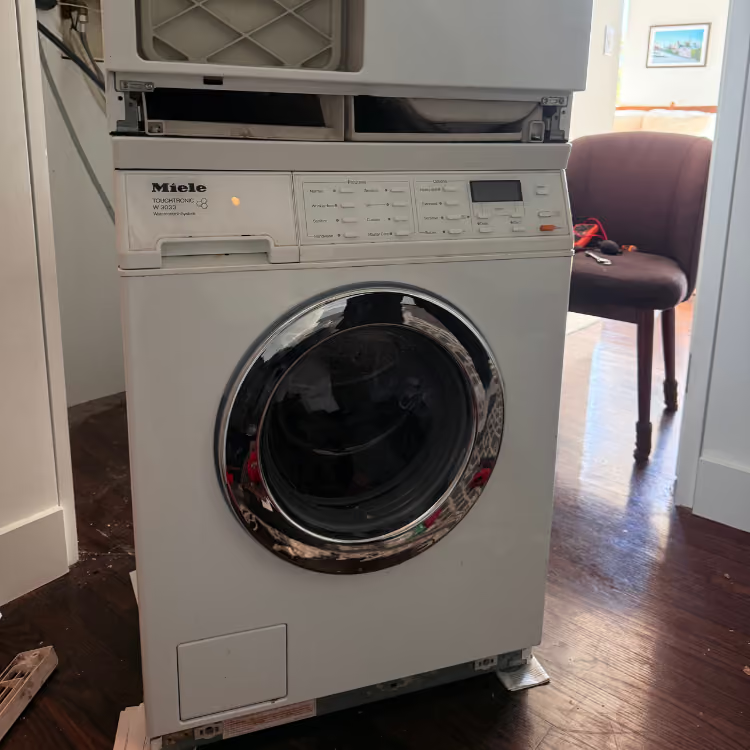


Miele W1215 Drum Squeak and Uneven Rotation | Case
Relieving contact with the door seal stopped the squeak, but the drum still turned unevenly. The repair decision depended on explaining the drum's position before ordering a seal.
Service Context
Mechanical inspection of a Miele W1215 after a drum-rotation noise complaint.
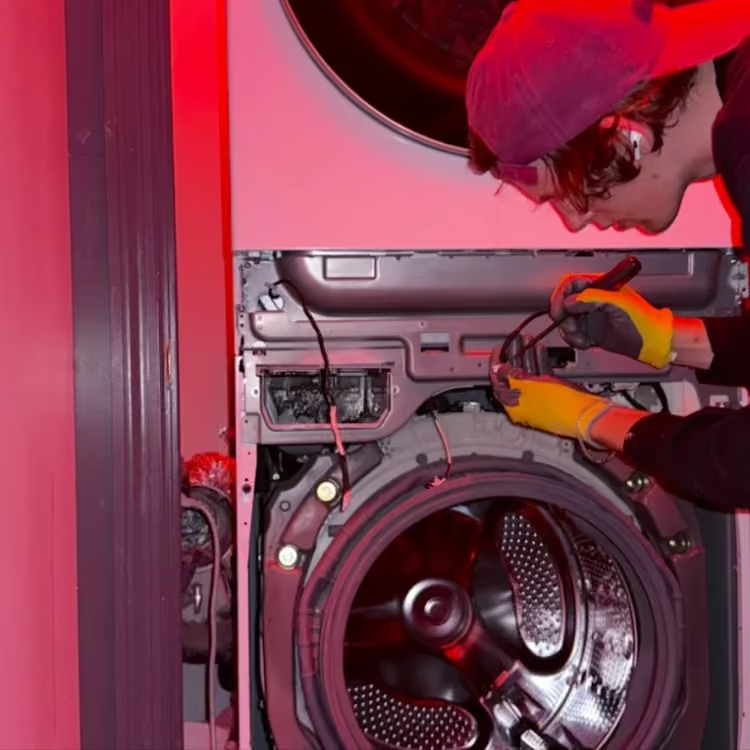
The Miele W1215 made a squeaking noise as its drum turned. During the inspection, the technician saw that the drum appeared displaced and did not rotate evenly, although it did not feel obviously loose. The technician reported that lifting at the top of the drum moved the tub assembly together. Moving the door seal away stopped the squeak.
The noise stopped, but the finding remained
Relieving contact located the rubbing point. It did not establish why the rotating drum and the seal were touching. The technician could still see uneven rotation while turning the drum by hand.
The technician described an approximately 7 mm difference in the surrounding gap. That uneven clearance reinforced the visible movement; it was not a factory tolerance or a confirmed bearing measurement.
Why a seal-only repair was premature
A seal can be the surface making the noise while another mechanical condition brings the drum into contact with it. In this case, replacing the rubber without explaining the drum's position would leave the central finding unanswered.
The useful distinction is between a seal that is seated incorrectly and a drum whose geometry or support is allowing it to run unevenly. Those possibilities lead to different repair scopes. The lack of obvious looseness did not settle that distinction, and the inspection did not confirm a failed bearing or drum support.
A repair decision based on the whole movement
The case was reported resolved; the final mechanical correction and post-repair rotation check are not specified. Locating the rubbing point changed the repair decision: a quiet drum with visibly uneven rotation could not be treated as a complete correction.
For this combination of symptoms, the service assessment must establish whether the seal is correctly positioned and whether the drum runs true relative to its support. If the problem is limited to the seal, the estimate can reflect that. If the drum assembly or support is damaged, the owner needs the full repair scope before deciding whether the work is worthwhile.
Miele treats rubbing during drum rotation as a technical fault requiring service. For an owner seeing the same rubbing and uneven movement, pausing use is the practical choice. A temporarily quieter drum is insufficient reassurance when its uneven movement is still visible.
- The drum squeaked during rotation.
- Moving the door seal away stopped the squeak.
- The drum still appeared to rotate unevenly when turned by hand.
- The technician described an approximately 7 mm difference in the surrounding gap.
- The drum did not feel obviously loose; the technician reported that lifting at the top moved the tub assembly together.
If the same symptom appears on your appliance:
- Have a technician establish whether the seal is correctly seated and whether the drum runs true relative to its supporting assembly.
- Request an estimate that distinguishes a seal-only correction from any confirmed drum-support or assembly work.
- After repair, verify even rotation and clearance through a full turn before normal operation is restored.
- Pause use while rubbing and visible uneven movement remain; do not hold the seal away, force the drum, or alter the rubber to keep the machine running.
Can the owner check for a trapped item?
With the washer off and the drum stationary, look for a visible small item in the accessible folds of the door seal, as the W1215 manual recommends. Do not pull the seal out of position. Finding an item would still not explain away this visit's separately observed uneven rotation.
What should be compared if the drum assembly needs repair?
Ask for the confirmed damaged assembly, the full scope of work, and a parts-availability check. Compare that complete estimate with replacing the washer; the squeak or the W1215 model name alone does not establish that replacement is the better choice.
Result Details:
Reported outcome: resolved. The inspection located seal contact as the source of the squeak and established why the drum movement had to be assessed before selecting a seal-only repair. The final corrective work and post-repair operating verification are not specified in this case.
Repair Decision:
Do not specify a seal as the complete repair until its seating and the drum's geometry and support have been assessed together. A drum-assembly defect would change the scope and the owner's repair-versus-replacement decision.
Owner Takeaway
The part making the sound is not always the part that started the problem. Here, stopping the seal squeak did not explain why the drum was turning unevenly.