

Two Wolf Ovens: Stored Faults and Live Tests | Case
One oven reported active Bake output; the other showed 2,498 RPM from its cooling fan despite stored stall faults. Each needed a repair decision tied to its own behavior.
Service Context
One visit covered two separate Wolf wall ovens. The first oven's heating-output check and the second oven's cooling-fan check are kept distinct.
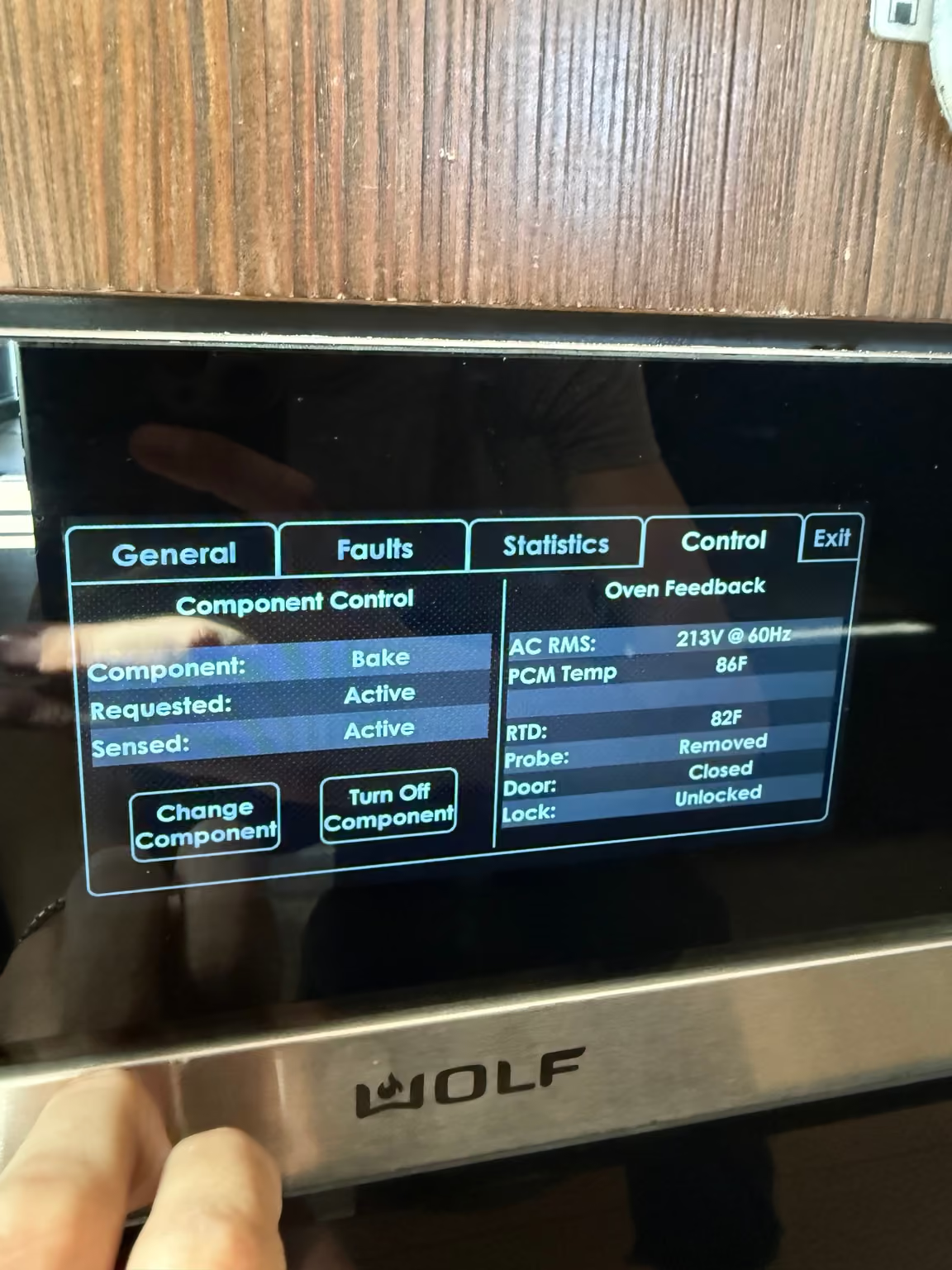
First oven: Bake was requested and sensed active during the component check. The screen recorded 213 V at 60 Hz.
- Second oven: the cooling fan returned 2,498 RPM during the test, despite the earlier stored stall warnings.
Two Wolf wall ovens were assessed during the same visit, and their diagnostic screens told different stories. The first oven reported an active Bake output. The second reported an active cooling fan at 2,498 RPM even though its history contained repeated fan-stall warnings. A single parts decision for both ovens would have ignored that difference.
First oven: what the Bake screen established
On the SO30CM/B, Component Control showed Bake as both Requested Active and Sensed Active. The screen also displayed 213 V at 60 Hz. A second screen showed Bake Requested Inactive and Sensed Inactive at 211 V and 60 Hz. The two snapshots showed the output status responding during the component checks.
The screen captured a working response at that moment. It did not prove reliable temperature control through a complete cooking cycle. Nor did 213 V alone identify the fault: the applicable Wolf installation guidance accommodates 240/208-volt supply. The actual installation and heating behavior still matter when evaluating that reading.
Second oven: a running fan and a stored stall
The SO3050CM/B showed Cooling Fan selected, Active status, and 2,498 RPM feedback. Its history included 4910, identified on the diagnostic record as Stalled Upper Cooling Fan.
Those two findings can coexist when a problem is intermittent. The speed feedback shows that the control was receiving a rotation signal during the test. A previous stall warning records a different event; it does not mean the fan must be stationary every time the technician looks at it.
The cooling fan is also different from the convection fans that circulate air inside the cooking cavity. Its role in cooling the appliance makes the timing of a warning important, including whether it appears during heating or the cooling period afterward.
Two repair decisions, with evidence for each
For a repeat heating complaint like the first oven's, diagnosis needs the interruption related to the appropriate output, temperature response, and any returning fault. For a stored stall like the second oven's, the cooling-fan event needs checking through a meaningful heating and cooling period, including its connections and rotation feedback. If a stall returns while the fan is commanded to run, that narrows the repair much more than the old entry alone.
The case was reported resolved after separate assessments and parts-planning discussions for the two ovens. The installed parts and full-cycle verification for each oven are not specified. The owner should expect an estimate that names which oven, which finding, and which repair are linked. Verification then belongs to each appliance: the relevant operating cycle should complete without the original interruption or returning warning. A brief Active indication is useful evidence, but it is only one part of that result.
- First oven: Bake Requested Active and Sensed Active on the diagnostic screen.
- First oven: displayed 213 V at 60 Hz with Bake Active, and 211 V at 60 Hz on a separate Inactive screen.
- Second oven: Cooling Fan selected, Active status, and 2,498 RPM feedback.
- Second oven: repeated historical 4910 cooling-fan stall warnings were discussed.
- The second oven's identification screen shows SO3050CM/B.
If the same symptom appears on your appliance:
- Identify each oven by its own model and serial number on the repair estimate.
- For the first oven, check the reported heating interruption through the relevant cycle and compare any returning fault with the temperature and output response.
- For the second oven, evaluate cooling-fan operation and feedback during heating and cooling, including whether the stall event returns.
- Verify the relevant full operating sequence separately after each repair.
Is fan operation after cooking automatically a fault?
No. Wolf explains that the appliance's cooling fan can continue after the oven is turned off. Continued cooling by itself is different from a stall warning or failure to move air.
What information helps if the warning returns?
Keep a photo of the message and identify which oven displayed it, the cooking mode, and whether it appeared during heating or afterward. Avoid clearing the evidence merely to make the display look normal.
Result Details:
Reported outcome: resolved. The visit distinguished the first oven's heating-output behavior from the second oven's cooling-fan history, allowing each appliance to be assessed on its own findings. The final corrective work and post-repair operating verification are not specified in this case.
Repair Decision:
Keep the two estimates separate. Relate the first oven's heating complaint to its output and temperature behavior; relate the second oven's stored stall to commanded fan operation and feedback under the conditions in which the warning returns.
Owner Takeaway
An intermittent fault can be real even when a component runs during the visit. The repair needs to connect the recorded fault to the same oven's operating behavior.