Most Common Reasons a Bosch Freezer Is Cold but the Refrigerator Is Warm
A cold Bosch freezer does not prove the fresh-food compartment is safe or that the cooling system is healthy. The exact cause depends on whether the refrigerator side has a food-safety temperature problem, blocked air movement, a door or mode issue, frost restriction, or model-specific separate cooling.
- Fresh-food temperature is actually above 40 F: The refrigerator section is no longer protecting perishable food even if the freezer still feels cold. The safe evidence is a separate thermometer reading in the center of the refrigerator compartment and a freezer reading if available. Diagnosis must separate actual temperature from display setpoint and hand-feel.
- Settings, modes, app changes, or door alarms changed the story: SuperCool, SuperFreeze, holiday mode, Sabbath mode, control changes, and door-left-open history can change short-term readings or explain why the refrigerator warmed. The safe evidence is the exact setpoint, mode indicator, app/control change, and alarm timing. Service confirms whether the control state or a sensor/control fault is driving the temperature.
- Rear vents, shelves, drawers, or cabinet ventilation are blocking air movement: Cold air may not circulate through the fresh-food section, or heat may not leave a tight built-in installation. The safe evidence is packed shelves, food against the back wall, blocked rear vents, or tight cabinet/toe-kick ventilation. Diagnosis confirms airflow, fan operation, return air, condenser ventilation, and whether a hidden restriction remains.
- Door gasket, drawer interference, or warm-air entry is raising the refrigerator temperature: A folded gasket, misaligned door, drawer obstruction, or open-door event can let warm humid air in and can create frost that later blocks cooling. The safe evidence is a door that rebounds open, gasket debris, visible gaps, alarm history, or frost near one area. Diagnosis confirms gasket compression, hinge alignment, door switch/alarm response, and frost impact.
- Frost, weak air, fan noise, damper, defrost, sensor, or control fault is restricting the fresh-food side: The freezer may stay cold while the refrigerator does not receive or regulate cold air correctly. The safe evidence is frost on the back wall, weak vent air, fan rubbing/noise, ice near vents, or a temperature alarm. Diagnosis must inspect the evaporator frost pattern, defrost circuit, fan, damper, thermistors, sensors, wiring, and control command.
- The Bosch model has separate refrigerator-side cooling hardware: On some Bosch 800 Series or dual-system models, the freezer can stay cold while the refrigerator side has its own compressor, evaporator, fan, sensor, control, or sealed-system problem. The safe evidence is the model/E-Nr and measured temperatures in both compartments. Diagnosis must use model-specific service data before any part is named.
- Both compartments are warming or power/electrical symptoms appear: That is a broader cooling or urgent electrical problem, not the same freezer-cold/refrigerator-warm pattern. If the display warning or both compartments are the main issue, use Bosch refrigerator temperature too warm as the better fit. Record the exact symptom and stop for electrical smell, water near controls, repeated power loss, or food-safety risk.
Start with actual temperature
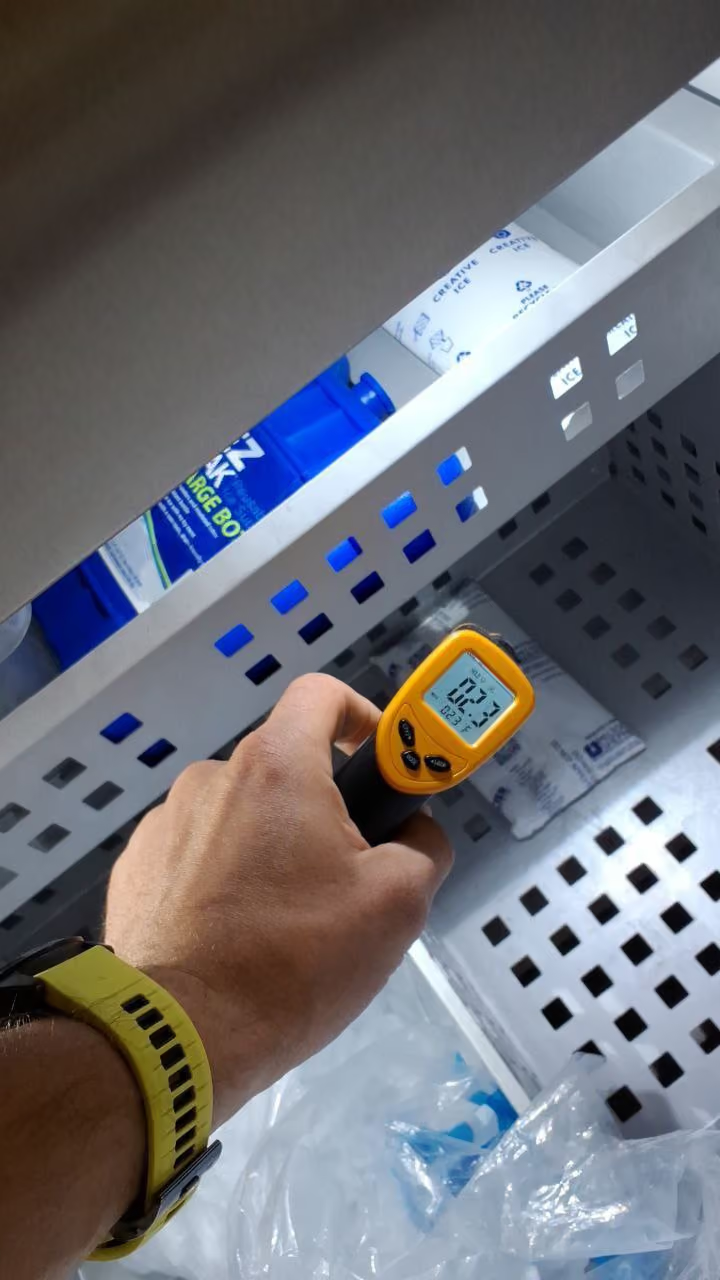
Hand-feel is weak evidence in a refrigerator. Use a separate appliance thermometer in the center of the refrigerator compartment, not near the door, and use another thermometer in the freezer if you have one. Bosch points to 37 F to 39 F as the normal refrigerator setting range and 0 F for the freezer. FDA food-safety guidance uses 40 F or below as the refrigerator safety threshold.
If the refrigerator section is above 40 F, move perishable food to a working refrigerator, cooler, or freezer-safe plan while you diagnose the appliance. Do not taste food to decide whether it is safe.
If you made only a setting change and there is no alarm, frost, smell, water, or food-safety issue, give the refrigerator time to stabilize before judging the result. Bosch guidance says to wait 24 hours after an adjustment before checking stability.
Safe visible checks
These checks do not require tools, live testing, or panel removal. They are meant to separate a blocked-airflow or mode issue from a fault inside the refrigerator.
- Temperature setting: Confirm the refrigerator temperature was not changed during cleaning, loading, or app use.
- Cooling modes: Check whether SuperCool, SuperFreeze, holiday mode, or Sabbath mode is active on your model. Holiday mode can intentionally warm the refrigerator compartment on some Bosch fridge-freezers.
- Rear vents and back wall: Move food away from vents and leave space near the back wall so air can circulate.
- Door closure: Look for a drawer, shelf, bottle, or gasket fold that keeps the refrigerator door from sealing.
- Door gasket: Clean visible debris from the gasket and check for gaps, tears, hardened areas, or a door that pops open.
- Recent loading: A large grocery load or warm containers can slow recovery, but it should not leave the fresh-food section warm indefinitely.
Airflow, frost, and fan clues
A freezer-cold/refrigerator-warm complaint often points to the way cold air reaches and returns from the fresh-food compartment. On some designs that means a damper or air channel. On others it may mean a refrigerator evaporator, fan, sensor, defrost problem, or control issue.
Use clues, not force:
- Frost on the back wall: This can mean an airflow route or defrost problem. Do not melt hidden ice with a hair dryer or sharp tool.
- Weak or no air from vents: Record where you checked and whether the door switch changes fan behavior, but do not remove covers to reach a fan.
- Clicking, rubbing, or fan noise: A fan may be hitting ice or struggling, but the location matters.
- Water or ice near vents: Record it as an airflow or defrost clue. It is not a reason to pry parts open.
- Door alarm or temperature alarm: Save the exact message or icon and when it appears.
Why Bosch model matters
Bosch refrigerators are not all the same inside. Some use shared airflow from the freezer side. Some Bosch 800 Series models advertise dual compressors for the fridge and freezer. Bosch also uses airflow features such as MultiAirFlow on current refrigerator lines.
That model difference matters because a cold freezer can mean different things:
- Shared-airflow style: The freezer may be cold while the refrigerator is warm because air is not reaching the fresh-food section correctly.
- Separate cooling style: The freezer may stay cold while the refrigerator side has its own fan, sensor, evaporator, compressor, or control problem.
- Mode or alarm behavior: A control setting can change one compartment without meaning the whole appliance failed.
Before parts are discussed, the model number or E-Nr has to be captured.
What diagnosis must confirm
A real Bosch refrigerator diagnosis should prove which compartment failed and why before a damper, fan, gasket, board, sensor, or sealed-system part is named.
- Actual compartment temperatures: Separate refrigerator and freezer thermometer readings from setpoints, display behavior, and hand-feel.
- Door and gasket sealing: Confirm gasket compression, hinge alignment, drawer/shelf interference, door switch behavior, and alarm history.
- Fresh-food airflow: Check vent clearance, air return, fan operation, damper movement where the model uses one, and whether frost or ice is blocking circulation.
- Defrost and frost pattern: Separate a normal frost event from a defrost failure, iced evaporator, blocked return, or fan obstruction.
- Sensor and control behavior: Confirm thermistor or sensor feedback, control commands, mode state, app/control history, and alarm logic.
- Heat rejection and installation: Check condenser airflow, toe-kick or cabinet ventilation, room conditions, and tight built-in access.
- Model-specific cooling hardware: Determine whether the refrigerator side has separate cooling hardware, dual compressors, or a shared-airflow design before parts are quoted.
When to stop DIY
Stop at observation and call for diagnosis when the symptom is no longer a visible setting or storage issue.
- Refrigerator temperature remains above 40 F: Protect food and stop waiting for recovery.
- Frost, fan noise, or weak airflow returns: The likely work is behind panels or inside the air system.
- Door or temperature alarm repeats: Save the display and timing.
- Water appears near wiring or controls: Leave the unit powered off if there is any electrical risk.
- Refrigerant smell, damaged tubing, or puncture is suspected: Ventilate the room, keep ignition sources away, and do not run the refrigerator.
- A forced reset is the only thing that temporarily helps: That is evidence for diagnosis, not a fix.
What to record before service
Useful notes make the visit shorter and reduce parts guessing.
- Model identity: Photograph the model label or E-Nr if you can reach it without moving a built-in or tight refrigerator.
- Actual temperatures: Record refrigerator and freezer thermometer readings, not only display setpoints.
- Control state: Save settings, mode indicators, app changes, door alarm history, temperature alarm wording, and any recent reset.
- Visible airflow clues: Photograph blocked vents, packed shelves, frost location, weak-air area, fan noise location, or visible ice near vents.
- Door evidence: Note gasket gaps, drawer/shelf interference, a door that rebounds open, or a recent door-left-open event.
- Recent events: Record grocery loading, power outage, cleaning, installation, moving, app/control changes, or warm food added.
- Installation context: Note whether the unit is built in, counter-depth, tightly paneled, in a warm room, or has limited rear or toe-kick ventilation clearance.
FAQ
Does a cold freezer mean the compressor is fine?
Not always. On some Bosch models the freezer and refrigerator sides can behave differently. A cold freezer is useful evidence, but it does not rule out refrigerator-side airflow, fan, sensor, control, or separate cooling hardware.
Can blocked vents make only the refrigerator warm?
Yes, if the refrigerator side cannot move cold air through the fresh-food compartment. The useful test is not just clearing space once; it is whether measured refrigerator temperature recovers and stays stable after vents and the back wall are cleared.
Is this usually a bad damper?
A stuck damper can fit the symptom on some models, but it is not the only explanation. Fan operation, frost blockage, door seal, sensor feedback, defrost behavior, control response, and model design all have to be separated before choosing a part.
How long should I wait after changing the setting?
If food is safe, no alarm is repeating, and there are no frost or airflow clues, wait up to 24 hours before judging a temperature adjustment. If the refrigerator section is above 40 F, handle the food first instead of waiting.
Should I unplug the refrigerator to reset it?
A reset may temporarily clear a control state, but it can also erase useful timing evidence. If you do unplug it, record the temperatures, settings, alarms, and symptom first. If the same warm-refrigerator condition returns, treat the reset result as evidence for diagnosis.


.jpeg)
.jpeg)