Ice Maker Repair
Professional Ice Maker Repair Across Brooklyn and Manhattan
An ice maker that stops producing ice — or produces cloudy, small, or malformed cubes — is more than an inconvenience. Whether you rely on an undercounter unit in a Williamsburg kitchen, a built-in column freezer ice maker in a Park Slope brownstone, or a freestanding commercial-style machine in a SoHo loft, ice maker failures compound quickly: spoiled parties, warm drinks, and the creeping realization that manual ice trays are not a long-term strategy.
At Volt & Vector, we specialize in diagnosing and repairing the full spectrum of residential ice makers across New York City. Our technicians understand the unique failure patterns that affect ice machines in NYC's environment — hard water mineral buildup, variable water pressure across aging building infrastructure, and the humidity swings that affect freezer-mounted units in poorly insulated apartments. We carry parts for all major brands and arrive equipped to diagnose on the first visit.
Our $99 diagnostic fee is credited directly toward your repair, so there's no financial penalty for getting a professional assessment before committing to a fix. We back every repair with a 180-day parts-and-labor warranty, and our 27 five-star Google reviews reflect the trust we've built with homeowners across Brooklyn and Manhattan.
Call us at (332) 333-1709 to schedule same-day or next-day service. We cover Williamsburg, DUMBO, Park Slope, Carroll Gardens, Cobble Hill, the Upper West Side, Tribeca, SoHo, and all surrounding neighborhoods.
Ice Maker Repair by Brand — NYC Service
Ice maker repair in NYC covers both built-in refrigerator ice makers and standalone undercounter units. Sub-Zero appliance repair ice maker service is one of our most requested calls — Sub-Zero's ice systems involve water inlet valves, mold heaters, and harvest motors that each require specific diagnostic procedures. We also service ice makers in Viking appliance repair, Samsung appliance repair, and LG appliance repair units.
Ice maker issues are often related to broader refrigerator repair needs — a freezer temperature problem, water line issue, or filter bypass fault frequently manifests as ice maker failure. Service available in Upper East Side, Tribeca, Brooklyn Heights, and Park Slope.
DIY vs Pro
Ice Maker Repair: DIY vs. Professional Service
What You Can Safely Try Yourself
Several ice maker issues have safe DIY resolutions that can save you a service call. First, perform a hard reset: locate the ice maker’s power switch (usually a toggle on the side of the module) or unplug the refrigerator for 60 seconds. This clears software faults that can freeze the control module in a non-producing state. Second, manually defrost a frozen-over ice maker by using a hair dryer on low heat to melt visible ice accumulation around the mold and ejector — this is safe and effective for minor freeze-overs, though it does not address the underlying defrost system failure causing the frost. Third, replace the water filter if your refrigerator has one and it is past its replacement interval. Fourth, verify the water supply shutoff valve is fully open and the supply line is not kinked. These four steps resolve a meaningful percentage of ice maker complaints without requiring professional service.
When to Call Volt & Vector
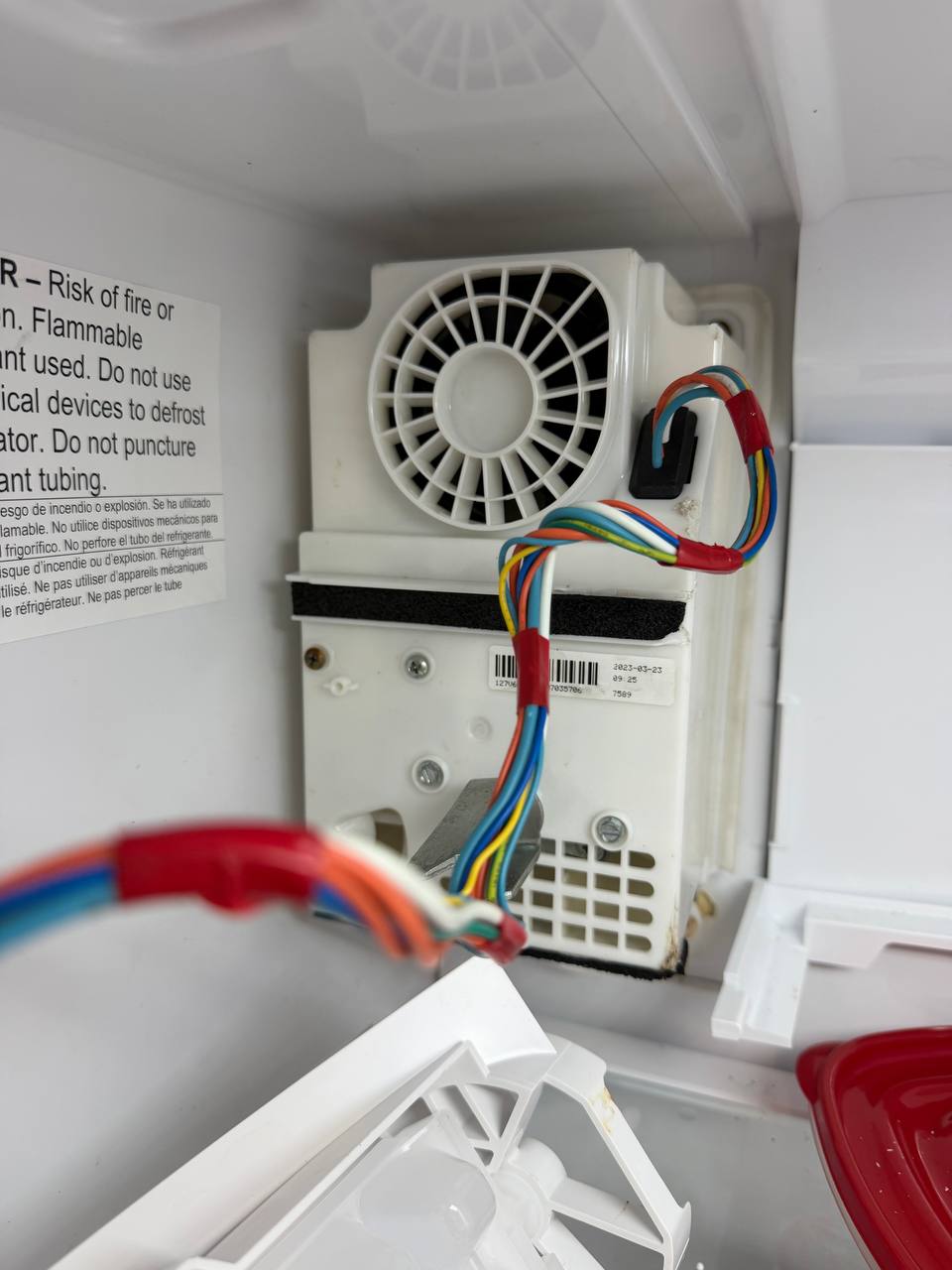
Call us when the DIY steps above do not restore function, or when you observe water leaking, loud mechanical grinding, error codes on the display, or a complete failure after a normal operating period. Water inlet valve replacement requires shutting off the water supply, disconnecting the supply line, and accessing components behind or beneath the refrigerator — manageable for confident DIYers but with real water damage risk if connections are not properly re-seated. Ejector motor and ice maker module replacement requires partial disassembly of the ice maker housing and familiarity with wiring harness connections — mistakes can damage the module or introduce shorts. For undercounter ice machines in particular, the sealed refrigerant system, electronic control boards, and condenser service require professional tools and expertise. Our $99 diagnostic gives you a complete picture of what’s wrong before you commit to repair costs, and our 180-day warranty protects every repair we perform. Call (332) 333-1709.
Diagnostic Process
How Your Ice Maker Works — And Why It Fails
Step 1: Water Fill and Freeze Cycle
When your ice maker receives a signal to produce ice, a water inlet valve opens and allows a precise measured amount of water — typically 120–140 mL — to flow into the ice mold. The mold sits in contact with the freezer evaporator coil, where temperatures drop to between -5°F and 10°F to freeze the water into cubes. The freezing cycle takes approximately 90 minutes under normal freezer conditions. In NYC apartments with older, undersized freezers or in units that are opened frequently, ambient temperature fluctuations can extend this cycle and reduce daily production capacity. The water fill volume is regulated by a timed solenoid — if the solenoid is partially blocked by mineral sediment, fill volumes become inconsistent, producing thin or irregular cubes.
Step 2: Ejection and Harvest
Once the ice is frozen, a heating element briefly warms the mold bottom to loosen the cubes, and a motor-driven ejector arm sweeps them out of the mold and into the ice bin below. This ejection cycle requires tight mechanical tolerances — ice that is too thick or fused together due to partial thaw-refreeze cycles can jam the ejector arm, triggering a safety shutoff. The ice maker module’s thermostat monitors mold temperature and triggers the harvest when it detects the mold has reached the correct release temperature. A faulty thermostat or heating element means the ice stays stuck in the mold, and the unit stops producing entirely.
Step 3: Bin Full Detection and Standby
After ejection, the cubes fall into the storage bin where a mechanical bail arm or optical sensor monitors the fill level. When the bin is full, the sensor signals the control module to pause production. In units with optical sensors — common in newer Samsung, LG, and KitchenAid models — frost accumulation or ice debris coating the sensor lens can cause false “full” readings, stopping production even when the bin is empty. In units with mechanical bail arms, a stuck or bent arm produces the same false-full signal. Understanding which detection method your unit uses is the first diagnostic step when a unit stops making ice despite an empty bin.
New York City — What's Different
Ice Maker Repair in New York City — What Makes NYC Different
New York City’s water supply, while among the highest-quality municipal water in the country, has hardness and chloramine levels that create specific challenges for ice maker systems. NYC tap water has a hardness of approximately 60–80 mg/L (moderately hard) with seasonal variation — lower in summer when Delaware Aqueduct sources predominate, higher in winter when Catskill watershed sources are used. Over a typical appliance’s lifespan, these minerals deposit scale on water inlet valve screens, mold surfaces, and supply line fittings, gradually degrading performance in a way that is invisible until a threshold failure occurs. Our technicians account for NYC water chemistry in every ice maker service call, assessing scale accumulation as a primary diagnostic factor.
Building-specific plumbing infrastructure creates additional variability. Prewar co-op buildings in neighborhoods like Cobble Hill, Carroll Gardens, and the Upper West Side often have original or early-replacement galvanized supply lines that introduce particulate into the water supply — this particulate is far more aggressive than dissolved minerals in fouling water inlet valves. High-rise residential buildings in Midtown and Downtown Manhattan frequently have water pressure exceeding 80 PSI at lower floors, which can stress inlet valve solenoids designed for 20–80 PSI operation. Williamsburg and Greenpoint loft conversions — former industrial buildings adapted for residential use — often have undersized domestic water service lines that produce suboptimal pressure at kitchen fixtures on upper floors. All of these variables affect ice maker performance and require site-specific diagnosis rather than generic component replacement.
Access logistics in NYC buildings also shape our service approach. Many Manhattan co-ops and condos require advance notice to building management, freight elevator scheduling, and technician background check submissions before allowing access for appliance service. Our team is experienced with NYC building access requirements and coordinates with building management proactively to minimize scheduling delays. In Brooklyn brownstones, the challenge is often the opposite — tight kitchen layouts and refrigerators positioned against walls with minimal clearance require careful technique to pull units for rear-access repairs without damaging floors or cabinetry. We carry appliance sliders and floor protection equipment on every service vehicle for this reason.
Symptoms
Ice Maker Symptoms and What They Mean
No Ice for 24 Hours
If your ice maker has not produced ice in 24 hours despite being powered and having an empty bin, the most likely culprits are a failed water inlet valve, a broken ejector motor, or a fault in the ice maker module itself. Before calling us, verify that the water supply shutoff valve behind the refrigerator (or under the sink for undercounter units) is fully open. Also confirm the freezer temperature is at or below 0°F — ice makers will not produce efficiently if the freezer is warmer than 10°F. If both are confirmed and you still have no ice, call Volt & Vector at (332) 333-1709 for a same-day diagnostic.
Ice Production Slowing Down Gradually
Gradual reduction in ice production — from a full bin daily to a half bin or less over weeks or months — typically indicates progressive mineral scale buildup on the water inlet valve, a slowly weakening water supply line, or degrading ice maker module performance. This pattern is especially common in NYC buildings where water hardness gradually deposits scale in all water-contact components. Unlike a sudden failure, gradual decline often allows time to schedule a non-emergency service visit, but it will not resolve on its own. We recommend calling before the unit fails completely, as early intervention prevents the valve from seizing entirely and potentially water-damaging cabinet interiors.
Ice Tastes or Smells Bad
Off-tasting or malodorous ice almost always traces back to one of three sources: an overdue water filter (for refrigerators with built-in filtration), a cracked or degraded water supply line introducing contamination, or food odors in the freezer compartment being absorbed by the ice. We recommend replacing refrigerator water filters every six months in NYC — the city’s water, while safe, has chloramine levels that become noticeable in ice when filters are overdue. If the ice smells of plastic or has a chemical taste, inspect the water supply line for kinks or cracks, and call us to inspect the inlet valve and internal water lines for material degradation.
Water Pooling Under Refrigerator or Inside Freezer
Water pooling is a multimodal symptom that can originate from the ice maker, the defrost drain, or the water inlet line. If the pooling is inside the freezer compartment, the most likely cause is a clogged defrost drain, an overfilling ice maker, or a cracked mold. If pooling is under the refrigerator, a leaking water supply line or inlet valve is most probable. Do not delay calling for service — water pooling in NYC apartments with hardwood or laminate floors can cause significant floor damage, and water under a refrigerator near electrical components creates a hazard. We treat all pooling calls as priority service requests.
Loud Banging or Clunking During Ice Drop
A loud bang when ice drops into the bin is usually normal — but significantly louder-than-usual sounds can indicate the ice is dropping from an excessive height due to a shifted mold position, or that cubes have fused into large chunks that impact the bin wall. If the sound is accompanied by reduced ice production or visible large clumps, a defrost system issue or door seal failure is likely. A single loud bang with no other symptoms typically requires no service. Multiple bangs or grinding sounds that accompany harvest cycles warrant a diagnostic call.
Ice Maker Cycling Constantly Without Producing Ice
If you can hear the ice maker cycling — the fill valve opening and closing, the ejector motor running — but no ice appears in the bin, the water supply is likely interrupted or insufficient, or the freeze cycle is not completing due to a freezer temperature issue. This cycling pattern also occurs when a bail arm sensor malfunction causes the unit to think the bin is always empty and continuously attempt production without completing full cycles. Continuous cycling places mechanical stress on the ejector motor and can accelerate its failure, so this symptom should not be ignored for more than a day or two.
Maintenance Tips
Ice Maker Maintenance for NYC Homes
Replace Your Water Filter Every Six Months
For refrigerators with built-in water filtration, the filter is your first line of defense against the mineral scale and chloramine levels present in NYC municipal water. An overdue filter reduces flow to the ice maker, accelerates valve fouling, and allows unfiltered water to reach the mold and ice bin. Most manufacturers recommend replacement every six months — in NYC, this interval is appropriate given the city’s water quality. Filter replacement is a simple DIY task: most filters twist out from inside the refrigerator and replacements are available at hardware stores and online. Replacing the filter proactively is far less expensive than a water inlet valve replacement caused by filter-bypassed mineral scale.
Clean the Ice Bin Regularly
Ice stored in the bin absorbs odors from the freezer compartment over time. Every three months, remove the ice bin entirely, wash it with warm water and a mild dish soap solution, rinse thoroughly, and allow it to dry completely before reinstalling. Discard any ice that has been stored for more than a week — older ice absorbs more freezer odors and tends to clump. While the bin is out, inspect the bin cavity for frost accumulation, which can indicate a door seal issue or a defrost system problem beginning to develop. A clean bin also allows the bail arm or optical sensor to operate without obstruction from ice debris.
Keep the Condenser Coils Clean on Undercounter Units
Undercounter ice machines — U-Line, Marvel, Scotsman, and similar brands common in Williamsburg and Greenpoint home bars and kitchenettes — have a refrigeration system with a condenser that must exhaust heat. On air-cooled units, the condenser coil and fan are accessible from the front grille. Dust and pet hair accumulation on the condenser reduces cooling efficiency, causes the compressor to run hotter and longer, and shortens compressor life. Every six months, remove the front grille and use a vacuum with a brush attachment to clean the coil. NYC apartments, particularly those with hardwood floors that circulate dust, benefit from more frequent coil cleaning — every three to four months in high-dust environments.
Monitor Freezer Temperature and Door Seals
Ice maker performance is directly tied to freezer temperature. The freezer should be maintained at 0°F (−18°C) for optimal ice production. Temperatures above 10°F significantly extend cycle times and reduce daily output. Use a standalone freezer thermometer — available for under $15 — to verify actual temperature, as built-in displays are often inaccurate. Inspect door gaskets every six months by closing the door on a sheet of paper — if you can pull the paper out easily, the seal needs replacement. In NYC’s older prewar apartments, freezer doors in poorly insulated kitchens are particularly susceptible to seal degradation from temperature cycling. A poor seal forces the freezer to work harder and can cause the ice maker evaporator to frost over prematurely.
Flush the Water Supply Line Annually
The water supply line connecting your building’s plumbing to the refrigerator’s inlet valve accumulates sediment over time, particularly in NYC buildings with older galvanized or copper supply lines. Once a year — or when you notice reduced ice production — shut off the water supply valve, disconnect the line at the refrigerator inlet, place the line end in a bucket, and briefly open the valve to flush sediment through the line before reconnecting. This simple procedure can restore flow rates that have been reduced by partial blockage, and it gives you an opportunity to inspect the line for kinks, cracks, or mineral buildup near the connection fitting. If the supply line is more than five years old or shows any discoloration or brittleness, replace it proactively.
Case Logs
Case Study: U-Line 2175WCS Undercounter Ice Machine, Williamsburg, Brooklyn
A client in a converted warehouse loft on North 7th Street in Williamsburg contacted Volt & Vector when their U-Line 2175WCS undercounter clear ice machine stopped producing ice entirely after approximately three years of service. The unit had been installed during a full kitchen renovation and was positioned adjacent to a beverage refrigerator in a home bar setup on the open ground floor of the loft. The client reported the unit had been producing progressively less ice over the prior three weeks before stopping completely, with the last batch having an unusual translucent, irregular shape rather than the unit’s characteristic cylindrical clear cubes.
Our technician arrived the same afternoon and performed a systematic diagnostic starting from first principles: water supply pressure at the inlet valve measured 45 PSI — within specification. The freezer compartment temperature was holding at 8°F, which is 8 degrees above the unit’s target operating temperature of 0°F — warm but not critically so. The evaporator plate, however, showed significant mineral scale buildup on approximately 40% of its surface, creating uneven thermal contact between the water film and the freezer surface. In U-Line’s clear ice production process, water is circulated over the evaporator plate in a thin film rather than being filled into molds — this produces the clear, cylindrical cubes the unit is known for, but it also means the evaporator surface quality directly determines ice clarity and cube formation. Scale buildup disrupts the water film flow, producing the irregular, translucent cubes the client had observed before production stopped entirely.
Further inspection revealed the water pump — which circulates the water film over the evaporator — had a fouled impeller from the same mineral scale debris, reducing circulation to below the threshold needed to maintain the film. The combination of reduced pump output and scaled evaporator had effectively ended the unit’s production capability. We removed the evaporator plate and performed a descaling treatment with a food-safe citric acid solution, restored the pump impeller function, replaced the water inlet valve screen, and adjusted the harvest thermostat which had drifted out of calibration. We also identified that the condenser coil — located at the front bottom of the unit behind the grille — had approximately 18 months of accumulated dust from the loft’s polished concrete floor, reducing cooling efficiency and contributing to the elevated freezer temperature. After cleaning the condenser and completing all repairs, the unit was producing full 30-cube batches of clear ice at the correct 90-minute cycle time within two hours. Total repair time: 3.5 hours. The 180-day warranty covers all replaced components and the descaling service.
Frequently Asked Questions — Ice Maker Repair in NYC
How long should a residential ice maker last?
A well-maintained residential ice maker module — the unit built into a freezer or refrigerator — typically lasts 3–5 years before requiring module replacement, though the refrigerator itself will last 10–15 years. Standalone undercounter ice machines from brands like U-Line, Marvel, and Scotsman typically last 8–12 years with proper maintenance — primarily annual descaling and semi-annual condenser cleaning. In NYC’s mineral-rich water environment, the practical lifespan of ice maker components trends toward the lower end of manufacturer estimates without preventive maintenance. Our technicians can assess your unit’s condition and advise whether repair or replacement is the better long-term investment based on your unit’s age, brand, and service history.
Why is my Samsung ice maker freezing up?
Samsung French door refrigerators — particularly the RF22, RF23, RF25, and RF28 series — have a well-documented issue with the ice maker freezing over due to a design flaw in the ice maker housing that allows warm, humid air from the refrigerator compartment to reach the freezer-located ice maker. Samsung has issued technical service bulletins for this issue and extended warranties on affected units in some markets. The repair involves installing an improved ice maker housing with better insulation and sometimes adding a heating element to the ice delivery chute. Volt & Vector has performed this repair extensively across NYC — if you have a Samsung French door refrigerator with ice maker freeze-over issues, call us at (332) 333-1709 for a targeted diagnostic.
Can I repair an ice maker myself?
Basic troubleshooting — resetting the unit, replacing the water filter, clearing ice jams from the bin, and verifying water supply — is safe for most homeowners. Replacing the ice maker module as a complete unit is within reach for mechanically inclined DIYers on many refrigerator models, as the module typically plugs into a wiring harness and is secured by two or three screws. However, water inlet valve replacement, sealed system diagnostics, and undercounter ice machine service require professional tools and carry real risk of water damage or refrigerant exposure if done incorrectly. Our $99 diagnostic tells you exactly what’s wrong and what it will take to fix it, so you can make an informed decision about DIY versus professional repair.
How much does ice maker repair typically cost?
Ice maker repairs vary widely in complexity. Module replacement on a standard refrigerator ice maker is one of the more straightforward appliance repairs. Water inlet valve replacement is similarly direct. More complex repairs — sealed system work on undercounter units, control board replacement, or structural repairs to evaporator plates — require more time and parts. We provide a complete written estimate after the $99 diagnostic — which is credited toward your repair — so there are no surprises. Every repair we perform is backed by our 180-day parts-and-labor warranty. Call (332) 333-1709 for scheduling.
Do you service undercounter ice machines like U-Line and Marvel?
Yes — undercounter ice machines are among our most common service calls in Williamsburg, Greenpoint, and SoHo, where loft and renovation-style kitchens frequently include dedicated undercounter ice machines as part of home bar setups. We service U-Line, Marvel, Scotsman, Ice-O-Matic, Hoshizaki, and other residential and light-commercial ice machine brands. Undercounter ice machines have more complex refrigeration systems than refrigerator-mounted ice makers and typically require professional service for all but the most basic maintenance tasks. Our technicians carry parts for the most common undercounter units and can often complete repairs on the first visit. Call (332) 333-1709 to schedule.
Ice Maker Repair NYC — Brooklyn & Manhattan | Volt & Vector
Expert ice maker repair in NYC. We fix undercounter, freestanding, and built-in ice machines — all brands. $99 diagnostic credited to repair. 180-day warranty. Call (332) 333-1709.

![[team] image of individual team member (for a plumbing service)](https://cdn.prod.website-files.com/69bee112af9b01020603c864/69bf25442088ee694e3ce2a9_kitchenaid-oven-repair.png)