

Bosch Refrigerator Temperature Too Warm | What To Check
If your Bosch refrigerator temperature is too warm, separate recovery, modes, alarms, food risk, and airflow issues before guessing parts.
If your Bosch refrigerator temperature is too warm, separate recovery, modes, alarms, food risk, and airflow issues before guessing parts.
.avif)
If a Bosch refrigerator says the temperature is too warm, do not start with a part guess. Confirm actual refrigerator and freezer temperatures, check setpoints and modes, close the doors, and clear visible vents, then watch whether the cabinet moves back toward target after normal recovery. If food is warm, frozen food is soft, or the alarm repeats, protect the food and have the temperature, airflow, and control system diagnosed.
Start by separating a real warm cabinet from normal recovery, control settings, airflow loss, and whole-unit cooling trouble. The useful clue is not only what the display says; it is whether the refrigerator and freezer temperatures are actually moving back toward target.
Bosch guidance puts normal refrigerator storage around the high 30s F and freezer storage around 0F. Several Bosch manuals also use +4C for the refrigerator and -18C for the freezer as normal targets.
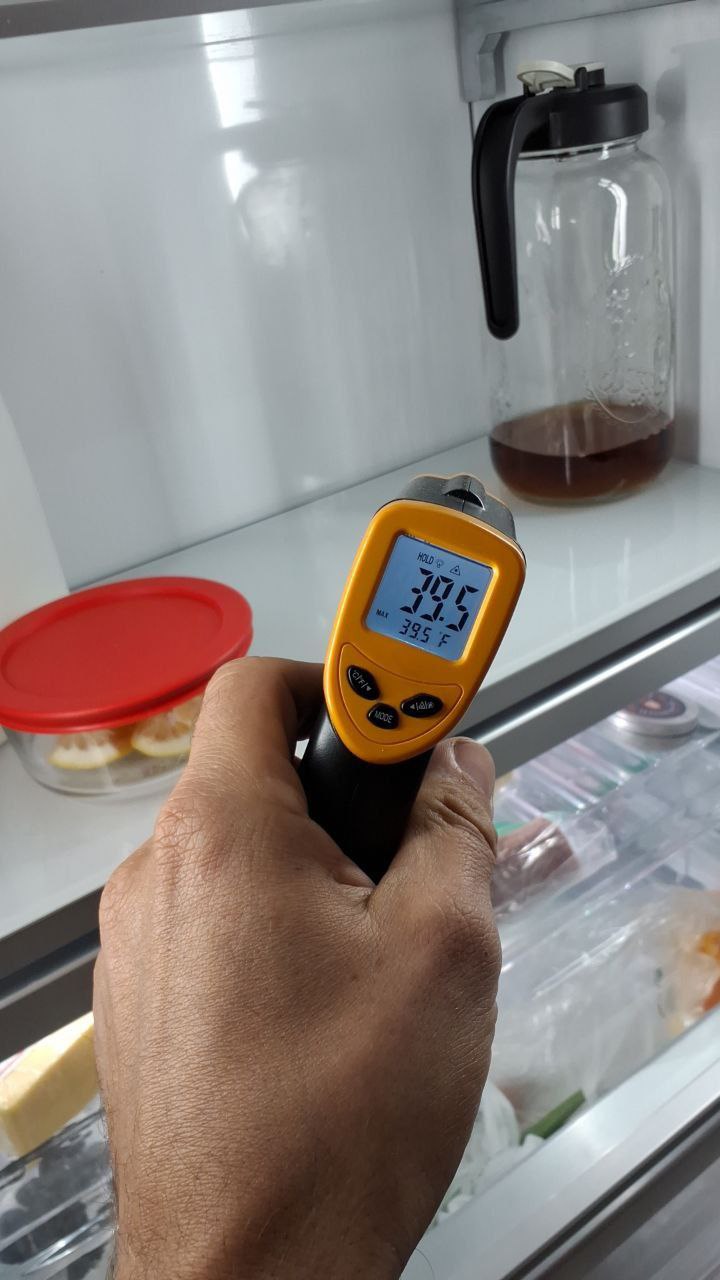
That means "too warm" should be confirmed with an actual reading, not only with a feeling, a setpoint, or a cleared alarm. Put a refrigerator thermometer in the fresh-food section and, if the unit has a freezer, check the freezer separately. The useful question is whether the temperature is moving back toward target or staying warm after the door, load, setting, and mode context is corrected.
If the control display looks normal but the food zone is still warm, do not assume the appliance has recovered. The display, sensor feedback, airflow, and actual cabinet temperature have to agree before the symptom is treated as resolved.
Bosch manuals describe temperature alarms for freezer-too-warm and door-open conditions, but they also note cases where an alarm can happen without immediate food risk, such as initial switch-on or a large fresh-food load. Bosch support also notes that a large amount of warm food can raise the temperature and trigger an alarm.
That recovery context matters, but it has a limit. A one-time alarm after loading groceries is different from an alarm that returns, a freezer with soft food, or a refrigerator compartment that stays warm after the doors have remained closed. Use the alarm as a reason to measure and watch the trend, not as a reason to keep resetting the refrigerator.
Check the setpoints before moving toward parts. Bosch support lists refrigerator settings around 37F to 39F and freezer settings around 0F, and Bosch manuals show model-specific setting ranges.
Also check active modes:
Mode details should not hide the main question: once the refrigerator is back on normal settings, does the measured temperature actually recover?
Do not test live voltage, remove hidden panels, thaw internal tubing, chip frost, bypass switches, or keep resetting the refrigerator while food remains warm.
A real Bosch refrigerator diagnosis should prove the temperature problem before parts are quoted. The visit should separate actual cabinet temperature from setpoint and display behavior, refrigerator-only warmth from whole-unit warmth, and normal recovery from a repeated cooling failure.
From there, diagnosis should check door sealing, visible and hidden airflow, evaporator fan operation, damper or air-channel behavior, frost or defrost pattern, condenser-side heat removal, sensor feedback, compressor/inverter response, and control output. For built-in Bosch units, ventilation and installation clearance can also matter because heat has to leave the cabinet area for the cooling system to recover.
The useful result is not a guessed part name. It is knowing whether the warm-temperature symptom comes from airflow, door/load conditions, a control mode, sensor feedback, defrost/frost restriction, condenser heat removal, compressor/inverter behavior, or a sealed-system issue.
Treat food safety as separate from appliance repair. If refrigerated food has been above 40F for more than two hours, follow food-safety discard guidance rather than tasting it. If frozen food is thawing or soft, Bosch manual guidance warns against refreezing thawed food unless it has first been cooked into a ready-to-eat meal.
Stop waiting on recovery when the alarm repeats, both compartments stay warm, frozen food softens, the refrigerator section remains above safe temperature, an error message appears, or visible checks do not move the temperature back toward target. At that point, protect the food first and keep the symptom information for service.
No. Alarm Off silences or acknowledges the warning; it does not prove the refrigerator is back at a safe temperature. Check actual compartment temperatures and whether the alarm returns.
Only if the temperature is moving back toward target and the food is still safe. Startup and warm-load recovery can take time, but soft frozen food, warm perishables, or a repeated alarm should not be handled by waiting and resetting.
No. A freezer can still feel cold while the fresh-food section is warm because the issue may involve airflow, a damper or fan, blocked vents, door sealing, frost buildup, or sensor/control response. If visible door and vent checks do not change the temperature trend, that split needs diagnosis.
Bosch requests are considered in Brooklyn, Manhattan below 96th Street, and selected Queens routes including Astoria and Long Island City when the exact address and route availability are confirmed.
.jpeg)
.jpeg)

Technician experience standard: 4+ years of hands-on appliance repair per technician; senior technicians bring 8 and 16 years. Bosch intake starts with the complete E-Nr, failed cycle stage, display, and installation access. Independent service; no current manufacturer authorization implied.

