

Bosch Dryer Moisture Sensor Comparison | Repair Case
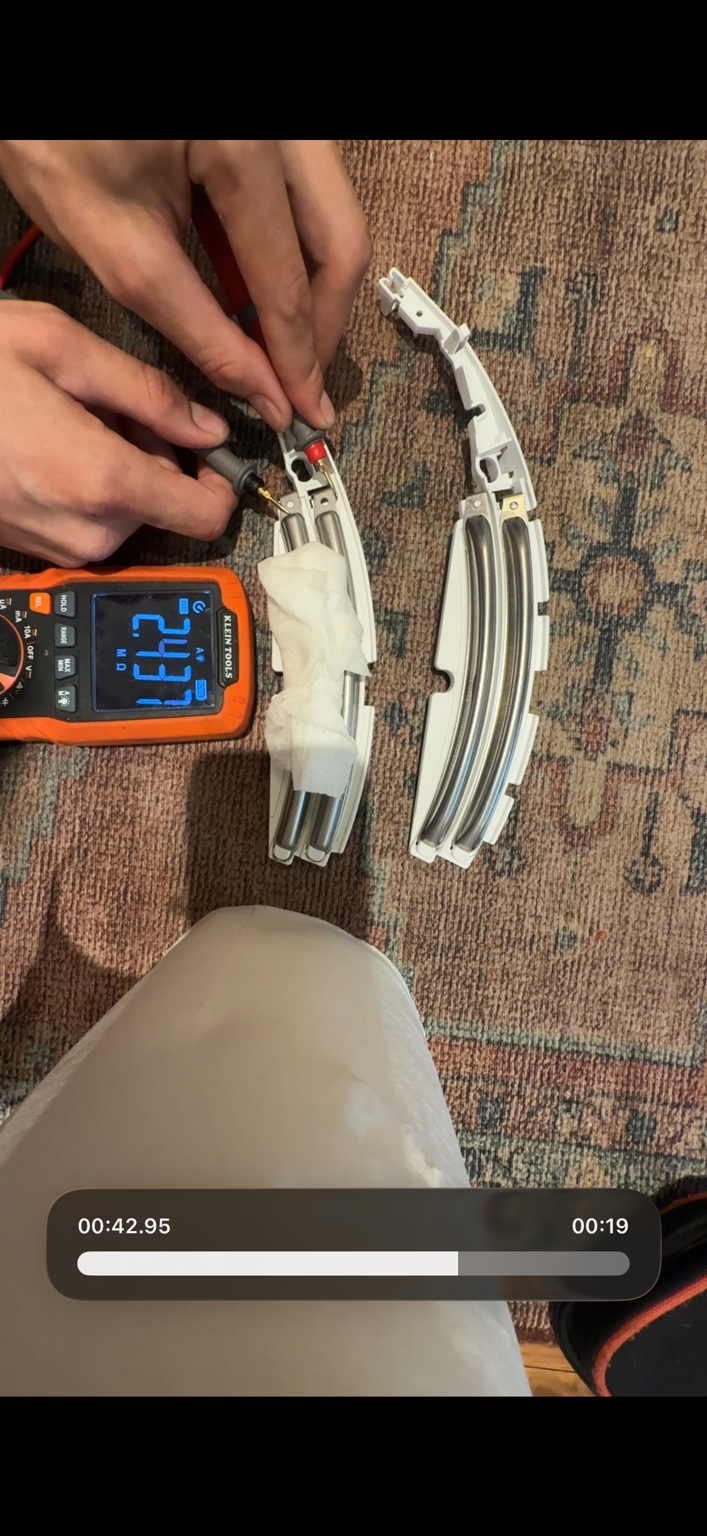
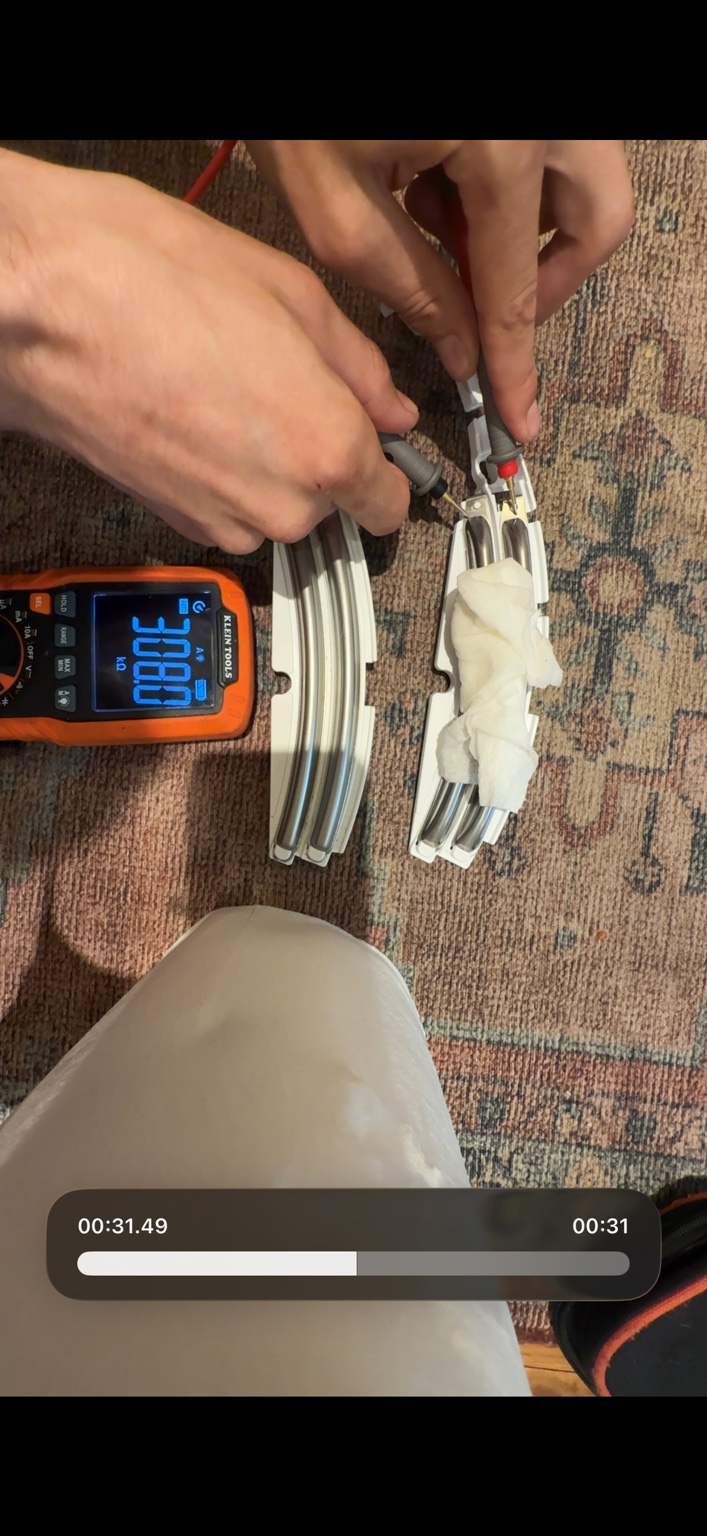
The removed moisture-sensor assembly measured 2.437 MΩ through a wet bridge; the replacement measured 308.0 kΩ. A separate one-cloth test showed why electrode contact and a suitable test load both matter.
Service Context
Moisture-sensing diagnosis during a Bosch dryer service case reported resolved.
Original moisture-contact assembly: 2.437 MΩ during the damp-bridge comparison.
- Replacement assembly: 308.0 kΩ in the comparison. These are visit readings, not a universal Bosch pass/fail specification.
This Bosch dryer inspection produced two useful observations. A comparison of the original moisture-sensor assembly and a replacement showed different resistance readings. Later, a single cloth tumbled without touching the sensing strips, and the automatic program shortened its remaining time. Both observations concerned the signal the dryer receives from wet laundry, but they required different interpretations.
What the comparison showed
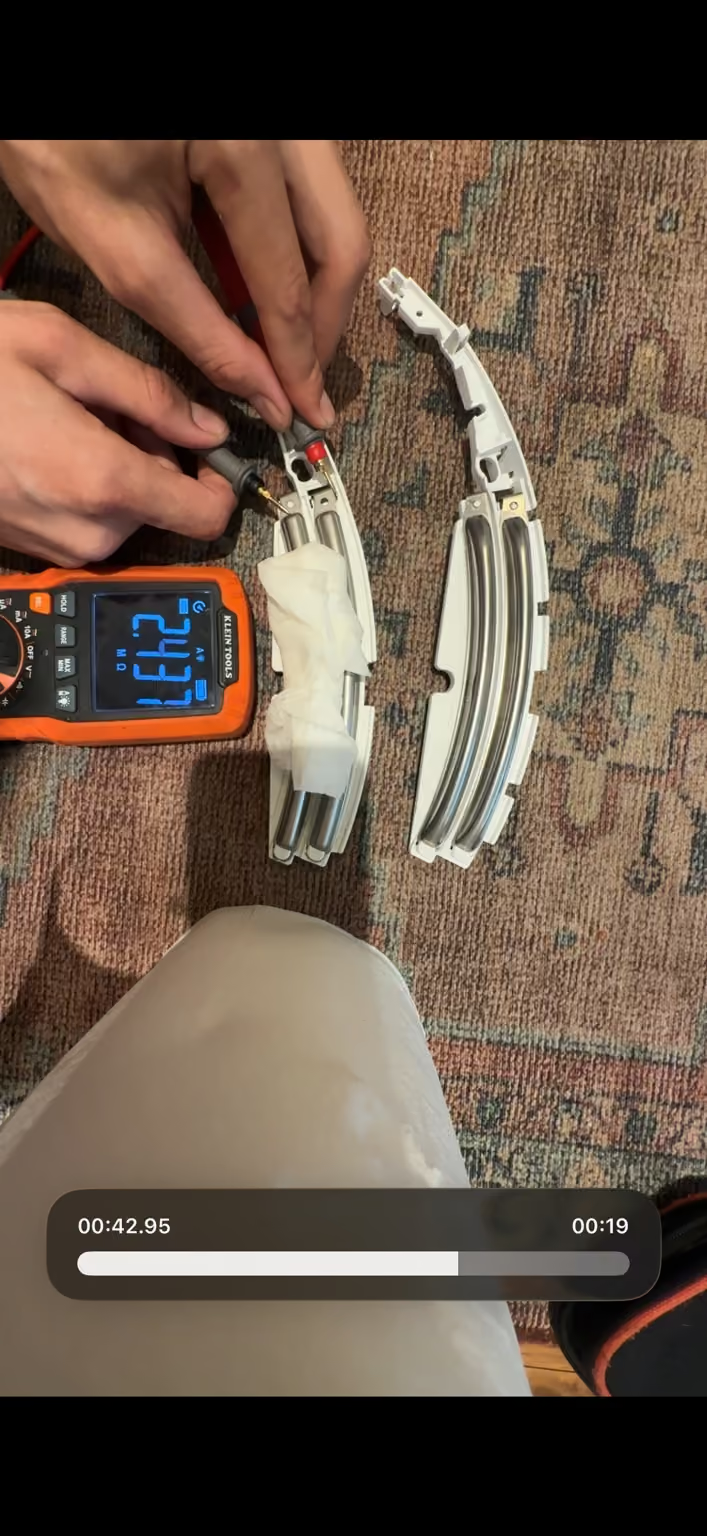
The photographs show two curved assemblies, each carrying a pair of metal strips. With wet paper bridging the strips, the older assembly measured 2.437 MΩ and the replacement measured 308.0 kΩ. These were comparative readings under the photographed test conditions, rather than a universal Bosch pass value. The reading includes the wet material and its contact with both electrodes. Moisture, pressure, placement, and the test connections can all affect it.
Comparison photographs: 2.437 MΩ reading and 308.0 kΩ reading.
These are contact electrodes. Wet laundry provides a conductive path between the strips, allowing the dryer to assess its dampness. Deposits on the contact surfaces can add resistance and distort that reading, allowing laundry to finish wetter than intended. A repeatable difference under matching conditions therefore directs attention to the older assembly's contact surfaces and electrical connections.
The repair direction behind those readings
The technical priority was reliable detection of wet material. For this type of finding, cleaning according to the exact model's care instructions is the first distinction: if cleaning restores the response, an assembly replacement may be unnecessary. If the poor response persists in a controlled comparison, replacement becomes a supported repair direction. The installed connections also have to carry the signal; a reading on a loose part tests only part of the system.
Why the one-cloth test needed a different interpretation
The later observation showed that the cloth never reached the strips. An automatic program receives limited wet-contact information from an item that misses them. Bosch manuals direct very small or individual loads toward an appropriate timed program. A suitable damp load that regularly reaches the strips is the relevant check for automatic drying. See Bosch dryer ends early with damp clothes for the wider symptom decision; these resistance readings are not a universal pass value.
The drying concern was reported resolved; the final corrective work and suitable-load verification are not specified. The comparison mattered because it focused the diagnosis on moisture contact, while watching the cloth explained why that small-load test could give a misleading impression of automatic-program performance.
- Both photographed parts were curved assemblies with two metal moisture-contact strips.
- A wet paper bridge was present during the comparison: 2.437 MΩ on the older assembly and 308.0 kΩ on the replacement.
- The technician observed a single cloth that did not touch the sensing strips while tumbling.
- The automatic program reduced its remaining time during that observation.
If the same symptom appears on your appliance:
- For individual small items, use the timed program recommended in the exact dryer manual.
- Clean the moisture-contact strips using the model's specified care method.
- If normal automatic loads repeatedly finish wet, have the technician compare wet-contact response under matching conditions and check the installed connections before selecting another part.
Should I sand the metal strips to improve contact?
Use the cleaning method in the exact model's manual. Aggressive abrasion is not a substitute for the specified care procedure and can damage the sensing surface.
If timed drying works, does that prove the sensor is bad?
No. It is a useful comparison, particularly when normal automatic loads repeatedly finish wet, but it does not isolate the electrodes from their wiring and control input. The technician still needs to verify the wet-contact response.
Result Details:
Reported outcome: resolved. The diagnostic findings separated the moisture-contact response from the misleading behavior of a one-cloth automatic-program test. The final corrective work and post-repair operating verification are not specified in this case.
Repair Decision:
Restore reliable wet-contact sensing: distinguish removable electrode contamination from a persistent assembly or connection problem. Judge automatic-program performance with a suitable damp load that reaches the strips.
Owner Takeaway
A moisture-sensor diagnosis needs both a reliable wet-contact signal and laundry that actually reaches the sensing strips. A repeatable controlled difference between assemblies is useful evidence; a short automatic cycle with one missed-contact cloth is not a complete repair test.