

.avif)
Bosch Appliances Through the Years: How the Engineering Changed
How Bosch appliances evolved from early refrigerators and dishwashers to today's connected systems—and what the changes mean as each platform ages.
Which Bosch Engineering Story Applies to Your Appliance?
Bosch changed different appliance categories in different ways. A Series number is a product-range label, not a manufacture date or a reliability score. Photograph the complete E-Nr, including the suffix after the slash, and the FD number before comparing an older unit with a newer one.
- Dishwashers: identify PureDry, AutoAir or CrystalDry. Poor drying can involve a different feature from the system that washes the dishes.
- Compact laundry: identify the exact dryer technology and washer pairing. Condensation and heat-pump models coexist; the compact dryer guide also explains the older vented exception.
- Refrigeration: verify compressor and compartment configuration in the specification. An 800 badge alone is not enough.
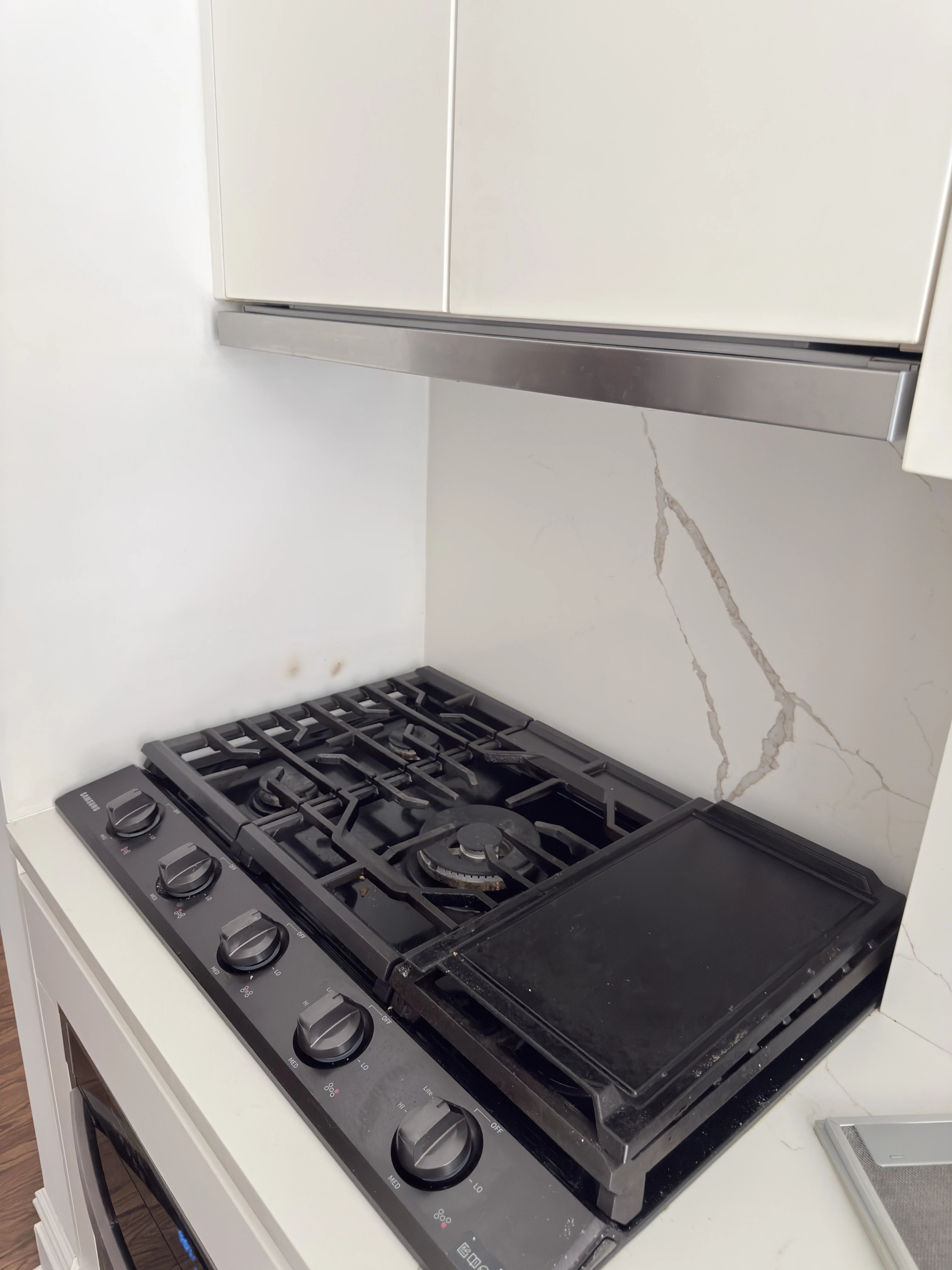
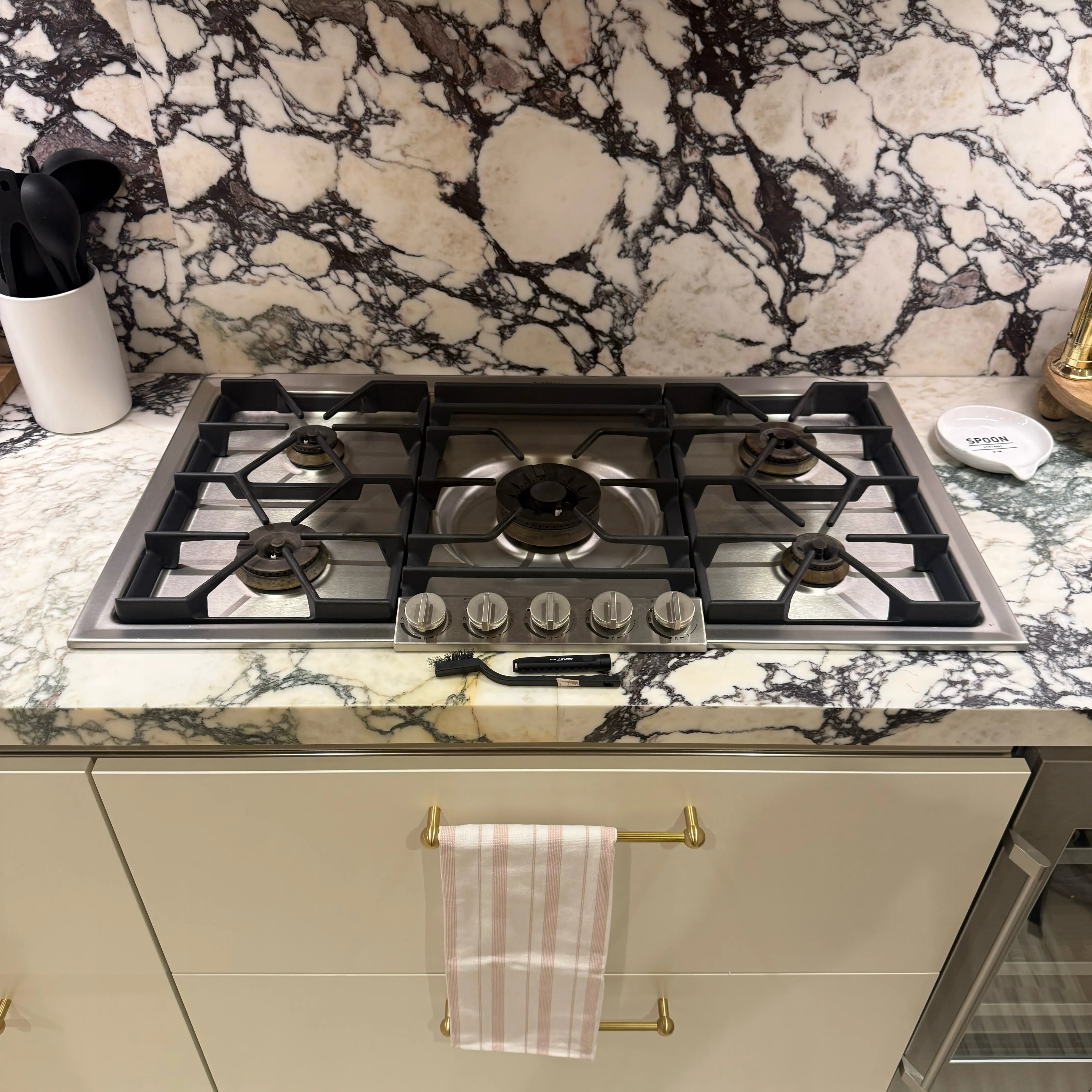
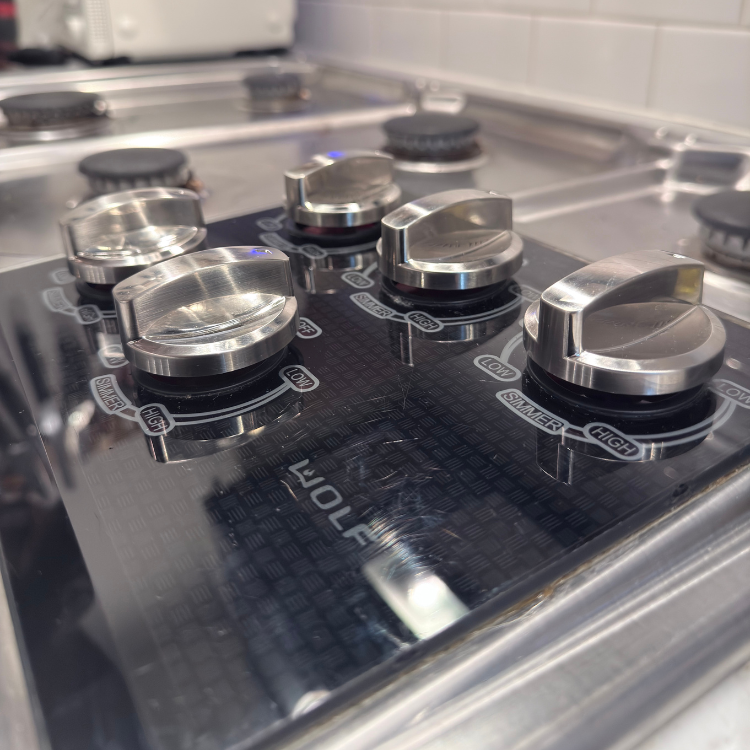
- Cooking: identify gas, electric, induction or dual-fuel, then separate the surface from the oven.
- Connected features: record whether the physical controls and main function work. An app failure is not proof of a heating or cooling failure.
The history below explains how those systems developed. For a particular machine, model identity, condition and documented support matter more than an "old versus new" verdict.
A Bosch appliance from 2002 and one from 2026 may share the same restrained design and red logo, but they do not belong to one mechanical tradition. Bosch moved from individual household machines toward product families built around sensors, specialized drying systems, connected controls, and model-specific software. The brand's history is not a clean decline from “good old machines” to “bad new electronics.” It is a series of engineering trades: every new layer solved a real problem while creating a new subsystem that eventually has to be identified, maintained, and diagnosed.
That distinction is especially important with Bosch because the name covers dishwashers, compact laundry, refrigeration, and cooking appliances whose architectures have little in common. The dishwasher story is about water management, quiet operation, and drying. The laundry story is about fitting European-style machines into small American spaces. The refrigeration story changed sharply when Bosch developed a more distinctive US platform. Cooking now spans gas, electric, induction, dual-fuel, and connected controls. “Is Bosch reliable?” is therefore too broad to produce a useful answer. The better question is: which Bosch era, category, and exact platform are we talking about?
1929–1969: Bosch Becomes a Home-Appliance Company
Robert Bosch founded his precision-mechanics and electrical-engineering workshop in 1886, but household appliances did not become part of the company immediately. Bosch's official home-appliance history places the strategic turn in 1929, when the company began looking beyond automotive and industrial technology. The first major result was a compact, round electric refrigerator shown in 1933. It held only 60 liters, but it established an idea that would recur throughout Bosch appliance history: use engineering to make an unfamiliar technology practical for an ordinary home.
Laundry followed a similar path. Bosch experimented with a sonic washer in 1949, introduced its first drum washing machine in 1958, and launched a fully automatic washer in 1961. The progression matters more than the novelty of the early machines. Bosch repeatedly began with a mechanism that reduced manual work, then added control logic until the appliance could manage the process with less intervention. The company's washing-machine history traces that movement from manual program selection to automatic cycles and, much later, automatic dosing and connected operation.
The first Bosch household dishwasher arrived in 1964. It was portable, used a coated-steel interior, and relied on one lower spray arm to reach both racks. Bosch's own historical account is unusually candid: the tub could rust, the high spray pressure could damage dishes, and the installation was cumbersome. The second generation, introduced in 1969, changed the architecture rather than polishing the appearance. It added a stainless-steel tub, a separate upper spray arm, better detergent and rinse-aid dispensing, improved drying, and lower noise. The official dishwasher history shows an early Bosch pattern clearly: reliability improved when the machine divided one overloaded system into several controlled ones.
In 1967, Bosch and Siemens formed BSH as a joint home-appliance company. Bosch acquired full ownership in 2015. That history explains why modern Bosch appliances should be understood as products of the BSH appliance organization rather than as domestic versions of Bosch automotive components or power tools. The current BSH company portrait describes a global appliance group with Bosch, Siemens, Gaggenau, Thermador, and Home Connect inside the same broader ecosystem.
Dishwashers Built the Modern Bosch Reputation
Bosch's most coherent appliance history belongs to the dishwasher. After the major second-generation redesign, the company kept working on the same basic problems: leaks, integration, noise, water use, cleaning decisions, and drying.
AquaStop arrived in 1985 to interrupt water flow when a leak was detected. During the 1990s, top-edge controls made fully integrated panel-ready installations more practical. In 2000, Bosch introduced an automatic dishwasher that used sensors to adjust time, temperature, and water consumption according to soil conditions. In 2008, Bosch introduced zeolite drying, using a mineral that absorbs moisture and releases heat. These were not styling changes. Each one added a distinct decision layer to the machine.
The current US dishwasher range still reflects that progression, but it does not use one drying architecture at every price level. Bosch identifies PureDry as its base closed drying system. The 500 Series adds AutoAir on applicable models, automatically opening the door near the end of the cycle. Selected 800 Series and Benchmark models use CrystalDry, the current US expression of Bosch's zeolite technology. PowerControl adds a controllable lower spray arm on selected 800 and Benchmark machines, while Home Connect supplies remote status, cycle options, and care information. Bosch's current dishwasher buying guide separates these systems explicitly.
This is why “Bosch 800 Series” is not a diagnosis and “Bosch dishwasher” is not a single reliability category. A machine can wash correctly but dry poorly. AutoAir can fail to release while the base wash system remains healthy. A CrystalDry-equipped model adds a fan, mineral chamber, and recharge-heater path that a PureDry model does not have. Bosch's current dishwasher error-code guide even separates heat-pump, door-sensor, PowerControl, and CrystalDry fan or heater faults. Greater capability does not prove lower quality; it creates more precise failure branches.
1991–2015: Bosch Becomes an American Appliance Brand
Bosch says it has sold home appliances in the United States since 1991. Its current US organization includes manufacturing and technology facilities in North Carolina and Tennessee, a boundary Bosch restated when it introduced its 2024 compact-laundry generation. That matters because “German engineering” is often used as if it identifies a factory, a generation, and a level of durability all at once. It does not.
Some recalled Bosch dishwashers were made in Germany; others were made in the United States. Current Bosch products come from a global BSH system. Country of manufacture can be relevant to a specific model, but it is not a substitute for the complete model and production identifiers.
Bosch calls the model number the E-Nr and uses the FD number for production details. Its support tools ask for the complete E-Nr, including the characters after the slash, rather than a shortened family name. Those values anchor manuals, parts research, registration, safety notices, and service preparation. Two appliances that look identical from the kitchen can use different components or instructions because their complete E-Nr or FD boundary differs. For an aging Bosch, the rating plate is more useful than the Series badge.
2014–Present: Home Connect Adds a Software Layer
Home Connect dishwashers and ovens reached the market in 2014, with laundry and refrigeration following in 2015. Today, Bosch uses the platform for remote status, program selection, notifications, care information, downloadable options, and communication between compatible appliances.
This changed the ownership model without replacing the appliance's core systems. A dishwasher still has to fill, circulate, heat, drain, and dry. A washer still has to lock, fill, tumble, drain, and spin. An oven still needs power, heating, temperature feedback, airflow, and door logic. Home Connect sits above those functions.
That separation prevents a common wrong conclusion. A pairing problem, unavailable router, app sign-in failure, or missed notification does not prove that the wash, cooling, or heating system has failed. Conversely, a working app does not prove the mechanical function is healthy. Connected status is evidence from one layer, not a verdict on the whole appliance.
Compact Laundry: Condenser and Heat-Pump Eras Now Coexist
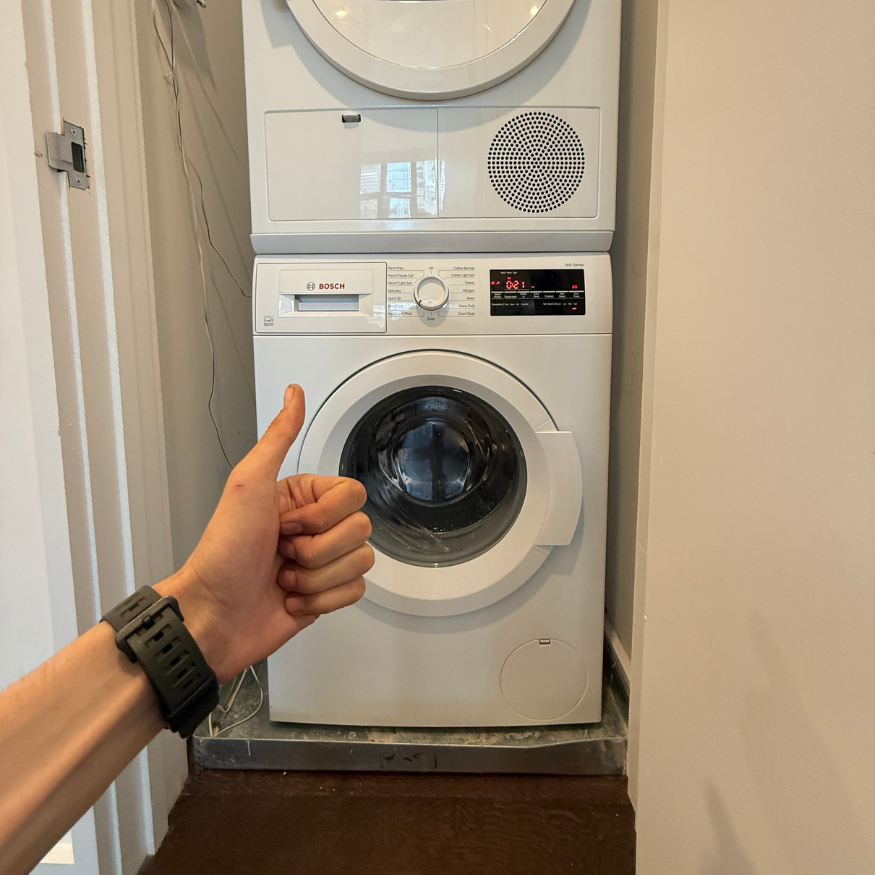
Bosch built its US laundry identity around 24-inch washers and ventless dryers that could fit closets, bathrooms, and under-counter installations. Older compact pairs relied primarily on condensation drying. In 2020, Bosch introduced a connected 500 Series heat-pump dryer with a self-cleaning condenser. In 2024, the company launched revised 500 and 800 Series compact pairs with larger washer capacity, Home Connect, Smart Dry, and an updated heat-pump platform; the 800 Series added automatic i-DOS detergent dispensing and Steam Restore.
The interesting detail is that Bosch did not erase the previous technology. The current US dryer catalog still includes a 300 Series condensation dryer alongside 500 and 800 Series heat-pump dryers. “New Bosch dryer” therefore does not describe one airflow or heating system. Condensation and heat-pump machines can sit in the same showroom and require different expectations, cleaning routines, cycle interpretation, and proof targets.
The detailed condenser-to-heat-pump chronology is explained in the Bosch compact dryer generations guide. The brand-wide lesson is simpler: Bosch kept the compact, ventless installation concept while changing how heat is created, recovered, controlled, and maintained.
2019–Present: Refrigeration Becomes a Distinct Bosch Platform
Bosch's American refrigeration story changed materially in 2019, when the company announced a complete transformation of its freestanding French-door portfolio. The 800 Series platform introduced dual compressors and dual evaporators on defined models, allowing the refrigerator and freezer cavities to manage temperature and humidity more independently. VitaFresh, internal water dispensing, specialized drawers, filtration, and Home Connect created a product whose value came from zone control rather than from cooling the entire cabinet as one space.
The current US range is broader than that one architecture. Bosch now sells 100, 500, and 800 Series freestanding refrigerators plus Benchmark built-in models. A 500 Series ice-focused French-door refrigerator, an 800 Series dual-compressor counter-depth model, and a panel-ready Benchmark column should not share one cause list merely because all three say Bosch. The current refrigerator catalog makes the differences in installation, depth, zones, ice systems, and feature layers visible.
Modern refrigeration adds useful separation, but it also changes how a complaint should be read. One warm compartment on a dual-compressor model does not carry the same meaning as both compartments warming. An ice-production complaint is not automatically a sealed-system problem. A Home Connect door alert is not a temperature diagnosis. The newer the platform, the more important it becomes to identify which zone and which function changed first.
Cooking Never Had One Bosch Architecture
Bosch's own timeline marks its first microwave oven in 1973 and, in the 1980s, a built-in cooker that combined a microwave, multipurpose oven, and self-cleaning system. That progression followed the same pattern visible elsewhere in the brand: combine formerly separate operations, then ask controls and sensors to coordinate them. Unlike the dishwasher story, however, cooking never converged on one dominant platform.
Bosch cooking products are the clearest warning against brand-wide generalization. The current US range line includes gas, electric, induction, and dual-fuel models; Bosch also sells separate gas, electric, and induction cooktops plus 800 Series and Benchmark ovens. A gas ignition complaint, an induction pan-detection problem, and an electric oven temperature complaint share almost no diagnostic path.
Current Benchmark induction cooktops can add flexible cooking zones, touch controls, and sensor-managed features. Connected ovens add remote status and guided functions. These capabilities may be valuable, but they create electronics, communication, sensing, and cooling requirements that do not exist on a simpler older electric cooktop. The correct comparison is not “old Bosch versus new Bosch.” It is direct-control gas or electric hardware versus sensor-managed induction or connected cooking, followed by the exact model boundary.
Recalls Are Production Boundaries, Not Brand Verdicts
Bosch's dishwasher history includes serious safety recalls. In 2009, CPSC recalled defined Bosch and Siemens dishwashers manufactured from May 1999 through July 2005 because an electrical component could overheat. In 2015, BSH recalled power cords on defined dishwasher models manufactured from January 2008 through December 2013. The recall was expanded in 2017 to additional models and production ranges because the cord could overheat and catch fire.
These records matter, but they do not prove that every Bosch dishwasher from those years is unsafe or that a newer dishwasher is automatically safe. The boundaries are model and FD/serial specific. The useful action is to compare the complete rating plate with Bosch's current safety-notice page and the exact CPSC notices for the 1999–2005 dishwasher recall and the 2017 power-cord expansion. Safety follows the production identity, not a general opinion about Bosch quality.
What Actually Ages on Bosch Appliances
There is no honest universal list of “Bosch parts that always fail.” The useful breakdown follows the platform.
Dishwashers
Separate the filter and drain path, water inlet, circulation and heat-pump assembly, spray system, door and hinge, leak-protection base, drying system, controls, and Home Connect layer. Wet plastics on a PureDry machine, a door that does not release on AutoAir, and a CrystalDry fan code are three different problems.
Compact Washers and Dryers
For washers, separate inlet, drain, door lock, drum movement, suspension, detergent dosing, controls, and installation. For dryers, identify condensation versus heat-pump architecture before interpreting slow drying, filter messages, condensate behavior, temperature, or compressor operation. A stacked closet can add access, ventilation, drain, and power-sharing conditions that are not component failures.
Refrigerators
Record actual temperatures by compartment, then separate door sealing, airflow, defrost, fans, compressor architecture, humidity drawers, water and ice, controls, and connectivity. Confirm whether the exact model uses one or two compressors before interpreting a one-zone complaint.
Cooking Appliances
Identify gas, electric, induction, or dual-fuel first. Then separate surface cooking from the oven, supply from appliance behavior, and basic heat production from sensors, fans, door logic, controls, or Home Connect. A cooktop that powers up but does not recognize a pan is not following the same path as a cold electric oven.
So Were Older Bosch Appliances Better?
Older Bosch appliances can be more mechanically legible because they contain fewer feature layers. A dishwasher without AutoAir, CrystalDry, PowerControl, or Wi-Fi has fewer branches to separate. A condenser dryer can be easier to describe than a connected heat-pump machine. Simplicity is a genuine advantage when the owner values direct behavior and easier fault isolation.
But age is not a quality feature. Older machines also carry worn pumps, seals, heaters, bearings, fans, wiring, and controls; uncertain installation history; old recall boundaries; and model-specific parts questions. A simpler machine in poor condition is not better than a more complex machine in good condition.
Newer Bosch appliances offer quieter operation, more controlled water and energy use, stronger drying options, specialized food zones, compact heat-pump laundry, induction, and connected support. Those gains are real. So are the additional fans, pumps, valves, sensors, power electronics, automatic doors, communication modules, and software decisions behind them.
The Bosch story is therefore not a fall from durable hardware into disposable technology. It is a movement from mechanisms toward managed systems. The best older Bosch appliances are valuable because their architecture is clear and their condition is known. The best current Bosch appliances are valuable because the extra systems solve a problem the owner actually cares about. In both cases, the logo is only the beginning; the E-Nr, FD number, platform, and observed behavior tell the real story.
What to Record Before Researching a Bosch Fault
- Identification and cycle: keep the full rating-plate photo, including Z-Nr when present, a display photo, the selected program, the time in the cycle and what still worked.
- Laundry installation: photograph the stack, hose routing, supply arrangement and available service space without moving the equipment.
- Refrigerator compartments: record each compartment separately.
- Replacement parts: confirm parts against the full E-Nr and revision; visual similarity does not establish compatibility.
- Dishwasher E15: Bosch identifies water detected in the base and activated leakage protection. Its instruction is to stop water inflow and obtain support. Close an accessible supply only if safe; do not tilt the dishwasher or repeatedly reset it to make the warning disappear.
- Stop-use signs: stop for burning odor, smoke, sparks, repeated electrical trips, uncontrolled heating, an overheated connection or water reaching electrical parts.
- Gas odor: leave and call 911 or the gas utility from a safe location without operating switches or retesting ignition; follow the gas-leak instructions.
Bosch did not simply replace durable machines with electronics. It moved from individual mechanisms toward sensor-managed, category-specific systems.