

.avif)
How condensate pump blockages disrupt Bosch WTB and WTG dryers, which US models use 00145623, and what separates cleaning from pump replacement.
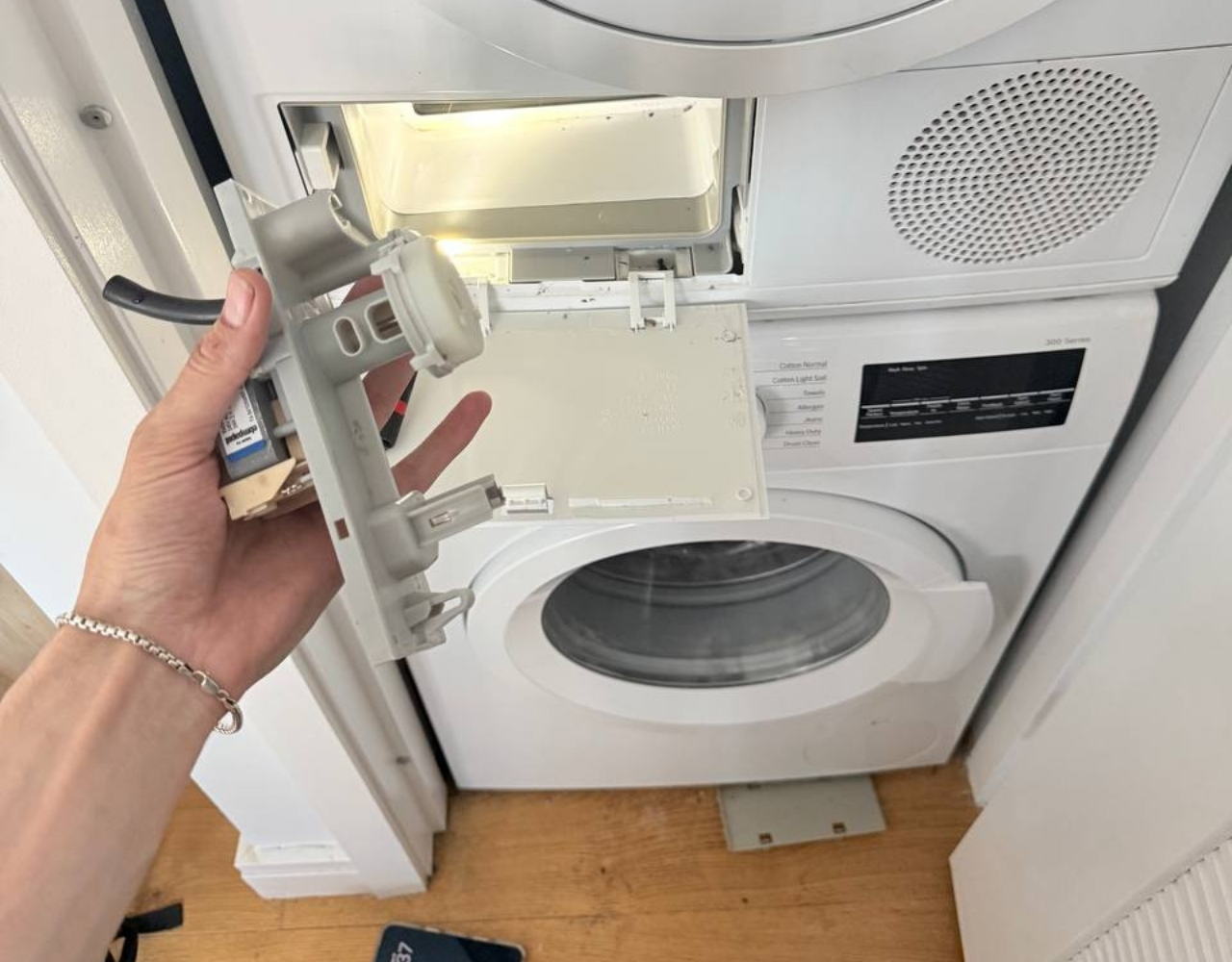
A blockage around the condensate pump can interrupt water removal in these Bosch condenser dryers, leaving a warm load unfinished. A drain warning makes the water-handling system worth checking, but does not identify a failed pump motor. Cleaning may resolve an obstruction; replacement needs a confirmed fault.
Why a drainage problem can look like a drying problem
These ventless dryers turn moisture from the laundry into liquid water. That water collects low in the machine, where a condensate pump sends it through the drain hose. If the water cannot leave properly, the drying cycle can be interrupted even though the drum has warmed up.
Several different conditions can produce a similar complaint:
- Debris in the collection area or pump passage: An obstruction can restrict water movement. An interrupted cycle with a drain warning supports checking this area, but a clean-looking external hose cannot show whether the internal passage is clear. Internal inspection requires service access.
- A restricted external drain: A kinked, pinched or incorrectly connected hose can prevent free discharge or allow water to return. If the symptom began after the dryer was moved, note the routing change. Inspect only the section you can reach safely and compare it with the model's installation instructions.
- A pump or water-level feedback fault: The pump may not move water correctly, or the level response may need investigation. Hearing the pump does not establish how much water leaves. A repairer must compare actual drainage with the machine's response before selecting a part.
- A separate drying limitation: Damp clothes without a drain warning can also involve the load, airflow, heat exchanger or laundry moisture sensors. That symptom alone is too broad to identify a clogged pump.
Check drain and DR describe the drainage complaint
The WTB86200UC manual calls the warning Check drain. The WTG86401UC and WTG865H3UC manuals use DR. Their troubleshooting instructions describe incomplete water drainage and direct the owner to check the drain hose; a persistent warning requires service.
Record the wording shown on your own machine. The shared pump part does not establish identical display messages across every revision. For the warning-specific checks, see Bosch dryer DR problem.
Why cleaning the lint filter may not reach the problem
The lint filter, removable heat exchanger and lower condensate collection area do different jobs. Cleaning the user-accessible filter and heat exchanger does not establish that the pump passage or collection area is clear. If lint and residue obstruct a lower passage, cleaning has to reach that obstruction to restore water movement.
There is also a distinction between sensing laundry dryness and sensing condensate. The moisture-sensing bars near the drum opening contact the laundry. Bosch describes pump assembly 00145623 as including an electrode. Cleaning the drum's moisture bars therefore does not clean or test the condensate-level sensing area.
Contamination around the lower sensing area is worth inspecting during diagnosis, but its presence alone does not prove a false reading. The water condition and level response need to be compared on the actual machine.
The US Bosch models covered
Bosch's US parts catalogs list condensate pump 00145623, diagram position 0512, for these 23 full model numbers, checked September 12, 2026:
- WTB86200UC: /02, /06, /07
- WTB86201UC: /01, /02
- WTB86202UC: /02
- WTG86400UC: /01, /02, /07, /08
- WTG86401UC: /01, /07, /08
- WTG86402UC: /01, /02, /07, /08
- WTG86403UC: /01, /13
- WTG865H2UC: /01, /02
- WTG865H3UC: /02
- WTG865H4UC: /01
Use the complete E-Nr, including the two digits after the slash, when identifying parts. A shared assembly confirms catalog applicability; it does not establish what has failed in a particular dryer. Recheck the current Bosch catalog before ordering, especially if your suffix is absent from this list.
What you can check without opening the dryer
- Preserve the warning: Photograph the display and note whether the cycle stopped, continued or finished with damp laundry. Record the selected program and load type.
- Inspect the accessible drain hose: Look for a visible kink or pinch and note whether its position recently changed. Follow the exact manual's installation guidance. Do not pull a stacked dryer out to reach hidden plumbing or disconnect the hose from the pump at the base.
- Complete the listed routine maintenance: With the dryer switched off and cooled as directed by its manual, clean the lint filter and only the heat-exchanger parts that the manual identifies as user-serviceable. Refit them correctly before use.
- Send the full model label: Include the E-Nr, the warning photo, what was already cleaned and whether the dryer is stacked or enclosed. These details help the repairer plan access to the lower condensate area.
Do not pour chemical drain cleaner into the dryer, push tools into hidden passages or bypass a sensor. Stop using the machine for a leak, burning smell or a tripped breaker; keep clear of water near electrical equipment. If the drain warning returns after the permitted checks, arrange service instead of repeatedly restarting the load.
Cleaning or replacement: what the repair must establish
For this complaint, the repairer needs to establish whether water reaches the collection area, whether the pump moves it through the installed drain and whether the level response agrees with the water actually remaining. That separates a restricted passage from poor pump operation or a sensing/control problem.
Cleaning is a reasonable repair when an obstruction is found and removing it restores the water-handling function. Replacement is justified when the relevant component remains faulty after restrictions and the installed drainage connection have been addressed. Visible residue, pump noise and the warning text are observations to investigate, not separate reasons to order a motor.
Verification should reproduce the original complaint with an appropriate load and program: the dryer must discharge water, complete the cycle and deliver the expected drying result without the warning returning. A brief start or a pump that makes noise is a weaker check. If the original symptom returns, the diagnosis needs to continue.