Most Common Reasons a Bosch Oven Is Not Heating
Start with the visible state before naming a part. The same Bosch no-heat complaint can come from power, a missed heat command, a control state, electric heat parts, gas ignition, airflow, or heat protection.
- Power, breaker, fuse, or missing heat command: Bosch official support starts no-heat troubleshooting with the circuit breaker or fuse box, proper electrical power, and confirming an oven temperature was selected. A timer, light, or display can be alive without proving that the heating command and heat supply are correct. The Bosch clue is a display that accepts input but never warms, a blank display, a flashing clock after an outage, or a mode selected without Start/temperature. A technician should prove incoming supply, control power, terminal condition, and heat-command output before parts are named.
- Control state, display code, or supply-voltage problem: Bosch range guidance separates electronics faults, demo mode, incorrect supply voltage, improper connection, overheating messages, and dual-fuel F-code behavior. That means an E-code, F-code, dE message, voltage message, or lock/control state is not the same as a failed element. The safe clue is the exact display wording or symbol before any reset. A technician should verify the model-specific code, appliance connection, supply condition, and control state.
- Electric bake, broil, convection, relay, sensor, or thermal-protection fault: On electric Bosch ovens, a working display or fan does not prove the bake, broil, or convection heat circuit is working. Bake can fail while Broil works, all heat modes can stay cold, or the oven can show preheat without temperature rise. The safe clue is which mode warms, which stays cold, whether a code appears, and whether the failure followed self-clean, a power event, or a long high-heat cook. A technician should prove element continuity, relay/control output, sensor feedback, high-limit protection, wiring, and supply under the model diagram.
- Gas oven ignition or burner-safety sequence fault: On gas Bosch ranges, the oven can fail to heat even if surface burners or another oven mode still works. A weak igniter, spark/electrode issue, burner problem, valve issue, gas supply problem, or control command can keep Bake or Broil from lighting normally. The safe clue is whether the oven clicks, glows, lights within normal time, smells of gas, or has delayed ignition. A technician should prove ignition current or spark, safety valve operation, burner ignition, gas pressure, wiring, and control output.
- Door, vent, rack, foil, or circulation problem: If the oven warms but cooks slowly or unevenly, the next diagnosis changes. Bosch temperature guidance points to convection setting behavior, rack spacing, blocked heat circulation, foil over a shelf, and malfunctioning elements. Bosch manuals also warn not to block oven and combustion vents. The safe clue is heat present but poor results, slow preheat, a door that does not close cleanly, or blocked airflow. Diagnosis should separate circulation, door seal, convection fan behavior, sensor reading, and element performance.
- Heat-stress shutdown or protection after self-clean, outage, or high heat: A Bosch oven that was working before self-clean, a power outage, or a long high-temperature run may need a different service diagnosis than an oven that never received power. The safe clue is timing: it stopped heating after a specific high-heat or power event while display functions still respond. Service should check thermal protection, wiring, relays, sensor feedback, and control history without bypassing safety devices.
Symptom Clues That Change the Next Step
- Display is dark: Start with power evidence. If the appliance went dead after an outage, the better symptom match may be Bosch range or oven no power.
- Display works but Bake stays cold: Record whether Broil and Convection heat. A bake-only failure narrows the diagnosis more than a whole-oven no-heat failure.
- Broil works but Bake does not: Save that split. It can separate a bake element, bake relay, bake igniter, or bake burner concern from full power loss.
- Fan runs but there is no heat: A fan is not proof that the heating element, relay, sensor feedback, or power supply is correct.
- Surface burners work but oven does not: That does not prove the oven heat system is healthy. A range can have working top burners while oven Bake has a separate ignition sequence or heat circuit.
- The oven heats slowly instead of staying cold: Treat that as weak heat or circulation first, not total no heat.
- A code appears: Photograph the exact E, F, dE, voltage, connection, lock, or overheat message before clearing it.
- Failure followed self-clean, outage, cleaning, or a long high-temperature cook: Save that timing. It changes the service diagnosis.
No Heat Versus Slow Heat
A totally cold Bosch oven and a slow Bosch oven are not the same complaint. If the cavity never warms, power, control state, heat command, element/ignition, sensor feedback, and thermal protection are the main causes to separate. If the oven warms but food stays undercooked, the first evidence changes to rack position, foil, blocked vents, door closure, convection setting, and whether the temperature rise is only slow.
Use a short observation window. Select a normal cooking mode, choose a real temperature, confirm Start or the model's equivalent command, and record what changes in the first several minutes. Do not keep cycling a gas oven that does not light. Do not run self-clean to test heat.
Safe Checks Before Service
- Command: Confirm the oven is in Bake, Broil, or Convection, not only Timer, Clock, Proof, Warm, Delay, or a display setting.
- Temperature: Select a real temperature and confirm the control accepted it.
- Display: Photograph any code, lock symbol, voltage message, demo-style message, flashing clock, or odd behavior before clearing it.
- Power: If the correct breaker is accessible and there is no smell, sparking, water, smoke, heat damage, or repeat trip, one deliberate off/on reset can be useful evidence.
- Door: Make sure the door closes normally and no rack, pan, foil, or hinge obstruction is holding it open.
- Airflow: Keep oven and combustion vents clear. Do not line the oven bottom or cover an entire shelf with foil.
- Mode split: Record whether Bake, Broil, Convection, or both cavities heat.
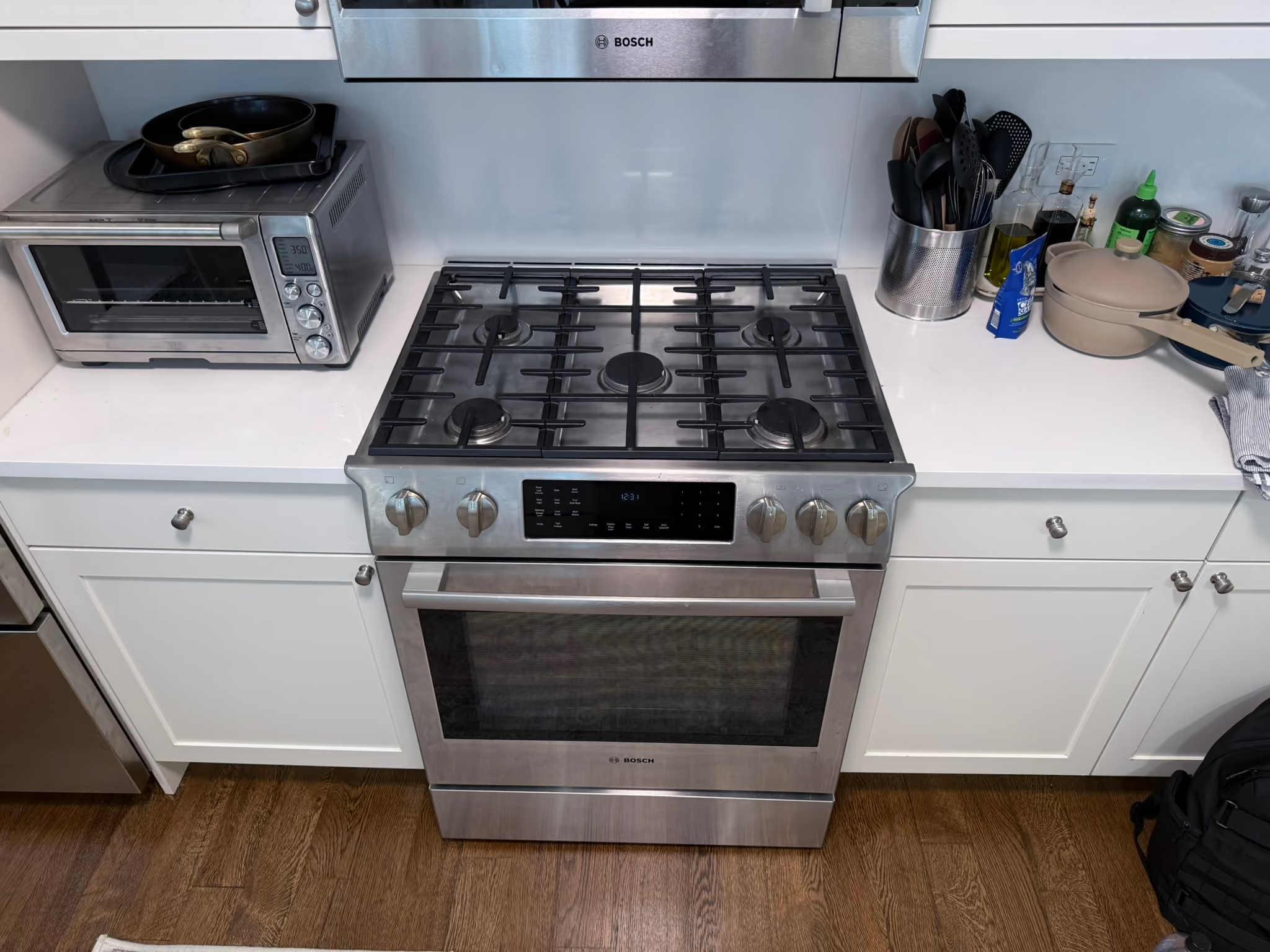
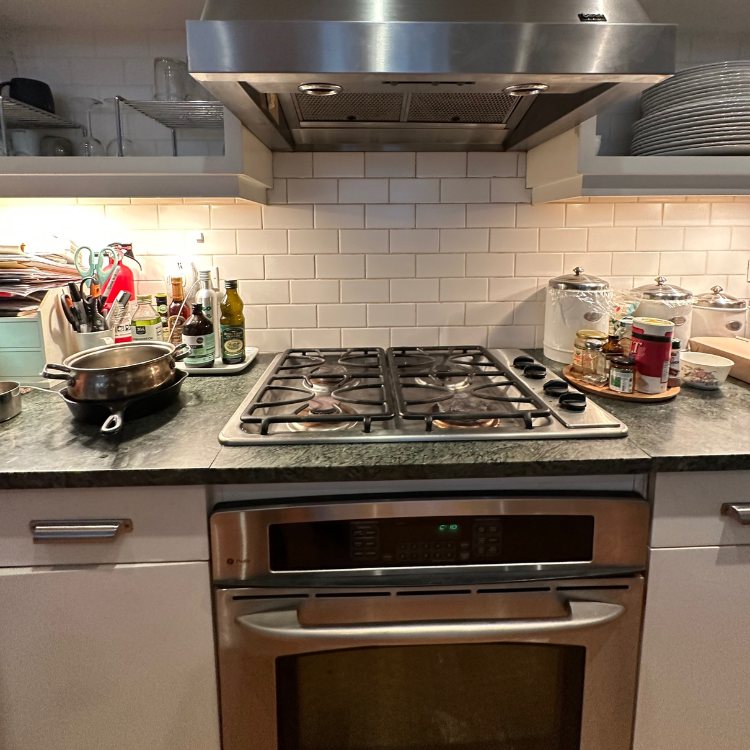
- Fuel type: Note whether it is electric, gas, dual-fuel, wall oven, range, speed oven, or a separate cooktop plus wall oven.
- Model identity: Save the Bosch E-Nr/model number and FD/serial if visible without moving a built-in unit.
Bosch Model and Display Details That Matter
Bosch ovens and ranges do not all prove the same failure in the same way. A wall oven, electric slide-in, induction range, gas range, dual-fuel range, and convection oven can use different heat circuits, ignition designs, and controls. The exact E-Nr matters before a part, manual, or diagram is trusted.
Display wording matters too. Bosch official range support treats electronics faults, demo mode, incorrect supply voltage, improper connection, overheating messages, and F-codes as separate cases. A photo of the display before clearing it can prevent a code-driven issue from becoming a parts guess.
When to Stop Using the Oven
- Gas odor: Turn the oven off and do not keep trying to ignite it.
- Delayed ignition: Stop if ignition is late, loud, or forceful.
- Breaker trip: Stop after one failed reset or any trip that happens when heat is selected.
- Sparking, smoke, or burning smell: Leave the appliance off and save what was visible.
- Persistent code: Photograph the code and stop clearing it repeatedly.
- Self-clean or high-heat failure: Do not run another high-heat cycle to test it.
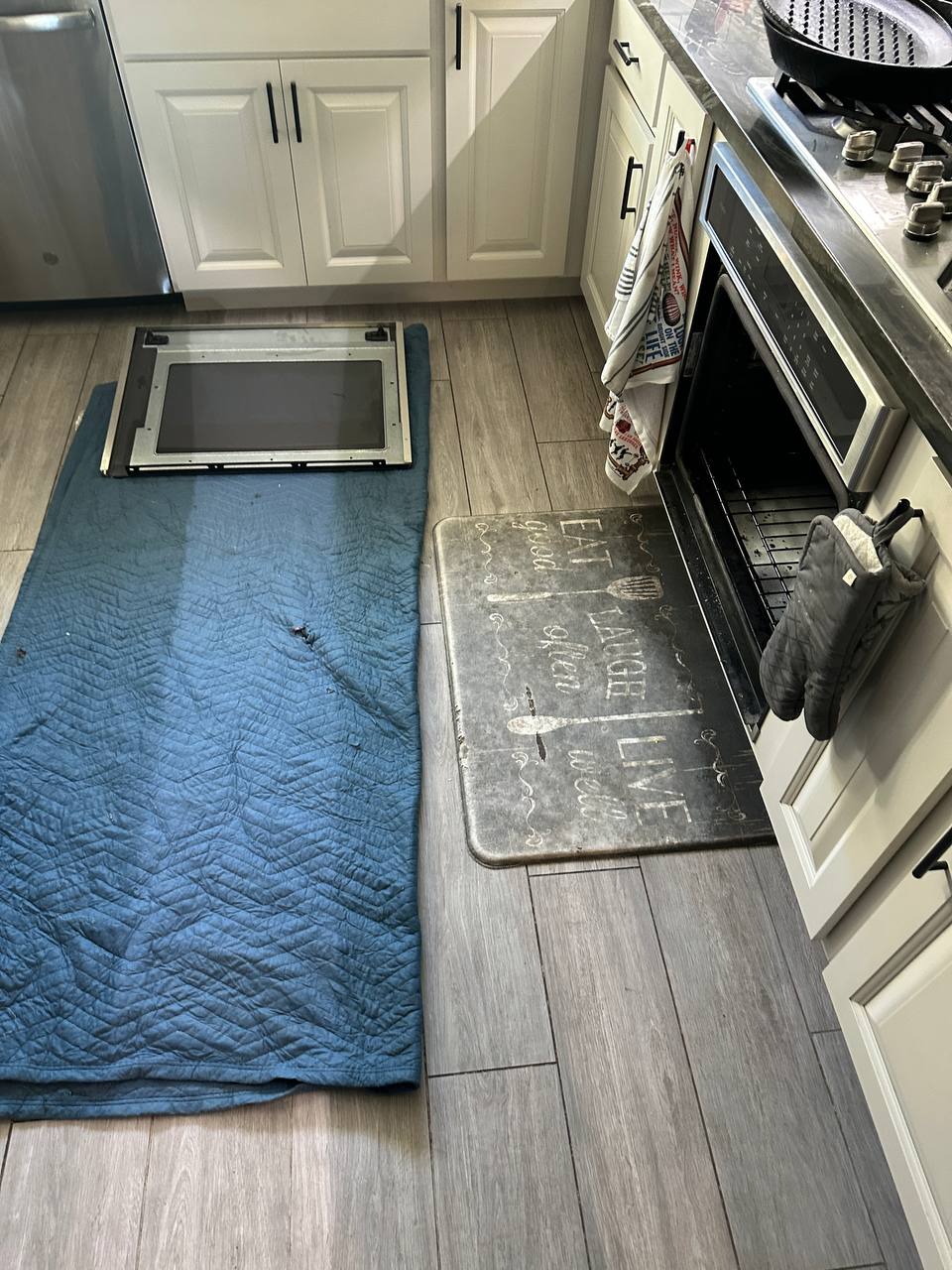
- Built-in access risk: Do not pull a wall oven from cabinetry or remove trim to look for a plug or wiring.
What Diagnosis Must Confirm
A useful Bosch oven no-heat diagnosis should prove the failed system, not just name the most common part. For electric models, that means incoming supply, bake and broil elements, convection element if present, relays, sensor feedback, high-limit protection, wiring, terminal condition, and control output. For gas models, it means ignition behavior, burner flame, safety valve, gas pressure, burner condition, wiring, and control command.
The model number controls the next step. The same symptom can mean a bake element on one electric wall oven, an igniter concern on a gas range, a control state after an outage, a voltage/connection message on a slide-in range, or thermal protection after self-clean.
What Not to Do
- Do not manually light the oven: Modern gas oven ignition should not be bypassed with a flame.
- Do not test live voltage: Heating circuits, relays, terminal blocks, and hardwired connections are service work.
- Do not remove panels: Oven floors, rear covers, control panels, junction covers, and built-in trim are not safe no-heat checks.
- Do not bypass safety devices: Door switches, thermal cutoffs, high limits, and locks are safety parts.
- Do not replace parts from a symptom alone: A glowing igniter, a cold element, a running fan, or a live display is evidence, not a final diagnosis.
- Do not keep resetting a breaker: A repeat trip is electrical evidence.
- Do not run self-clean as a test: Self-clean can add heat stress and erase useful symptom timing.
What to Record Before Service
- E-Nr/model and FD/serial: Photograph the Bosch model tag or parts-finder identity if accessible safely.
- Fuel and format: Note electric, gas, dual-fuel, wall oven, range, speed oven, single oven, or double oven.
- Mode behavior: Record whether Bake, Broil, Convection, Proof/Warm, or each cavity heats.
- Display evidence: Save codes, lock symbols, voltage messages, connection messages, demo messages, flashing clock, or blank-panel behavior.
- Ignition clue: For gas models, record clicking, glow, flame timing, gas odor, delayed ignition, and whether surface burners work.
- Heating clue: For electric models, record whether any element visibly glows only if it is exposed and safe to observe from outside the cavity.
- Timing clue: Note whether the failure started after outage, self-clean, cleaning, installation, moving, long high heat, or a breaker event.
- Building access: In an apartment, note if the oven is hardwired, built in, requires COI access, or cannot be moved safely.
FAQ
Can a Bosch oven have power but still not heat?
Yes. A light, fan, display, or timer can work while the heat command, heat circuit, ignition sequence, relay, sensor feedback, or supply still fails. Record which functions work instead of saying the whole oven has power.
Does Broil working mean the Bosch oven is mostly fine?
No. Broil working is useful because it narrows the problem, but it does not prove Bake is healthy. Bake and Broil can use different elements, burners, igniters, relays, or control outputs depending on the model.
Is oven calibration the fix for a Bosch oven that is not heating?
Calibration is for an oven that heats but cooks too hot or too cool. If the cavity stays cold, focus on power, command, mode split, control state, ignition or element evidence, and codes first.
Should I replace the Bosch oven igniter or element first?
Not from the symptom alone. Gas models, electric models, dual-fuel ranges, and wall ovens fail differently. Save Bake/Broil behavior, display codes, fuel type, and E-Nr so the failed system can be proven before a part is ordered.
What if the Bosch oven stopped heating after a power outage?
Photograph the display, check whether the clock or control state needs attention, and use one safe breaker reset only if there are no risk signals. If the display is dead or the breaker will not hold, use the no-power guide and stop owner troubleshooting.


.jpeg)

.jpeg)

