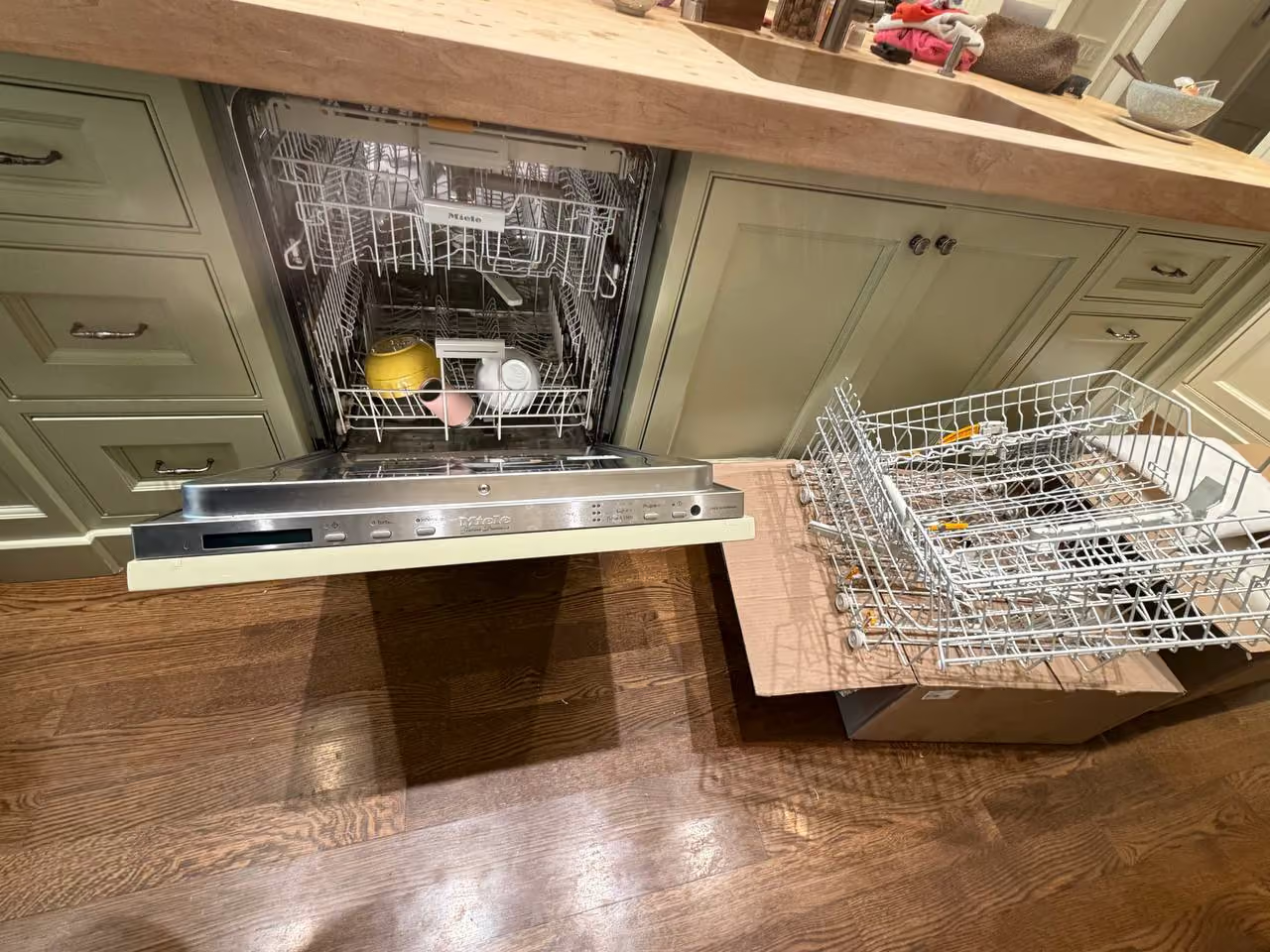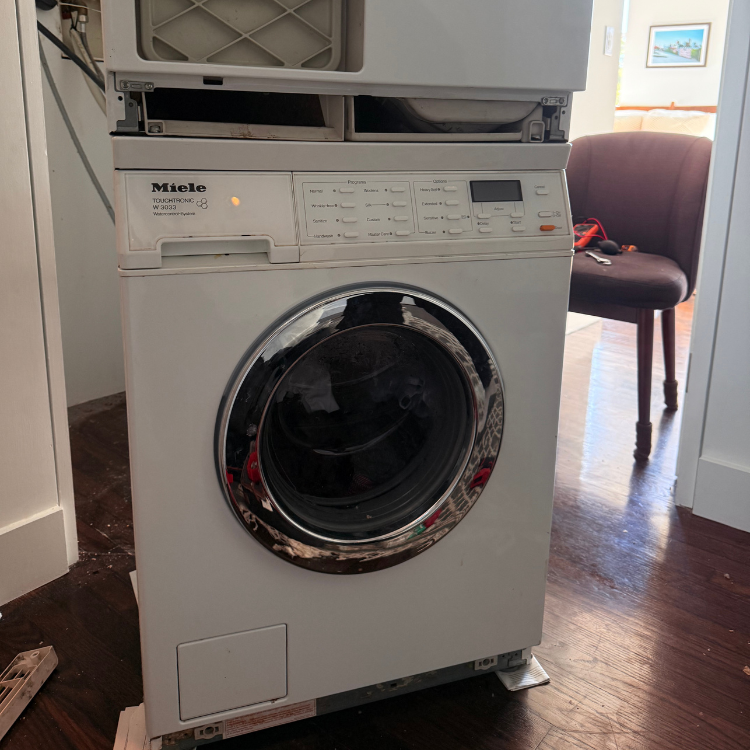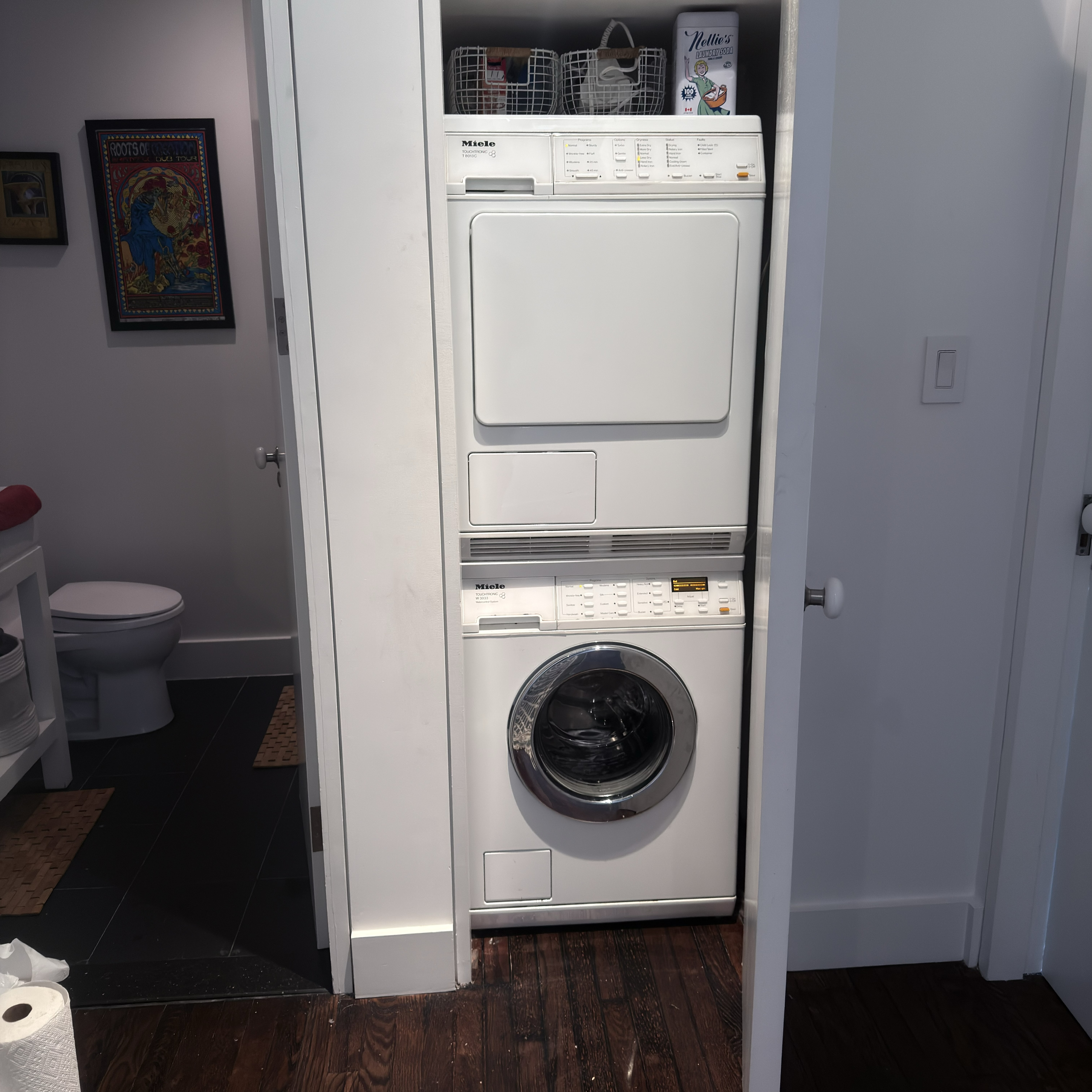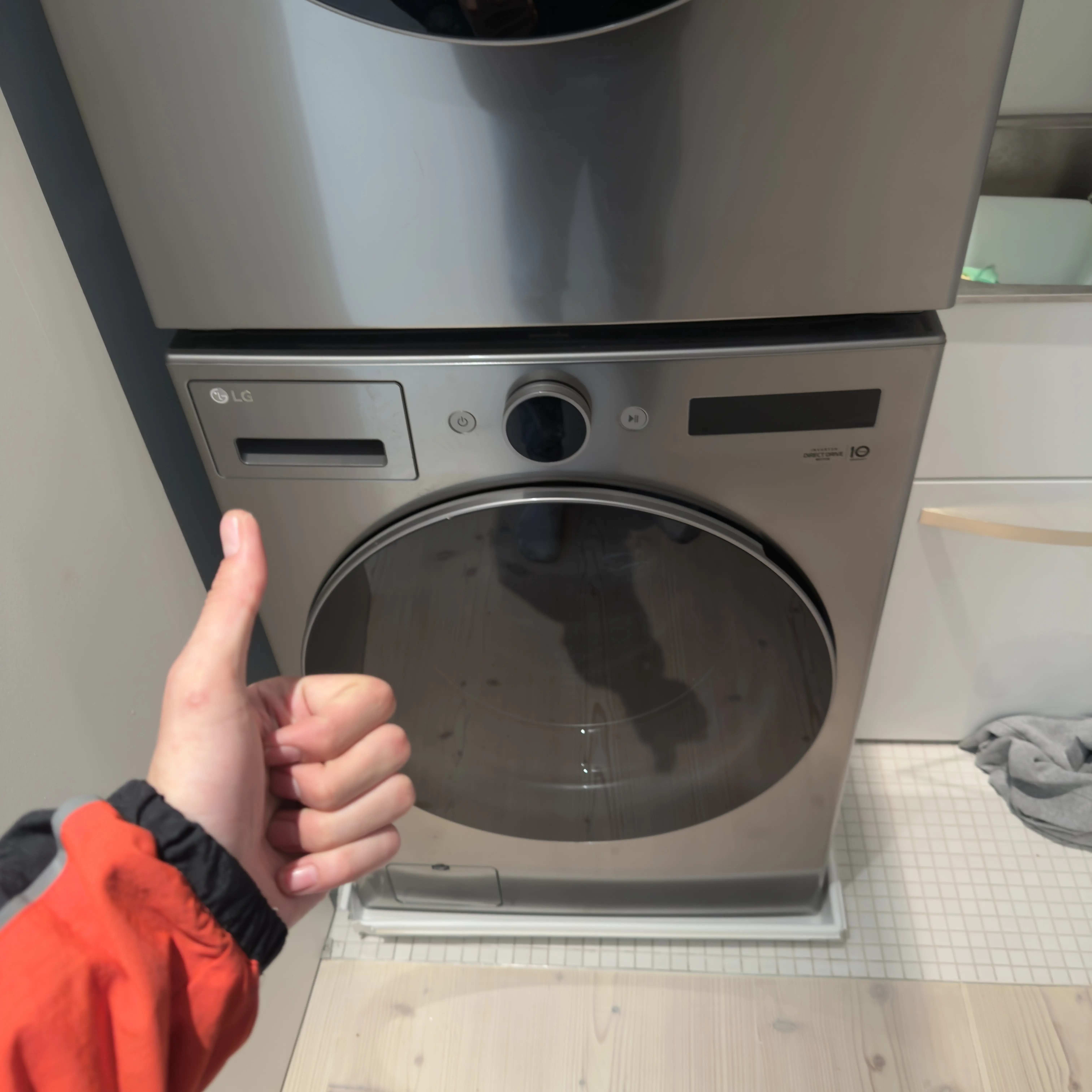

Compact Stackable Washer-Dryer Problems in NYC
Identify the failed unit and platform, then check drain, condensate, vent, power, closet heat, stacking, and building access before NYC compact laundry service.
Identify the failed unit and platform, then check drain, condensate, vent, power, closet heat, stacking, and building access before NYC compact laundry service.
For a compact stacked washer-dryer in an NYC apartment, identify the physical configuration and the exact failed unit before troubleshooting. A stacked pair, one-piece laundry center, and single-drum combo use different power, drain, airflow, and access paths; “ventless” also may mean condenser or heat pump. Keep the equipment off for leakage, gas or burning odor, repeated breaker trips, abnormal heat, violent movement, or any condition that would require unstacking or pulling the appliances without a documented access plan.
Do not pull a compact pair from a closet just to see the connections. Stacked equipment can be top-heavy, and movement can strain water hoses, a drain, a dryer exhaust, an electrical cord, or a gas connector.
Stop and arrange controlled access when:
NYC buildings may require advance scheduling, a certificate of insurance, elevator or floor protection, service-hour compliance, and a superintendent or building engineer. Those requirements should be resolved before the appointment, not after the technician discovers the pair cannot be accessed.
Compact laundry problems are often misrouted because three different configurations look similar from the front:
Use the Unit–Platform–Connection–Access map:
“Stacked” does not prove “ventless,” and “compact” does not prove that every model has the same filter, condenser, drain, or clearance instructions. The exact model numbers for both appliances control the service path.
The exact installation manual is the controlling source for stacking compatibility, clearances, room-air requirements, drain routing, and service access. A similar-looking compact model is not enough evidence because adjacent series can use different connections and maintenance paths.
Low effort: identify the actual equipment and symptom
Why it works: A stacked pair has two model numbers and often two serial numbers. The lower washer model does not identify the upper dryer’s fuel, venting, or maintenance access.
Tools/materials: Phone camera, flashlight, purchase record, and installation paperwork.
What to do:
Common mistakes:
Why it works: “The stack is broken” can conceal a washer no-drain, washer no-spin, dryer no-heat, vent restriction, condensate warning, shared power loss, or movement problem. Each has a different first safe action.
Tools/materials: Notes and a short safe video.
What to record:
Common mistakes:
Why it works: A vented dryer sends air outdoors. Condenser and heat-pump dryers collect or drain water. A combo may also use water during drying on some platforms. The wrong platform assumption sends the reader to the wrong fix.
Tools/materials: Exact dryer manual and installation record.
What to do:
Common mistakes:
Medium effort: check owner-visible conditions
Why it works: Water in a compact closet can come from inlet hoses, washer drain, standpipe, door/gasket, dryer condensate container or hose, or nearby building plumbing. The first wet location and cycle phase determine the responsible system.
Tools/materials: Towels, flashlight, phone camera, and dry paper towels.
What to do:
Common mistakes:
Why it works: Compact condenser and heat-pump dryers exchange heat with the surrounding air, and manuals can require specific clearances or an open closet door for performance. A vented dryer also needs makeup air and an unobstructed exhaust route.
Tools/materials: Exact installation manual, flashlight, and room observations.
What to do:
Common mistakes:
Why it works: Washer spin movement transfers into the dryer above. Poor foot contact, floor flex, an unsuitable pan, retained shipping restraints, or stacking hardware can amplify motion.
Tools/materials: Flashlight, level, and installation records.
What to do:
Common mistakes:
High effort: prepare access before diagnosis
Why it works: A successful visit may need access to water valves, drain, receptacle, gas shutoff, vent connector, condensate drain, or both model tags. If these are behind the stack, removal becomes a separate scoped operation.
Tools/materials: Installation photos, closet measurements, building alteration packet, and service records.
Map:
Common mistakes:
Why it works: A technician may arrive within the appointment window but be unable to enter, use the service elevator, protect floors, move equipment, or work without the building’s documents.
Tools/materials: Management contact, COI requirements, work rules, and written authorization.
Confirm:
Common mistakes:
The repair plan should identify the failed unit first, then prove its supply and connection path. Access labor and building-system corrections should not be hidden inside an appliance-part estimate.
No. A stacked pair has separate washer and dryer drums. A combo washes and dries in one drum, while a laundry center is a coordinated single-frame product.
No. Compact dryers can be vented, condenser, or heat pump. Confirm the exact model before choosing a vent or condensate path.
The installation may depend on room air and heat exchange. Check the exact clearance and ventilation instructions; do not alter the closet without building approval.
Not when movement can strain water, drain, electrical, vent, gas, or stacking connections. Plan shutoffs, support, labor, and building access first.
Washer imbalance, footing, floor flex, shipping hardware, stacking attachment, or internal washer movement can transfer vibration upward.
No. Dryer condensate, shared drains, hoses, nearby plumbing, and water traveling along the floor can appear beneath the lower unit.
Send both model and serial tags for a stacked pair. For a laundry center or combo, send every tag and the full control display.
The technician may diagnose appliance airflow and the visible connector, but concealed or shared ducts may require building-authorized vent service.
Critical test points and connections may be behind or between the units. If safe access is impossible, the condition cannot be verified without a separate removal/unstacking scope.
Have both model tags, symptom record, closet and connection photos, installation/stacking records, building contact, COI rules, arrival window, elevator access, and repair authorization.