
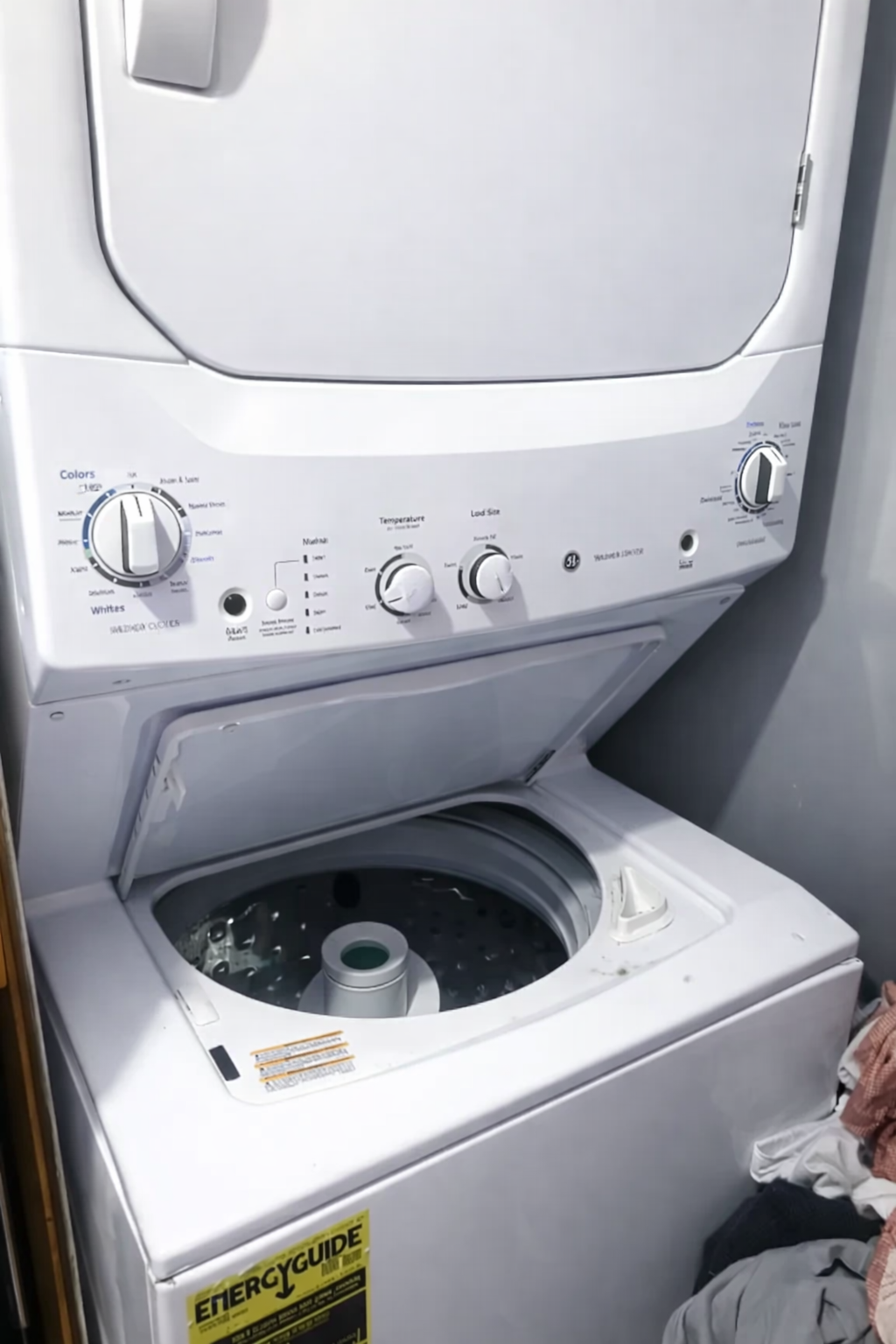

Whirlpool WET/WGT Laundry Center Problems
Find whether a Whirlpool WET/WGT problem begins in the washer, dryer, shared supply, gas or electric heat path, vent, drain, or installation.
Find whether a Whirlpool WET/WGT problem begins in the washer, dryer, shared supply, gas or electric heat path, vent, drain, or installation.
A Whirlpool WET/WGT laundry-center problem should first be split by model prefix and by the half that fails: WET uses an electric-dryer path, WGT uses a gas-dryer path, and the washer has its own fill, wash, drain, and spin sequence. Record the complete model suffix and the first action that does not happen instead of diagnosing the entire cabinet as one machine. Stop use for water on the floor, violent movement, gas or burning odor, smoke, unusual heat, a damaged vent, or repeated power loss.
A unitized laundry center brings water, drainage, electricity, heat, exhaust, and sometimes gas into one narrow installation. The cabinet may also be too heavy and tightly connected for an owner to move safely.
Stop operation when:
Do not bypass a lid, door, thermal, or other safety device. Do not perform energized electrical measurements, disconnect gas fittings, force a locked lid, keep resetting a breaker, or run the dryer with its exhaust disconnected. For a gas odor, leave the area, avoid switches and flames, and contact emergency services or the gas utility from outside.
“WET/WGT problems” is not a diagnosis. It is a platform question that must be reduced to one failed sequence. The combined cabinet can make a washer problem look like a dryer problem, especially when the final complaint is wet clothing.
Use the Prefix–Half–Resource route:
The full model is essential. A family prefix identifies a broad fuel path, but the suffix selects the applicable controls, cycles, clearances, venting, and instructions. A manual for a similar cabinet is not enough.
Before blaming the dryer, inspect the load at the end of the washer cycle. Whirlpool’s official product information separates washer and dryer functions, and the load between them is the decision point. Clothing that is dripping, unusually heavy, or accompanied by water in the tub did not receive normal extraction. That is a washer drain or spin path. The dryer cannot efficiently remove water the washer should have extracted.
If the washer leaves a normally spun load and the dryer tumbles but the load remains damp, classify the result:
These are routing observations. None identifies a particular component by itself.
The washer must accept a selection, recognize the lid, obtain water, move the load, drain, and reach final spin. The dryer must accept Start, recognize its door, turn the drum, establish the correct heat path, move air, and exhaust moisture. “It runs” is incomplete: a washer can agitate but fail final spin, and a dryer can tumble without heat.
If one half operates normally, some shared resources are available, but that does not prove every power leg, gas supply, control output, water path, or connection is correct. If both halves appear dead, verify that each control was tried independently before describing a shared failure.
Low effort: identify the correct path
Why it works: The tag distinguishes the applicable WET or WGT configuration and prevents gas and electric instructions from being mixed.
Tools/materials: Phone camera, flashlight, owner documents, and notes.
What to do:
Common mistakes:
Why it works: The first missing action is more diagnostic than the final statement “laundry is wet.”
Tools/materials: Notes, timer, and a short video when safe.
What to do:
Common mistakes:
Why it works: An unaccepted selection, open lid or door, delayed start, unsuitable cycle, or severe load imbalance can stop a sequence before internal diagnosis is justified.
Tools/materials: Exact owner guide and a normal, modest load.
What to do:
Common mistakes:
Medium effort: check visible resources without moving the unit
Why it works: It proves whether excess water entered the dryer because the washer failed to drain or spin.
Tools/materials: Towels, notes, and a modest washable load.
What to do:
Common mistakes:
Why it works: Closed valves, a visibly kinked hose, standpipe overflow, or drain backflow can affect washer performance without proving an internal failure.
Tools/materials: Flashlight, towels, and building contact information.
What to do:
Common mistakes:
Why it works: The dryer needs both heat and airflow to remove moisture. The U.S. Fire Administration’s dryer-safety guidance treats lint removal and unobstructed exhaust as safety matters. A clean lint screen does not prove the hidden duct is open, but it removes one accessible restriction.
Tools/materials: Soft brush or vacuum used only as the owner guide permits, flashlight, and phone camera.
What to do:
Common mistakes:
Why it works: A temporary interruption can mimic an appliance failure, while repeat loss points to a condition that needs diagnosis.
Tools/materials: Breaker labels, dry hands, owner guide, and building contact.
What to do:
Common mistakes:
High effort: inspection that requires planned access
Why it works: Once the failed half and stage are known, testing can stay on the correct sequence instead of guessing parts across the whole cabinet.
Tools/materials: Model/serial photos, cycle record, load result, display photos, sound video, and exact manuals.
What to prepare:
Common mistakes:
Why it works: Correct access protects floors, cabinetry, water, gas, drain, power, and exhaust connections.
Tools/materials: Installation photos, measurements, appliance path, floor protection, building contact, and COI requirements if applicable.
What to prepare:
Common mistakes:
Save:
Do not state that a component failed unless it was actually confirmed. A useful service note is: “WGT model, washer completes normal final spin, dryer tumbles on heated cycle but stays cold, no gas odor, failure repeated twice.” That is more actionable than “laundry center broken.”
WET is the electric-dryer route and WGT is the gas-dryer route. The full suffix still matters for exact controls and instructions.
Check the load immediately after washer spin. The official washer and dryer instructions make this the practical decision point: dripping or unusually heavy laundry begins with washer extraction, while normally spun but warm-damp laundry points more toward dryer airflow, load, sensing, or venting.
Yes. One working half proves only that some operation is available. It does not prove every electrical, gas, heat, or control path is normal.
Only if the appliance is safe and the exact guide permits it. A timed cycle may help classify heat, but it cannot make a restricted vent or poor washer spin safe.
Not by itself. Use the exact cycle guide and judge whether fill, washing, drain, and final spin complete correctly.
No. Do not discharge heat, lint, moisture, or combustion products into the residence.
Drain and spin are different actions. Record whether water leaves, the lid remains recognized, the load is balanced, and the basket attempts final spin; do not infer a motor or lock failure from the result alone.
At most one reset may be appropriate when the exact guide permits it and there is no moisture, odor, heat, or damage. A repeat trip needs diagnosis.
Not casually. A unitized cabinet is heavy and may be connected to water, drain, power, gas, and exhaust in a tight space.
Provide the full tag, fuel path, affected half, first failed action, washer water and load state, dryer tumble and temperature, display or sound evidence, visible connections, and access restrictions.
Whirlpool requests are considered in Brooklyn, Manhattan below 96th Street, and selected Queens routes; laundry-center, venting, gas or electric, built-in, and building-access details are confirmed first.
.jpeg)

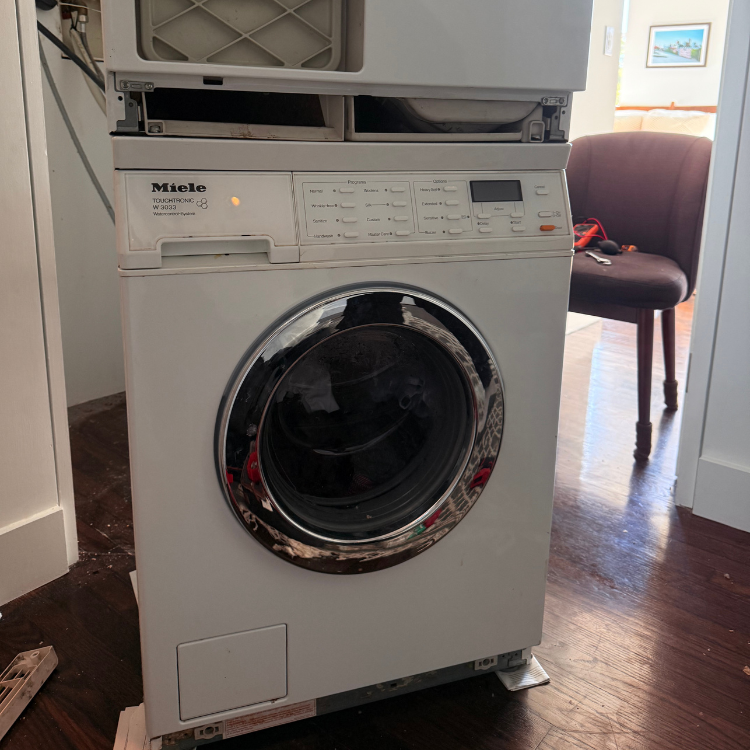
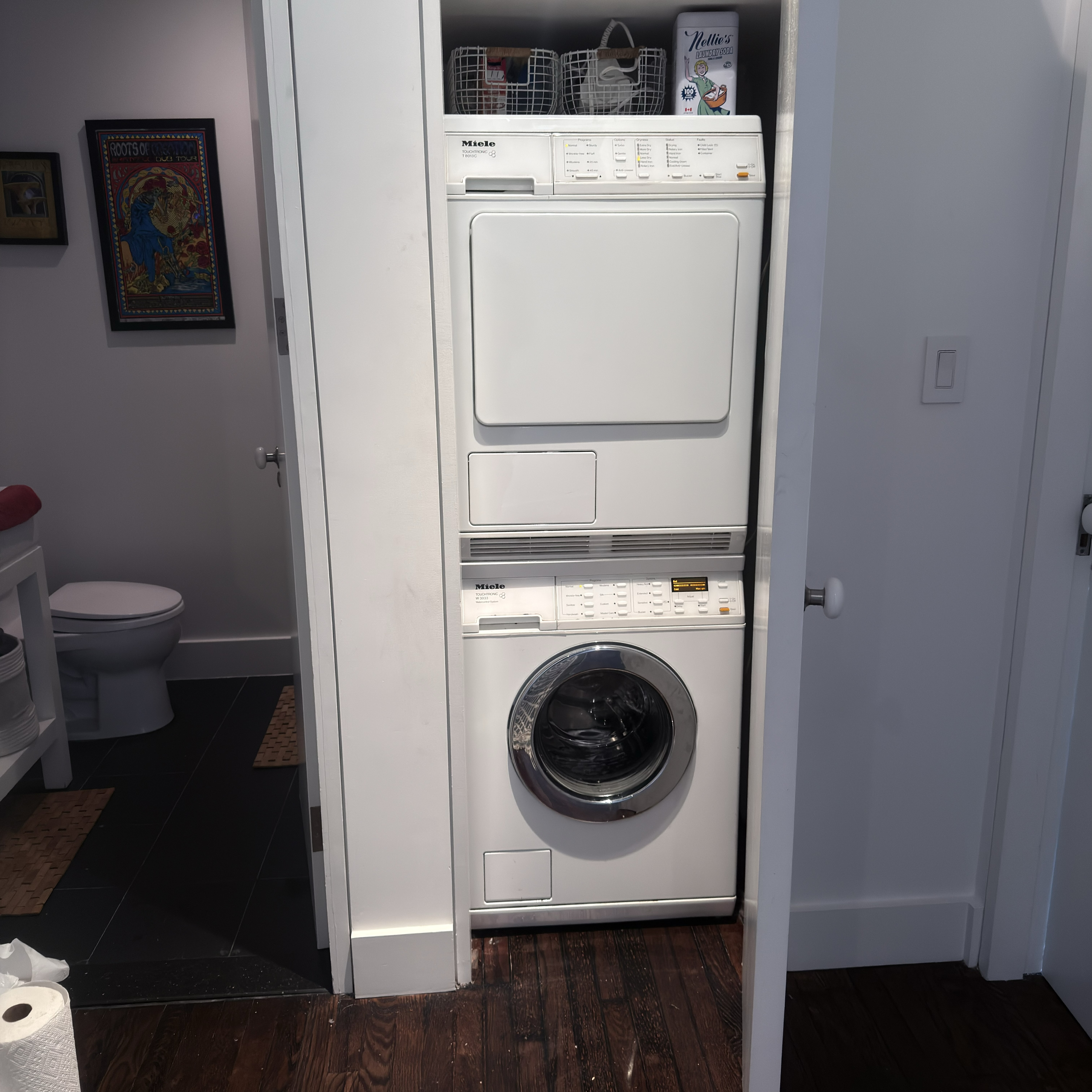

Technician experience standard: 4+ years of hands-on appliance repair per technician; senior technicians bring 8 and 16 years. Whirlpool intake starts with Model and Serial or connected identity, cycle or feature, display, failed timing, and installation context. Independent service; no current manufacturer authorization implied.

