
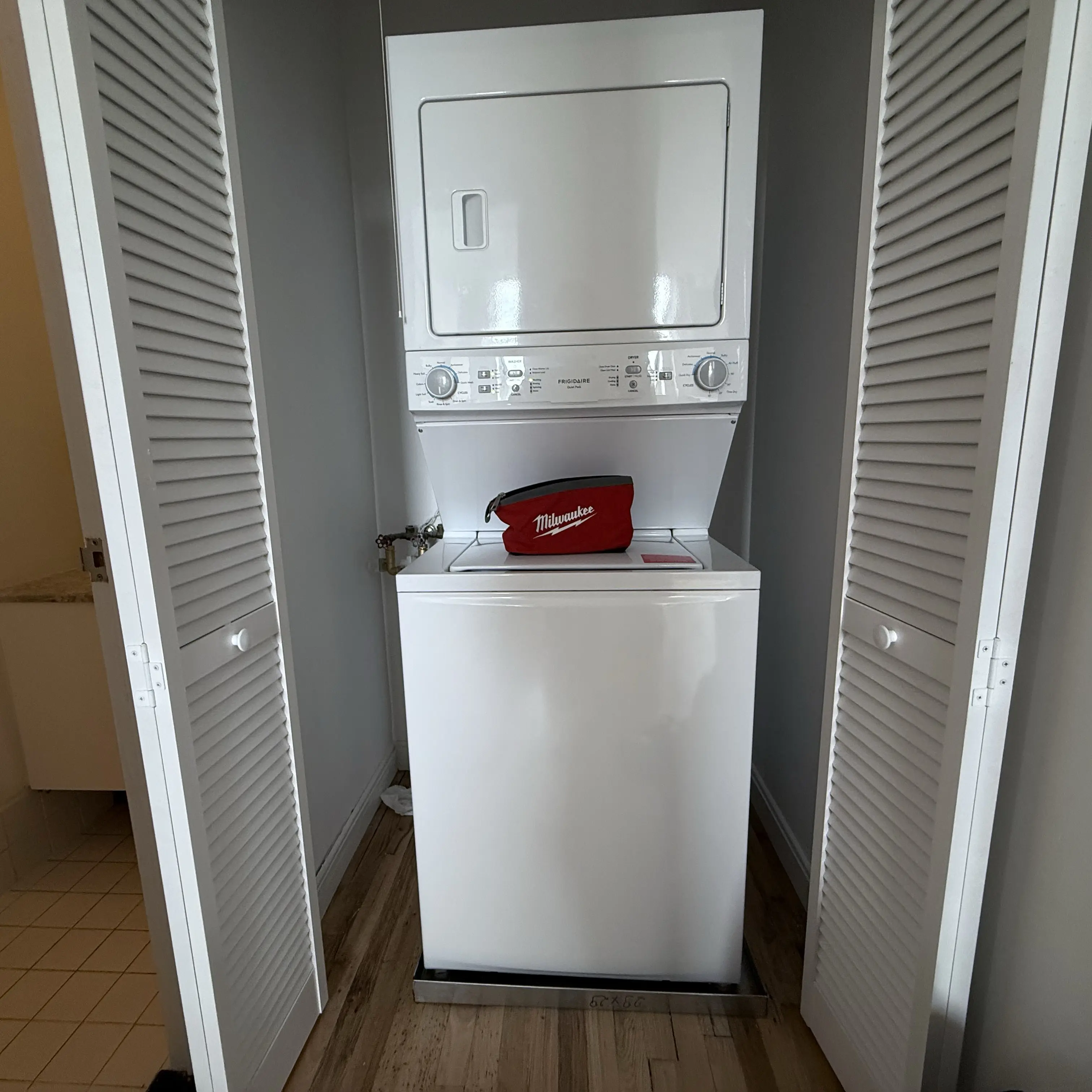

Frigidaire FLCE/FLCG Laundry Center Problems
Find whether a Frigidaire FLCE/FLCG laundry-center problem starts in the washer, dryer, shared supply, drain, gas, or exhaust path.
Find whether a Frigidaire FLCE/FLCG laundry-center problem starts in the washer, dryer, shared supply, drain, gas, or exhaust path.
For a Frigidaire FLCE/FLCG laundry center, first identify whether the washer, dryer, or both stopped and record the first action that failed. The full model number matters because gas and electric configurations do not share the same heat or supply path, while a washer sensing pause can look like a no-start condition. Keep the unit off for water near power, gas or burning odor, smoke, abnormal heat, violent movement, a damaged vent, or repeated breaker trips.
A unitized laundry center places water, drainage, heat, exhaust, power, and sometimes gas in one narrow installation. Do not pull it forward, open panels, or continue both halves just to discover which system is involved.
Stop using the affected side—and shut down the whole unit when the source is uncertain—if:
If gas odor is present, leave the area without operating switches and call 911 and the gas utility from a safe location. For active water, close the accessible appliance water valves when that can be done without stepping into water or reaching near energized equipment.
FLCE and FLCG are family shorthand, not a complete diagnosis. A laundry center has a washer sequence below and a dryer sequence above, plus installation resources that may affect one or both. A symptom must be assigned before a part can be evaluated.
Use the Side–Resource–Stage triage:
For the washer, useful stages include control acceptance, lid lock, sensing, fill, agitation, drain, and spin. For the dryer, separate control acceptance, door recognition, drum movement, heat, and moisture removal.
Frigidaire notes that many laundry centers spend an initial period sensing the load before water enters. A quiet start with normal indicators can therefore differ from a control that never accepts Start, a lid that never locks, or a washer that senses and then fails to fill.
The dryer branch also changes with fuel. An FLCG-family gas configuration needs safe gas supply and combustion-air conditions; an FLCE-family electric configuration follows an electric heat-supply path. Neither branch authorizes gas-line work, live-voltage testing, or internal access.
CPSC published a recall for specified Frigidaire FFLG4033QW and FFLG4033QT gas laundry centers within listed serial ranges. That does not mean every FLCG, FLCE, or Frigidaire laundry center is recalled.
Use the complete model and serial tag in the current CPSC recall record. If the appliance matches, follow the official remedy and stop-use instructions rather than treating the recall as an ordinary troubleshooting tip.
Low effort: identify the failed side and first failed action
Why it works: The full model suffix separates fuel, size, control, and production variations that family shorthand hides. A display photo also preserves lights that may disappear after power is removed.
Tools/materials: Phone camera, flashlight, purchase record, and exact owner manual.
What to do:
Common mistakes:
Why it works: “Washer will not work” can mean Start was rejected, the lid did not lock, sensing is still active, water never entered, agitation failed, water remained, or spin never accelerated.
Tools/materials: Notes, phone clock, and one short video from a safe distance.
What to do:
Common mistakes:
Why it works: A dryer that is dark, refuses Start, tumbles cold, becomes warm but leaves clothes damp, or overheats needs a different next page.
Tools/materials: Notes, lint-screen observation, and load-temperature description.
What to do:
Common mistakes:
Medium effort: separate installation resources
Why it works: A closed water valve can stop a washer while the dryer works. A drain or standpipe problem can leave water behind while the dryer remains normal. A true shared power event affects a different set of evidence.
Tools/materials: Flashlight, dry hands, breaker label, and building or installation record.
What to do:
Common mistakes:
Why it works: A cold load suggests a different branch than a hot, damp load. The second result can involve lint, load, exhaust, or room-air conditions even though heat exists.
Tools/materials: Clean lint screen, exact manual, flashlight, and safe termination observation.
What to do:
Common mistakes:
High effort: prepare a platform-specific diagnosis
Why it works: A technician can separate shared supply, washer sequence, dryer sequence, and installation effects more efficiently when both sides are described independently.
Tools/materials: Model/serial photos, cycle notes, short videos, installation record, and prior invoices.
What to do:
Common mistakes:
Why it works: Diagnosis may require access to connections or service areas that cannot be reached while the unit remains tightly installed. Moving first can create a second leak, vent, cord, or gas problem.
Tools/materials: Cutout photos, shutoff locations, floor-protection plan, COI requirements, and building contact.
What to do:
Common mistakes:
They are family labels that can represent different fuel and model configurations. Use the complete model suffix and serial number before applying instructions.
Frigidaire documents a load-sensing period on many laundry centers. If indicators are normal, allow the manual’s expected time before calling it a no-start.
The halves share a cabinet but still have separate door, drum, heat, and airflow sequences. Record whether the dryer accepts Start, tumbles, heats, and moves moisture.
Check the washer’s sensing state, lid closure, visible water valves, and supply interruption. A working dryer does not prove that water, fill, drain, or washer controls are normal.
No. Cold-damp, warm-damp, and unusually hot-damp loads take different paths. Airflow and washer extraction can matter when heat is present.
No. One reset may be reasonable only when the area is dry and there is no odor or damage. A repeat trip needs diagnosis.
No. The CPSC recall covers specified model and serial ranges. Compare the complete tags with the current official record.
Not without a controlled plan for weight, floor protection, water, drain, power, vent, and gas connections. A tight NYC installation may require more than one trade or building approval.
No. Keep the dryer off until the correct filter is installed and seats properly.
Send full model/serial, fuel, control photos, first failed stage, washer water state, dryer load temperature, sound timing, visible connection conditions, recent work, recall result, and access requirements.
Frigidaire requests are considered in Brooklyn, Manhattan below 96th Street, and selected Queens routes; laundry-center, gas, built-in, and restricted-access conditions are confirmed before routing.


Technician experience standard: 4+ years of hands-on appliance repair per technician; senior technicians bring 8 and 16 years. Frigidaire intake starts with Model and Serial, appliance form, display or light pattern, cycle or mode, failed function, and access. Independent service; no current manufacturer authorization implied.

