What the Miele Steam Feature Needs to Work
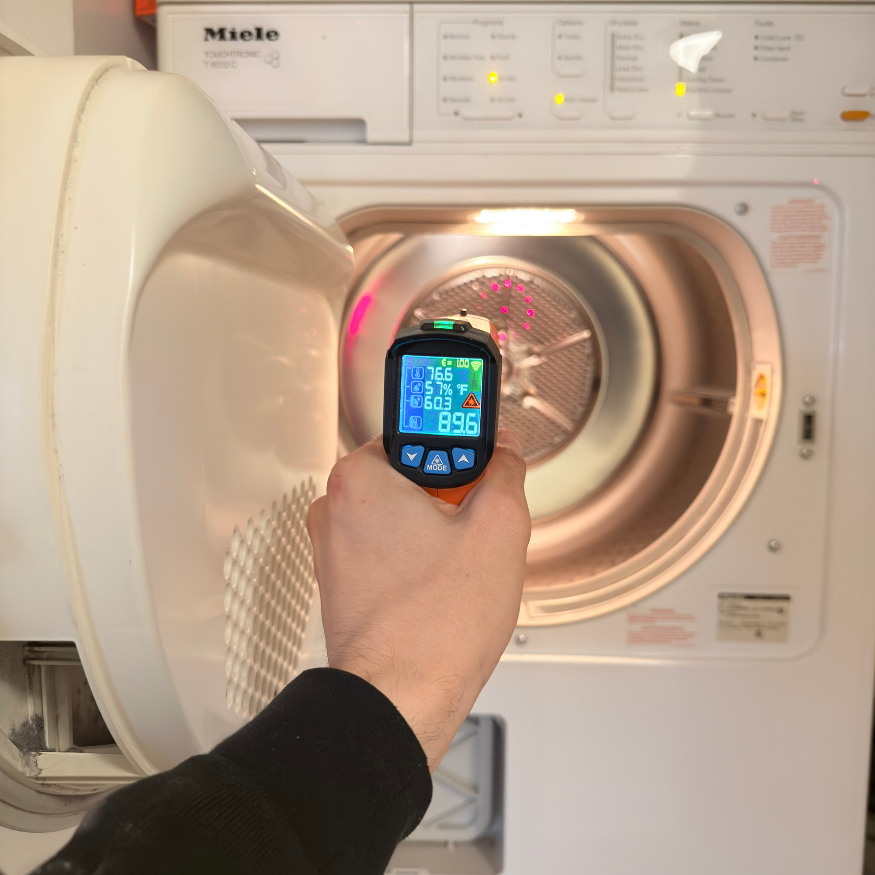
The checked Miele designs do not depend on a separate homeowner-filled steam generator. They draw water from the condensate container and spray it into the drum for a smoothing or dampening effect. The exact feature name and instructions vary by model, so use the visible signal to select the next step.
- The model or program does not list Steam Smoothing, Steam Care, or SoftSteam: This feature diagnosis does not apply. Use only the programs and options shown for the full model number.
- Water is below the minimum mark: The feature does not have the required water source. Prepare the condensate container exactly as the model manual permits before one comparison.
- The dryer uses an external condensate drain: Steam operation may still require water in the condensate container. Follow the exact model's steam-program preparation instead of assuming the external drain eliminates the tank requirement.
- Water contains additives or conflicts with the model instructions: Stop before adding fragrance, detergent, vinegar, descaler, or another chemical. Use only the clean water type permitted by the exact manual.
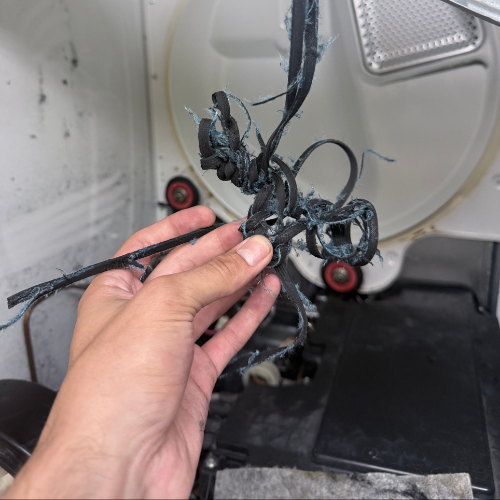
- Lint is visible on the filter at the end of the container hose: Clean, rinse, and refit that owner-accessible filter and hose only as the model instructions show. If output remains weak, the hidden delivery path needs proof.
- The spray jet has significant limescale: Miele's checked guidance moves to nozzle replacement using the supplied special tool. Do not poke the jet with a pin, improvise another tool, or run the dryer without the nozzle.
- No large steam cloud is visible but fabrics are dampened or smoothed: Judge the program by the model's stated fabric effect and prerequisites, not by the expectation of continuous visible vapor.
- All visible prerequisites are correct but the effect remains absent: Use the nozzle and service threshold below instead of opening the machine or guessing a pump.
- Stop now: A missing or damaged nozzle, water leaking toward powered parts, a burning or electrical odor, smoke, a breaker trip, or visible electrical damage requires the dryer to remain off for safe diagnosis.
Safe Steam Smoothing Checks
- Identify the exact feature: Photograph the program or option name and the full model and serial label.
- Confirm the program prerequisites: Match the load type, permitted load size, and program preparation to the exact operating instructions.
- Check the condensate container: Confirm the water level reaches the required minimum mark, including when an external drain is used and the manual still requires container water.
- Use only permitted clean water: Remove any water mixed with fragrance, detergent, vinegar, descaler, or another additive.
- Inspect the hose-end filter: Clean, rinse, and refit the owner-accessible filter and hose exactly as shown for the model.
- Inspect the spray jet without probing it: Note visible limescale, damage, or a missing nozzle; do not insert a pin, wire, or improvised tool.
- Run one model-correct comparison: Use a suitable load and the documented program once, then record the water level and fabric result.
What Not to Do and When to Stop
Do not pour chemicals into the condensate container to descale the steam path. Do not add fragrance or detergent to the water unless the exact Miele instructions explicitly permit a named product for that purpose. Do not poke or drill the spray jet, remove panels, energize a missing-nozzle system, test live voltage, disconnect internal hoses, or replace an internal pump or control from weak steam alone.
Stop owner work when the nozzle is significantly limescaled and the supplied special tool or exact replacement procedure is unavailable, when the nozzle is missing or damaged, or when correct water, filter, load, and program conditions still produce no useful effect. Preserve the exact state for model-specific diagnosis.
When This Is a Different Problem
- Empty Container warning appears while the tank is empty: Use the dedicated empty-container warning diagnosis.
- The dryer performs poorly in every program: Route by the actual drying result, airflow warning, no-heat symptom, or shutdown behavior rather than treating all poor drying as a steam-feature fault.
- Water leaks from the dryer: Use the leak diagnosis and stop if water approaches powered parts.
- The spray phase makes a brief normal sound but smoothing works: Sound alone does not establish insufficient steam.
What Diagnosis Must Confirm
An effective service diagnosis should reproduce the feature with the correct model, program, load, water, container filter, and nozzle state. It should then separate:
- Water pickup: Confirm that the feature can draw water from the condensate container under the exact program conditions.
- Hose and filter path: Distinguish an owner-corrected hose-end filter from a hidden restriction or leak.
- Pump actuation and delivery: Verify that the delivery device operates when the control permits the feature.
- Spray-jet condition: Confirm whether the nozzle is restricted, damaged, incorrectly installed, or delivering the expected spray pattern.
- Control permission: Determine whether the model's program, load, and feedback conditions actually command steam delivery before selecting an electrical component.
What to Record Before Service
- Machine identity: Full model and serial number.
- Feature identity: Exact program or option name: Steam Smoothing, Steam Care, SoftSteam, or another label.
- Water evidence: Starting level, water type, external-drain use, and whether any additive was present.
- Owner checks: Container-hose filter condition, nozzle appearance, and the one model-correct comparison performed.
- Result: Whether water level changed, fabric was dampened or smoothed, no effect occurred, or a leak or different warning appeared.