
.png)


Brooklyn Heights Appliance Repair for Historic Homes and Managed Buildings
For a Brooklyn Heights appointment, the practical local decision is: confirm building access, COI needs, elevator rules, model label, and whether the appliance is built-in. The primary friction is building approvals, elevator timing, floor protection, and appliance movement in finished spaces, and that changes the appliance implication: built-in refrigerator and dishwasher work needs access planning before components or parts are discussed. Share those details before the appointment so the visit is planned around the real address, not a generic Brooklyn appliance call.
Volt & Vector services Brooklyn Heights with diagnostic-first appliance repair for refrigerators, dishwashers, ovens, ranges, cooktops, washers, and dryers. The 11201 ZIP code is useful for routing, but the exact address matters more in a neighborhood that moves from Old Fulton Street and the Promenade to Montague Street, Court Street, Cadman Plaza, Atlantic Avenue, and quieter residential blocks. A repair visit in a low-rise brownstone can have a different access path than a visit in a co-op, condo, elevator building, or apartment near the courts and offices.
The appointment should start with the appliance symptom and the building setup together. In Brooklyn Heights, a refrigerator may be built into a finished kitchen, a dishwasher may sit below stone counters, a stacked washer-dryer may be in a closet, and a range may be in a kitchen where gas odor instructions need to be separated from ordinary ignition trouble. Good prep avoids unnecessary movement, protects finished floors and trim, and lets the technician focus on the failure path.
For appliance-specific service details, use refrigerator repair, dishwasher repair, oven repair, range repair, washing machine repair, and dryer repair. Nearby service areas include DUMBO, Downtown Brooklyn, Cobble Hill, and Boerum Hill.
Local Conditions That Change the Visit
Brooklyn Community District 2 includes Brooklyn Heights, and the Brooklyn Heights Association describes the neighborhood as a low-rise community with brick and brownstone rowhouses plus apartment buildings. Its boundary framing from Old Fulton Street to Atlantic Avenue, and from Cadman Plaza or Court Street to the Promenade and East River, gives a practical service picture: older residential blocks, managed buildings, busy approach streets, and addresses where loading may be simpler if the arrival notes are clear.
The Brooklyn Heights Historic District map supports local references such as Montague Street, Pierrepont Street, Remsen Street, Henry Street, Hicks Street, Willow Street, Clark Street, Pineapple Street, Cranberry Street, Joralemon Street, Columbia Heights, Cadman Plaza, Court Street, and Atlantic Avenue. These details matter for appliance work because the technician may need a service entrance, elevator timing, doorman instructions, COI paperwork, or a plan for moving tools through narrow halls without disturbing finished surfaces.
Best Evidence Before Booking
Send a small set of useful details before the visit: appliance type, brand, model label if reachable, symptom photo or video, floor, elevator or stair notes, building contact, service entrance rules, COI requirement, and whether the appliance is built-in, stacked, gas, electric, induction, vented, or ventless. If the building has a front desk, board approval, or freight-elevator window, include that before the appointment is set.
For refrigerators, send temperature symptoms, display photos, ice-maker behavior, water-line notes, and whether the cabinet opening is tight. For dishwashers, send the water level, leak location, and any error display. For laundry, say whether the washer and dryer are stacked and whether the dryer is vented or ventless. For cooking appliances, note whether the issue affects one burner, the oven, the full range, or an induction/electric surface.
Repair Patterns We See in Brooklyn Heights Homes
Built-in refrigerator warming behind finished panels
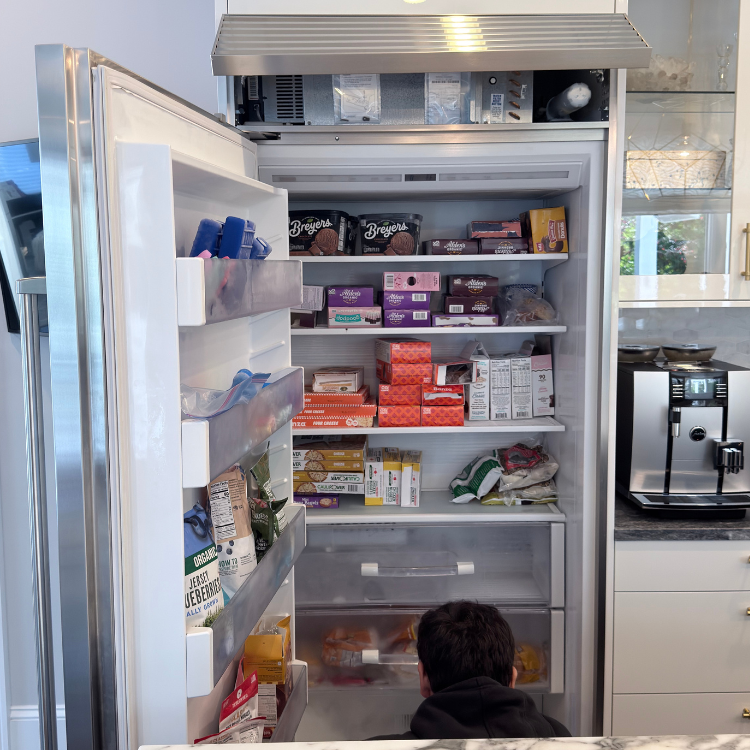
A refrigerator can run while fresh-food temperatures rise if airflow, door sealing, condenser access, fan behavior, or sensor feedback is wrong. Check that doors close fully and that interior vents are not blocked by food. Do not force the unit out of the opening or chip ice. A controlled access plan is safer than pulling on panels, trim, water tubing, or flooring.
Dishwasher leak under a counter
If water appears near the toe-kick, stop the cycle and photograph the water path before cleaning everything. You can check a visible filter if it is easy to reach. Do not remove panels, pull the dishwasher forward, or pour chemical drain cleaner into the machine. The diagnostic path should separate door seal, drain hose, pump, inlet, float or leak protection, and sink-connection issues.
Dryer long dry time in a closet
Clean the lint screen and stop using the dryer if it smells hot, shows scorching, or shuts off from overheating. A closet installation can hide airflow restriction even when the machine turns on normally. A technician should confirm lint restriction, blower movement, vent routing, cycling behavior, and gas or electric heat sequence before parts are replaced.
Washer vibration in an upper-floor unit
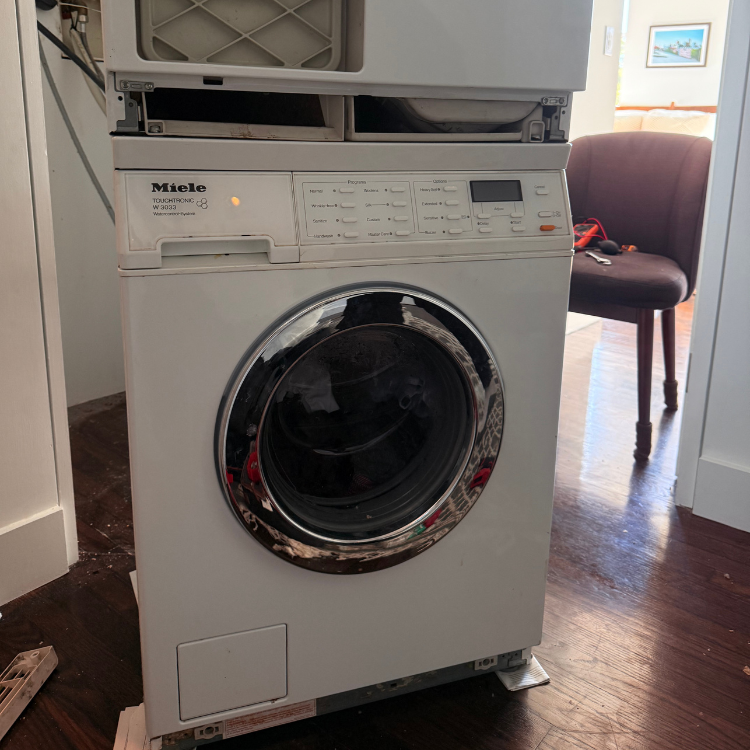
Record a short video if the washer walks, bangs, or shakes during spin. Note whether it is stacked, close to living space, or installed over older flooring. Do not keep running heavy loads to test the noise. Leveling, load balance, suspension, drain behavior, and floor movement need to be separated before parts are ordered.
Range ignition or oven heat trouble
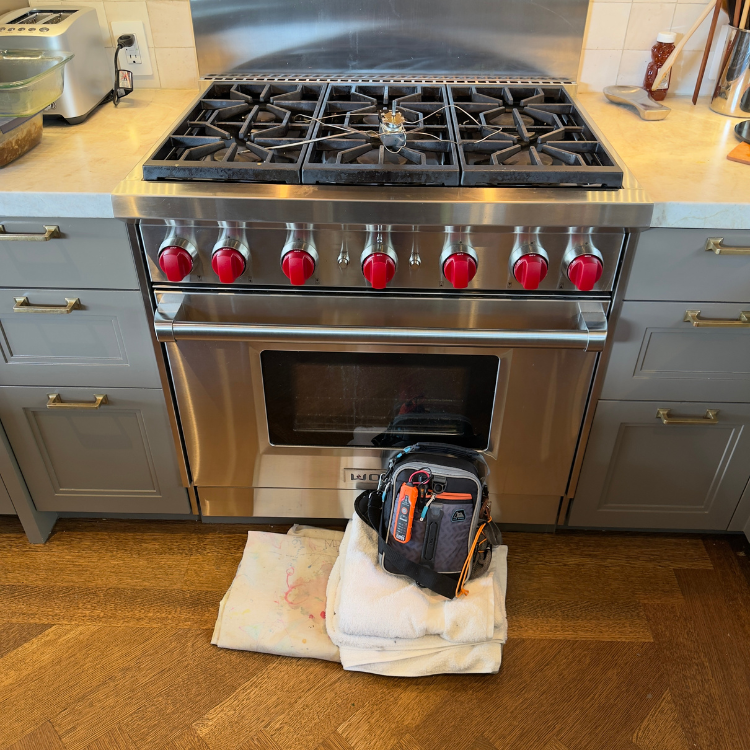
If there is no gas odor, note which burner clicks, whether bake or broil heats, and whether the issue began after cleaning. If you smell gas, leave the area and call 911 or the utility from safety. Do not use switches or phones inside the affected area, keep trying to ignite gas, or open the gas connection.
What Not To Move Before the Visit
In Brooklyn Heights, the safest prep is often documentation rather than force. Do not pull a panel-ready refrigerator, slide a dishwasher from under stone, separate stacked laundry, or move a range if the gas connector, water line, trim, or floor protection is uncertain. Clear the area around the appliance, take photos of the opening, and leave cabinet panels, toe-kicks, and trim in place unless they are already removable without tools.
If the home has delicate flooring, tight hall turns, a finished stair, or a narrow service path, photograph the route from the entry to the appliance. That helps the technician bring the right protection and decide whether access can be handled during the diagnostic visit or whether building coordination is needed first. The same photo set is useful for doorman buildings, elevator buildings, and older walk-ups because it shows the real working space before the appointment begins.
Building Approval Notes
For co-ops, condos, and managed buildings near Montague Street, Cadman Plaza, Court Street, and Columbia Heights, ask the building whether appliance repair requires a COI, service entrance, elevator window, front-desk sign-in, or manager approval. Share those requirements before scheduling. If the building needs paperwork, the timing should be handled before the technician arrives, not after tools are already at the lobby.
Brooklyn Heights service is usually smoother when the booking note separates the appliance problem from the access requirement. A useful note can say: refrigerator warming, water line connected, seventh floor elevator building, COI required, front desk sign-in, building allows work between certain hours. That gives the technician a practical route plan and keeps the diagnostic time focused on the refrigerator instead of avoidable building delays.
Stop-Use Boundaries
Stop using the appliance if there is gas odor, smoke, sparking, melting, scorch marks, water near electrical parts, or a breaker that trips again after one reset. Stop a dishwasher or washer that is actively leaking into a finished space. Stop a dryer that smells hot or shows scorching. For a warming refrigerator, limit door openings and move high-risk food if temperatures are rising.
How Volt & Vector Handles Brooklyn Heights Calls
For Brooklyn Heights, Volt & Vector keeps the visit diagnostic-first: symptom notes, model information, access details, and safety status come before repair approval. The technician checks the failure path and whether building approvals, elevator timing, floor protection, and appliance movement in finished spaces affects the work, then gives an estimate before repair work begins. OEM parts are used when appropriate and available.
Brooklyn Heights Appliance Repair FAQ
Do managed buildings need extra information?
Often, yes. Send doorman, elevator, COI, service entrance, and building-contact details before booking so access does not consume the diagnostic window.
Can you work in historic brownstones?
Yes. The important part is careful access planning. Send photos of the appliance opening, stairs, hallway turns, and anything that limits movement.
Should I move a built-in refrigerator before the visit?
No. Send photos instead. Built-in refrigerators should be moved only with a plan that protects flooring, panels, water lines, and trim.
What if the dryer is hot but clothes stay damp?
Clean the lint screen and stop using the dryer if it smells hot or shows scorching. Airflow and vent routing need confirmation before replacing heating parts.
Can you come same day?
Appointment timing for Brooklyn Heights is confirmed during booking. Route capacity, parts availability, and the local access notes around building approvals, elevator timing, floor protection, and appliance movement in finished spaces determine whether the realistic window is same day, next day, or later.
Insured Appliance Repair Service in NYC & Brooklyn
VOLT & VECTOR LLC carries Commercial General Liability insurance through Hiscox Insurance Company Inc. Coverage is effective June 6, 2026 – June 6, 2027, with $1,000,000 per occurrence and $2,000,000 general aggregate limits.COI available upon request for homeowners, landlords, property managers, co-op/condo boards, commercial clients, and general contractors.
11201
Brooklyn Heights appliance repair with practical access notes, safe prep, and diagnostic-first service for refrigerators, dishwashers, laundry, and cooking appliances.