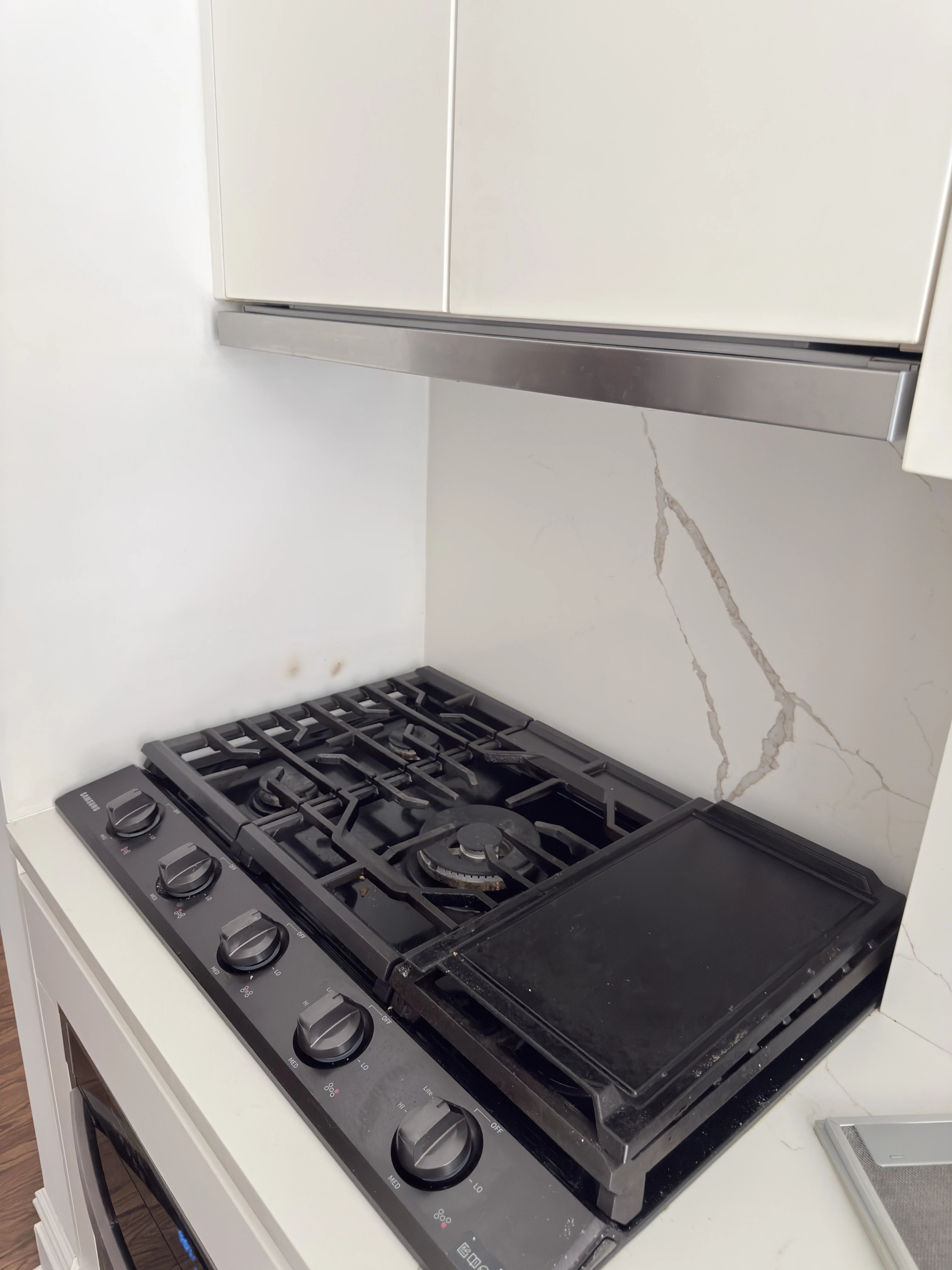
Before the first showing, check oven-door fit, dishwasher racks and staining, refrigerator closure, and fresh water near appliances. Arrange supervised operating checks for unverified functions, mark anything untested as not checked, and give the seller a specific next action for each concern.
Before the First Showing: Appliance Problems NYC Agents Should Catch Early
An appliance checklist for NYC agents before showings: door fit, dishwasher rack damage, operating checks and a clear repair list for the seller.
.jpeg)
Manhattan Appliance Repair
.avif)
$265 Diagnostic Visit
Manhattan homes often have compact kitchens, built-in appliances, stacked laundry closets, finished floors, and limited access around the machine. COI available upon request.
Brooklyn Appliance Repair
$150 Diagnostic Visit
Diagnostic-first residential appliance repair in Brooklyn for refrigerators, dishwashers, washers, dryers, ovens, ranges, cooktops, and freezers.
Westchester Appliance Repair
$150 Diagnostic Visit
Volt & Vector provides residential appliance repair in Scarsdale, Eastchester and Bronxville.
HVAC Repair
$220 Diagnostic Visit
We confirm the New York City service address and equipment before scheduling residential HVAC diagnostics or repairs. We work on central air, heat pumps, mini-splits, air handlers, and thermostats. Our $220 diagnostic fee is credited toward an approved repair on the same job.
Appliance problems to catch early
An uneven oven door, rust-colored dishwasher marks or rack damage, a refrigerator that will not close, and fresh water or swelling near appliances are concerns to resolve before showings. Have the seller assign an assessment or correction for visible problems and an authorized check for functions nobody has verified.
Start with what a buyer will open
With the seller's permission, walk through the kitchen and any in-unit laundry. Keep cooking appliances off and cool for this visual check.
- Oven door: Open and close it normally. Note an uneven fit, scraping or a door that will not close without pressure. Do not force it straight.
- Dishwasher: Look at the racks, their coating and where any rust-colored marks appear. A stained tub and exposed metal on a rack are different observations.
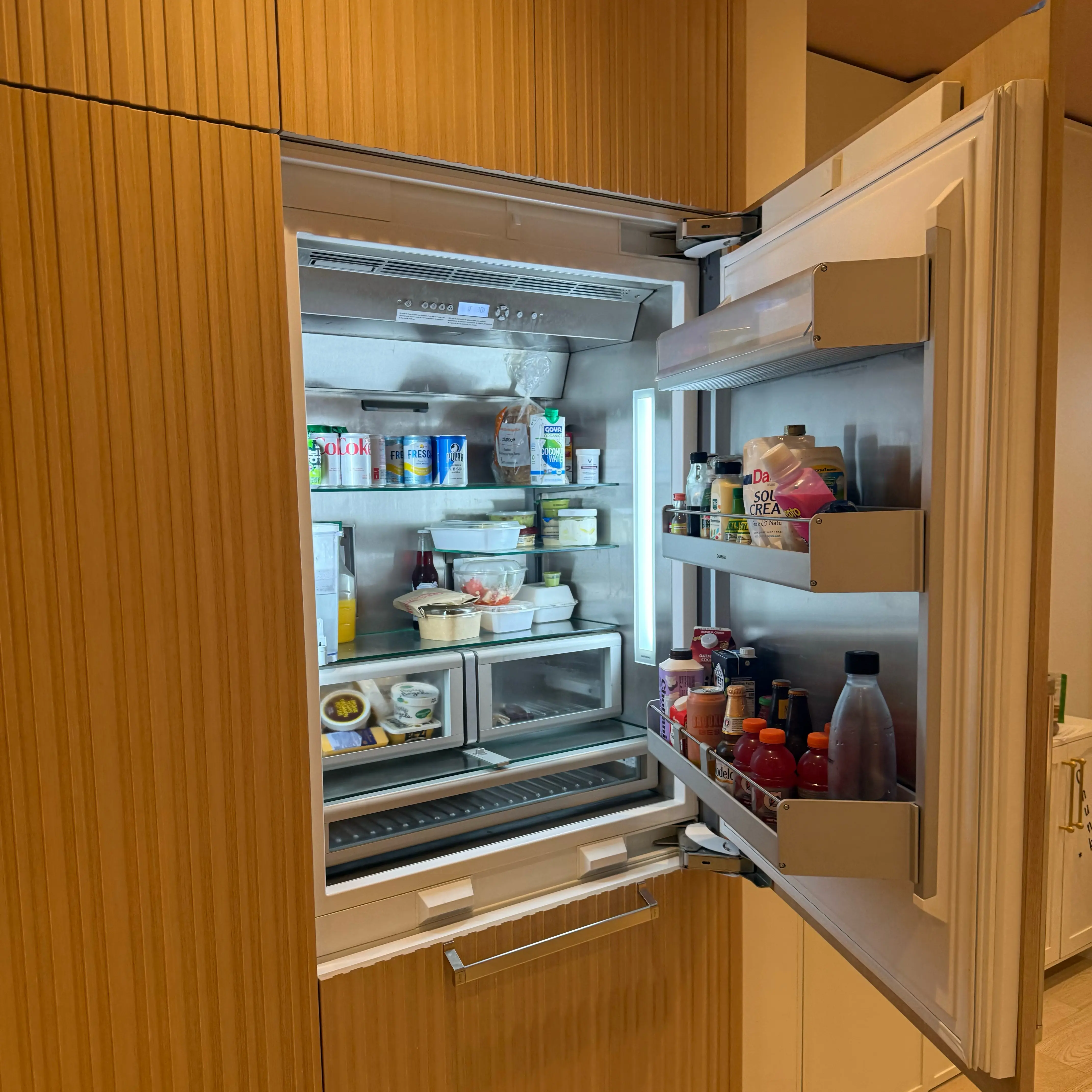
- Refrigerator: Check that drawers, shelves and stored items allow the doors to close. Note the displayed settings and ask whether the appliance has remained powered.
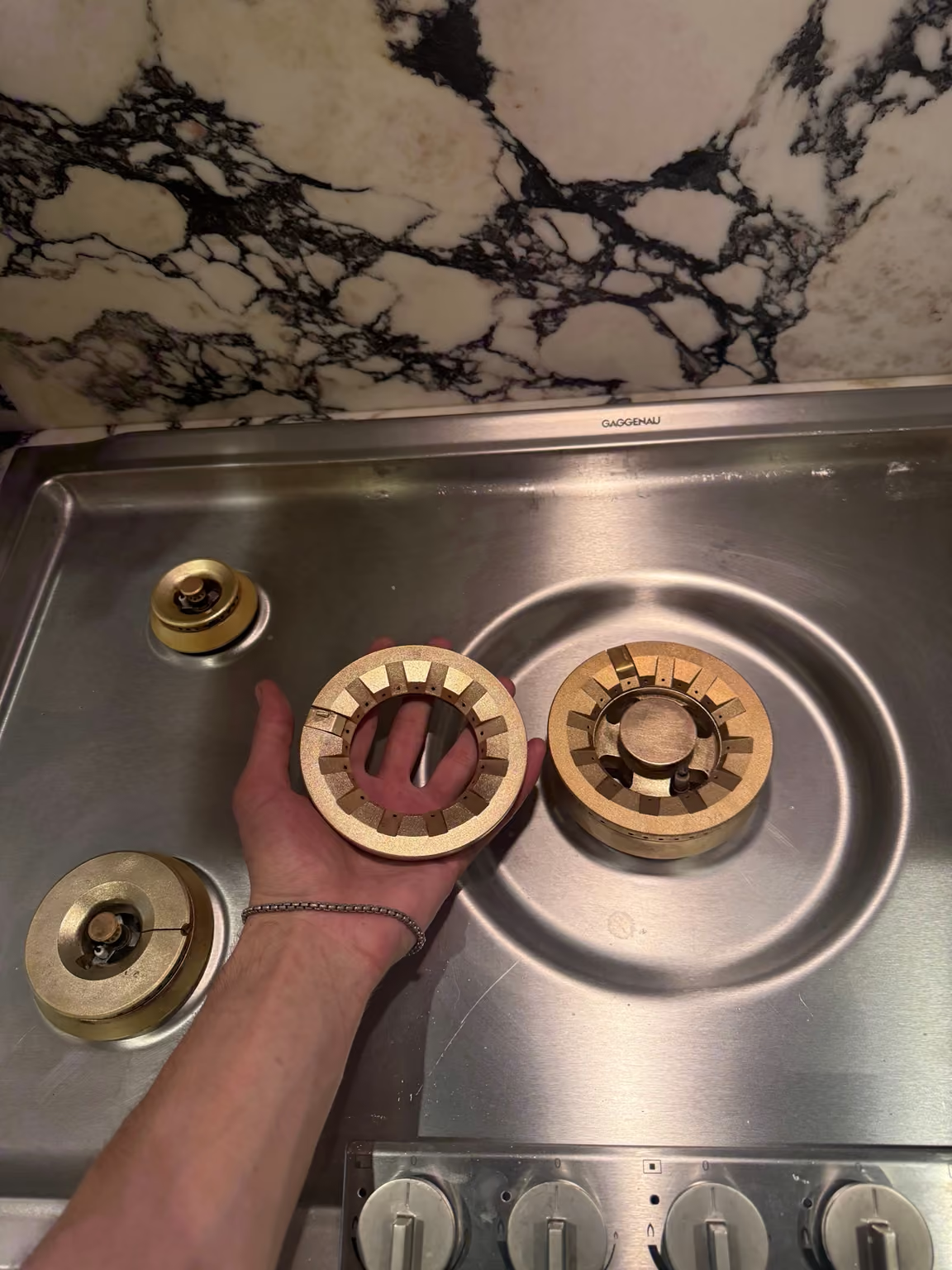
- Handles, racks and removable pieces: Check whether anything feels loose during ordinary use or was removed for cleaning. Keep detached pieces with the appliance.
- Floor and nearby cabinetry: Look for fresh water, swelling or a recurring stain near the dishwasher, refrigerator or laundry. Ask when it first appeared; a dry floor during a short visit does not establish the source of an earlier leak.
For a door that hangs loosely, cracked glass, an active leak or electrical scorching, leave the affected appliance out of operation until assessed. If you smell gas, leave with everyone else and call 911 or the gas utility from a safe location. Do not operate switches, appliances or a phone in the suspected leak area. Con Edison's gas-safety guidance explains that response.
A crooked oven door can start with cleaning
On a Volt & Vector visit requested by an agent preparing an apartment for sale, the oven door looked crooked. Someone had previously handled the door for cleaning and had not fully inserted one hinge when reinstalling it. We corrected the seating on site.
The useful question for the seller is: Was the door removed or did its fit change after cleaning? GE's guidance confirms that a removable oven door can end up out of position after installation or removal for cleaning, and directs owners to the instructions for the exact model. GE: Oven Door Crooked.
Avoid turning a visual check into a hinge-removal job. A technician needs to distinguish incorrect seating from damage to the hinge, its mounting or the door itself before quoting parts.
A rust-colored dishwasher mark needs a closer description
Before recommending a new dishwasher, identify the location:
- A mark on the tub or another interior surface: GE describes interior rust staining that can come from iron introduced into the dishwasher.
- A split in the rack coating with exposed or rusted metal: Ask about the correct rack or manufacturer-supported remedy for that model.
- A rack that no longer rolls or holds dishes properly: That is a functional problem, not only an appearance issue.
Manufacturer advice differs. GE recommends replacing extensively rusted racks; Whirlpool discusses remedies for damaged rack coating within its own product guidance. A touch-up product found online is not a universal solution. GE rack and staining guidance, Whirlpool rack guidance.
Skip improvised sanding, paint or chemical treatment before the model and material are identified. The practical outcome may be cleaning, a rack-related repair or further inspection. A rust-colored spot alone is not evidence that the entire machine needs replacement.
Arrange an operating check before the buyer's visit
Ask the seller which appliances have been used normally since the cleaning or move-out preparation. For anything uncertain, arrange an owner-permitted check using the appliance's ordinary instructions, with someone present for the relevant operation.
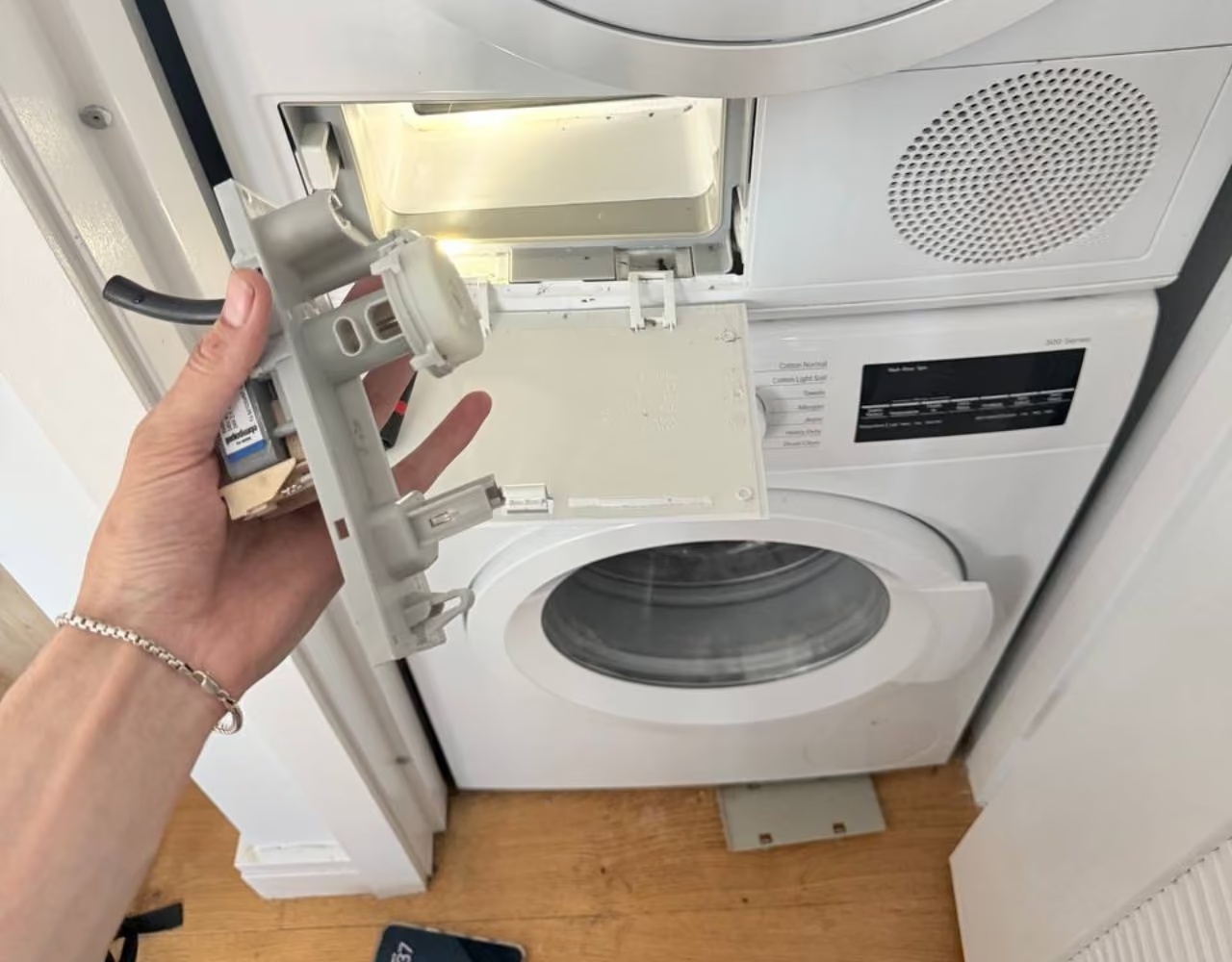
- Dishwasher or laundry cycle: Observe whether it completed and what the result was. Starting a cycle proves less than observing its finish. Do not start one if nobody can remain to supervise it.
- Oven or cooktop: Have the seller demonstrate the ordinary controls only if the appliance has no visible safety concern. Consider a reported heating problem without guessing an element, igniter or control-board failure.
- Refrigerator or freezer: Ask when it was last switched on. A light or displayed target does not establish cooling performance. Newly started equipment needs the model's startup conditions and time to stabilize; arrange that observation ahead of the showing. GE's startup guidance.
If the time or conditions do not allow a meaningful check, write not checked. That leaves a clear task for the seller instead of an unsupported assurance to the buyer.
Keep the appliance record tied to the unit in the apartment
- Included appliances: confirm with the seller which units and removable accessories are intended to remain. Record missing shelves, racks, trays or other pieces while there is still time to locate them.
- Replacement during sale preparation: update the appliance identity and the checks completed on the replacement. Do not leave a note about the old machine attached to a different unit.
- Repair documents: keep the written fault, estimate or invoice with the matching appliance manual and any warranty paperwork. Identify documents still to be obtained and who has them.
The NAR final walk-through checklist includes remaining sale items, operating appliances and repair paperwork. Finding missing pieces and mismatched records before the first showing leaves the seller time to resolve them.
Turn the findings into a short seller action list
Keep one line for each concern: appliance, observed issue, next action and the person handling it.
Example unresolved condition: “Oven door sits unevenly after cleaning. Seller to arrange an assessment of the door fit before photography.”
- Not checked: the appliance was off, unavailable or not operated long enough to observe the relevant function. Assign a check before describing it as working.
- Problem observed: name the visible defect or failed operation without naming an unproven part.
- Corrected and rechecked: for an ordinary obstruction, setting change or completed repair, record the correction and which function now works. If the original complaint was not checked, keep that limitation in the seller’s note.
- A mechanical problem remains: The diagnosis and written repair scope are distinct from an unverified parts or replacement recommendation.
- The seller is considering replacement: First establish the repair option, parts availability and installation implications.
- Work will remain outstanding: Give the seller and the transaction team the factual finding and available estimate so they can decide how to handle it.
The National Association of REALTORS® recommends gathering repair estimates for significant known problems, even when the seller does not plan to complete the work before sale. It also recommends locating appliance manuals and warranties early. NAR: Preparing to Sell Your Home.
For a NYC service visit, confirm who can authorize the work and open the apartment. Ask management about the building's contractor access, work hours and any COI requirement before selecting a time. The NYC building-access guide covers those arrangements.


More Appliance Repair Articles
Explore practical appliance repair guides, technical insights, and real service cases from Volt & Vector in New York City.


.avif)