
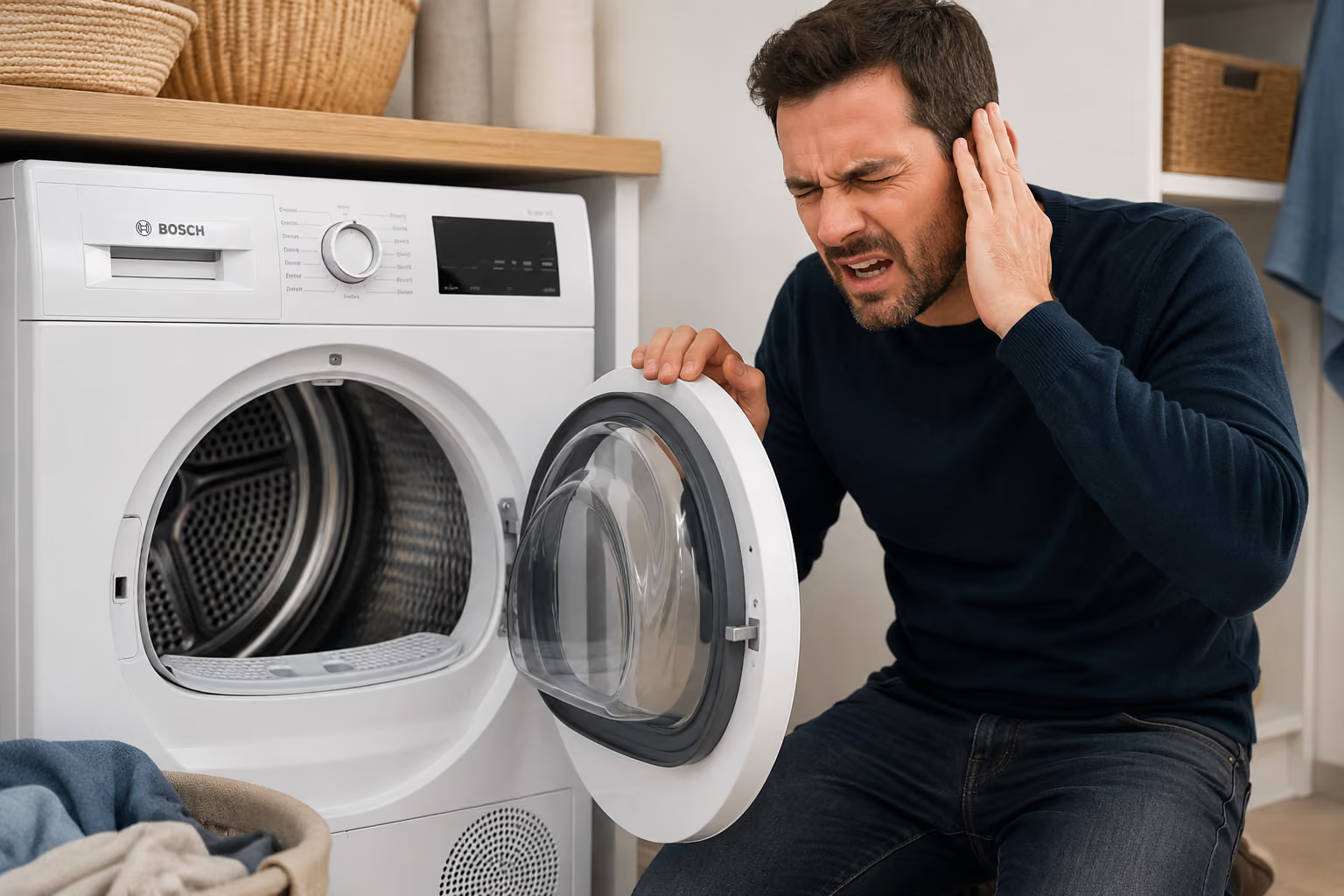

Most Common Reasons a Bosch Dryer Makes a Loud Noise
- A current WQB245 is in a documented operating state: The compressor can hum, its ventilation can whir, and the condensation pump can produce a pumping sound while each system is active on the checked WQB245AXUC and WQB245B0UC models. The useful clue is timing: the sound follows that exact operating interval while tumble and drying remain otherwise normal. Confirm the complete E-Nr and compare the timing with its manual; if the sound is new, much louder than before, or does not match that state, service must reproduce it before deciding that it is normal.
- A loose item or garment fastener is hitting the drum: A coin, key, zipper, hook, or other hard item can strike the drum as the load tumbles. Bosch tells owners to empty pockets, secure fasteners, and inspect the accessible drum for an unwanted object. With the drum fully stopped, remove only what is visible and accessible. If the same sound remains after that item is removed, diagnosis must check for hidden contact without assuming which part is involved.
- The cabinet is amplifying vibration from the installation: A dryer that is not solidly supported on all four feet can transfer ordinary motion into the floor, wall, washer, cabinet, trim, or stacking hardware. With the dryer off, visible wobble or obvious external contact supports this cause. A qualified installer or technician must correct an unsafe stacked installation and determine whether any sound that remains comes from the cabinet or an internal moving system.
- Something is making abnormal contact as the drum rotates: A contact sound or fabric snag that repeats at the same point on each rotation, or visible off-center movement, supports repeated physical contact rather than a general sound-to-part guess. The sound does not prove a belt, roller, bearing, seal, fan, or motor failure. Service must inspect the exact E-Nr construction, locate rub marks or damaged clearances, and identify the system producing the contact before a part is named.
The Model Changes What Normal Means
- Current WQB245 scope: The operating-state classification above applies only to the checked WQB245AXUC and WQB245B0UC manuals and the matching complete E-Nr.
- Current WPA12100UC scope: Its manual does not provide the WQB operating-sound classification, so the WQB label cannot be transferred to this condensation dryer.
- WPA Wrinkle Block timing: When this option is active, the drum rotates at intervals after drying. That timing can explain post-cycle movement, but it does not classify every accompanying sound as normal.
- Other Bosch dryers: Use the manual for the complete E-Nr. A family prefix is not enough to transfer operating sounds or predict an internal part.
What You Can Check Safely
- Stopped drum: Wait until the drum has stopped completely before reaching inside.
- Load and visible objects: Empty pockets, secure zippers and hooks, and remove only a loose item that is visible and accessible in the drum or load.
- Installation: With the dryer off, look for cabinet wobble or obvious contact with a wall, washer, hose, trim, or stacking part. Leave lifting, moving, or leveling a stacked or heavy dryer to a qualified installer.
- Machine identity: Complete E-Nr, including the slash suffix, and FD.
- Sound timing: Note whether the sound occurs during tumbling, after the cycle during Wrinkle Block, or during a documented WQB operating interval.
- Repeat pattern: Check whether the sound follows one garment, repeats at the same point of drum rotation, changes as the cycle warms, or continues while drying performance changes.
Stop Using the Dryer for These Signs
Disconnect the dryer safely and do not restart it for grinding or metal scraping, fabric catching in the drum, violent or off-center movement, visible cabinet or cord damage, a loose plug, smoke, a burning odor, visible melting, water near electrical parts, or a repeated breaker trip. Do not reach into a moving drum, remove panels, bypass a safety device, lubricate an internal component, move a stacked dryer, or replace a belt, roller, bearing, fan, or motor from the sound alone.
What Diagnosis Must Confirm
The technician should reproduce the sound with the complete E-Nr and identify what its timing follows: the load, each drum rotation, external cabinet vibration, post-cycle Wrinkle Block movement, or a documented WQB operating state. Diagnosis then separates visible-object and installation noise from drum contact, drive motion, air movement, and other internal systems. Physical contact marks, clearances, and exact-model construction must support the final part decision.


.avif)


.jpeg)