
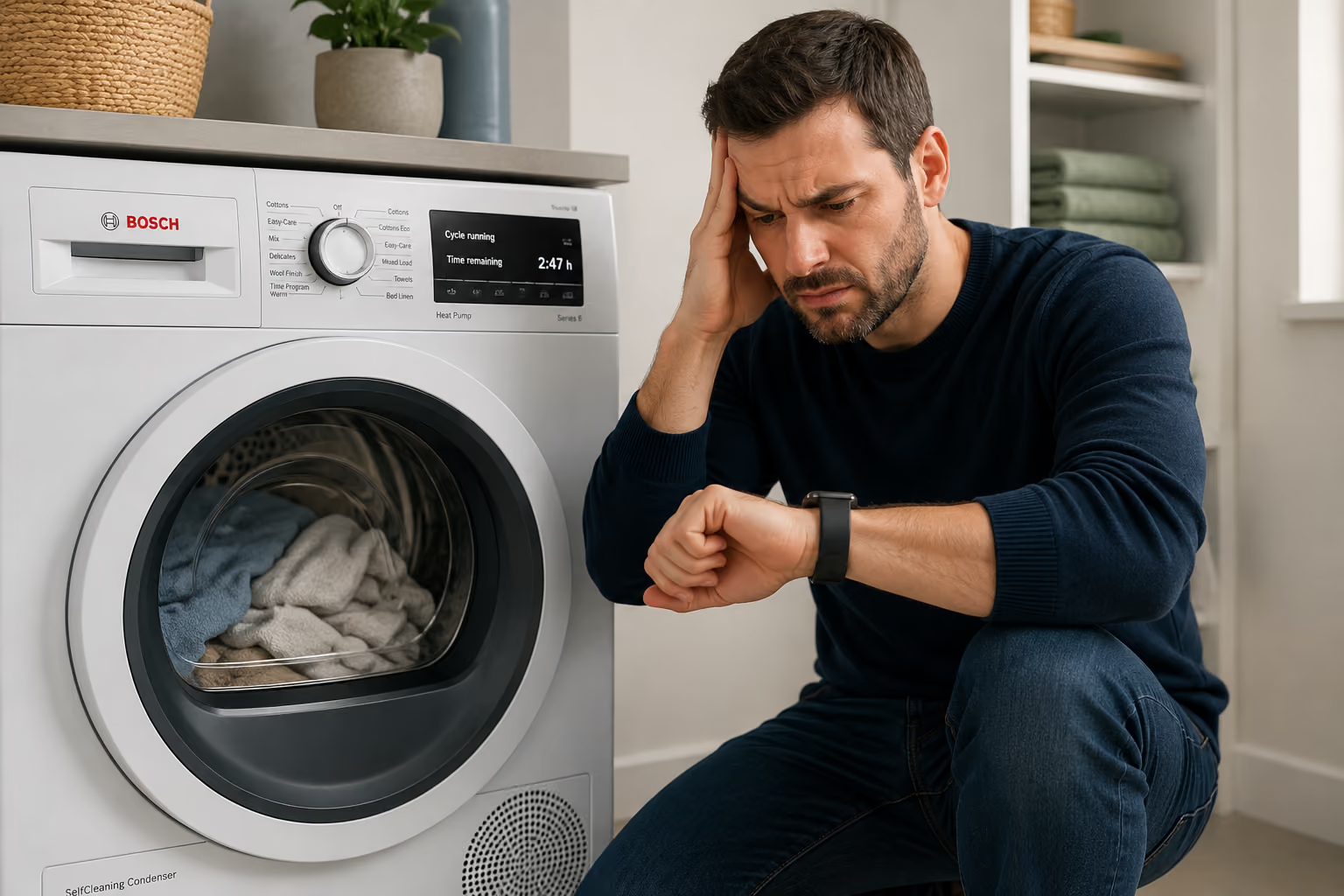

Most Common Reasons a Bosch Heat Pump Dryer Takes Too Long
- Cooling air around the appliance is restricted: The WTW87NH1UC needs cool ambient air to circulate around the dryer and reach its front inlet. Bosch says a closed closet or cabinet can lengthen drying and recommends free space for the shortest cycle. A room-temperature reading and open-enclosure comparison are the safe clues; diagnosis measures inlet and process-air behavior.
- Room temperature is outside the WTW optimum range: The WTW87NH1UC manual specifies 59–86°F (15–30°C) for optimum drying and says times may be longer outside it. That number belongs only to the checked WTW family. A technician verifies whether performance remains abnormal after the room returns to the supported range.
- One or both parts of the lint filter restrict airflow: Bosch identifies a two-part lint filter and states that cleaning it reduces drying time. Both sections must be cleaned, completely dry and correctly reassembled. If a controlled cycle remains slow, diagnosis measures airflow rather than assuming the filter solved every restriction.
- Load, program or washer spin adds more water than the comparison allows: Thick mixed items, an overloaded drum, a low washer spin or the wrong program changes both starting moisture and sensor termination. Compare the same moderate, well-spun load on its matching program. Normal performance on that load weakens the machine-fault case.
- Heat-pump capacity, drainage or sensing has degraded: A repeatable slowdown on the same controlled load after the official conditions are corrected is service evidence. Diagnosis must separate temperature lift, airflow, compressor/heat-pump output, condensate transfer, moisture sensing and control termination before a component is named.
Bosch Model Boundaries That Change the Check
- WTW87NH1UC: The 59–86°F optimum range, open-enclosure guidance, two-part lint filter and Self-Cleaning Condenser boundary are manual-proven.
- Current WQB heat-pump dryers: Ventilation openings, care programs, drain configuration and R290 warnings belong to the exact WQB E-Nr manual; do not assume every WTW access point exists.
- WTG/WTB condenser and legacy vented dryers: Removable-exchanger or exterior-exhaust instructions are different platform procedures and do not belong on this heat-pump page unless the exact E-Nr identifies that design.
Use One Controlled Load to Compare Performance
- Long from the first installation: Open the permitted enclosure, measure room temperature and verify the installed air clearances before judging the machine.
- Recently became much slower: Clean and dry both filter sections, keep the inlet clear and check tank/drain indicators during the same ordinary load.
- Only bulky bedding or towels run long: Separate the items and improve washer spin when fabric care permits; compare an ordinary moderate load.
- Laundry feels damp only while hot: Spread it briefly and reassess after cooling; warm fabric can feel wetter than it is.
- The controlled cycle terminates at its maximum or remains materially slower: Check the exact load, program, room temperature, runtime and display.
Safe Checks
- Open the enclosure: Run with the closet or under-counter cabinet door open where the installation permits it.
- Measure room temperature: Compare it with the WTW manual's 59–86°F optimum range.
- Clear the front inlet: Leave free room air around the dryer.
- Clean both lint-filter parts: Follow the manual and reinstall all filter components.
- Control the comparison: Use a normal, well-spun, moderate load on the matching program and compare actual runtime.
- Water handling: Check tank-full/drain indicators and whether the cycle terminates or simply estimates more time.
What Not to Do and When to Stop
- Do not open the Self-Cleaning Condenser, refrigerant circuit or service panels.
- Do not apply exterior-vent, gas-valve or conventional-heater advice to a WTW heat-pump dryer.
- Do not declare refrigerant loss from runtime alone.
- Stop for smoke, burning odor, abnormal cabinet heat, repeated breaker trips, water near electrical parts or visible refrigerant-circuit damage. Keep ignition sources away from a damaged R290-marked system.
What Diagnosis Must Confirm
Diagnosis should compare inlet and process-air temperatures, airflow, compressor/heat-pump operation, moisture-sensor response, condensate drainage, and control termination under a known load. The result must distinguish low capacity from sensing, drainage, airflow, installation, and load effects.
FAQ
How long is too long for a Bosch heat-pump dryer?
There is no universal minute cutoff independent of load and room conditions. A repeatable increase on the same controlled load, or maximum-time termination after the official checks, is stronger fault evidence.


.avif)


.jpeg)