
GE Dryer Not Heating: Safe Checks
GE dryer not heating? Sort electric vs gas, cycle setting, breaker or gas supply, lint screen, venting, warm damp vs cold wet, and stop signs.
GE dryer not heating? Sort electric vs gas, cycle setting, breaker or gas supply, lint screen, venting, warm damp vs cold wet, and stop signs.
A GE dryer that tumbles but does not heat first needs a gas-versus-electric split, confirmation that a heated cycle is selected, and an external supply and airflow check. An electric dryer may tumble with one side of its heat supply missing; gas ignition and electric element paths require different service proof.
Identify gas or electric from the rating label, then record whether the drum tumbles, whether any warmth appears on a heated cycle, and whether a breaker or gas-supply event preceded the failure.
A GE dryer that is not heating needs the same first split GE uses in its own support materials: airflow, lint screen, exhaust duct, load, cycle setting, and fuel type. GE Appliances support for long dry times warns that vent pipe can collapse and restrict airflow, that lint screens can collect fabric-softener residue, and that airflow is very important to dryer operation. GE also warns not to operate a gas dryer without the vent. That means no-heat and not-drying complaints must be separated carefully.
Start with three facts: does the drum tumble, is the dryer gas or electric, and are the clothes cold wet or warm damp? If the drum does not tumble, this is not a heat-first complaint. If the load is cold wet after a heated cycle, heat is missing. If the load is warm damp, the dryer is heating and an airflow or moisture-removal problem becomes more likely.
Do not test voltage, open panels, adjust gas valves, or run a gas dryer without a vent. If the dryer is in a closet or stacked, access must be planned.
An electric GE dryer can tumble while heat is unavailable because the motor and heat circuits are not the same. A supply issue, heating element diagnosis, thermal safety, control, or sensor can all create a tumbles-cold complaint. The owner-safe check is not a multimeter; it is cycle setting, breaker behavior, lint, vent, and evidence. If the breaker trips again after one reset, stop.
If the dryer is warm but weak, airflow remains important. A restricted vent can reduce performance and stress heat components. Replacing a heating part without correcting airflow can repeat the failure.
A gas GE dryer can tumble without heat if gas supply, ignition, flame sensing, or controls do not complete. If there is gas smell, stop and follow gas safety. If there is no smell but no heat, record whether the dryer attempts to ignite, whether it heats briefly then cools, and whether airflow is restricted. Do not remove burner covers or observe flame by opening panels.
No heat does not prove the element, igniter, coils, thermostat, thermistor, fuse, or board is bad. Those are service possibilities after fuel type, cycle setting, airflow, and basic supply clues are known. A cold load and a warm damp load have different meanings. A hot damp load with a long dry time may be more dangerous than a cold load because it can point to restricted airflow.
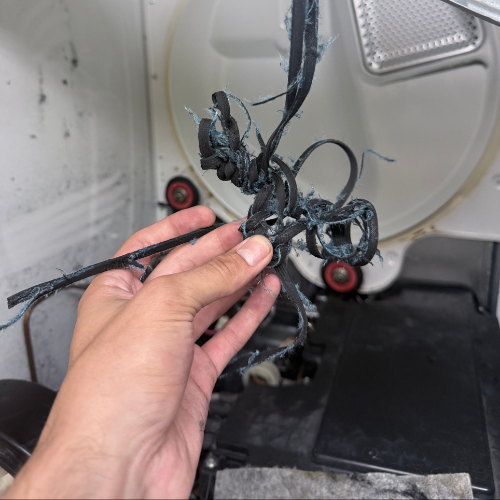
Another false assumption is that a clean lint screen proves airflow. GE support explicitly discusses vent material, collapsed ducts, and exhaust duct condition. The duct beyond the lint screen can still be the problem.
Use one modest load that the washer spun properly. Select a heated cycle. Clean the lint screen. If safe, run the dryer long enough to classify heat: cold, normal warm, or unusually hot. Stop for odor or overheating. If the load is cold wet, report no heat. If it is warm damp, report drying performance and airflow. If it is hot damp, report overheating or vent restriction clues.
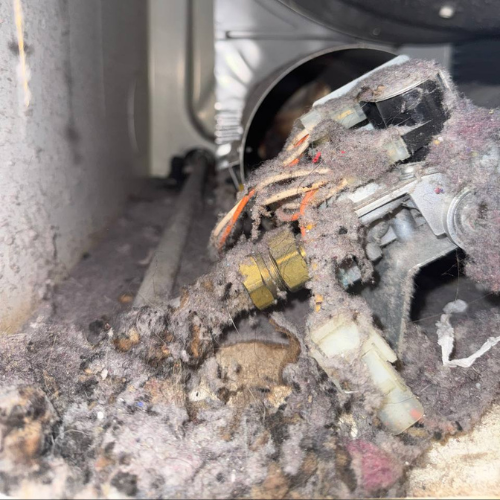
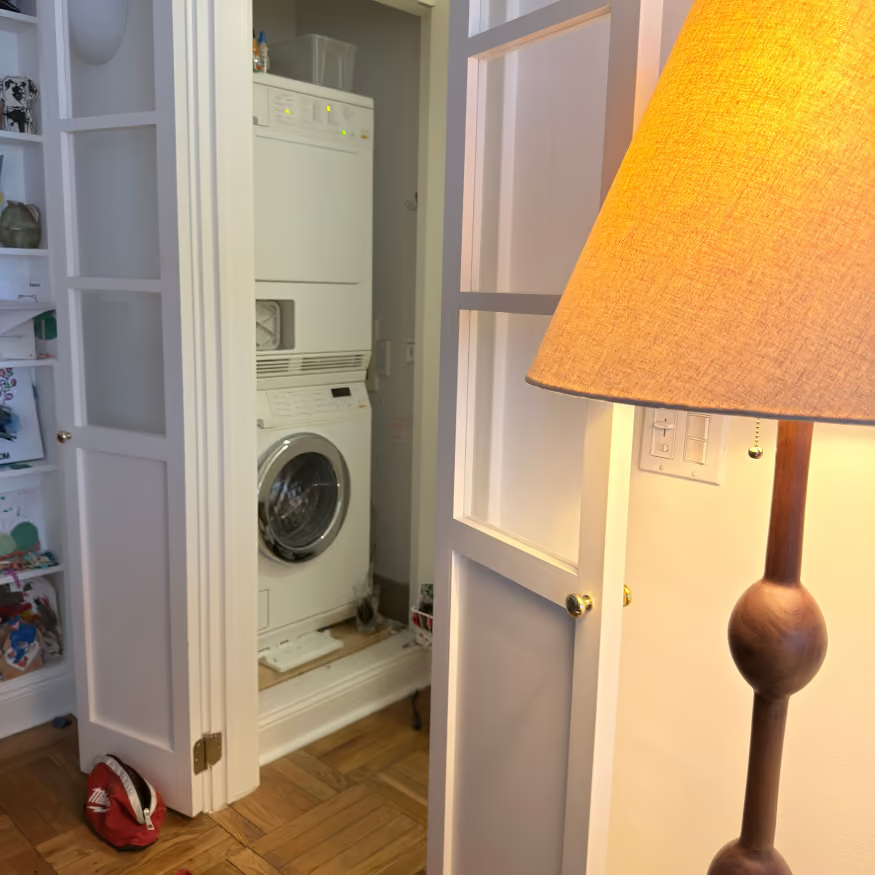
GE dryers in NYC apartments may connect to hidden wall ducts, roof terminations, or tight closet vents. A resident may not be able to inspect the duct without building access. If the vent path is hidden and the dryer heats but does not dry, the building vent may need inspection before appliance parts are blamed. Photograph the closet, duct connection, and lint evidence.
Save the model tag, gas/electric type, cycle selected, load temperature, lint screen photo, vent photo, breaker behavior, gas odor yes/no, and whether the dryer tumbles. If there was a long-dry problem before no heat, include that history because airflow may have caused a heat-safety failure.
For fuel-type logic, use dryer not heating: gas vs electric. When the strongest evidence is weak exhaust or a hidden wall duct, move to dryer vent clogged in an NYC apartment. If the dryer runs too long and shuts off, use dryer takes too long and shuts off. For Whirlpool comparison, use Whirlpool dryer no heat.
Yes. Tumble and heat are separate possibilities, especially on electric dryers.
Yes. Restricted airflow can create long dry times, overheating, and repeated heat-safety issues.
No. Live testing is service work. Use one normal breaker reset only and preserve evidence.
Fuel type, tumble behavior, cold/warm/hot result, lint screen, vent access, breaker or gas clues, and model tag.
Ask whether the GE dryer had long dry times before it became cold. GE’s airflow guidance matters because restricted airflow can stress heat systems and create repeated safety failures. If towels took two cycles for weeks and then the dryer lost heat, do not treat that as an isolated heat part. The vent path may be part of the root cause.
A lint screen can look clean and still be coated with residue. GE support says the filter can be washed with warm soapy water to remove fabric-softener residue. If water beads on the screen, airflow can be reduced. Clean and dry it by the manual instructions before judging warm-damp performance.
If an electric GE dryer tumbles cold, the motor side may still have power while the heat side does not. One breaker reset is the owner limit. If heat returns after reset, record that. If the breaker trips again, stop. If nothing changes, service needs to verify supply and heat circuit safely.
If the GE dryer is gas, no heat can involve ignition or gas supply, but odor changes everything. Gas smell is not a repair clue to test through. Turn the dryer off and follow gas safety procedures. If there is no odor, report whether the dryer ever heats briefly.
A good GE dryer report says: gas or electric, tumbles or not, cold/warm/hot load, lint screen condition, vent condition, breaker/gas clue, and whether long dry time came first. That prevents the visit from starting with the wrong fuel system or skipping airflow.
A cold wet load after a heated GE cycle supports a heat-source diagnosis. A warm damp load supports airflow, load, and moisture removal. A hot damp load points toward restriction or overheating. Use those words instead of only saying no heat. They prevent the wrong first part from being ordered.
GE support warns that certain vent pipe materials can collapse and restrict airflow. If the transition duct is thin foil, crushed, kinked, or sagging behind the dryer, document it. Do not run repeated loads through a crushed duct. If the dryer is gas, do not disconnect it to inspect.
Automatic cycles may end differently from timed cycles depending on load contact and moisture sensing. If timed dry heats but automatic dry ends with damp clothing, record both results. That does not prove the sensor is bad; it proves the drying mode matters.
In apartments and condos, the vent past the wall may be the owner or building responsibility. A GE dryer can test fine at the appliance and still fail against a blocked building duct. Save airflow and access evidence.
Heating element, igniter, coils, thermostat, thermistor, thermal fuse, and board are all possible service words. They should not appear as conclusions until fuel type, airflow, load temperature, and supply clues are proven.
A GE dryer that heats for a few minutes and then goes cold should be described that way. Brief heat can point toward cycling, ignition, airflow, or safety behavior. Completely cold from the first minute points differently. Time into cycle is a diagnostic fact, not a detail to skip.
If heat returns after a breaker reset and then disappears again, record that too. The repair path may involve supply, wiring, controls, or heat components, but live testing belongs to service. The homeowner evidence is reset result and repeat behavior.
Warm but weak drying can be airflow, load, sensor cycle, or partial heat depending on fuel type. Do not call it no heat if clothes are warm. Call it warm damp, slow dry, or weak drying. That wording sends service toward the right diagnosis.
A GE dryer can be blamed for a washer that leaves clothes too wet. Before diagnosing weak heat, confirm the washer spun the load normally. If the clothes enter the dryer heavy with water, the dryer may be working but overloaded with moisture. That distinction prevents unnecessary dryer heat diagnosis.
If a properly spun small load still comes out cold, the dryer heat diagnosis is real. If the load is warm but damp, change the report to airflow or drying performance. Precise wording protects the repair path from starting with the wrong system and wrong first part.
Yes. The motor and heating path do not use supply in the same way, so tumbling does not prove the full electric heat supply is present.
It means some heat exists and moves airflow, exhaust restriction, load moisture, and sensor-cycle behavior ahead of a total no-heat diagnosis.