

The frost location is the useful clue: frost along a door edge supports an air leak; frost behind lower drawers with water below supports a drain path; a broad sheet that returns supports airflow, defrost, sensor, or cooling diagnosis. Clear visible door or vent obstructions and record the temperature and frost pattern. If frost returns or the compartment warms, stop repeated defrosting and arrange diagnosis.
Most Common Reasons a Sub-Zero Refrigerator Has Frost on the Back Wall
- The door is not sealing completely: A package, drawer, hinge problem, or misaligned door can leave a small opening. Warm, humid room air then reaches the cold rear surface and freezes. Frost that is heavier near one door edge, a visible obstruction, or a gasket that does not contact evenly supports this cause. Diagnosis must prove door alignment, closer action, gasket contact, and the actual air-entry point.
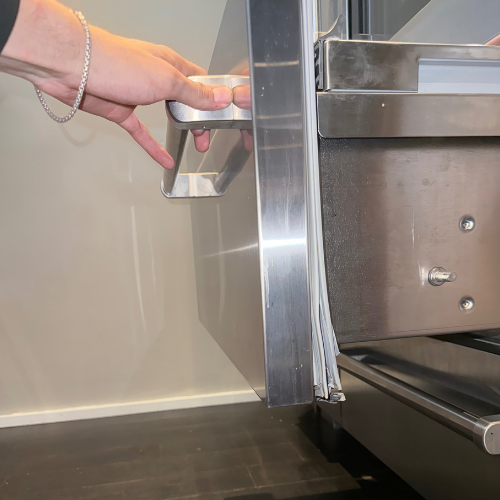
- The gasket is torn, folded, or no longer sealing: Sub-Zero specifically lists a faulty gasket and air leakage among the causes of rear-wall frost. Look for a rip, hard section, loose corner, or area that stays folded after the door closes. A damaged gasket can explain frost, but replacement should follow a model and fit check rather than appearance alone.
- Interior air circulation is restricted: Food pushed against the back wall or an air outlet can create a colder local zone and trap moisture. Sub-Zero also lists an air-circulation issue as a possible cause. Frost concentrated around a blocked area supports this branch; diagnosis must separate a storage obstruction from a fan, fan-switch, or control problem.
- The drain trough or tube is clogged or frozen: Defrost water that cannot leave the compartment may collect behind the lower drawers and refreeze on the rear wall. Water or ice under the crisper makes this branch stronger. The drain trough is visibly accessible on some 200, 300, 500, and 600 Series units; other Sub-Zero families have different access and should not be treated as the same homeowner procedure.
- A defrost or cooling fault is making the frost return: Sub-Zero includes a sealed-system issue in its official cause list and calls for service when frost returns after the listed checks. A recurring sheet of frost, temperature drift, a service indicator, or abnormal fan behavior requires measurements rather than another blind defrost. Diagnosis must separate air leakage, drain freeze-up, fan operation, defrost control, sensor feedback, and refrigeration performance.
What the Frost Pattern Changes
- Frost is thickest beside a door edge: Remove anything interfering with closure and photograph the gasket contact. Persistent edge frost keeps the door, hinge, closer, and gasket branch first.
- Frost or ice is concentrated behind the lower drawers: Look for water, debris, or ice in the visible drain area. Use only the drain instructions for the exact Sub-Zero series.
- Food is touching the rear wall or vents: Reposition it and leave the intended airflow space clear. This is useful evidence only if the frost begins to resolve and temperatures remain normal.
- The entire rear wall frosts again after defrosting: A temporary defrost removed the ice but did not establish the cause. Record how quickly it returned and schedule diagnosis.
- The refrigerator is warm as well as frosted: Protect perishable food and move to service sooner. Frost does not prove the compartment is maintaining a safe temperature.
Safe Checks Before Service
- Confirm the location: Make sure the ice is on the refrigerator back wall, not throughout the freezer or only inside the ice-maker area; those are different intents.
- Check door closure: Remove packaging or drawers that prevent full closure. Do not force an out-of-line door.
- Inspect the visible gasket: Look for tears, a loose corner, folding, or contamination that prevents contact. Clean only by the product-care instructions.
- Record the temperature: Sub-Zero commonly uses 38°F for an electronically controlled refrigerator. Measure actual temperature rather than relying only on the display, and allow the prescribed recovery time after a setting change.
- Clear the rear airflow space: Move food away from the back wall and visible outlets without removing covers.
- Inspect only an accessible drain area: If the exact model provides owner access, look for standing water, food debris, or ice. Do not push a brush or sharp object into the tube, and do not apply a heat gun.
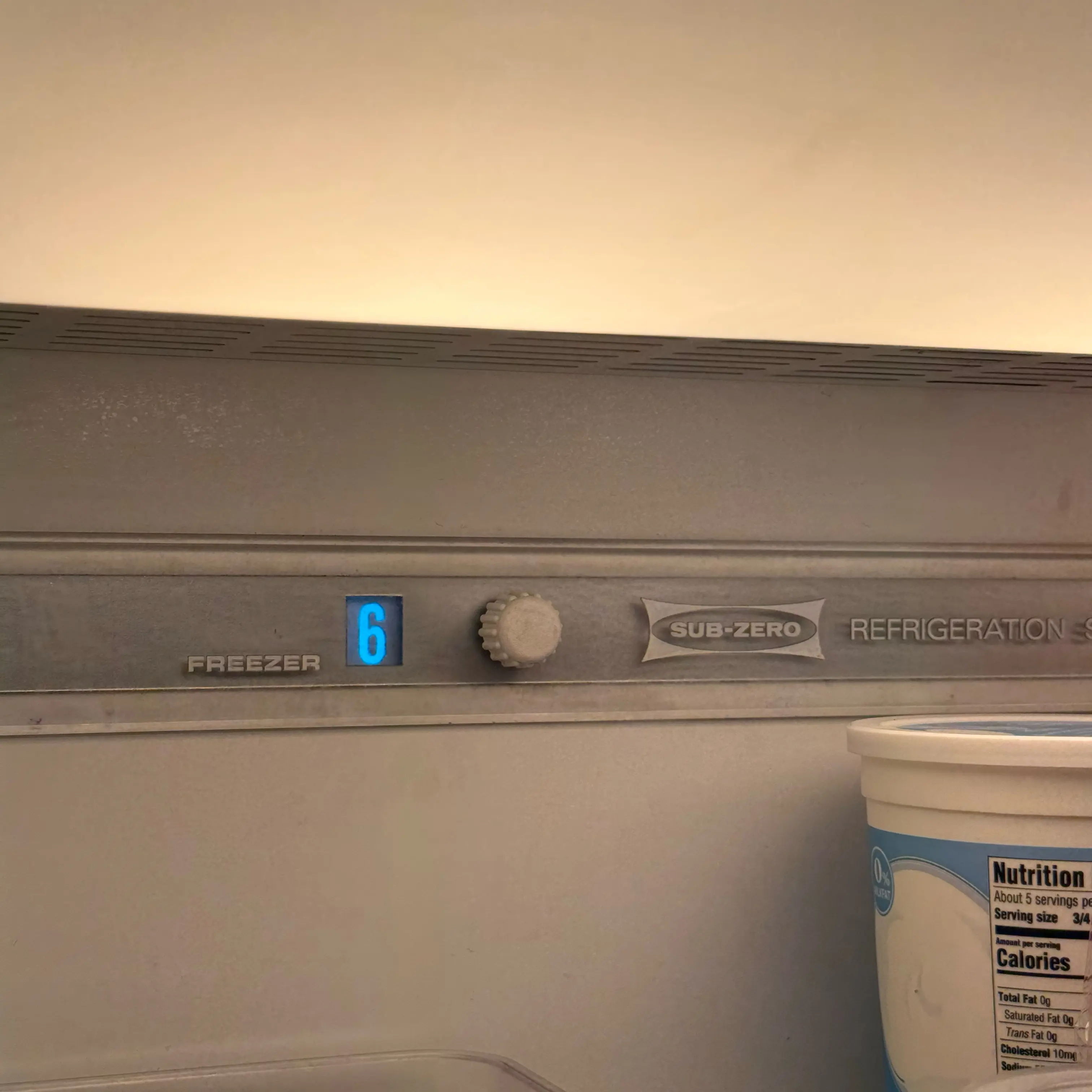
- Save the model and serial information: The 648PRO has a separate official frost path, and drain access differs across Sub-Zero series.
When to Stop and Schedule Diagnosis
Stop the homeowner checks if frost returns after a complete model-approved defrost, the compartment cannot maintain temperature, a service indicator appears, the fan makes abnormal contact noise, water reaches the floor or electrical area, or drain access would require panels or built-in-unit disassembly. Do not test live voltage, open the evaporator area, melt ice with high heat, or attempt refrigerant work.
What Diagnosis Must Confirm
A useful service visit should not end with “ice was removed.” The technician needs to establish why moisture accumulated and why the rear surface stayed cold enough to freeze it. That requires checking door geometry and gasket contact, airflow and evaporator-fan operation, drain continuity and freeze point, temperature and sensor behavior, defrost operation, and refrigeration performance where the evidence supports it. The frost location, recurrence time, temperature record, and exact Sub-Zero model narrow those tests.
What to Record Before Service
- Frost location: Photograph the whole rear wall and the heaviest edge or lower-drawer area.
- Temperature: Record the measured refrigerator temperature and the displayed setpoint.
- Recurrence: Note whether the frost followed a door-left-open event and how long it took to return after defrosting.
- Water evidence: Record any water or ice under the crisper or at the door.
- Door evidence: Photograph a torn, folded, or visibly uneven gasket.
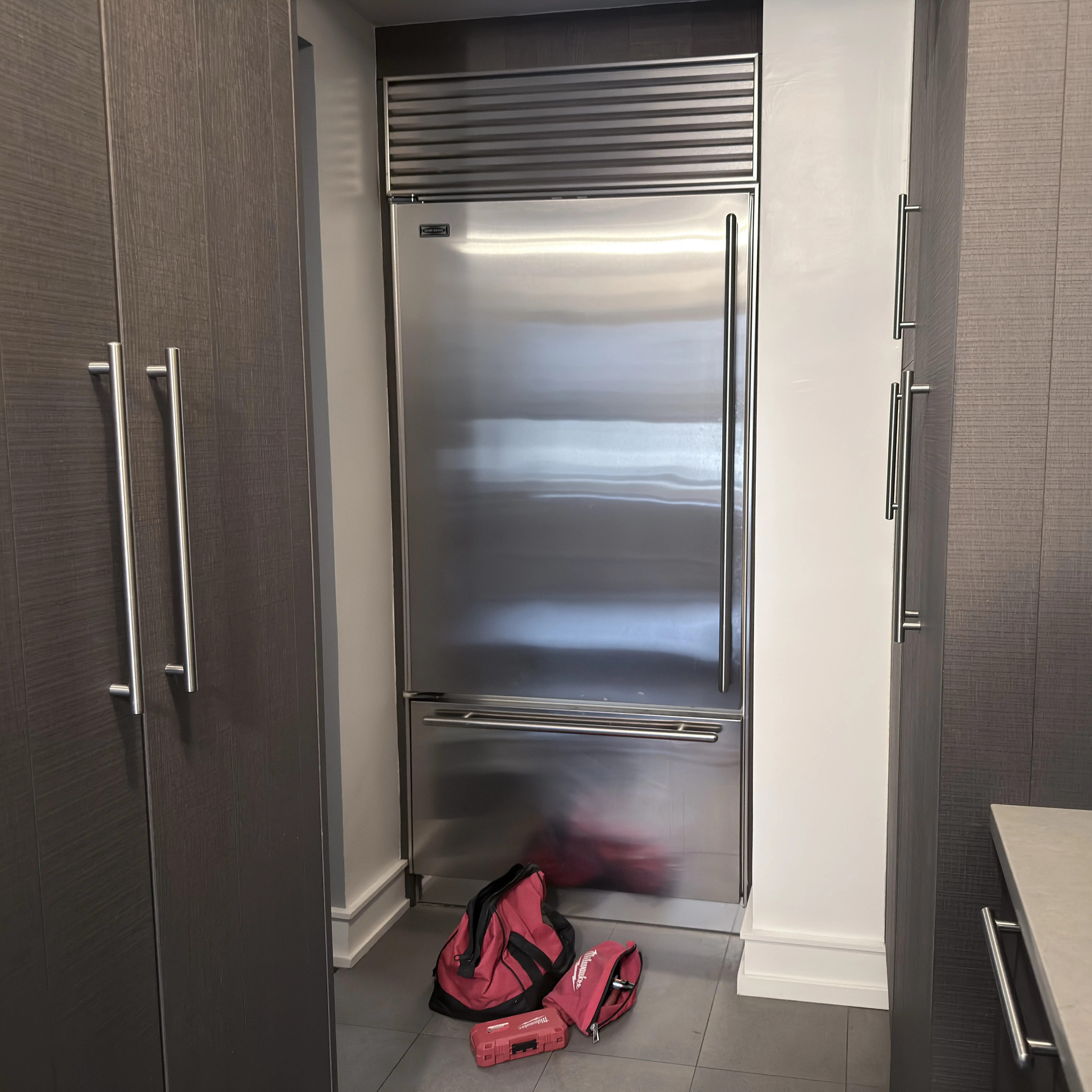
- Product identity: Save the model and serial tag so the correct drain and control instructions are used.
FAQ
Does frost on the back wall always mean the door gasket is bad?
No. A gasket or door gap is one official cause, but Sub-Zero also lists air circulation, a clogged drain, and a service-level cooling problem. The frost location and whether water appears below the crisper help determine which evidence should be tested first.
Can I just defrost the refrigerator and keep using it?
A model-approved defrost can clear the immediate ice, but it does not repair a door leak, recurring drain freeze-up, fan problem, defrost fault, or refrigeration issue. If the frost returns, record the recurrence time and arrange diagnosis instead of repeating defrost cycles.
Why does the exact Sub-Zero model matter for a clogged drain?
The drain trough and tube are visibly accessible on some 200, 300, 500, and 600 Series refrigerators. Classic, Designer, 700, 400, 648PRO, and other products use different access instructions. A procedure that is safe for one series may require service access on another.
.jpeg)