

Water under a Sub-Zero crisper drawer can be liquid condensation, meltwater from frost, a spill, door-air leakage, a supplied-water leak, or water that cannot leave a model-specific drain path. Photograph the original water or ice and rear wall, check food temperature and door closure, then identify the exact model series before following any drain instructions. Remove only visible water and loose debris; do not push tools, heat, compressed air, bleach, or chemicals into a hidden drain.
Safety gate before removing drawers or ice
Water inside a refrigerator is often contained, but it becomes higher risk when it reaches lights, wiring, floor seams, cabinetry, or food. Ice can also lock a drawer in place and cause breakage if forced.
Stop owner-level work when:
- water reaches an electrical component, light, control, cord, receptacle, or the floor;
- the refrigerator compartment is warming or food safety is uncertain;
- a drawer is frozen in place or will not move normally;
- thick ice covers the rear wall or returns after thawing;
- a supplied-water leak is active;
- the drain route is hidden or does not match the exact model instructions;
- removing shelves, panels, evaporator covers, or the built-in appliance would be required;
- there is broken glass, cracked plastic, sharp ice, burning odor, or power loss.
Do not chip ice with a knife or screwdriver, use a heat gun or hair dryer, pour boiling water, force a drawer, insert a brush or wire into tubing, or apply chemical drain cleaner. Keep towels from blocking air openings.
What’s really happening
The space under a crisper is the collection point, not automatically the source. Water can move down the rear liner, collect in a trough, refreeze beneath a drawer, spill from food, condense when warm humid air enters, or travel from a water-system connection.
Sub-Zero’s official support guidance points to:
- condensation or ice on the rear wall;
- food debris and standing water in an accessible drain trough on some older series;
- a frozen or obstructed drain path;
- door or gasket conditions that admit warm air;
- drawer or food placement that interferes with closure or airflow;
- model-specific differences in whether the drain is owner-accessible.
Use the State–Wall–Drain–Series check:
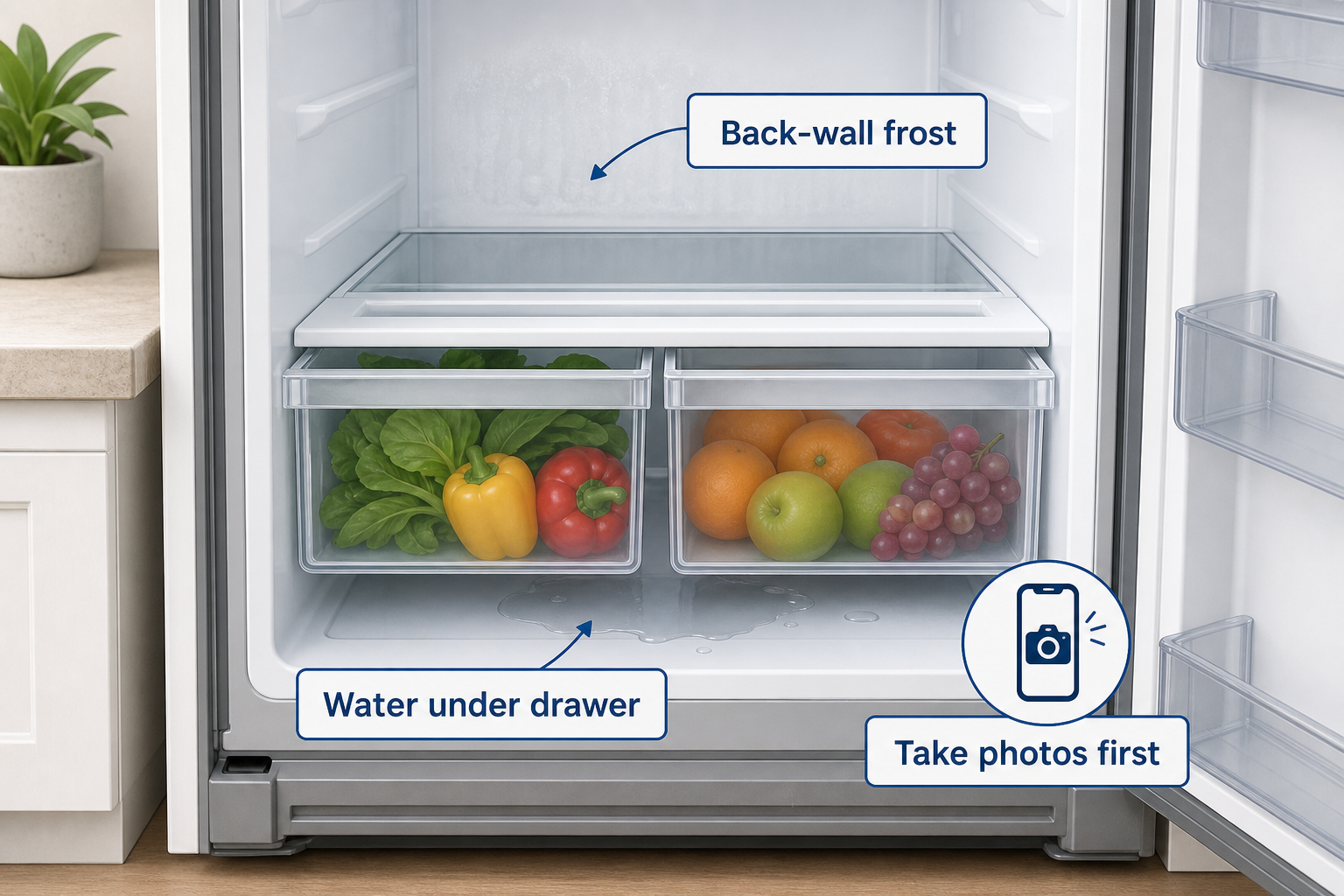
- State: Is it liquid water, slush, clear ice, frost, or spill residue?
- Wall: Is the rear wall dry, wet, frosted, or covered with ice?
- Drain: Is a trough visible and owner-accessible in the exact instructions?
- Series: Which Sub-Zero model family governs the safe procedure?
Liquid, ice, and frost tell different stories
Clear liquid with no rear-wall frost may fit a recent spill, condensation, or drainage that has not refrozen. A sheet or ridge of clear ice near the rear can show where water repeatedly traveled before freezing. White frost across the wall points more strongly toward warm-air entry, door closure, airflow, or a defrost/cooling condition.
Water that returns slowly after cleanup is valuable evidence. Record whether recurrence follows door use, grocery loading, humid weather, power interruption, ice making, or a predictable interval.
Drain access changes by series
Sub-Zero publishes drain-tube cleaning instructions for older 200, 300, 500, and 600 Series contexts. That does not mean later Classic, Designer, 700, 400, or PRO arrangements expose the same drain or permit the same owner action.
Even in an applicable older-series procedure, the support guidance warns against putting objects down the drain tube because it can be pierced. Visible water and loose debris are different from forcing a hidden blockage. If the route is not clearly shown for the exact model, stop.
Door-air leakage can create water later
A door left open or held slightly ajar allows warm humid air to enter. Moisture may first appear as condensation or frost, then melt and collect below. Packages, a misseated drawer, a dirty gasket face, or a hardened or torn gasket can contribute.
Clean accessible gasket faces and remove obstructions, but do not adjust hinges or conclude that the gasket must be replaced from condensation alone. Record where frost is concentrated and whether the door closes freely.
Ranked action plan
Low effort: preserve the original pattern
Photograph water, ice, wall, and drawer position
Why it works: Cleanup removes the shape and direction that distinguish a spill, frost melt, condensation, or recurring drain path.
Tools/materials: Phone camera, flashlight, towels, and disposable gloves.
What to do:
- Take a wide photo before moving the drawer.
- Photograph the rear wall, drawer edges, rails, food packages, and gasket corners.
- Capture liquid, slush, ice ridge, frost, debris, and any color or residue.
- Record whether one or both crisper areas are affected.
- Then remove only loose water that can be reached safely.
Common mistakes:
- wiping first;
- chipping ice before a photo;
- removing every shelf and drawer;
- assuming clear water proves a drain problem;
- overlooking a leaking food container.
Check actual temperature and food condition
Why it works: A warm refrigerator changes the issue from local water management to cooling and food protection.
Tools/materials: Appliance thermometer, notes, and verified alternate cold storage.
What to do:
- Measure the refrigerator temperature rather than relying on touch.
- Record the setpoint separately from the measured temperature.
- Protect perishable food if safe storage is uncertain.
- Discard food contaminated by dirty runoff or broken packaging.
- Minimize door opening while monitoring.
Common mistakes:
- using the display setpoint as the actual reading;
- tasting food to judge safety;
- leaving the door open during cleanup;
- blocking airflow with towels;
- focusing on the drain while temperature rises.
Inspect spills, packages, and door closure
Why it works: A leaking container or a drawer that prevents full closure can create the same visible location as a drainage fault.
Tools/materials: Flashlight, clean soft cloth, and exact care guide.
What to do:
- Remove leaking or open containers.
- Check whether packages touch the rear wall.
- Confirm drawers and shelves are correctly seated.
- Clean accessible gasket faces as instructed.
- Close the door normally and observe whether anything interferes.
Common mistakes:
- overpacking food against air passages;
- applying lubricant to gaskets;
- forcing a swollen or frozen drawer;
- adjusting hinges;
- assuming a dry gasket face guarantees proper sealing.
Medium effort: inspect only the model-approved drain area
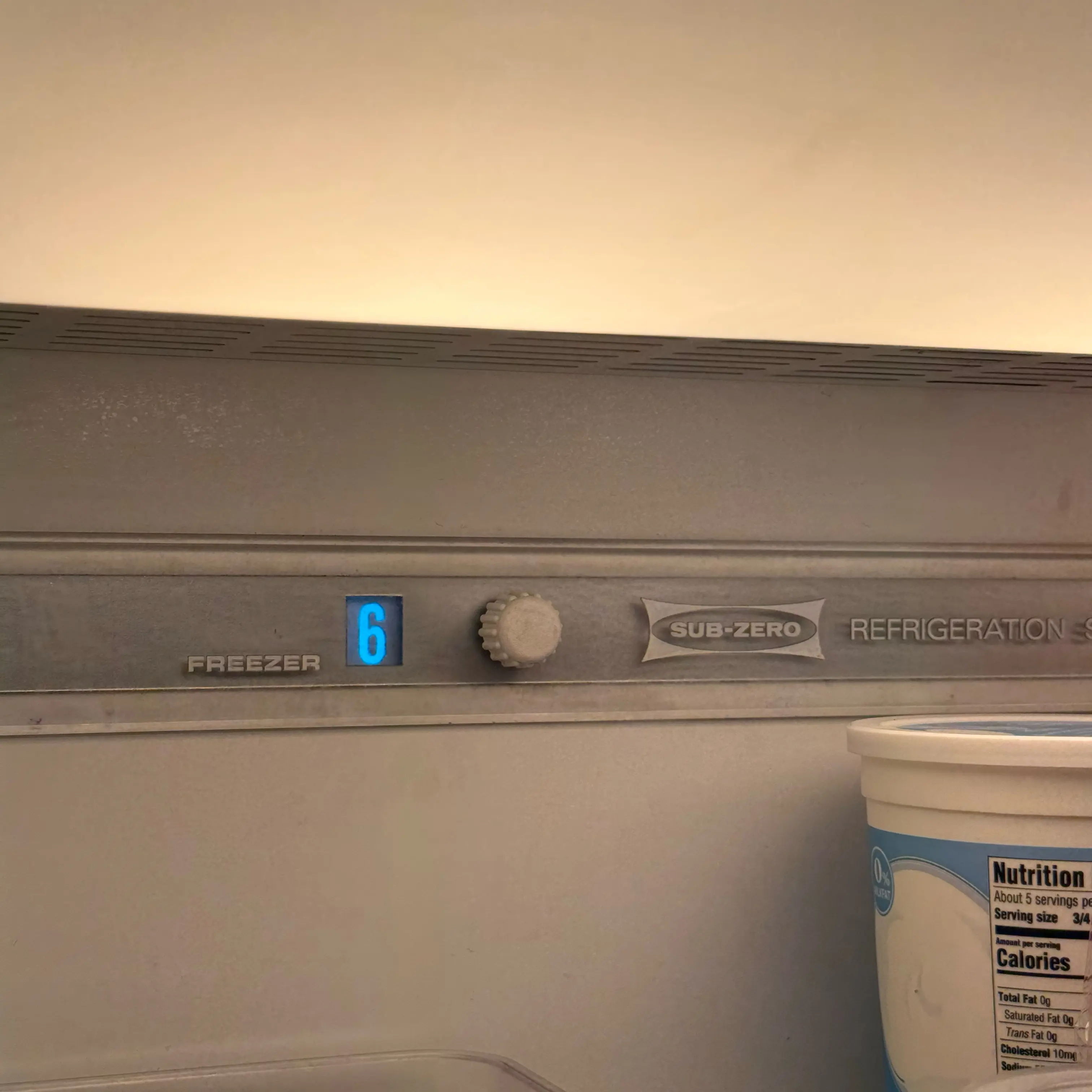
Identify the exact Sub-Zero series
Why it works: Series identification determines whether an owner-visible trough exists and which cleaning instructions are valid.
Tools/materials: Model/serial photo, official Sub-Zero support material, and exact use-and-care guide.
What to do:
- Photograph the complete model and serial.
- Match the interior layout and instructions to that exact model.
- Determine whether the drain trough is explicitly owner-accessible.
- Compare visible parts with the manual illustration.
- Stop if the layout differs or panels would be needed.
Common mistakes:
- using a 600 Series method on a later platform;
- estimating the model from door style;
- removing an evaporator cover;
- assuming every trough is a drain;
- following a forum video for another series.
Remove visible water and loose debris
Why it works: On an applicable owner-accessible design, standing water and loose debris can be removed without forcing the tube.
Tools/materials: Towels, sponge or baster only if the exact guide permits, soft cloth, and flashlight.
What to do:
- Keep the appliance in the state specified by the exact instructions.
- Absorb standing water from the visible trough or floor of the compartment.
- Lift out only loose debris that is fully accessible.
- Clean surrounding owner-accessible surfaces.
- Leave the tube untouched unless the exact guide provides a safe, unambiguous owner step.
Common mistakes:
- inserting wire, brush, screwdriver, or cable;
- using compressed air;
- pouring bleach or chemical cleaner;
- detaching tubing;
- treating clear flow once as proof the freeze cause is resolved.
Record recurrence without unsafe thawing
Why it works: The time and shape of returning water or ice can show whether the condition tracks frost, door use, drainage, or a supplied-water event.
Tools/materials: Date/time log, phone, thermometer, and removable marker outside food-contact areas.
What to do:
- Dry the safe visible area and photograph the baseline.
- Check at consistent intervals without excessive door opening.
- Record temperature, rear-wall state, and first return location.
- Note door-open events, humid weather, groceries, outage, dispenser, or ice-maker activity.
- Escalate if water reaches the floor or temperatures change.
Common mistakes:
- running a heat source inside the refrigerator;
- checking so often that door opening creates more moisture;
- clearing each recurrence without a photo;
- assuming a single dry day proves correction;
- turning water on to force a suspected leak.
High effort: diagnose a recurring freeze or hidden water path
Prepare a State–Wall–Drain–Series report
Why it works: It directs the inspection toward drainage, warm-air entry, frost, cooling, or supplied water without guessing a failed part.
Tools/materials: Model/serial, before/after photos, temperature log, recurrence timing, door observations, and service history.
What to prepare:
- Liquid, slush, ice, frost, or spill description.
- Exact first location and affected drawer.
- Rear-wall condition and frost distribution.
- Model series and whether a trough is visibly owner-accessible.
- Cleanup method and recurrence time.
- Door, drawer, gasket, package, humidity, outage, and grocery-load context.
- Dispenser, ice-maker, or water-supply relationship if present.
Common mistakes:
- requesting a drain heater or tube by guess;
- reporting only “leaks inside”;
- omitting a warm compartment;
- scraping away the frost pattern;
- claiming the drain was cleaned when only surface water was removed.
Plan built-in service access
Why it works: Recurring frozen drainage, door alignment, hidden water paths, and cooling conditions may require panels or movement outside owner scope.
Tools/materials: Installation photos, measurements, model/serial, custom-panel records, floor protection plan, and building requirements.
What to prepare:
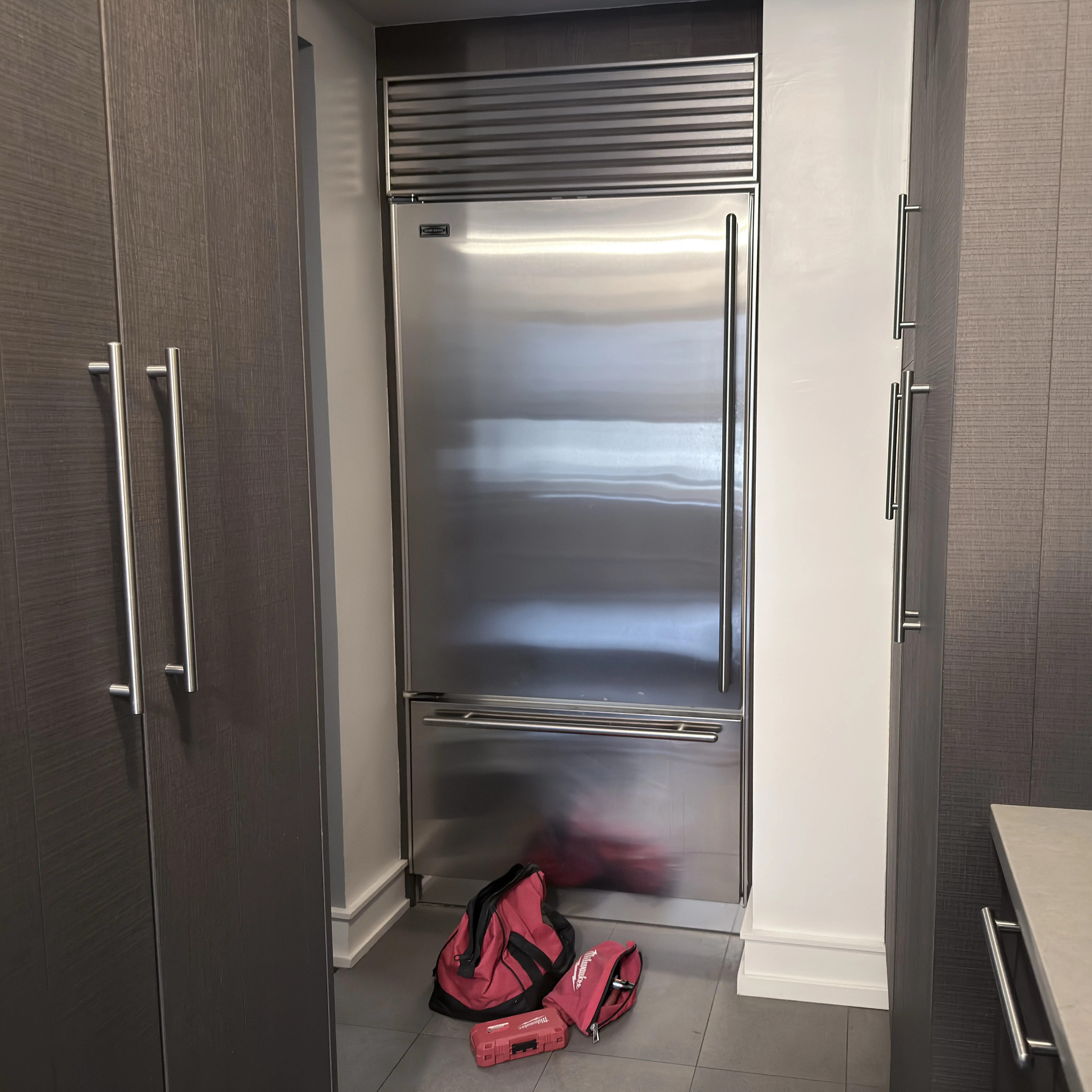
- Photograph the entire unit, grille, panels, floor, and adjacent cabinetry.
- Show door and drawer alignment.
- Identify breaker and water-shutoff responsibility.
- Confirm elevator, arrival window, access approval, and COI requirements.
- Do not pull the appliance forward or remove concealed covers.
Common mistakes:
- forcing a frozen drawer to create access;
- removing a rear interior panel;
- melting ice with high heat;
- pulling on a custom-panel door;
- overlooking floor protection and building rules.
Stop DIY and call a pro if…
- water or ice returns after visible spill, debris, and door checks;
- thick frost or ice covers the rear wall;
- refrigerator temperature is rising or food safety is uncertain;
- the drawer is frozen, cracked, or cannot be removed normally;
- water reaches lights, controls, the floor, cabinets, or electrical areas;
- the drain is hidden or the exact series does not permit owner access;
- leakage changes with dispenser, ice maker, or water-supply operation;
- the door will not close freely after obvious obstructions are removed;
- diagnosis requires panels, forced thawing, tube clearing, hinge adjustment, moving the unit, or live testing.
Standards and documentation
Use the exact Sub-Zero documentation to verify:
- model and serial identification;
- drawer and shelf removal and installation;
- gasket and interior cleaning;
- temperature settings and measurement;
- drain-trough visibility and permitted cleaning;
- water-filter, dispenser, and ice-maker operation;
- door alignment, custom panels, ventilation, and service access.
Save:
- photos before cleanup and at recurrence;
- complete model and serial;
- actual temperature readings;
- liquid, ice, frost, or residue description;
- rear-wall and gasket-corner photos;
- drawer, shelf, and food-placement condition;
- exact cleanup method;
- recurrence interval and triggering events;
- floor or cabinetry damage;
- prior drain, door, cooling, or water-system work.
For warranty records, describe the observed condition and confirmed actions only. Do not state that a drain, heater, gasket, valve, or cooling component failed unless diagnosis established it.
Maintenance cadence
Weekly
- Wipe spills promptly.
- Keep food and containers from blocking drawers, doors, and air passages.
- Check the crisper area for new moisture or ice.
Monthly
- Clean accessible gasket faces and crisper components by the exact guide.
- Measure compartment temperature.
- Inspect the rear wall and drawer rails for recurring frost or debris.
Quarterly
- Review water-filter, ice-maker, and dispenser conditions where applicable.
- Check door closure and food placement during humid seasons.
- Compare any recurrence notes and photos.
Annual
- Reconfirm model-specific use-and-care and installation instructions.
- Arrange appropriate inspection when a hidden drain, door alignment, cooling, or supplied-water condition recurs.
- Update temperature, maintenance, access, and service records.
FAQ
Does water under the crisper mean the drain is clogged?
No. Condensation, frost melt, spills, door-air leakage, food placement, and a supplied-water source can collect in the same area.
Why is there a sheet of ice under the drawer?
Water reached that area and froze. The shape, rear-wall frost, temperature, door condition, and recurrence help distinguish the path.
Can I pour hot water into the drain?
Do not pour hot water into a hidden or unconfirmed drain. Follow only the exact model’s official owner procedure.
Can I push a brush or wire into the drain tube?
No. Sub-Zero warns that objects can pierce the tube.
Which models have owner-accessible drain cleaning?
Sub-Zero publishes specific guidance for older 200, 300, 500, and 600 Series contexts. Confirm the exact model; do not apply it universally.
Can a door gasket cause water under the crisper?
Warm-air entry can create condensation or frost that later melts, but the visible water does not by itself prove the gasket is defective.
What if the water returns after I dry it?
Photograph the recurrence, note the interval and rear-wall state, and arrange diagnosis if it continues.
Can I use a hair dryer to melt the ice?
No. High heat can damage plastic, wiring, liners, and cooling components and can create electrical risk.
Is water under the drawer the same as water under the refrigerator?
No. Interior crisper water and a floor leak have different initial paths, although an interior leak can eventually reach the floor.
What evidence should I provide?
Provide model/serial, liquid-versus-ice state, rear-wall photos, temperature, door and drawer condition, exact cleanup, recurrence timing, triggering events, and installation access.
Sources you would cite
- Sub-Zero — Water or ice under crisper drawer
- Sub-Zero — Ice behind crisper drawer
- Sub-Zero — 200, 300, 500, and 600 Series refrigerator drain-tube cleaning
- USDA Food Safety and Inspection Service — current refrigeration and food-safety guidance.
- Exact Sub-Zero use-and-care and installation manuals — temperature, doors, drawers, drainage, water systems, custom panels, ventilation, and service-access sections.
.jpeg)