
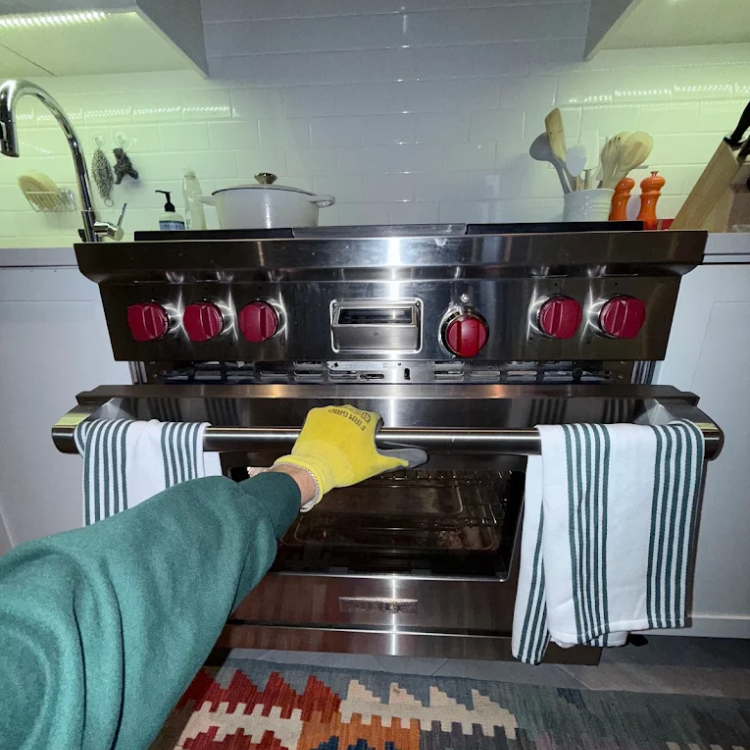

Wolf Steam Oven Heats but Has No Steam
Check mode, CSO versus CSOP water supply, mineral-containing water and descale state when a Wolf steam oven heats but steam is missing.
Check mode, CSO versus CSOP water supply, mineral-containing water and descale state when a Wolf steam oven heats but steam is missing.
.avif)
If a Wolf Convection Steam Oven heats but the expected steam function is missing, confirm that a steam-using mode is selected and identify the model-correct water source. Dry cavity heat alone does not prove that steam was requested or supplied with water.
On current Wolf CSO models, pure Steam operates from 86–210°F, while Convection Steam operates from 180–445°F. Convection Steam above 210°F is therefore valid; the oven is not universally limited to steam below 210°F.
There is one separate timing case. If a steam mode was selected only after the cavity was already above 210°F and steam did not appear, Wolf directs the owner to let the cavity cool below 210°F and select the intended steam mode again once at the recommended temperature. This action applies to an already-hot cavity at the moment of selection; it does not cancel the normal 180–445°F Convection Steam range.
Ordinary Convection and Convection Humid are not interchangeable with Steam or Convection Steam. Record the exact words and icons on the display rather than relying on the fan sound or cavity heat alone.
Photograph the exact descale, scaled-up, or blocked message and note the last fully completed descale. Follow only the matched Wolf procedure and approved solution. If the process was interrupted, the message persists, water leaks, or the oven cannot complete the sequence, stop and arrange diagnosis.
Descaling is not an experiment for a hidden pump or boiler problem. Do not substitute vinegar, household cleaner, or an improvised concentration.
Stop using the oven if water enters cabinetry or an electrical area, the tank or access door is damaged, smoke or arcing appears, there is a burning odor, the breaker trips, or heating becomes uncontrolled. Escaping steam can burn; open a hot cavity cautiously and keep your face and hands out of the opening.
If these checks are correct and the steam cooking effect remains absent, stop at service. Do not remove the oven or access the internal water and heating system.
Prepare the exact model and water configuration, mode and temperature, timing of mode selection, displayed prompts, water type, descale history, visible leak evidence, and whether dry heat is normal.
Diagnosis must then verify the commanded steam mode, water intake and tank detection where applicable, plumbed supply on CSOP models, pump and valve flow, boiler or steam-heater response, level and temperature sensing, steam delivery, leaks, and control feedback. Dry heat narrows the complaint, but no visible vapor alone does not identify a failed pump or any other component.
No. The absence of a visible cloud alone does not prove that a pump, boiler, valve, sensor, or control has failed. Judge the exact steam-using mode, water or descale prompts, and cooking result together; vapor visibility by itself is not a component diagnosis.
Wolf cooking-system requests are considered in Brooklyn, Manhattan below 96th Street, and selected Queens routes; fuel connection, ventilation, cabinet clearance, and building access are confirmed before routing.

.jpeg)
Technician experience standard: 4+ years of hands-on appliance repair per technician; senior technicians bring 8 and 16 years. Wolf intake starts with model prefix, fuel or induction platform, affected burner or cavity, and access. Independent service; no current manufacturer authorization implied. Our Wolf oven work includes a completed igniter replacement.

