
.png)


LicInsured HVAC Service in NYC & Brooklyn
VOLT & VECTOR LLC carries Commercial General Liability insurance through Hiscox Insurance Company Inc. Coverage is effective June 6, 2026 – June 6, 2027, with $1,000,000 per occurrence and $2,000,000 general aggregate limits.COI available upon request for homeowners, landlords, property managers, co-op/condo boards, commercial clients, and general contractors.
NYC DCWP License No. 2135266-DCWP
Air Handler Repair in NYC
Air handler repair in NYC is usually an indoor access problem as much as an airflow problem. The blower, coil, filter rack, drain pan, cabinet panels, and controls may be inside a closet, soffit, hallway ceiling, or fan coil enclosure. An air handler can look broken when the blower wheel is loaded with dust, the filter rack is bypassing air, the indoor coil is dirty, or the drain pan is holding water.
This page is for the indoor section of the HVAC system. If the complaint is cooling performance from the entire AC system, use air conditioner repair. If the visible issue is water collection or overflow, the direct path may be condensate drain repair.
Repair vs cleaning inside an air handler
Cleaning belongs in the decision when dirt or moisture is blocking airflow or causing the coil, blower, or drain pan to work poorly. Repair belongs in the decision when the blower will not start, the motor overheats, the cabinet vibrates, the safety circuit opens, or the drain pan, pump, or control wiring needs correction. A useful visit confirms the cabinet condition before treating every airflow problem as a failed motor.
Weak airflow from vents or fan coil grille
- What you notice: the system runs, but supply air is weak, uneven, noisy, or unable to condition the room.
- Likely system: filter fit, blower wheel, indoor coil, return path, fan speed, duct restriction, or cabinet leakage.
- Safe check: look at the accessible filter and make sure furniture or storage is not blocking return or supply grilles.
- Stop using it if: airflow drops suddenly with burning odor, cabinet heat, or repeated shutdowns.
- What helps booking: send grille photos, filter size if visible, and a video of the blower ramping up or failing to start.
Blower noise, vibration, or scraping
- What you notice: rattling, grinding, squealing, cabinet buzz, or vibration through a wall, ceiling, closet, or fan coil enclosure.
- Likely system: blower wheel debris, motor bearing, wheel balance, loose panel, mounting hardware, or cabinet contact.
- Safe check: note whether the noise starts immediately, after several minutes, or only at one fan speed.
- Stop using it if: the sound becomes metal-on-metal, the fan slows, or the cabinet smells hot.
- What helps booking: record the sound from outside the cabinet and include access photos of the closet or panel.
Water in or below the air handler cabinet
- What you notice: water collects under the cabinet, near a ceiling opening, behind a wall panel, or under a fan coil.
- Likely system: drain pan, clogged trap, condensate pump, float switch, coil icing, poor pan pitch, or disconnected drain fitting.
- Safe check: turn cooling off and protect finished floors while preserving photos of the leak path.
- Stop using it if: water reaches electrical parts, leaks into another unit, or the system shuts down on a water safety device.
- What helps booking: send whether the cabinet is in a closet, ceiling, mechanical room, or built-in enclosure.
Air handler starts and stops too often
- What you notice: the blower starts, stops, pauses, or never reaches stable airflow.
- Likely system: low-voltage control, thermostat call, float switch, motor protection, relay/board output, or heat pump lockout logic.
- Safe check: note the thermostat setting and whether the same cycling happens in fan-only mode.
- Stop using it if: the breaker trips, the cabinet gets hot, or electrical odor appears.
- What helps booking: include the thermostat display and the timing between start and stop.
Cleaning and maintenance inside the cabinet
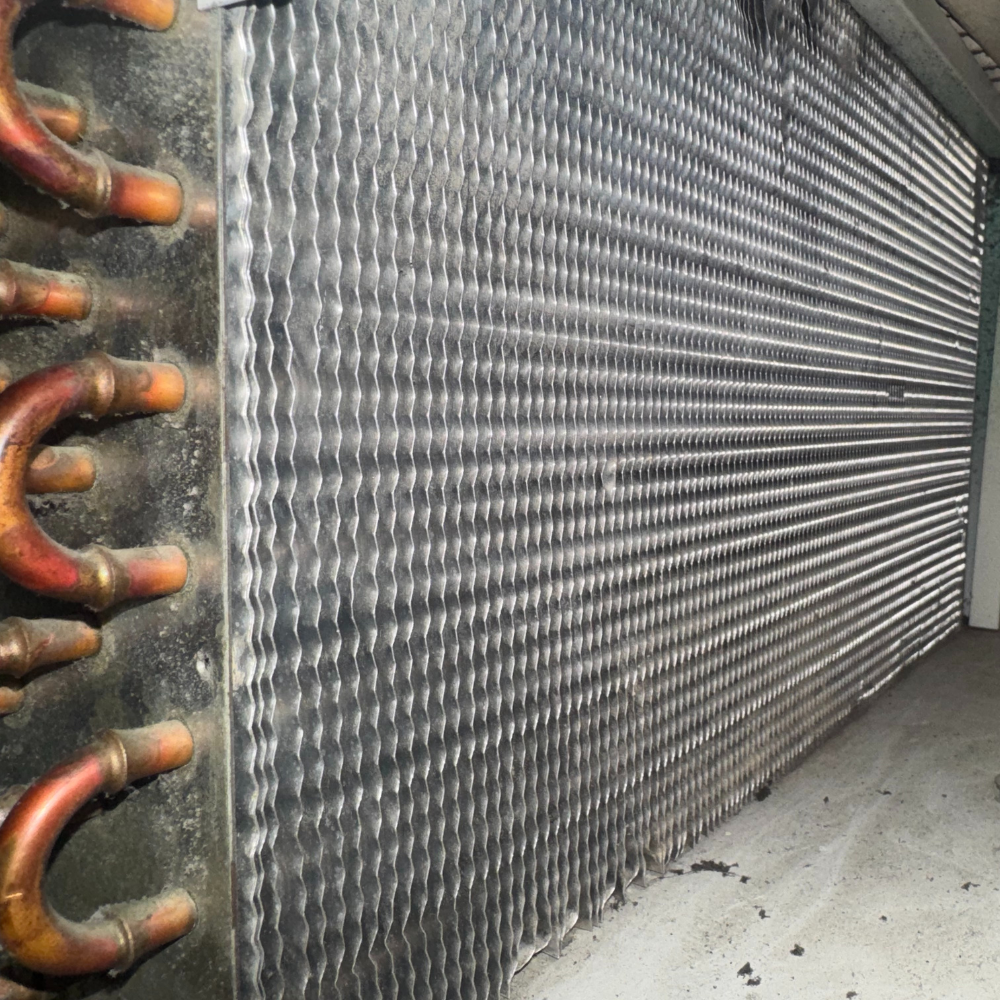
Useful air handler maintenance is not a vague dusting. The practical checks are filter fit, filter bypass, blower wheel buildup, indoor coil face, drain pan condition, float switch behavior, cabinet panels, and access to the service side of the unit. In NYC apartments, the cabinet may be inside a closet, soffit, hallway ceiling, or built-in millwork, so access photos matter before the visit.
Do not assume duct cleaning solves an air handler problem. EPA guidance treats duct cleaning as an as-needed decision, while routine HVAC maintenance is more often about filters, coils, drain pans, and inspections. If ducts show heavy contamination, moisture, pests, or renovation dust, document that separately from the air handler repair request.
What not to do before air handler service
- Do not remove ceiling panels, fan coil covers, or closet trim if you cannot restore them safely.
- Do not reach into the blower section or spin the wheel by hand.
- Do not spray disinfectant or fragrance into returns or the cabinet.
- Do not run the system while water is active in the cabinet.
- Do not keep resetting a system that trips electrical protection.
Quick answers
Is an air handler repair the same as AC repair?
No. The air handler is the indoor air-moving section. It can cause AC symptoms, but the repair path is different from an outdoor condenser or refrigerant-side diagnosis.
Can a dirty blower wheel cause weak airflow?
Yes, buildup on the blower wheel or coil can reduce airflow. The visit should still confirm motor operation, filter bypass, and cabinet conditions before calling it only a cleaning issue.
Should I move stored items from the HVAC closet?
Yes, clear a safe access path if you can do it without touching the equipment. Do not remove panels or wiring covers.
Why does the air handler shut off when there is water?
Many systems use a float or condensate safety to stop operation when water backs up. That protects the building but does not identify the cause by itself.
What if the thermostat is the real issue?
If the indoor unit responds inconsistently to a call, the low-voltage path may need thermostat repair or control troubleshooting.
Next step
Send the model label, cabinet location, filter photo, access photo, and the main symptom: weak airflow, leak, noise, vibration, no-start, or short cycling. Volt & Vector will use that information to decide whether the visit starts with cleaning access, drainage, blower diagnostics, or control checks.
Common Air Handler Problems
- Weak airflow: dirty filter, filter bypass, blower buildup, indoor coil restriction, duct issue, or fan speed/control problem.
- Cabinet leak: drain pan, trap, condensate pump, float switch, coil icing, or poor pan pitch.
- Blower noise: debris on wheel, loose panel, bearing wear, motor strain, or cabinet vibration.
- No fan operation: thermostat call, control board output, relay, motor, safety switch, or power issue.
- Short cycling: float switch, motor protection, control interruption, or thermostat command problem.
- Maintenance gap: inaccessible filter, dirty coil face, blocked return, or unclean drain pan that should be corrected before deeper repair decisions.