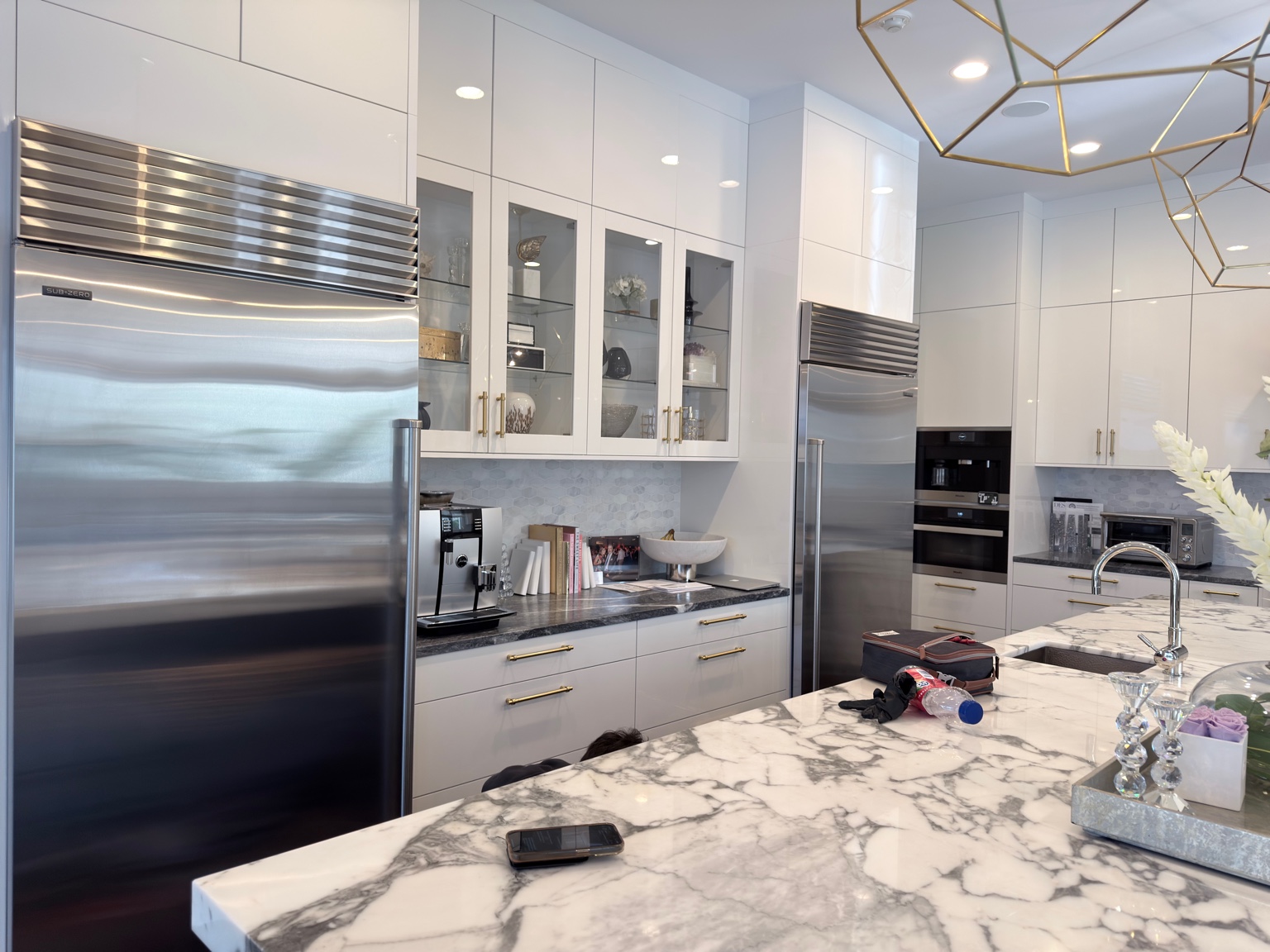


Sub Zero Freezer Cold but Fridge Warm: How to Fix
Volt & Vector Appliance Repair
.avif)
This guide covers the common causes and solutions for Sub-Zero appliances experiencing the issue of a freezer being cold while the fridge remains warm. Follow step-by-step instructions for effective troubleshooting.
Sub Zero freezer cold but fridge warm in NYC. Safe quick checks, most likely causes, and step by step troubleshooting to restore airflow and cooling.
+1 (332) 333-1709
Our service manager handles all calls personally. For short questions, text works best.
Google Business Profile
See live reviews, photos, and recent jobs. Booked with us? Please leave a review, thank you!
180-Days Warranty
Every completed repair includes a 180-day parts & labor warranty. OEM parts only. Warranty service is prioritized.
Local Service
Built by real NYC technicians - not marketers. Volt & Vector is where clean design meets certified service.
Sub Zero Freezer Cold but Fridge Warm: How to Fix
Reviewed by Lead Tech
Vladis B.
Updated:
January 24, 2026
Sub Zero Freezer Cold but Fridge Warm: Troubleshooting Guide (Field-Tested Checklist)
When a Sub Zero freezer is cold but the fridge is warm, the cooling system is usually making cold air, but the refrigerator section is not receiving it. This is typically an airflow delivery problem, not “no refrigeration.” Causes range from simple vent blockages and door seal issues to frost buildup that restricts air movement, a fan problem, or a damper/air gate that is not opening as it should. The correct approach is to start with quick, safe checks and then move step by step toward the most likely components involved in airflow and temperature control. As a technician with 11+ years of experience, the fastest wins come from confirming airflow and frost conditions before assuming a control board issue.
Quick Fix (10–20 minutes)
- Clear any food packages blocking air vents/returns in both compartments.
- Confirm both doors fully close and gaskets seal (paper pull test in a few spots).
- Lower the fridge setpoint temporarily and ensure any Vacation/Sabbath/Eco mode is OFF (model-specific; refer to owner’s manual).
- Listen for the evaporator fan: open freezer door, then press the door switch to see if the fan runs.
- Power cycle: unplug for 2 minutes, then restore power (only if safe access to outlet).
Before You Start
Tools (optional)
- Flashlight
- Paper strip (gasket check)
- Refrigerator/freezer thermometer (optional)
- Towels (for condensation or defrost water)
Safety (homeowner safe checks only)
- Electric shock risk: unplug before moving the unit or reaching near fans/controls.
- Water slip risk: frost melt or condensation can drip; protect floors and wipe promptly.
- Sharp edges: panels and chassis edges can cut hands.
- No sealed-system work, no live-voltage testing. If the next step requires electrical measurements or internal disassembly beyond basic access, stop and call a technician.
Step-by-Step Troubleshooting (Most Likely Causes First)
Step 1: Verify actual temperatures (not “feels cold”)
Why important: You need to confirm this is truly an airflow split, not an overall cooling failure.
Checks
- Measure freezer temp (typical target near 0°F) and fridge temp (typical 37–40°F).
- If no thermometer, check for stable hard-frozen items in freezer and rapid warming in fridge.
Fix / Next action - If freezer is above typical range, troubleshoot cooling performance first.
- If freezer is normal and fridge is above 42°F, continue to Step 2.
Time estimate: 10–15 min
Repair difficulty: 1/5
Step 2: Remove vent blockages and confirm clear return airflow
Why important: Blocked vents are the most common cause of “freezer cold, fridge warm.”
Checks
- Look for items pressed against upper/rear vents in the fridge compartment.
- Check freezer vents and the back wall area for blocked airflow paths.
- Confirm return vents (often lower areas) are not blocked by bins or bags.
Fix / Next action - Reorganize to leave several inches of clearance around vents.
- Avoid packing soft bags that collapse into vents.
Time estimate: 10–20 min
Repair difficulty: 1/5
Step 3: Check door closure and gasket sealing (both doors)
Why important: Warm air intrusion drives frost buildup and reduces effective airflow to the fridge.
Checks
- Paper test around the gasket: it should resist pulling out.
- Look for gaps at corners, torn gasket, or doors not aligning.
- Check for condensation along door frames.
Fix / Next action - Clean gaskets and mating surfaces with mild soap/water, dry fully.
- Remove items that prevent full closure.
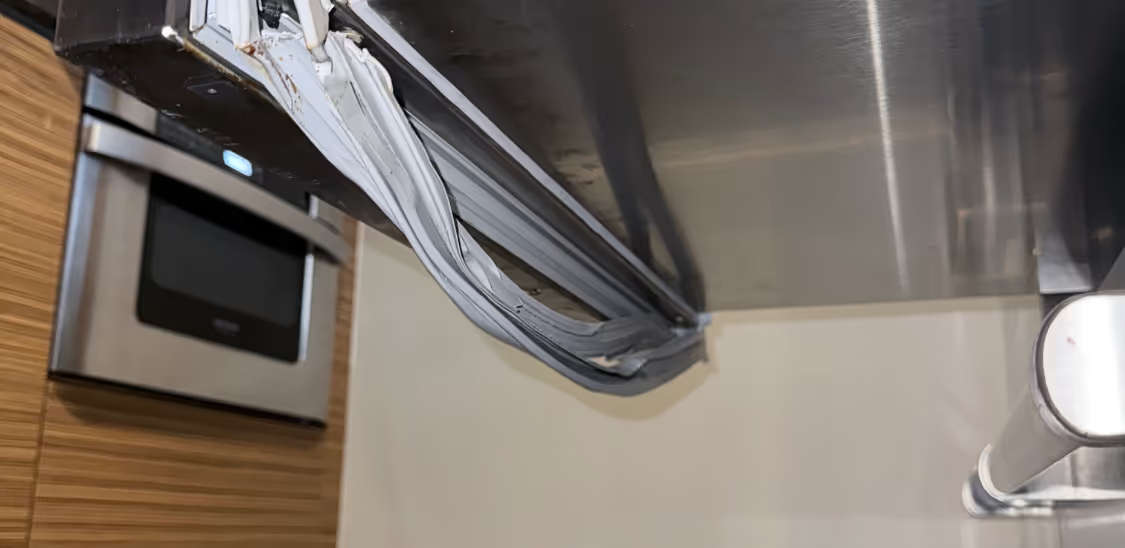
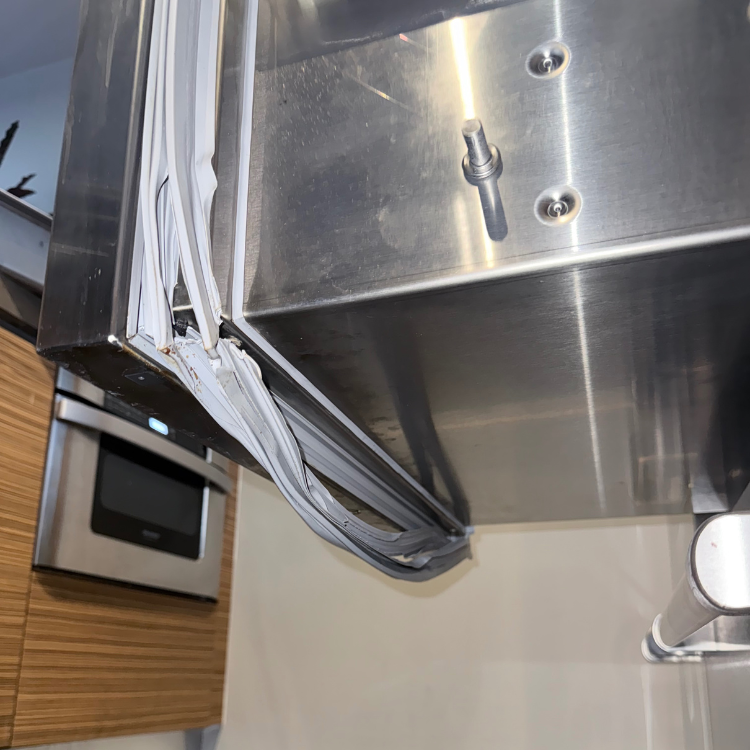
- If gasket is torn or door is misaligned, schedule service.
Time estimate: 15–25 min
Repair difficulty: 2/5
Pro tip: In tight NYC kitchens, the fridge can shift slightly when cabinets or floors settle. A small door alignment change can create an air leak that causes frost and airflow problems.
Step 4: Confirm the freezer evaporator fan is running consistently
Why important: The fan is what pushes cold air through the system and toward the fridge section.
Checks
- Open freezer door and press/hold the door switch (do not force).
- Listen for steady fan operation; note intermittent stops or unusual noises.
- Check for weak airflow at freezer vents even when the compressor is running.
Fix / Next action - If the fan does not run or makes grinding/squealing noise, this typically requires technician repair.
- If airflow is weak, continue to Step 5 and Step 6.
Time estimate: 5–10 min
Repair difficulty: 2/5
Step 5: Check for frost/ice restriction in the freezer (defrost-related symptoms)
Why important: Heavy frost can block airflow while freezer still seems cold near the coil area.
Checks
- Inspect the freezer back wall for thick frost or snow-like buildup.
- Note if the issue worsens gradually over days (common defrost failure pattern).
- Look for ice buildup near vents or duct openings.
Fix / Next action - Homeowner-safe option: controlled manual defrost (unplug, doors open, towels ready).
- If frost returns quickly, a technician should test defrost components per model-specific specs.
Time estimate: 1–24 hours (manual defrost varies)
Repair difficulty: 2/5 (manual defrost), 5/5 (repair)
Step 6: Check the air damper / air gate function (model-dependent)
Why important: If the damper stays closed, the fridge warms even if the freezer is correct.
Checks
- Locate the cold air outlet/damper area in the fridge (refer to owner’s manual/model-specific diagrams).
- Feel for airflow at the outlet while the unit is calling for cooling.
- Listen for damper movement after lowering the fridge setpoint.
Fix / Next action - If airflow is absent and no damper activity is observed, technician diagnosis is likely needed.
- If the outlet is blocked by ice, return to Step 5 and address frost restriction first.
Time estimate: 10–20 min
Repair difficulty: 3/5
Step 7: Check condenser airflow basics (heat rejection)
Why important: Poor heat rejection can worsen compartment balance and recovery time.
Checks
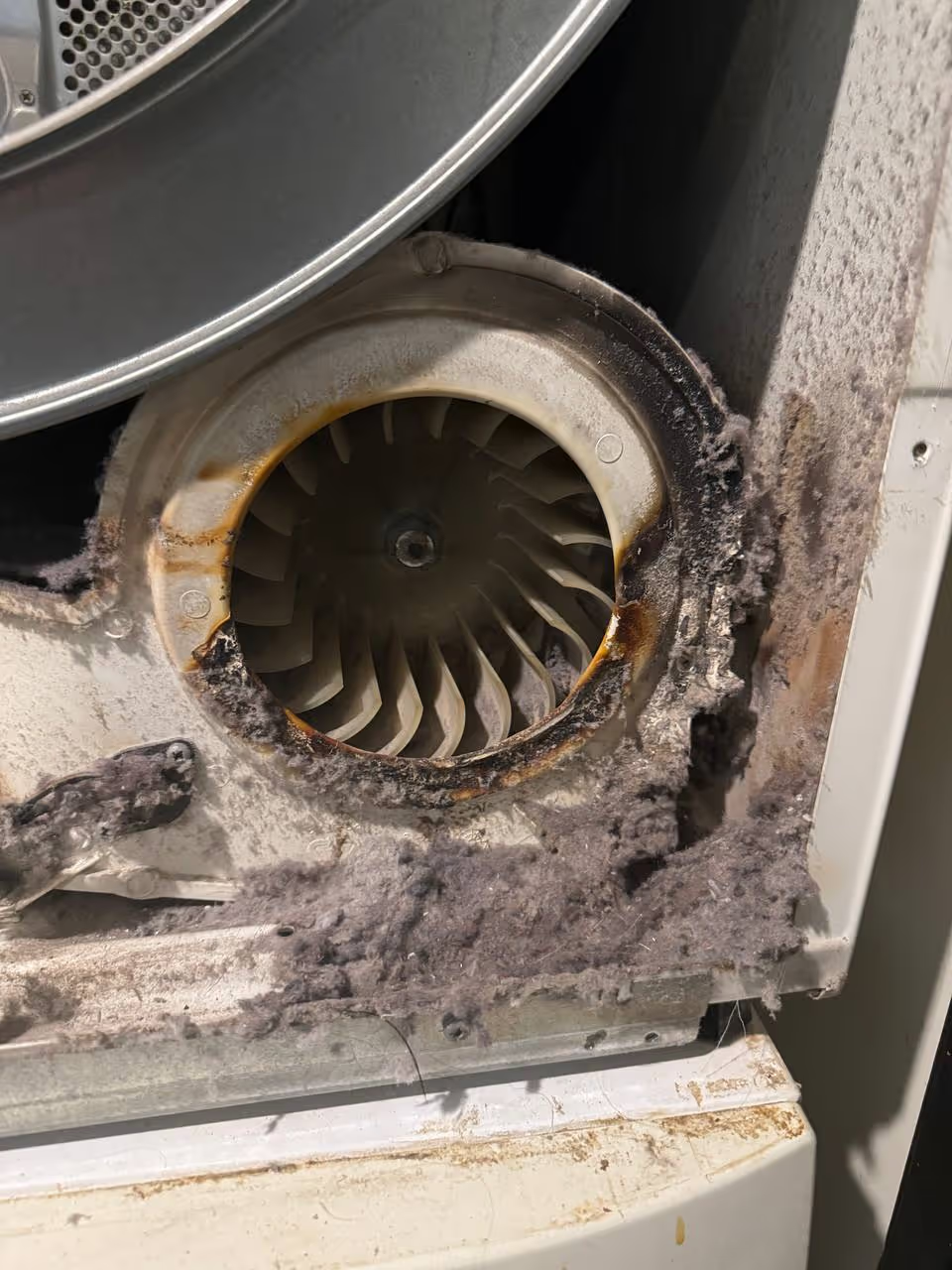
- Ensure grille/toe-kick area is not clogged with dust.
- Confirm the unit has breathing room and is not sealed into a tight cavity without airflow.
- Listen for condenser fan operation if your design includes one (model-dependent).
Fix / Next action - Vacuum accessible intake/exhaust areas.
- Improve clearance if possible without forcing the unit.
- If deeper cleaning requires panel removal, stop at homeowner-safe cleaning only.
Time estimate: 10–20 min
Repair difficulty: 2/5
Pro tip: If the refrigerator is installed flush with limited ventilation, even minor dust buildup can push temperatures out of balance during heavy use.
Step 8: Confirm settings and modes that can limit fridge cooling
Why important: Certain modes can change targets or reduce airflow delivery to the fresh-food section.
Checks
- Verify temperature setpoints are appropriate (refer to owner’s manual/model-specific specs).
- Confirm Vacation/Sabbath/Eco modes are OFF (names vary by model).
- Check if the fridge compartment is enabled in the control settings (model-specific).
Fix / Next action - Return to standard mode and monitor temperatures over several hours.
- If settings reset unexpectedly or display behaves erratically, move to Step 9.
Time estimate: 5–10 min
Repair difficulty: 1/5
Step 9: Suspect sensor/control issues only after airflow and frost checks pass
Why important: Misreads can prevent proper cooling calls even when the fridge is warm.
Checks
- Display reading does not match measured temperature.
- Cooling behavior does not respond to setpoint changes.
- Fan/damper behavior does not match demand.
Fix / Next action - Document temps, mode status, and symptoms for service.
- Technician should test sensors and controls using model-specific diagnostics and specs.
Time estimate: 20–60 min (documentation), longer for monitoring
Repair difficulty: 2/5 (documentation), 5/5 (repair)
Fast Diagnosis: What Your Symptoms Usually Mean
- Freezer near 0°F, fridge 45°F+ → airflow delivery problem (blocked vents, damper not opening, fan issue).
- Weak airflow + frost on freezer back wall → defrost problem or evaporator icing restriction.
- Fridge warms slowly over days, improves after manual defrost → recurring frost restriction.
- Condensation at doors / frost near edges → gasket leak and warm air intrusion.
- Setpoints normal but behavior inconsistent → sensor/control issue (model-specific testing required).
Common mistakes to avoid
- Overpacking the fridge/freezer and blocking vents, then chasing the issue by lowering setpoints.
- Using sharp tools to remove ice (risk of puncturing plastic ducts or damaging components).
- Assuming the control board is bad before confirming fan airflow and frost conditions.
- Ignoring door seal issues that drive frost and airflow restriction.
When to Call a Technician
- Evaporator fan is not running, runs intermittently, or makes abnormal noise.
- Heavy frost returns quickly after a full manual defrost.
- Damper/air gate appears stuck or airflow never reaches the fridge compartment.
- Fridge stays above 42°F despite clear vents and correct settings.
- You suspect sensor/control faults requiring electrical diagnostics per model-specific specs.
Preventive Maintenance
- Keep air vents and returns clear in both compartments.
- Clean door gaskets and confirm firm closure regularly.
- Avoid prolonged door openings, especially in humid months.
- Vacuum accessible grille/toe-kick areas to maintain airflow.
- Do not overpack the freezer area near the back wall and vents.
- Use a thermometer occasionally to verify real temperatures match setpoints.
FAQ
Why is my Sub Zero freezer cold but the fridge warm?
Most often, cold air is not being delivered to the fridge due to blocked vents, frost restriction, a damper issue, or an evaporator fan problem.
How to fix Sub Zero freezer cold but fridge warm?
Start with vent clearance, door seal checks, and verifying the evaporator fan runs, then inspect for frost buildup and damper airflow.
Can frost buildup cause this problem even if the freezer feels cold?
Yes. Frost can block airflow paths while the freezer still feels cold near the evaporator area.
What temperatures should I aim for?
Typical targets are about 0°F freezer and 37–40°F fridge, but always confirm with the owner’s manual/model-specific specs.
Does a bad door gasket affect fridge temperature?
Yes. Air leaks add moisture and frost, which can restrict airflow and warm the fridge section.
When is a power reset useful?
It can clear minor control glitches, but it will not fix blocked vents, a failed fan, or a defrost problem.
Why does the fridge warm up faster than the freezer?
The fridge depends on delivered airflow from the freezer; if that delivery is restricted, the fridge warms while the freezer can remain cold.
+1 (332) 333-1709
Our service manager handles all calls personally. For short questions, text works best.
Google Business Profile
See live reviews, photos, and recent jobs. Booked with us? Please leave a review, thank you!
180-Days Warranty
Every completed repair includes a 180-day parts & labor warranty. OEM parts only. Warranty service is prioritized.
Local Service
Built by real NYC technicians - not marketers. Volt & Vector is where clean design meets certified service.
Book your service





9:00 AM – 6:00 PM




.png)


.avif)
The diagnostic fee credit applies to the same job when you approve the repair. You will receive diagnostic results and an estimate before any repair begins.
Speak directly with a Volt & Vector dispatcher
voltnvector@gmail.com
Send your appliance details and preferred time window

Our Work






.avif)