

.jpeg)
.avif)
Emergency Water Leak Playbook for NYC Apartments
An appliance is leaking in your NYC apartment: avoid electrical hazards, stop water only from safe access, alert the building, and arrange drying and repair.
Water on the Floor: What to Do First
Keep clear of water near outlets, wiring or an appliance. Stop the water only if you can reach a known shutoff safely, and alert building management immediately. Photos and a repair booking come after urgent safety and containment.
- Electrical danger, smoke or a sagging ceiling: keep people away. Leave the affected area and call 911 for immediate danger. Do not touch a wet plug, appliance or switch.
- Known valve, dry and clear access: close the appliance supply without moving the machine or forcing the valve. If access is blocked or the source is unknown, ask the super or emergency building team to isolate it.
- Water still spreading: tell management which room is affected and whether water is approaching walls, electrical points or the unit below.
- Once urgent action is underway: photograph visible damage from a safe position, save the notification record and keep the appliance out of use.
Never operate a wet-dry vacuum or other electrical equipment while standing in water. CDC electrical-safety guidance explains when an electrician must make the area safe.
Why an Apartment Leak Needs a Building Response
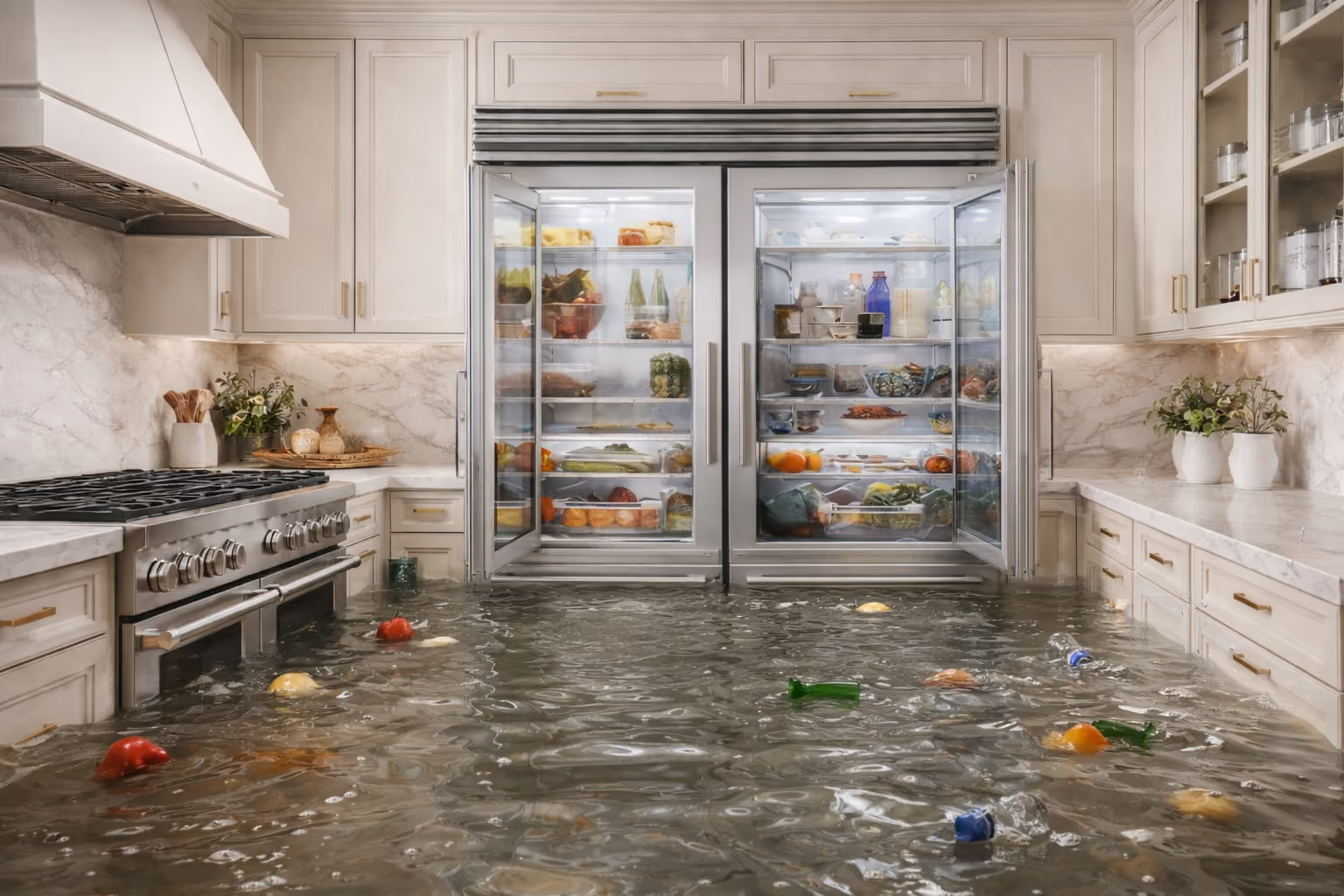
A puddle beside a washer, dishwasher or refrigerator may be only the visible part of the event. Water can move beneath flooring and into another apartment. Alert the building even if the appliance has stopped leaking: someone needs to check the affected area beyond your unit.
Do not decide fault, repair cost or insurance responsibility from the appliance's location. First establish whether water is still entering, whether electricity or the ceiling creates a danger, and who can reach the relevant shutoff.
Step 1: Make the Area Safe and Stop Water if Accessible
Keep children, pets and other occupants out of the wet area. Do not cross standing water to reach an appliance, a plug, the electrical panel or a valve. If power must be isolated, it must be done from a dry, safe location; ask the building team or an electrician when that cannot be done safely. Do not re-energize wet equipment merely because the floor looks dry.
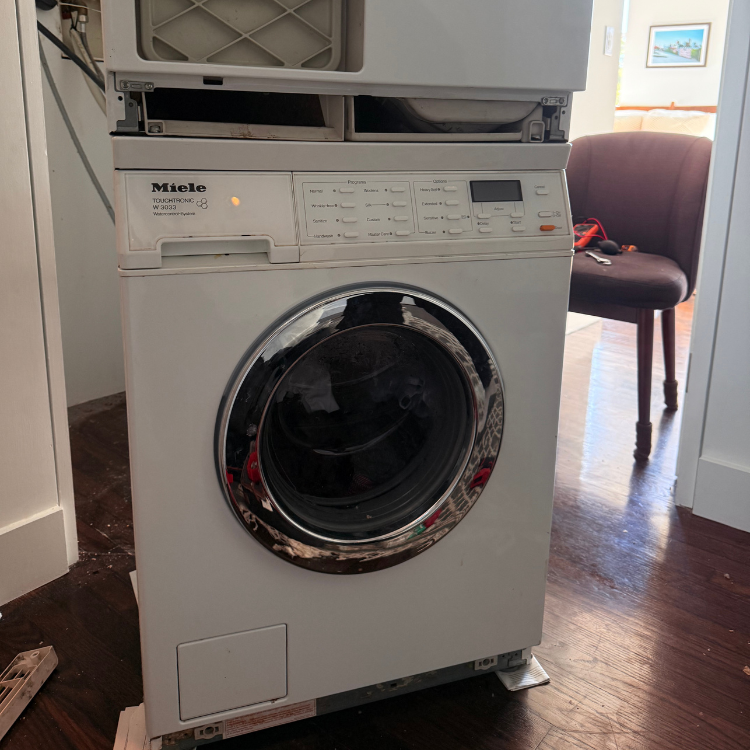
- Washing machine: the supply may have separate hot and cold valves. Use only valves you can identify and reach without pulling or climbing over the washer. Closing the water supply does not remove water already inside the machine.
- Dishwasher: the supply valve may be under the sink, but the layout varies. Do not guess which pipe or valve feeds it. Tell the super if the under-sink cabinet is wet or access is unsafe.
- Refrigerator ice maker or dispenser: a water supply may be involved. Do not pull a heavy, built-in or panelled refrigerator to search behind it during a leak. Ask management or a plumber to locate the supply.
- No accessible appliance valve: contact the building's emergency team. Some apartments depend on a shared or building-controlled shutoff; do not operate an unidentified common valve.
Valve designs differ. Do not force a stiff handle or disconnect a hose to stop a leak. If you also smell gas, leave immediately and call 911 or the utility from a safe place; do not investigate or operate switches.
Step 2: Notify Building Management Immediately
Call the super, emergency maintenance line or property manager as soon as you can safely do so. If another person is present, they can call while you take a safe containment step. A text or building-portal message can follow the call to preserve the details; do not delay the call while composing a report.
Give management the facts needed to respond:
- Location: address, unit, room and where water is visible.
- Current condition: whether water is still flowing and whether a shutoff has been closed.
- Immediate concern: whether electricity, a ceiling or another apartment may be affected.
- Response: ask who is attending and who will check the unit below.
- Source: report a suspected appliance as a possibility until the origin is confirmed.
Step 3: Document Without Delaying Containment
Once urgent action is underway, photograph the visible water, appliance position, cabinets, baseboards and flooring from a safe location. Do not re-create the leak for a video. Save the original files and record when you first noticed it, when you contacted the building, what was shut off and who attended.
Describe facts separately from assumptions: “Water was visible under the left side of the dishwasher” is more useful than “The dishwasher pump failed.” Keep repair invoices, building messages and any instructions from your insurer together. A timestamp supports a timeline; it does not establish the cause or assign liability.
Step 4: Contain and Arrange Drying
For a small amount of clean water in an electrically safe area, towels can help limit spread while assistance is arranged. Widespread water, hidden moisture, water from a drain, or affected electrical equipment requires a different cleanup plan. Ask management who will assess the flooring, wall cavities and neighboring unit.
Electrical extraction equipment, fans and dehumidifiers belong after the electrical safety check. A dry surface is not proof that the subfloor is dry. EPA recommends drying water-damaged materials within 24–48 hours to reduce mold risk; this is a prompt-action target, not a prediction that mold always starts at a particular hour. Do not apply concentrated heat to flooring or assume ventilation alone has resolved hidden moisture.
Appliance-Specific Leak Clues to Report
These observations help route the inspection. They do not identify a failed part on their own.
- Washer: record whether water appeared while the machine was idle, filling, washing or draining. A continuing leak with the machine off raises a different inspection question from water appearing only during a cycle.
- Dishwasher: note whether water appeared at the door, below the machine or inside the sink cabinet, and whether the sink was being used. Supply, drain, installation and machine-side sources all need consideration.
- Refrigerator: record whether the unit has a water connection, whether the dispenser or ice maker was being used, and where the water first became visible. Water beneath it does not by itself prove a supply-line failure.
If cabinet swelling remains after the leak is contained, the next question is where moisture is reaching the cabinets, so the source correction and cabinet work can be coordinated.
After the Emergency: What Gets Inspected
Separate three tasks: identify and correct the source, assess water-damaged building materials, and establish whether the appliance and electrical supply are safe to use. One visit may not cover all three. A fixed supply valve or building pipe needs the appropriate plumbing route; an internal machine fault needs appliance diagnosis.
Before returning the machine to use, ask for a record of the confirmed source, work performed, controlled test result and any unresolved drying or access issue. The building manager should coordinate shared-property work; the lease, ownership documents and applicable insurance determine who handles payment. Do not restart a leaking machine just to see whether it happens again.
Prevention Before the Next Leak
- Identify access now: ask management to show you the relevant shutoffs and the emergency contact route. Report valves that appear damaged or cannot be reached; do not force-test them.
- Check visible water connections: during routine cleaning, look for dampness, corrosion or cabinet discoloration without moving a heavy appliance. Report changes promptly.
- Keep maintenance model-specific: use the appliance and hose instructions to plan inspection or replacement. Do not assume every hose or refrigerator line has one universal replacement interval.
- Plan hidden access: if a supply connection is behind cabinetry or a stacked machine, have a qualified person establish an access plan before an emergency. Do not tighten concealed fittings or disconnect plumbing yourself.