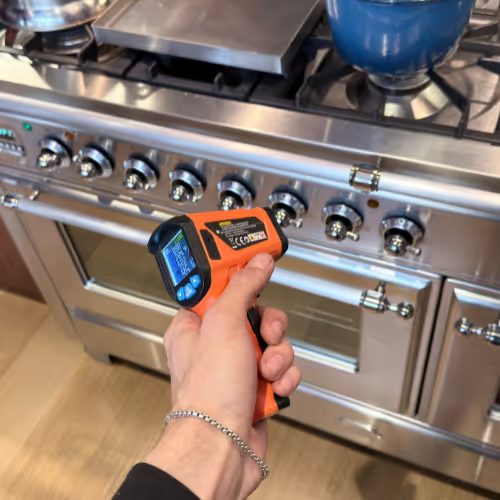
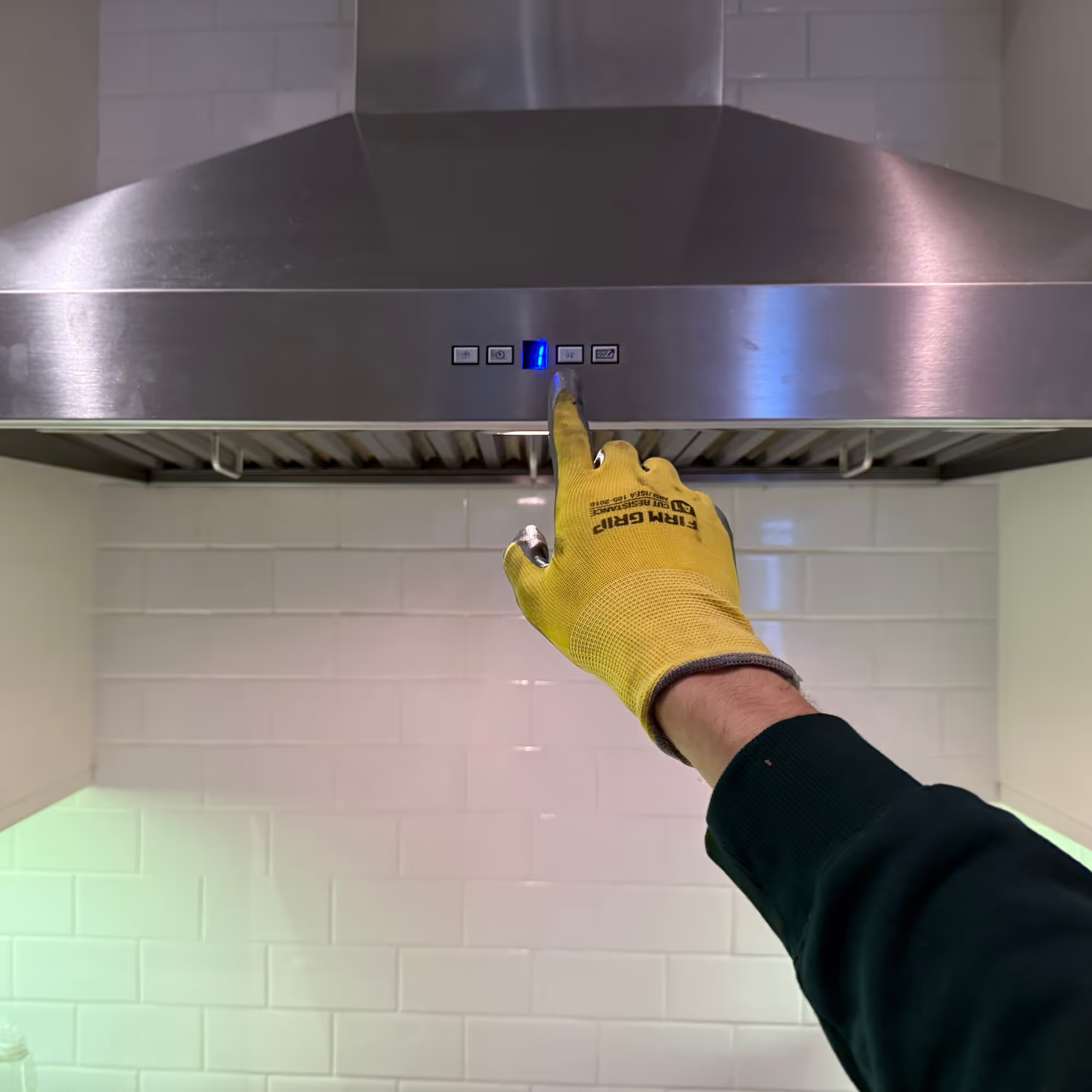
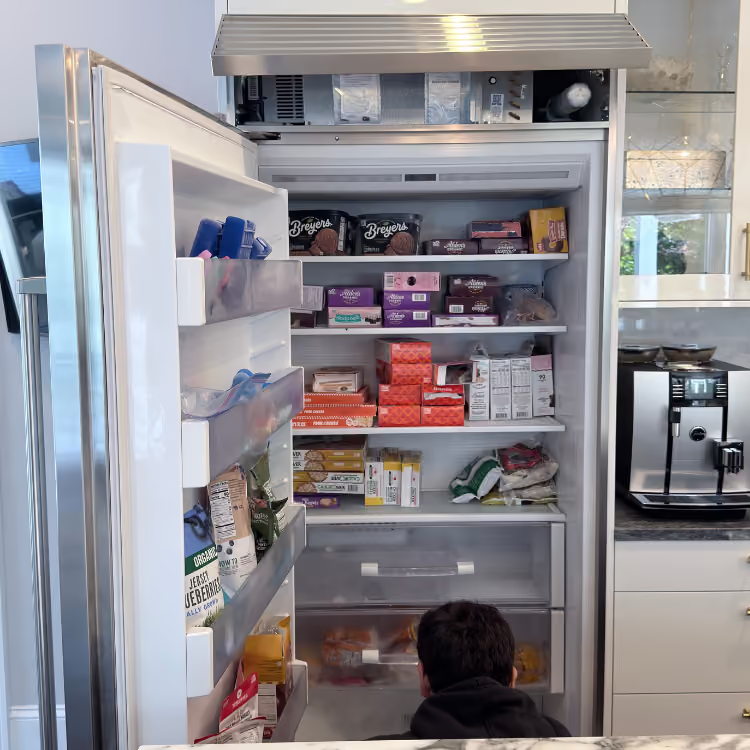
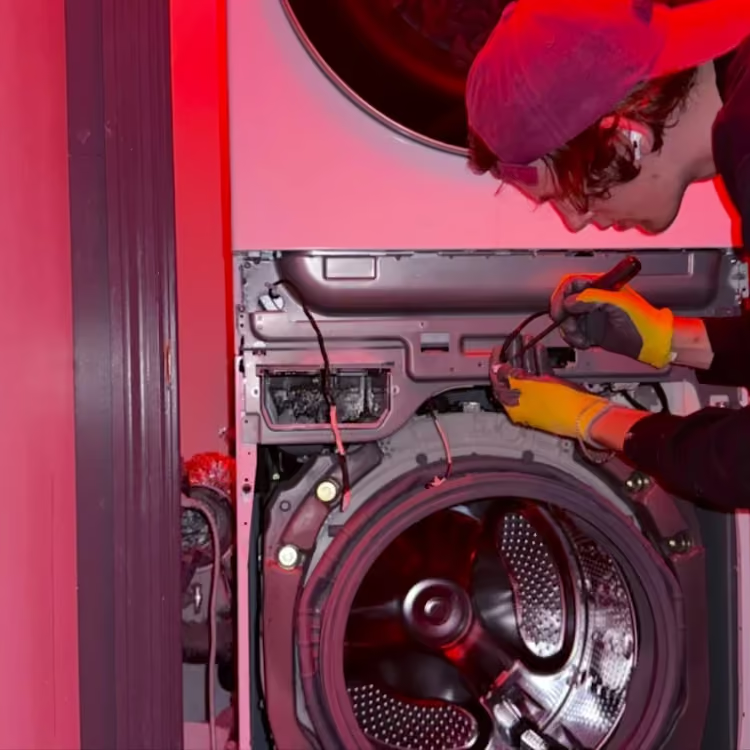
Whirlpool uses F/E formats across washers, dishwashers, dryers, and cooking appliances, while refrigerators use words and power indicators. Similar characters do not create one brand-wide parts map. Begin with appliance and Model / Serial, then preserve exact spacing, cycle or mode, retained water or temperature, airflow or heat, event history, and installation.
Volt & Vector reviews independent Whirlpool repair requests for Brooklyn, Manhattan below 96th Street, and selected Queens ZIP codes. Product scope, stack or built-in access, route capacity, and timing are confirmed before a visit. Volt & Vector is not affiliated with, endorsed by, or authorized by Whirlpool.
Quick Answers
What should I send before requesting Whirlpool repair?
Answer: Send the complete Model / Serial, appliance type, full display with spaces, selected cycle or mode, failed function, physical result, safety status, and installation photos.
Does washer F9 E1 mean the same repair as dishwasher F9E1?
Answer: No. Both can route through long drain on covered products, but retained water, access, filters, hoses, standpipe, sink, and disposer evidence differ.
Is Sud / Sd an immediate part failure?
Answer: No. On covered washers it can accompany extended suds-reduction pauses, detergent conditions, or a restricted drain path.
Does a dryer running with AF / Check Vent prove airflow is safe?
Answer: No. Covered dryers may continue operating while airflow remains restricted.
Do working refrigerator lights prove the cooling system failed?
Answer: No. Demo / Showroom / Shwrm or COOLING OFF can preserve lights or controls while cooling is disabled.
When should Whirlpool use stop?
Answer: Stop for active leakage, locked water, absent airflow, overheating, gas odor, smoke, sparks, microwave arcing, uncontrolled heat, or unsafe food temperature.
Whirlpool Repair NYC at a Glance
- Service type: Independent residential Whirlpool refrigeration, laundry, dishwasher, cooking, and microwave diagnosis and repair.
- Coverage: Brooklyn appliance repair, Manhattan appliance repair below 96th Street, and selected Queens routes.
- Products: Refrigerators, washers, dryers, dishwashers, ranges, wall ovens, and microwaves, subject to exact-model and access review.
- Approach: Lock appliance and display format first, then separate operating state, power event, installation, building connection, physical failure, and safety route.
- Before dispatch: Send identity, display, sequence, safety state, and access through the booking request.
Choose the Whirlpool Appliance That Matches the Problem
- Washer: Use Whirlpool washer repair. Record lock, suds, fill, tumble, drain, spin, retained water, and stack access.
- Dryer: Use Whirlpool dryer repair. Use the Whirlpool no-heat guide or clothes-still-damp guide according to the literal result.
- Stacked laundry center: Use the Whirlpool WET/WGT laundry-center guide and preserve complete combined-unit identity and access.
- Refrigerator: Use refrigerator repair. Record actual temperatures, power event, cooling state, door history, and model-specific display wording.
- Dishwasher: Use dishwasher repair. Record F/E spacing or flash sequence, standing water, drain sound, leak state, and sink connection.
- Range or wall oven: Use range repair or oven repair. Record fuel, mode, set point, power history, actual heat, and display.
- Microwave: Use microwave repair. Stop for arcing, cavity damage, smoke, or burning odor.
What the Whirlpool Diagnostic Visit Needs to Resolve
- Keep repeated characters attached to the appliance: washer F9 E1, dishwasher F9E1, and cooking F9 / F9 E0 require different water, drain, installation, and electrical evidence.
- Separate Control Lock, suds-reduction logic, power-outage acknowledgement, Sabbath, Demo or Showroom, Cooling Off, and dryer airflow messaging from the physical condition the appliance produces.
- Reproduce the customer's no-drain, no-heat, no-cool, fill, leak, or cooking complaint while preserving building connections and stop-use signals. The customer receives the cause class, route or access dependency, and an estimate before approved repair work proceeds.
NYC Access and Building-Connection Planning Before Whirlpool Dispatch
Photograph stacked or closet laundry, the visible dryer transition, washer drain and supply, dishwasher-to-sink route, refrigerator cabinet ventilation, and range or wall-oven fit without pulling an appliance. Record gas versus electric, recent installation or power work, building drain or exhaust history, elevator or service entrance, superintendent, and COI requirements. Appliance repair does not include concealed vent construction, branch-circuit correction, gas-line alteration, cabinetry modification, or unplanned built-in removal.
Whirlpool Symptom-to-Decision Map
Washer shows LOC / LC and normal controls do not respond.
What this usually points to: Control Lock on covered platforms first; touch-input recognition, moisture, door state, wiring, or control response if the exact-model owner procedure does not restore stable operation.
What we verify: Preserve the full display and door or water state, use only the matching normal-control instruction, and keep service menus and lock manipulation out of owner checks.
Washer shows Sud / Sd.
What this usually points to: Excess suds, detergent type or dose, extended rinse and pause response, restricted drain, sensing, or internal response.
What we verify: Preserve detergent, load, cycle timing, water, and drain behavior instead of restarting repeatedly.
Washer shows F5 E2.
What this usually points to: Door-lock route, visible clothing interference, alignment, lock response, wiring, or control.
What we verify: Record door and water state and keep the lock intact.
Washer shows F9 E1.
What this usually points to: Long drain, retained water, hose or standpipe, accessible filter where provided, suds, pump response, sensing, or control.
What we verify: Preserve washer identity and water state without applying dishwasher instructions.
Dishwasher shows F8E4.
What this usually points to: Drip-tray water, connection, suds, leak path, float response, wiring, or control.
What we verify: Treat protected water as active evidence even when the visible floor is dry.
Dishwasher shows F9E1.
What this usually points to: Long drain, filter, drain hose, disposer or air gap, suds, pump response, sensing, or control.
What we verify: Keep dishwasher sink-routing evidence separate from washer standpipe evidence.
Dishwasher shows H2O / H20 and expected fill is not detected.
What this usually points to: Water-supply or fill-detection route on covered Whirlpool dishwasher platforms, with official sources using both letter-O and zero renderings that must not be silently normalized.
What we verify: Photograph the literal display, model, fill sound, cycle stage, visible supply-valve position, and tub water without opening the inlet system or borrowing washer instructions.
Dryer shows AF / Check Vent.
What this usually points to: Lint screen, transition duct, concealed building exhaust, load, airflow sensing, heat system, or control.
What we verify: Split dryer behavior from the complete building exhaust path.
Refrigerator shows PO.
What this usually points to: Power-outage and temperature-rise event on covered controls; supply or refrigeration issue if recovery remains abnormal.
What we verify: Record actual temperature before acknowledgement and verify recovery afterward.
Refrigerator lights and controls work while Demo / Showroom / Shwrm or COOLING OFF prevents cooling.
What this usually points to: Model-specific non-cooling operating state first; returning mode, power history, control response, or an independent refrigeration problem if normal operation does not remain restored.
What we verify: Preserve literal wording and actual compartment temperatures, use only the matching owner guide, and verify time-based cooling recovery rather than treating lights as proof of refrigeration.
Oven shows F9 / F9 E0.
What this usually points to: Electrical connection, installation, power-event noise, supply, wiring, or control on covered cooking platforms.
What we verify: Stop at external history and identity; internal electrical checks remain qualified scope.
Cooking display shows SAB / Sab / 5AB / 5A6, LOC, or PF and is mistaken for a component failure.
What this usually points to: Sabbath mode, Control Lock, or recorded power-failure state on covered controls first; a separate input, supply, door, heating, wiring, or control route only if the requested function remains abnormal afterward.
What we verify: Match exact model and literal spacing, use only normal controls, record the power and cooking timeline, and retest the original heat or door function.
The Whirlpool Same-Code Appliance Split
- Identity: Photograph Model / Serial and state refrigerator, washer, dryer, dishwasher, cooking appliance, or microwave.
- Exact display: Preserve spacing, order, capitalization, words, icons, and any flash sequence.
- Physical result: Record retained water, suds, load moisture, airflow, temperature, heat, flame, door, or leak state.
- External connection: Capture standpipe, sink drain, disposer, transition duct, exterior exhaust, power event, or cooking installation without moving equipment.
- Platform boundary: Keep washer F9 E1, dishwasher F9E1, and oven F9 / F9 E0 in separate dictionaries.
- Verification: A cleared message is not proof that drainage, airflow, cooling, or electrical operation recovered.
How to Read the Display: Fault Code, Status, or Appliance ID?
- Fault-like format: Covered pages include washer F5 E2 and F9 E1, dishwasher F8E4, F9E1, and H2O / H20, dryer AF / Check Vent, and cooking F9 / F9 E0; each remains appliance and model specific.
- Status or operating message: Washer LOC / LC and Sud / Sd, refrigerator PO, Demo / Showroom / Shwrm, and COOLING OFF, plus cooking SAB / Sab / 5AB / 5A6, LOC, and PF, can represent a lock, recovery logic, power history, or operating modes.
- Appliance ID: Model / Serial selects the correct Whirlpool appliance and F# E# dictionary. It is not a fault.
- Service-mode or internal value: service-mode values are not automatic owner-facing errors. Do not enter diagnostics, activate components, or alter stored settings.
- What to photograph: Capture appliance, full display and spaces, cycle or mode, physical result, power or installation history, external drain or vent connection, identity, and access.
Use Whirlpool's washer code guide only after confirming washer identity. Its cooking display guide demonstrates why F/E ordering, Sabbath wording, and power messages cannot be transferred to laundry or dishwashers.
Safe Checks Before Requesting Service
- Confirm ordinary cycle, mode, lock, delay, cooling state, and clock through the exact model guide.
- Photograph the full display before acknowledgement, reset, or setting changes.
- Measure refrigerator temperature and record washer or dishwasher standing water.
- Inspect only manual-approved owner-accessible filters, lint screen, and visible hose or duct condition.
- Record exterior airflow, dryer heat, load moisture, detergent, suds, and cycle progression.
- Do not manipulate locks, pull built-ins or stacks, open terminals, alter gas components, or enter diagnostics.
Mistakes That Can Make the Problem Worse
Using washer F9 E1 instructions on a dishwasher showing F9E1.
Why it causes problems: Both can involve long drain, but water containment, filters, standpipe, sink, disposer, and access differ.
Safer next step: Lock appliance and installation before checking only owner-accessible paths.
Restarting a washer repeatedly during Sud / Sd.
Why it causes problems: The covered washer may be extending pauses and rinsing to reduce suds, while restarting erases timing and water evidence.
Safer next step: Stop adding detergent and record product, dose, load, time, and drain behavior.
Continuing a dryer because AF / Check Vent did not stop the drum.
Why it causes problems: Covered dryers can keep running while restricted airflow still affects heat and drying.
Safer next step: Preserve the full exhaust route and stop for abnormal heat, odor, smoke, or absent airflow.
Acknowledging refrigerator PO before measuring temperature.
Why it causes problems: Other controls may return without proving cooling recovery or food safety.
Safer next step: Photograph the event and measure each compartment first.
Opening range terminals because F9 / F9 E0 appeared after installation.
Why it causes problems: The route can involve the appliance connection or building supply, and energized access creates shock and fire risk.
Safer next step: Stop use, preserve installation and outage history, and request qualified evaluation.
Where the Homeowner-Safe Limit Ends
- Homeowner-safe: Use normal controls; confirm cycle, mode, lock, detergent, accessible filters, lint screen, and visible hose or duct condition; record display, water, temperature, heat, airflow, identity, and installation.
- Technician or utility boundary: Stop at locked water, hidden leakage, energized terminals, gas components, microwave high-voltage areas, concealed exhaust, internal refrigeration, stacked or built-in movement, and diagnostic modes.
Stop-Use and Food-Safety Conditions
- Stop laundry or dishwasher use for active leakage, water near power, a locked door with water, absent airflow, overheating, smoke, or burning odor.
- Stop cooking for gas odor, delayed ignition, microwave arcing, smoke, sparks, or uncontrolled heat.
- Leave the area for suspected gas release and follow Con Edison guidance from a safe location.
- Protect food by measured temperature and elapsed time after PO, Demo, Showroom, Cooling Off, or continuing no-cool.
- Follow USDA power-outage food-safety guidance.
NYC Installation and Access Notes
- Photograph washer valves, standpipe, pedestal, stack, floor, and closet clearance.
- Photograph dryer fuel or electrical configuration, transition duct, wall connection, closet ventilation, and stack access.
- Photograph dishwasher panel, toe-kick, sink drain, disposer or air gap, shutoff, flooring, and cabinetry.
- Photograph refrigerator panels, water route, ventilation, flooring, and door swing.
- Photograph cooking-product fuel or electrical configuration, ventilation, anti-tip relationship, trim, and cabinetry.
- Include elevator, floor protection, superintendent, and COI requirements.
How Whirlpool Service Works
- Submit identity, appliance, literal display, failed sequence, physical result, safety status, address, and access photos through the booking page.
- Product scope, route, stack or built-in access, and appointment timing are reviewed.
- The technician separates appliance response from drain, water, exhaust, power, fuel, temperature, installation, sensing, and control state.
- The cause class, access requirement, repair option, and estimate are explained before work proceeds.
- The original drain, dry, airflow, cooling, heat, ignition, or control function is retested.
What to Send for Faster Review
- Complete Whirlpool Model / Serial.
- Appliance type and gas, electric, stacked, or built-in configuration.
- Literal display with spaces, capitalization, words, and icons.
- Cycle or mode, standing water, suds, temperature, moisture, heat, airflow, or event history.
- Wide installation photos, exact address, and building access requirements.
Service Boundaries
- Volt & Vector provides independent Whirlpool appliance repair, not Whirlpool warranty administration, product registration, branch-circuit work, gas-line alteration, building-duct cleaning, plumbing reconstruction, cabinetry modification, appliance installation, or relocation.
- Concealed utilities, structural access, refrigeration circuits, and microwave high-voltage assemblies remain separate or technician-only scopes.
- Submit unusual or unlisted products with complete identity and installation photos before dispatch.
Request Whirlpool Appliance Repair in NYC
Use the online booking request or call +1 (332) 333-1709. Include Whirlpool identity, appliance, display, failed function, installation photos, and address.


.jpeg)


.jpeg)
.jpeg)


.jpeg)