Most Common Reasons a Bosch Gas Igniter Will Not Stop Clicking
Bosch gas cooktops and ranges use electronic ignition, and on covered models all igniters can spark when one burner is turned on. That brief startup clicking is different from clicking that continues after the flame is stable, clicking with every knob off, or clicking after cleaning, boilover, or installation work.
- Normal startup sparking is being mistaken for a fault: Bosch manuals state that all igniters can spark when any single burner is turned on. If the extra clicking stops quickly and the selected burner has a steady flame, that can be normal operation. If the clicking continues after the flame is stable, use the next rows.
- The igniter is wet or soiled: Bosch says the igniter should be clean and dry, and that a wet or soiled igniter may spark without lighting the burner or even spark continuously when a flame is present. The safe clue is recent cleaning, boilover, damp burner parts, or visible residue around a cool igniter.
- The burner cap or base is not seated correctly: Bosch burner caps and bases must sit correctly for proper function. A cap that is off-center, rocking, on the wrong burner, or not flat can change ignition, flame shape, and gas odor risk. The safe clue is clicking after the burner was cleaned or reassembled.
- Food residue or blocked burner openings are changing the flame: Grease, food, or spill residue can disturb ignition and flame shape. The igniter may keep trying because the flame is not being proven cleanly. The safe clue is visible debris around a cool burner head, cap, or ports.
- The burner is at a setting where occasional spark can be normal, but the clicking is not occasional: Bosch notes that an igniter may occasionally spark when a flame is present on a Low setting. Occasional is the key word. Continuous clicking, repeated flame loss, or clicking with gas odor is not the same condition.
- A switch, module, control, wiring, or flame-sensing fault remains: This becomes more likely when the burner is dry, clean, correctly assembled, and the clicking continues with all knobs off or across multiple burners. That is not a homeowner part-swap; it requires testing the ignition command and flame-sense return.
- The installation or electrical supply is wrong: Bosch installation instructions warn that improper grounding or reverse polarization can cause continuous sparking of burner igniters. This matters when the problem started after installation, outlet work, a range move, or electrical repair.
What the Clicking Pattern Means
Read the pattern before touching parts.
- All igniters click briefly while lighting one burner: This can be normal on Bosch gas ignition systems. The deciding clue is whether clicking stops and the flame stays steady.
- One burner keeps clicking after it lights: Focus on that burner after it cools: cap position, burner base seating, visible moisture, residue, flame shape, and whether the correct cap is on the correct burner.
- Clicking started after cleaning or boilover: Moisture and residue are the first clues. Let removable burner parts and the igniter area dry completely before judging the result.
- Clicking happens with every knob off: Stop using the cooktop or range surface. That pattern points toward a stuck/wet switch, module/control issue, wiring, or supply problem.
- Clicking started after installation or outlet work: Do not treat that as a dirty-burner problem first. Grounding and polarity must be verified by a qualified person before ignition parts are blamed.
What You Can Check Safely
- Knobs: Turn every burner control fully to Off and make sure no knob is pushed in, stuck between positions, or slow to return.
- Cool-down: Wait until burner caps, grates, and the surface are cool before handling anything.
- Cap seating: Reseat only the removable burner caps, bases, or grates your model manual identifies as owner-removable. The cap should sit flat and centered.
- Moisture: Dry visible moisture around the burner and igniter with a soft cloth. If parts were washed, let them air-dry fully before trying again.
- Visible residue: Remove loose food or grease from cool visible burner parts using the gentle cleaning method allowed by the model manual.
- Pattern notes: Record whether one burner or all burners click, whether the flame lights, whether the clicking stops at a higher flame, and whether this followed cleaning, a spill, installation, or power work.
When to Stop Using the Burner
- Gas odor: Do not keep trying to ignite the burner. Turn controls off, leave the area safely, ventilate only if it can be done safely, and follow the gas supplier or building emergency procedure.
- No flame after a short attempt: Bosch manuals use a short no-light limit on covered models. Turn the burner off instead of continuing to click.
- Clicking with all knobs off: Stop using the surface until it is diagnosed.
- Stuck or loose knob: Do not force the knob or use that burner.
- Visible damage, arcing, or electrical wetness: Do not remove panels or test voltage.
- Recent installation or outlet work: Stop owner troubleshooting and have the electrical supply and appliance connection checked by a qualified person.
What Diagnosis Must Confirm
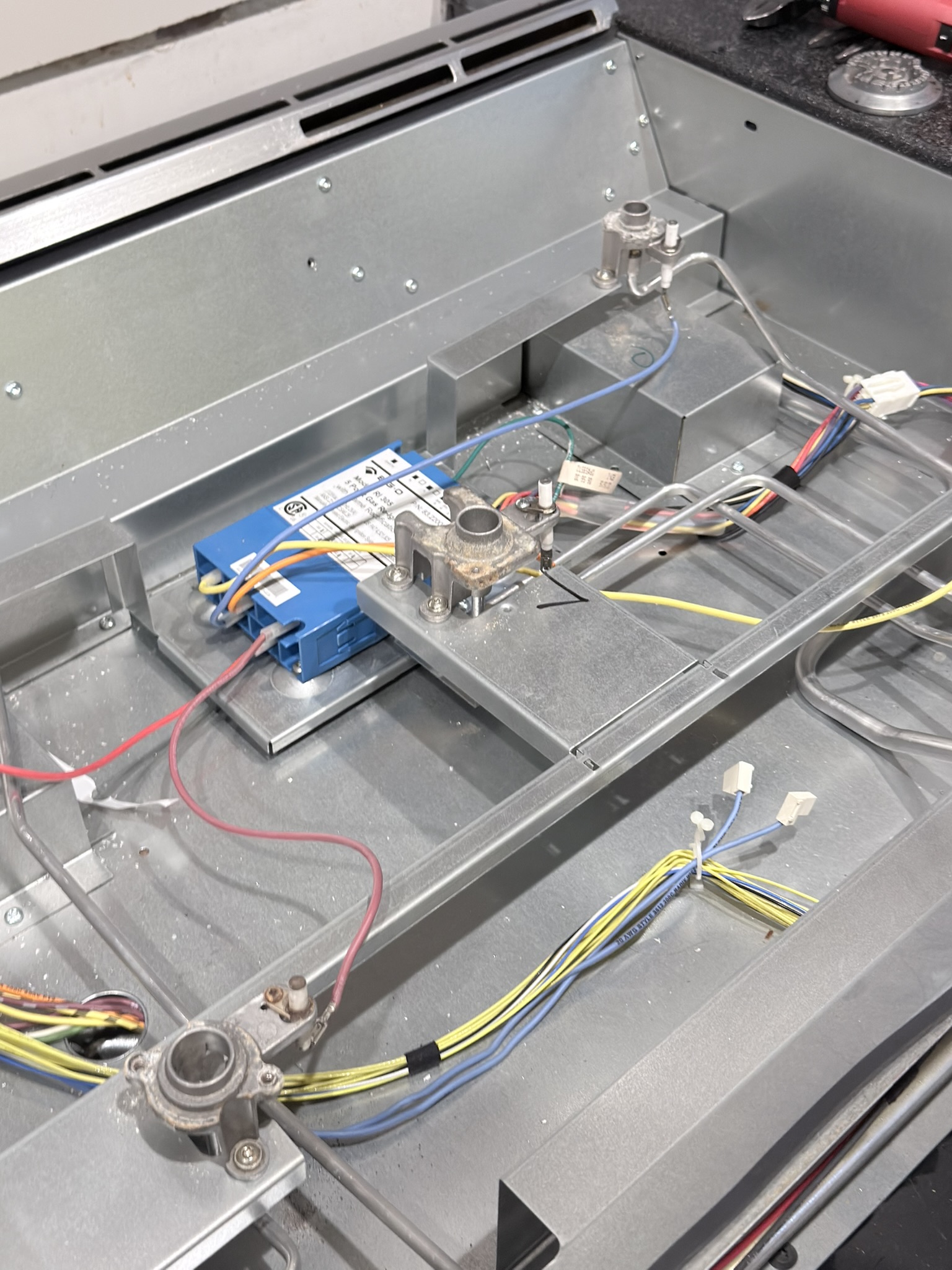
A useful Bosch gas ignition diagnosis should separate surface conditions from hidden ignition faults. The visit should confirm burner cap and base seating, igniter cleanliness and dryness, burner ports, flame carryover, flame stability, switch behavior at each knob, spark module or control output, electrode condition, wiring, ground, and supply polarity.
The model identity matters. Bosch cooktops and ranges vary by burner layout, cap shape, ignition/reignition behavior, and service access. Record the E-Nr, FD number, or model label if it is accessible without moving a built-in or stressing a gas connection.
What Not to Do
- Do not test for gas leaks with a flame: Bosch installation instructions explicitly reject flame leak checks.
- Do not open the cooktop to dry switches: Moisture around a switch can cause clicking, but switch access is service work.
- Do not replace the spark module by guess: A module can be involved, but wet igniters, cap placement, burner residue, switch state, and grounding must be separated first.
- Do not keep cycling knobs through gas odor: That changes nuisance clicking into a safety condition.
- Do not scrape, bend, or pull the igniter: Damage or movement at the electrode can make ignition worse.
FAQ
Is it normal for all Bosch gas igniters to click when I turn on one burner?
It can be normal during startup on Bosch electronic ignition systems. It is not normal if the clicking continues after the selected burner has a stable flame, continues with all knobs off, or appears with gas odor.
Does clicking after cleaning mean the spark module failed?
Not by itself. Bosch manual guidance points first to a clean, dry igniter and correct burner cap placement. A module or switch becomes a stronger suspect only after the burner area is dry, correctly assembled, and the symptom still continues.
Can I use another burner if only one Bosch burner keeps clicking?
Only if there is no gas odor, no clicking with all knobs off, and the other burners ignite and stop clicking normally. Avoid the affected burner until the cap, moisture, residue, and service-level ignition checks are resolved.


.jpeg)